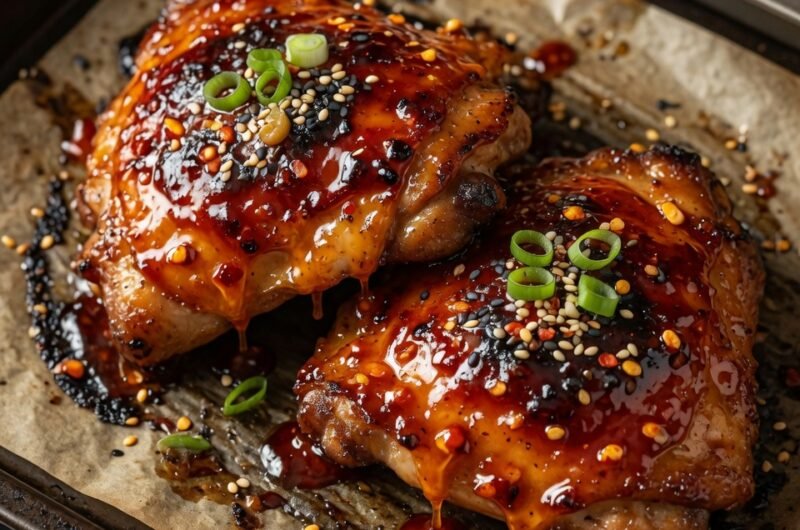
Golden, sticky, and finger-licking good, these chicken thighs strike the perfect balance between sweet honey heat and savory depth — ready in under an hour.
📋 In This Article
Introduction
There is a specific kind of magic that happens when honey meets high heat. It bubbles, it deepens, and it transforms into a glossy, amber shell that cracks just so when you bite into it. That is the promise of Honey Sriracha Glazed Chicken Thighs That Caramelize Beautifully in the Oven. But here’s the catch: sugar burns fast. If you aren’t careful, that beautiful glaze turns bitter and black before the chicken is cooked through.
I’ve spent years testing oven temperatures and glaze ratios to find that sweet spot (pun intended). This recipe isn’t just about dumping sauce on meat; it’s about timing. We use a two-stage cooking process to render the fat and crisp the skin before introducing the sugar. This ensures you get that crave-worthy, caramelized finish without the acrid taste of burnt garlic or scorched sugars. It’s a weeknight warrior that eats like a weekend project. Spicy Honey Garlic Chicken Thighs with Roasted Broccoli.
Why This Recipe Works (The Science of Caramelization & Flavor)
Getting Honey Sriracha Glazed Chicken Thighs That Caramelize Beautifully in the Oven right requires understanding a bit of food chemistry. We are dealing with two distinct browning processes: the Maillard reaction and caramelization.
The Maillard reaction is what browns the meat proteins and skin, creating those savory, meaty flavors. Caramelization, on the other hand, is the oxidation of sugar—the honey in our glaze. Honey begins to caramelize around 320°F (160°C), but it can burn quickly if left unattended. If you apply the glaze at the start of a 400°F roast, you’re fighting a losing battle against carbonization.
By roasting the chicken naked first, we allow the skin to render its fat and crisp up via the Maillard reaction. Only once the skin is structurally sound do we paint on the honey-sriracha mixture. The sugars then interact with the residual heat to form a sticky, polymerized glaze that clings to the meat rather than sliding off. It’s a small timing tweak that makes the difference between soggy skin and a perfect, crackling bite.
Ingredients You’ll Need
The beauty of this dish lies in its simplicity. You likely have most of these pantry staples already.
For the Chicken:
- 4 bone-in, skin-on chicken thighs: Bone-in thighs retain moisture better and render more flavor than boneless cuts. The skin is essential for protecting the meat during the initial roast.
- 1 teaspoon kosher salt: Essential for drawing moisture to the surface and dissolving into the meat.
- 1/2 teaspoon black pepper: Adds a mild, woody heat that cuts through the fat.
- 2 tablespoons olive oil: Helps conduct heat for even browning.
For the Glaze:
- 1/4 cup honey: The base for our caramelization. It provides viscosity and sweetness.
- 3 tablespoons Sriracha hot sauce: Delivers the punchy garlic-chili heat.
- 2 tablespoons soy sauce: Adds umami and saltiness to balance the sugar.
- 3 cloves fresh garlic, minced: Fresh garlic provides a pungent kick that mellows beautifully in the oven.
- 1 tablespoon fresh ginger, minced: Adds a bright, citrusy zing that lifts the heavy glaze.
Optional Garnishes:
- Sesame seeds: For a nutty crunch.
- Sliced green onions: For a fresh, oniony bite that cuts the richness.
Step-by-Step Instructions
- Preheat and Prep: Preheat your oven to 400°F (200°C). Line a baking sheet with aluminum foil or parchment paper for easy cleanup, and set a wire rack on top. Airflow is crucial here; the rack elevates the chicken so heat circulates underneath, promoting even cooking and rendering the fat away from the skin.
- Dry the Skin: Pat the chicken thighs thoroughly dry with paper towels. This step is non-negotiable. Moisture is the enemy of crispiness—water turns to steam in the oven, which softens the skin. Toss the thighs with olive oil, salt, and pepper, ensuring they are evenly coated.
- The Initial Roast: Place the chicken skin-side up on the wire rack. Roast for 25 minutes. This initial phase renders the subcutaneous fat and sets the stage for a crispy texture. Do not add the glaze yet.
- Make the Glaze: While the chicken roasts, whisk together the honey, Sriracha, soy sauce, garlic, and ginger in a small bowl.
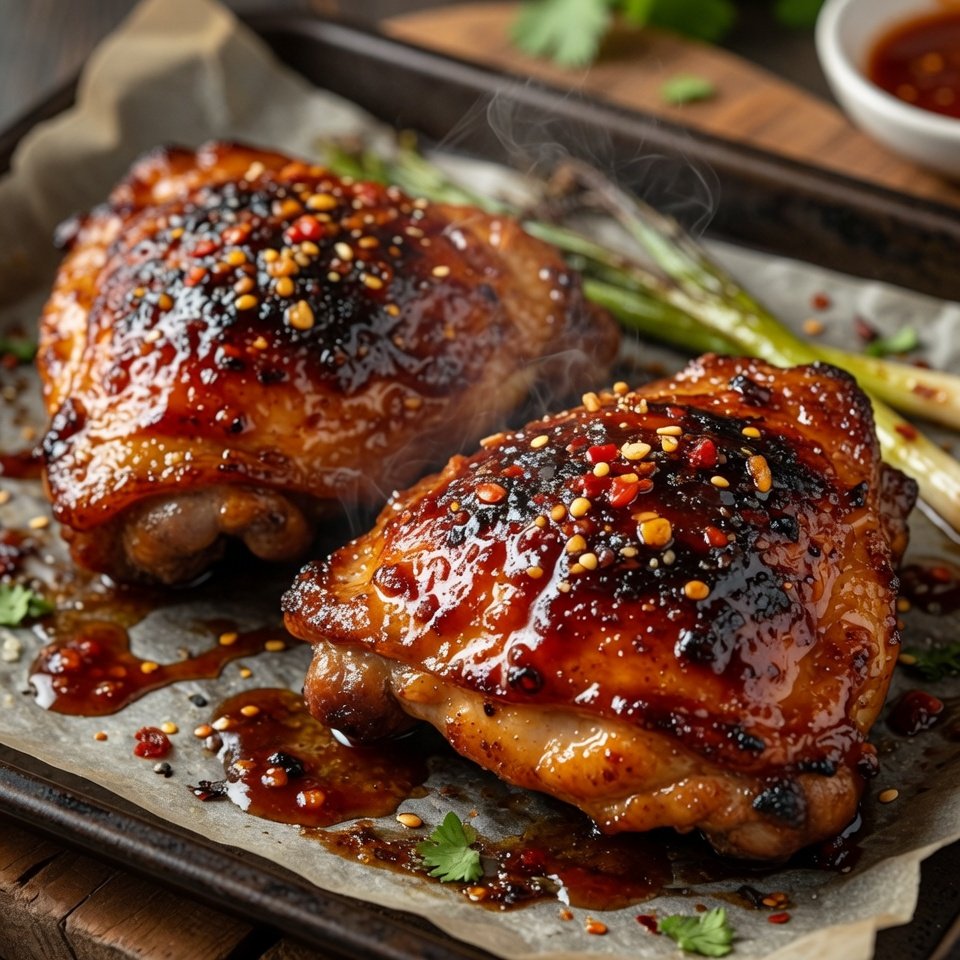
- Glaze and Finish: After 25 minutes, remove the chicken from the oven. Brush a generous layer of the honey-Sriracha mixture over each thigh. Return to the oven for another 10-15 minutes. Watch closely during the last few minutes. The sugars will bubble and darken rapidly. If the skin is browning too fast but the internal temperature isn’t quite there, tent a piece of foil loosely over the top.
- Rest: Remove the chicken from the oven. Let it rest for 5-10 minutes. This allows the juices to redistribute and the glaze to set. If you cut into it immediately, you lose that sticky, cohesive coating.
- Serve: Transfer to a platter. Spoon any remaining pan drippings over the top and garnish with sesame seeds and green onions.
⚠️ Common Mistakes to Avoid
Even simple recipes have pitfalls. Here is where things usually go wrong.
Adding the Glaze Too Early: If you put the honey mixture on at the start, the sugars will burn long before the chicken cooks through. Patience is key. Add the glaze only in the final stage of cooking.
Overcrowding the Pan: If the thighs are touching, they will steam rather than roast. Steam equals rubbery skin. Give them space.
Skipping the Wire Rack: Roasting directly on the sheet tray causes the bottom of the chicken to boil in its own rendered fat. A wire rack ensures 360-degree heat circulation for uniform crispiness.
Not Checking the Temperature: Visual cues can be deceiving with a dark glaze. Use an instant-read thermometer inserted into the thickest part of the thigh (avoiding the bone). You are looking for 165°F (74°C). I used to guess on timing alone, but a thermometer is the only way to guarantee food safety without drying out the meat.
Delicious Variations & Serving Suggestions
This recipe is a canvas. Once you master the technique, you can tweak the flavor profile to suit your mood.
Spicy-Sweet Adjustments: If you prefer more heat, increase the Sriracha to a 1:1 ratio with the honey, or add a teaspoon of chili flakes to the glaze. For a brighter profile, add a splash of rice vinegar or lime juice to cut the sweetness.
Serving Ideas: This dish pairs beautifully with simple starches that can soak up the excess glaze.
- Jasmine Rice: The neutral, floral flavor is the perfect backdrop for the spicy glaze.
- Roasted Broccolini: The charred edges complement the caramelized chicken.
- Asian Slaw: A crisp, acidic salad balances the richness of the thighs.
Storage & Reheating Tips
To keep your Honey Sriracha Glazed Chicken Thighs That Caramelize Beautifully in the Oven tasting fresh, storage matters.
Refrigeration: Store leftovers in an airtight container for up to four days. Keep the bones in; they help retain moisture.
Freezing: Freeze glazed thighs in a single layer on a baking sheet before transferring to a freezer bag. This prevents them from freezing into a solid block. Use within three months.
Reheating: The microwave is the enemy of crispy skin. It creates steam, turning that beautiful crust soggy. Instead, reheat in a 350°F (175°C) oven for 10-15 minutes. The skin will re-crisp, and the glaze will bubble anew.
💡 Pro Tips for Perfection
The Cold Start Trick: Some chefs swear by starting the chicken in a cold cast iron skillet and then turning on the heat. This renders the fat more slowly and evenly. If you have a cast iron pan, try placing the thighs skin-side down in a cold pan, then turning the burner to medium-high. Once the skin is rendered and golden (about 15 minutes), flip, add the glaze, and finish in the oven. It’s a pro move for the dedicated cook.
Baste for Depth: Don’t just glaze once. Brush the sauce on, let it cook for 5 minutes, then brush again. Layering the glaze builds a thicker, more complex crust.
Broiler Finish: If the glaze looks a bit pale after the cooking time, switch your oven to “Broil” for the final 1-2 minutes. Keep the door cracked and watch it like a hawk—sugar can go from caramelized to carbonized in seconds.
Frequently Asked Questions (FAQ)
+Why did my glaze burn?
Honey is high in fructose, which browns faster than regular table sugar. If your oven runs hot or you applied the glaze too early, the sugars will carbonize. Always add the glaze in the last 10-15 minutes of cooking. If the top is darkening too quickly, move the tray to a lower rack.
+Can I use boneless, skinless chicken thighs?
You can, but you will lose the textural contrast of the crispy skin. Boneless thighs cook faster—check them at the 20-minute mark. Because there is no skin to protect the meat, the glaze will caramelize directly on the surface, creating a sticky, intense flavor.
+How do I know when the chicken is fully cooked?
The most accurate method is using a meat thermometer. Insert it into the thickest part of the thigh, avoiding the bone. It should read 165°F (74°C). If you don’t have a thermometer, the juices should run clear when you cut into the meat, and the flesh should be opaque throughout.
+Can I marinate the chicken overnight?
Yes, but with a caveat. The soy sauce and salt in the marinade will act as a cure, making the meat firmer and darker. It will be flavorful, but the texture changes. If marinating overnight, omit the salt from the marinade and add it just before cooking.
+What sides go best with this dish?
You want sides that can handle the bold flavors. Steamed rice (jasmine or basmati) is classic. Roasted vegetables like Brussels sprouts or carrots work well because their natural sweetness echoes the honey. A sharp, acidic salad, like a cucumber daikon slaw, provides a necessary contrast to the rich glaze.
Conclusion
Honey Sriracha Glazed Chicken Thighs That Caramelize Beautifully in the Oven are a testament to the power of technique over complexity. By understanding the science of caramelization and respecting the timing of the glaze, you transform a few pantry staples into a dinner that feels intentional and refined. It’s about that sticky, sweet, spicy bite that keeps you coming back for more. Give this method a try, and you’ll see why patience really is the secret ingredient.