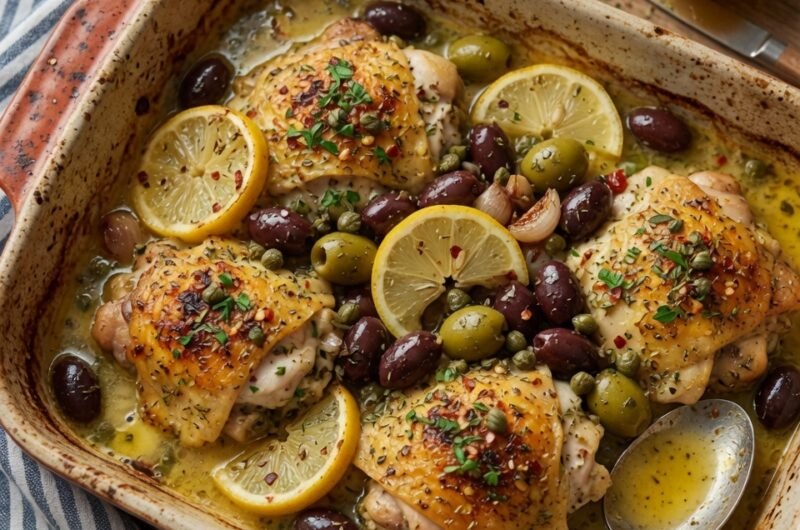
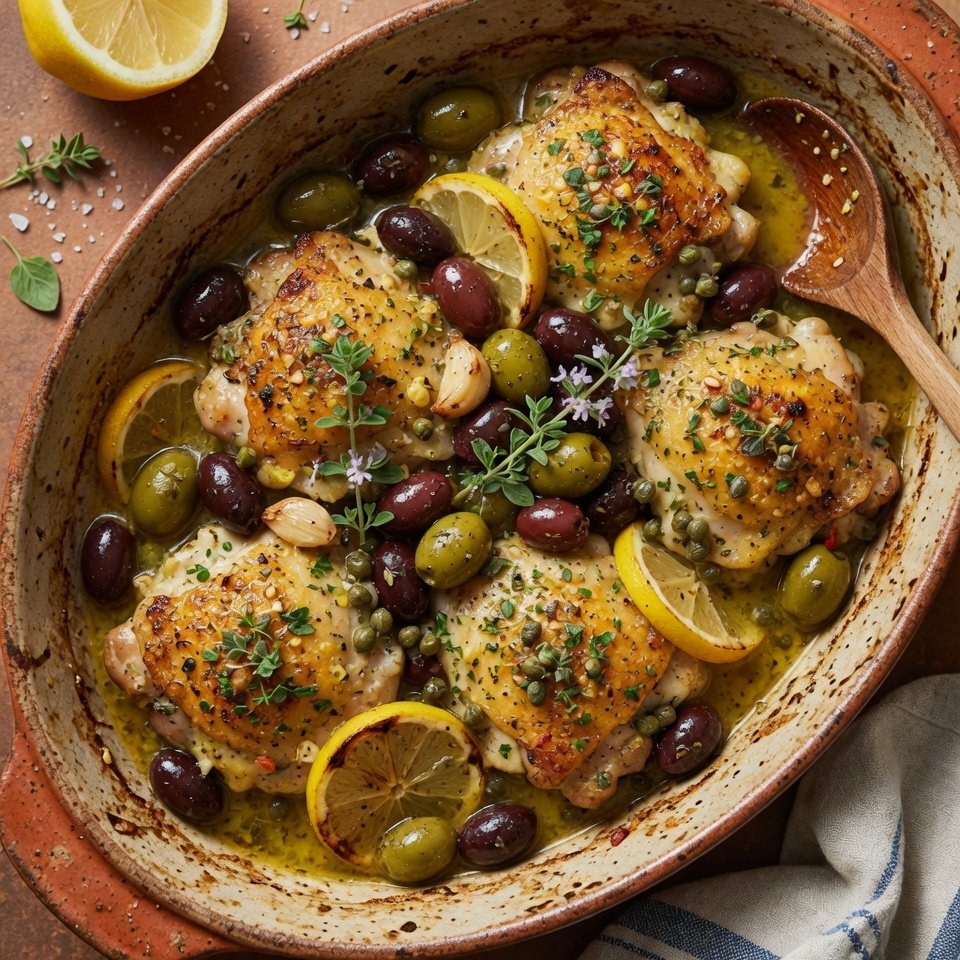
Juicy, seared chicken breasts finish in the oven with briny olives, capers, and a buttery lemon pan sauce that’s ready in under 45 minutes.
📋 In This Article
- Introduction
- Why This Recipe Works (The Mediterranean Magic)
- Essential Ingredients for Mediterranean Baked Chicken
- Step-by-Step Instructions: How to Make Mediterranean Baked Chicken
- Common Mistakes to Avoid for Perfect Baked Chicken
- Serving Suggestions & Pairings
- Recipe Variations and Customizations
- Storage, Reheating, and Make-Ahead Tips
- Pro Tips for Next-Level Mediterranean Baked Chicken
- Frequently Asked Questions (FAQ)
- Conclusion
Introduction
Some recipes just click. This Mediterranean Baked Chicken With Olives, Capers, and a Lemon Butter Sauce is one of them. It hits that elusive trifecta of weeknight cooking: it’s fast, it feels sophisticated, and—most importantly—it actually tastes like something. The magic lies in the contrast. You have the savory depth of seared chicken, the sharp, briny punch of olives and capers, and a rich, velvety sauce that ties it all together.
I used to think baked chicken was synonymous with dry, flavorless diet food. This recipe proved me wrong. By starting the chicken on the stovetop and finishing it in the oven, you get the best of both worlds: a golden, flavorful crust and perfectly cooked, tender meat. And that sauce? It’s essentially a simplified schnitzel style pan sauce, deglazed with broth and emulsified with butter. It’s the kind of dish that makes you close your eyes at the dinner table.
Why This Recipe Works (The Mediterranean Magic)
This isn’t just “throwing things in a pan.” There is real food science at play here that ensures success every time.
First, the sear. We start the chicken in a hot skillet before baking. Searing doesn’t “lock in juices”—that is a persistent culinary myth. What it actually does is trigger the Maillard reaction, a chemical process where amino acids and sugars react under heat to create hundreds of new flavor compounds. That brown crust is pure flavor, and it provides the base for our sauce.
Second, the balance. Mediterranean cuisine is all about the interplay of fat and acid. The olives and capers provide a salty, briny backbone, while the lemon slices roast alongside the chicken, mellowing their acidity into a sweeter, caramelized note. When we deglaze the pan with chicken broth, we dissolve the fond—those sticky, browned bits of protein stuck to the pan—back into the liquid. Finally, whisking in cold butter at the end creates an emulsification, turning a thin broth into a glossy, velvety sauce that clings to the meat.
Essential Ingredients for Mediterranean Baked Chicken
Quality matters here. Because the ingredient list is short, every item needs to pull its weight.
- Chicken: I prefer boneless, skinless chicken breasts for speed, but chicken thighs are fantastic if you want richer, darker meat. If using breasts, pound them to an even thickness so they cook uniformly.
- Olives: Use a mix. Kalamata olives bring a deep, purple fruitiness, while green olives (like Castelvetrano) add a buttery crunch. Don’t buy pre-pitted if you can avoid it; they often have a softer, less pleasant texture.
- Capers: Look for salt-packed capers if you can find them; they have a brighter, floral flavor. If using brined, rinse them well to remove the vinegar taste.
- Lemons: You will need both zest and juice, plus thin slices for roasting. The roasted slices become marmalade-like and are edible.
- Unsalted Butter: Crucial for the sauce. Using unsalted butter lets you control the final seasoning, especially since olives and capers are naturally high in sodium.
- Olive Oil: Use a decent extra virgin olive oil for searing. It adds a peppery note that complements the chicken.
- Chicken Broth: A low-sodium store-bought broth is fine, but if you have homemade stock, use it here. The reduction will concentrate the flavor.
- All-Purpose Flour: A light dusting on the chicken aids in crust development and helps thicken the sauce slightly without a roux.
Step-by-Step Instructions: How to Make Mediterranean Baked Chicken
Step 1: Prep and Season
Preheat your oven to 400°F (200°C). Pat the chicken dry with paper towels—moisture is the enemy of browning. Season the chicken generously on both sides with salt, pepper, and dried oregano. If you have time, let it sit with the salt for 15 minutes; this dry brining helps the meat retain moisture.
Step 2: Sear the Chicken
In a large, oven-safe skillet (cast iron is ideal), heat olive oil over medium-high heat until shimmering. Dredge the chicken lightly in flour, shaking off the excess. Place the chicken in the pan. Sear for about 4-5 minutes per side until golden brown.
Note: Do not crowd the pan. If the pieces are too close, they will steam rather than sear, and you won’t get that flavorful crust.
Step 3: Char the Lemons
Remove the chicken from the skillet and set aside. Add the lemon slices to the hot fat remaining in the pan. Cook for 1-2 minutes per side until they are lightly charred. This step caramelizes the lemon sugars, reducing their harsh acidity. Remove the lemons and set them aside with the chicken.
Step 4: Deglaze and Build the Base
Reduce the heat to medium. Add a splash of chicken broth (or white wine) to the pan. Use a wooden spoon to scrape up the browned bits from the bottom. Add the garlic, olives, and capers, sautéing for just a minute until the garlic is fragrant but not brown.
Step 5: Bake
Return the chicken and charred lemons to the skillet. Pour in the remaining chicken broth. Transfer the entire skillet to the preheated oven. Bake for 15-20 minutes, or until the internal temperature reaches 160°F (71°C) in the thickest part. (It will rise to 165°F as it rests).
Step 6: Finish the Sauce
Carefully remove the skillet from the oven (the handle will be incredibly hot—I’ve burned my palm enough times to remind you to use a mitt). Transfer the chicken to a plate. Place the skillet back on the stove over low heat. Whisk in the butter, one cube at a time, stirring constantly until the sauce thickens slightly and looks glossy. Stir in the fresh parsley.
Step 7: Serve
Pour the lemon butter sauce over the chicken. Let the meat rest for 5 minutes before serving. This allows the muscle fibers to relax and reabsorb the juices, ensuring the chicken stays moist.
⚠️ Common Mistakes to Avoid for Perfect Baked Chicken
Even simple recipes can go sideways. Here is how to dodge the common pitfalls.
1. Skipping the Thermometer Visual cues are unreliable. A meat thermometer is the only way to guarantee safety without sacrificing moisture. Chicken is safe at 165°F (74°C). Pulling it at 160°F and letting it rest covers the gap via carryover cooking.
2. Cold Chicken If you put cold chicken directly from the fridge into a hot pan, the exterior overcooks before the interior is done. Let the meat sit on the counter for 20 minutes before cooking. It makes a surprising difference.
3. Not Deglazing the Pan Those sticky brown bits on the bottom of the pan? That is concentrated flavor. If you skip deglazing, you are literally throwing away the best part of the sauce.
4. Overcrowding the Skillet This is the most common error. If the chicken pieces touch, the humidity around them rises, and they boil in their own juices. Sear in batches if you have to. A soggy crust is a flavor killer.
Serving Suggestions & Pairings
You need something to soak up that sauce.
- Starch: Creamy mashed potatoes or a simple orzo pasta are classic choices. The sauce acts as a gravy for the starch.
- Grains: Farro or quinoa add a nutty texture that stands up to the bold Mediterranean flavors.
- Vegetables: Roasted asparagus or broccolini work well. Since the oven is already at 400°F, you can roast a sheet pan of veggies alongside the chicken.
- Wine: A crisp Sauvignon Blanc or a dry Rosé cuts through the butter and complements the acidity of the capers.
Recipe Variations and Customizations
This recipe is a template, not a law.
- Artichokes: Add drained, marinated artichoke hearts to the pan along with the olives for extra texture.
- Spicy Kick: Add a pinch of red pepper flakes when sautéing the garlic.
- Fresh Herbs: While dried oregano is convenient, fresh rosemary or thyme sprigs can be added to the pan before baking for an aromatic boost.
- Gluten-Free: Skip the flour dredge. The sauce won’t thicken quite as much, but you can whisk in a teaspoon of cornstarch slurry (cornstarch + water) at the end if needed.
Storage, Reheating, and Make-Ahead Tips
Storage: Keep leftovers in an airtight container in the refrigerator for up to 3 days. The flavors actually meld and improve overnight.
Reheating: The microwave is convenient but often dries out chicken. For the best texture, reheat gently in a skillet over low heat with a splash of extra broth or water to create steam. Cover the pan to trap moisture.
Make-Ahead: You can chop the olives, capers, and garlic a day in advance. The chicken can also be seasoned and stored in the fridge up to 24 hours before cooking.
💡 Pro Tips for Next-Level Mediterranean Baked Chicken
Want to elevate this from “good” to “incredible”? Focus on the sauce.
Emulsify Properly: When whisking in the butter, make sure the pan is not boiling. If the sauce is too hot, the butter will separate into an oily mess rather than creating a creamy emulsion. Keep the heat low and whisk aggressively.
Use the Lemon Zest: Before juicing your lemons for the sauce, zest them. Stirring that fresh zest into the finished dish right before serving adds a bright, aromatic pop that cooked lemon juice lacks.
Resting is Non-Negotiable: I know it’s tempting to dig in immediately. But if you cut into the chicken straight from the oven, you lose moisture on the cutting board. Resting allows the proteins to relax. Just five minutes makes the difference between juicy and dry.
Frequently Asked Questions (FAQ)
+Can I use chicken thighs instead of breasts?
Absolutely. Bone-in, skin-on thighs will take longer to cook (about 35-40 minutes total) but offer richer flavor and are more forgiving if slightly overcooked.
+Why is my baked chicken dry?
Dry chicken is almost always the result of overcooking. Use a meat thermometer and pull the chicken at 160°F; the residual heat will finish the job.
+Do I have to sear the chicken first?
Technically, no. You could bake it raw. However, you will sacrifice the depth of flavor from the Maillard reaction and the texture of the crust. Searing is worth the extra 10 minutes.
+Can I make this dairy-free?
Yes. Replace the butter with additional olive oil or a vegan butter alternative. The sauce won’t be as velvety, but it will still be delicious.
+How do I know when the chicken is done?
Use an instant-read thermometer inserted into the thickest part of the meat. It should read 165°F (74°C). If you don’t have a thermometer, the juices should run clear when you cut into the thickest part.
+What can I substitute for capers?
If you dislike capers, chopped green olives or even chopped pickled peppercorns can provide a similar briny punch.
Conclusion
This Mediterranean Baked Chicken With Olives, Capers, and a Lemon Butter Sauce is a reminder that good food doesn’t require complicated techniques. It just requires understanding how ingredients work together. With a hot skillet, a reliable thermometer, and a few briny staples, you can pull a dinner out of the oven that feels special any night of the week.
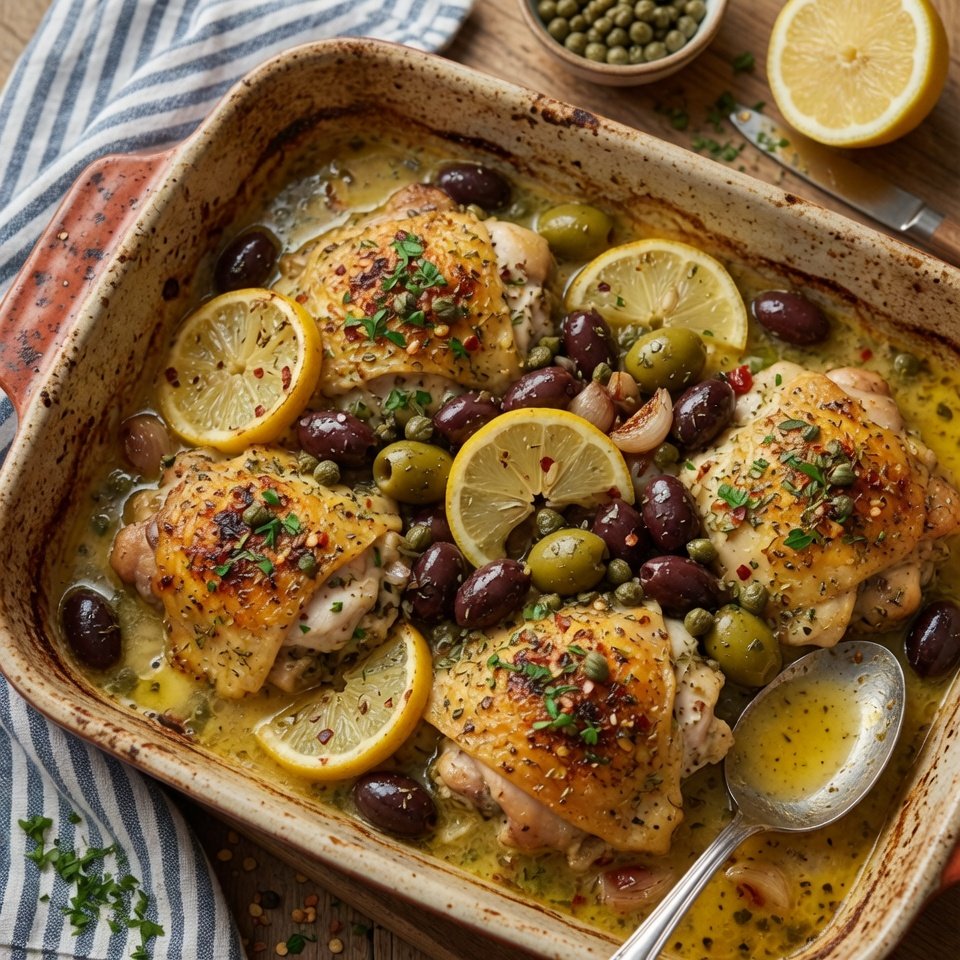
Roasted Lemon Chicken with Capers and Olives
Ingredients
Method
- Preheat the oven to 350° Fahrenheit.
- Roasting Lemon
- Breading the Chicken
- Cooking The Chicken
Nutrition
Notes
- For perfectly cooked chicken, aim for an internal temperature of 165°F; use a meat thermometer to check doneness in the thickest part of the breast.
- To prevent dryness, consider using chicken thighs instead of breasts for a juicier result, as they have more fat and retain moisture better during cooking.
- Roasting the lemon slices not only enhances their flavor but also reduces their acidity; don't skip this step for a more balanced dish.
- Store any leftovers in an airtight container for up to 3 days, but keep the sauce separate to avoid sogginess in the chicken.
- When reheating, do so gently in a covered skillet over low heat, adding a splash of chicken broth to help loosen the sauce and maintain moisture.