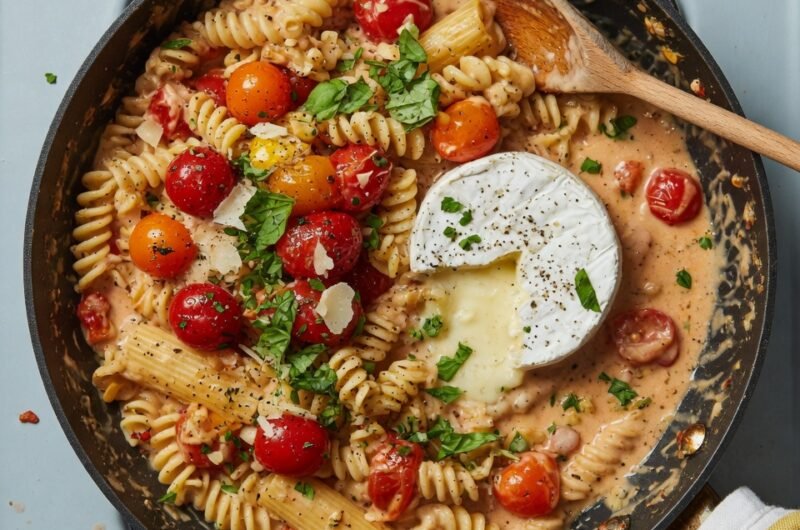
A 30-minute weeknight wonder where roasted tomatoes collapse into a sweet, jammy base before mingling with herbed Boursin for a velvety, no-drain sauce.
📋 In This Article
Introduction
We’ve all been there. It’s 6:00 PM on a Tuesday, you’re staring into the pantry, and the takeout apps are looking dangerously tempting. This One-Pan Creamy Boursin Cheese Pasta With Burst Cherry Tomatoes is the antidote to that specific brand of weeknight fatigue. It requires zero heavy cream, no tedious roux-making, and—crucially—only one pan to wash.
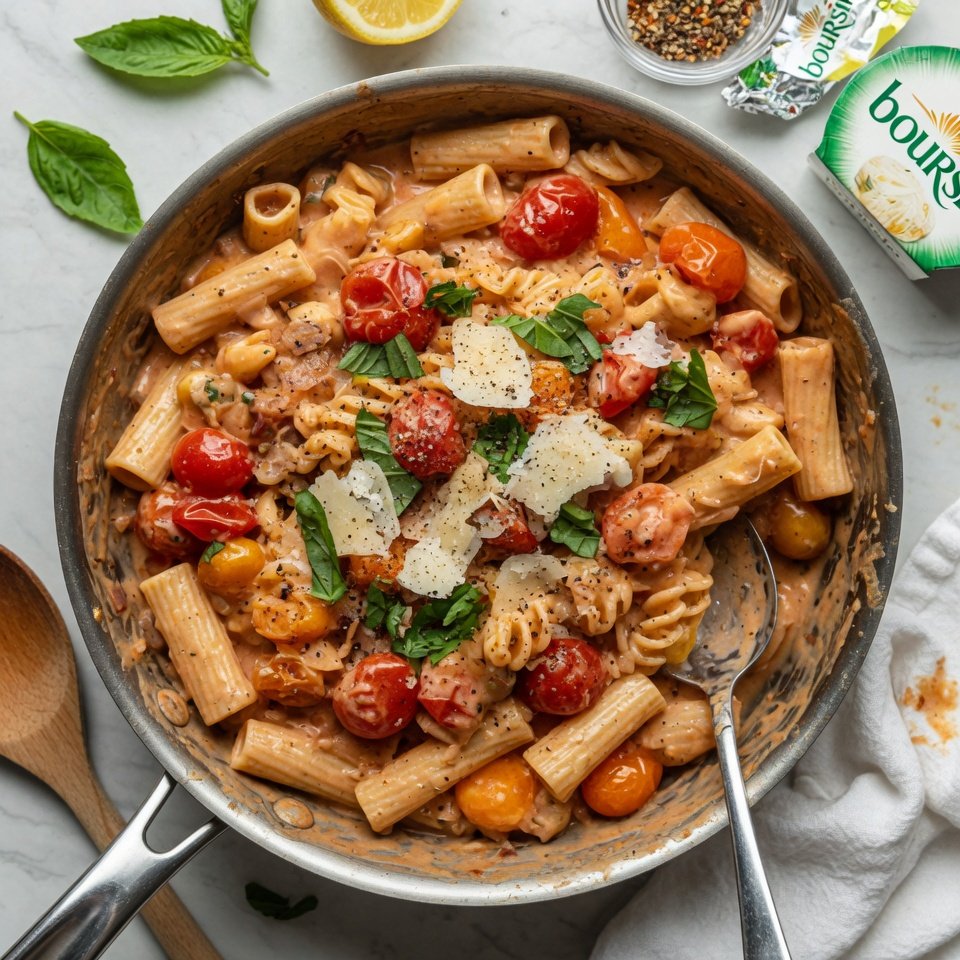
The technique here is a slight departure from the standard “dump and bake” method you might be used to. We start by roasting the tomatoes to concentrate their sugars—a step that triggers the Maillard reaction, deepening their flavor profile from simply “fresh” to intensely savory and sweet. Only then do we introduce the pasta and liquid. It’s a small tweak that changes the game. And the Boursin? It’s not just a cheese; it’s a pre-seasoned flavor bomb. Because it’s a fresh, spreadable cheese (technically a Gournay), it melts into a sauce with a silkiness that aged cheeses can’t replicate without a stabilizer.
Why You’ll Love This Recipe
This dish hits the elusive trifecta of weeknight cooking: it’s fast, it’s low-effort, and it tastes like something you’d order at a bistro. The magic lies in the dual texture of the tomatoes. Roasting them first ensures they blister and burst, releasing their juices to mix with the olive oil and create a vibrant, rust-colored fond at the bottom of the pan. That fond is pure flavor—don’t scrape it off; let the pasta water dissolve it into the sauce.
It’s also incredibly forgiving. The Boursin cheese acts as its own emulsifier, creating a creamy sauce that clings to the pasta without separating. Whether you are a seasoned home cook or someone who burns water, this recipe works. It’s rich enough to feel indulgent but bright enough from the tomatoes and herbs that you won’t feel weighed down.
The Science of Boursin: Why It Works
Boursin is often categorized simply as “soft cheese,” but understanding its structure is key to this recipe’s success. Unlike aged cheeses like Parmesan or Cheddar, which can clump and separate when heated too aggressively due to their protein structure tightening, Boursin is essentially a stabilized mixture of fresh curds, cream, and flavorings.
This high moisture and fat content means it melts uniformly. When you whisk it into the hot pasta water, the proteins in the cheese relax rather than coagulate, creating a stable emulsion. This is why we don’t need heavy cream or butter—the cheese provides both the fat and the liquid body for the sauce. The “Garlic & Fine Herbs” variety also builds in a complex aromatic base (typically chives, parsley, and pepper), saving you from chopping a dozen different fresh herbs.
Ingredients You’ll Need
- Pasta (250g): Short shapes like penne, rigatoni, or fusilli are ideal. Their tubular shape and ridges create surface area for the sauce to grip. Long noodles like spaghetti are harder to manage in a single skillet.
- Cherry Tomatoes (2½ cups): You want whole, firm cherry tomatoes. Their high skin-to-flesh ratio allows them to blister rather than disintegrate immediately, creating pockets of sweet acidity.
- Boursin Cheese (150g): One standard wheel. The Garlic & Fine Herbs is the classic choice, though the cracked black pepper variety adds a nice kick if you prefer spice.
- Olive Oil (2 tbsp): Essential for roasting the tomatoes and conducting heat. A decent extra virgin olive oil adds a peppery finish.
- Garlic (4 cloves, minced): We use a generous amount because the roasting process mellows the raw bite into something sweet and savory.
- Red Pepper Flakes (½ tsp): For background warmth. It doesn’t make the dish spicy, just dimensional.
- Dried Oregano (¼ tsp): An earthy note that bridges the gap between the fresh tomatoes and the rich cheese.
- Fresh Basil (1-2 tbsp, chopped): Added at the very end. Heat destroys the delicate volatile oils in basil, so keep it fresh for a pop of color and aroma.
- Parmesan Cheese (2 tbsp, grated): Optional, but a hard cheese adds a salty, umami punch that contrasts with the creamy Boursin.
- Salt and Black Pepper: To taste. Remember, Boursin and Parmesan are already salty; season your pasta water well, but go easy on the sauce until the end.
- Water (approx. 2-3 cups): You will use this to cook the pasta directly in the pan.
Step-by-Step Directions
1. Roast the Tomatoes
Preheat your oven to 400°F (200°C). In a large oven-safe skillet or Dutch oven, combine the cherry tomatoes, olive oil, minced garlic, red pepper flakes, and dried oregano. Toss everything together until the tomatoes are glistening. Season with a pinch of salt and pepper.
Place the skillet in the oven and roast for 15 to 20 minutes. You’re looking for the tomatoes to burst open and wrinkle slightly, releasing their juices into the pan. The garlic should be golden, not brown.
2. Start the Stovetop Phase
Remove the skillet from the oven (carefully—it’s hot). Place it on the stovetop over medium heat. Add the uncooked pasta to the pan. Pour in enough water to just cover the pasta—usually about 2 to 2½ cups.
Bring the mixture to a boil, then reduce to a vigorous simmer. Cook the pasta according to the package instructions minus 1 minute, stirring frequently to prevent sticking. The water will reduce, creating a starchy liquid that is crucial for the next step.
Science Note: As the pasta hydrates, it releases amylose (starch) into the water. This starch gelatinizes and thickens the cooking liquid, which is what helps your sauce emulsify later. Without this starchy water, the oil and cheese would separate.
3. Emulsify the Sauce
Once the pasta is al dente and there is still about ½ cup of starchy liquid left in the pan, turn the heat down to low. Add the entire wheel of Boursin cheese.
Stir gently but persistently. The cheese will melt into the starchy water, transforming it into a velvety sauce. If the sauce looks too thick or sticky, add a splash more water. If it looks too thin, keep stirring for another 30 seconds; the sauce will thicken rapidly as it cools slightly.
4. Finish and Serve
Remove the pan from the heat entirely. Stir in the fresh basil. Taste the pasta—this is the moment to adjust salt or add more red pepper flakes if you want more heat. Serve immediately, garnished with grated Parmesan.
💡 Pro Tips for the Perfect Pan Sauce
- Watch the Water Level: One-pan pasta relies on the ratio of liquid to starch. If the water evaporates before the pasta is tender, add more hot water (about ¼ cup at a time). If the pasta is done but there’s too much liquid, just keep cooking it down before adding the cheese.
- Don’t Burn the Garlic: When roasting the tomatoes, if you see the garlic browning too fast around the edges, stir the mixture. Burnt garlic is bitter and will ruin the creamy flavor profile.
- Temperature Control for Cheese: I used to add the cheese while the pan was still on high heat—don’t do that. It separates instantly. Take the pan off the heat for a minute before stirring in the Boursin. It melts perfectly with residual heat.
- Use an Oven-Safe Skillet: A cast-iron skillet or enameled Dutch oven is best. It retains heat well, ensuring the tomatoes roast evenly rather than stew in their own steam.
⚠️ Common Mistakes to Avoid
- Overcrowding the Pan: If your skillet is too small, the tomatoes will steam instead of roast. They need space for the hot air to circulate. If necessary, use two pans or roast the tomatoes on a baking sheet, then transfer them to a pot for the pasta boiling stage.
- Skipping the Starch: If you drain the pasta water and then add fresh water, you lose the binding agent. The sauce will be thin and oily. You need that starchy cooking liquid to bind the fat from the cheese and oil.
- Overcooking the Pasta: Remember that the pasta continues to cook in the hot sauce. Pull it off the heat when it’s just shy of your ideal texture. Mushy pasta cannot be saved by a good sauce.
Variations and Substitutions
This recipe is a template. Once you master the technique, you can riff on it endlessly.
- Protein Boost: Stir in shredded rotisserie chicken or sautéed shrimp during the last 2 minutes of cooking. Crispy pancetta or bacon bits make an excellent garnish.
- Green Vegetables: Add spinach or kale right after you add the water; they will wilt perfectly by the time the pasta is done. Asparagus tips work well too, but add them halfway through the pasta cooking time.
- Different Cheeses: If you can’t find Boursin, use an equal mix of cream cheese and goat cheese, plus a teaspoon of dried herbs and garlic powder. It mimics the texture and flavor profile closely.
- Gluten-Free: Use your favorite gluten-free pasta. Note that GF pasta often releases less starch, so you may need to simmer the sauce a bit longer to thicken it.
Serving Suggestions
This dish is rich and comforting, so it pairs well with something acidic and crisp to cut through the creaminess. A simple arugula salad with a lemon vinaigrette is my go-to. The peppery bite of the arugula contrasts beautifully with the sweet tomatoes.
If you want to soak up every drop of sauce—and you should—serve this with a hunk of crusty sourdough or a slice of garlic bread. For wine, a glass of Pinot Grigio or a light Sauvignon Blanc balances the herbs in the Boursin without overpowering the dish.
Storage and Reheating
Leftovers keep well in an airtight container in the refrigerator for up to 3 days. However, pasta has a tendency to absorb sauce as it sits.
To reheat, skip the microwave if you can. Put the pasta back in a skillet over medium-low heat. Add a splash of water or broth—about a tablespoon—and stir gently until the sauce loosens back up and the pasta is heated through. This restores the creamy texture better than blasting it with dry heat.
Frequently Asked Questions (FAQ)
+Can I use regular tomatoes instead of cherry tomatoes?
You can, but the texture will be different. Cherry tomatoes have a higher sugar concentration and thicker skin, which creates that specific “burst” effect. Regular diced tomatoes will break down into a sauce faster, resulting in a wetter dish with less textural contrast.
+Why is my sauce gritty or oily?
This usually happens if the heat is too high when you add the cheese. Boursin contains stabilizers, but extreme heat can still break the emulsion. Always add the cheese off the heat or on very low heat, and stir until smooth.
+Can I make this dairy-free?
Yes. Use a plant-based cream cheese alternative and ensure your pasta doesn’t contain egg. The texture won’t be quite as velvety as dairy Boursin, but the method works the same way.
+Do I have to roast the tomatoes first?
Technically, no. You could start everything on the stovetop. However, roasting concentrates the tomato flavor by evaporating excess moisture and caramelizing the sugars. If you skip this step, the dish will be more acidic and less sweet.
+How much salt should I add?
Boursin is naturally salty. Salt the water you add to the pasta, but wait until the very end to add extra salt to the sauce. Taste first—you might find it doesn’t need any extra.
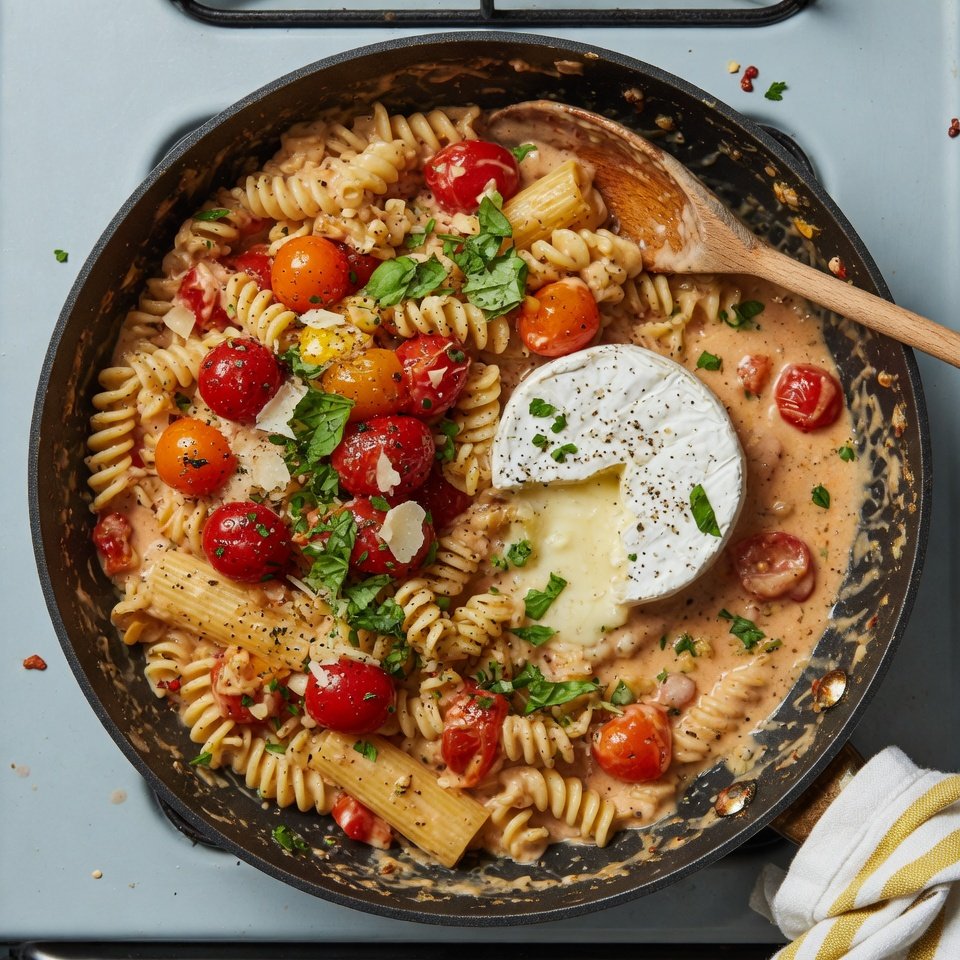
Creamy Boursin & Tomato Pasta
Ingredients
Method
- Begin by preheating your oven to 425 °F.
- Next, to a large baking dish (I use a 9x13) add your Boursin directly into the centre.
- Surround the Boursin with the whole cherry tomatoes then drizzle the tomatoes with olive oil, garlic, red pepper flakes, dried oregano, and salt and pepper to taste.Gently toss the tomatoes so that they are completely coated with the olive oil and seasonings.
- Bake uncovered for 15-20 minutes or until the tomatoes start to burst open and you can easily smash them with a fork. Be very careful when poking the tomatoes as they can release some of their juices and its very hot.*some ovens may take slightly longer than 15-20 minutes - just keep an eye on the tomatoes.
- While the tomatoes are roasting, bring a pot of salted water to a boil and cook your pasta until al dente. Be sure to reserve at least 1/4 cup of pasta water.
- Once your tomatoes are bursting open and easy to pierce them with a fork, carefully remove from the oven.Smash, half-smash, or leave tomatoes whole based on your desired final texture.
- Add in the cooked pasta and fresh basil and gently toss to combine.
- Begin by adding 2 tablespoons of reserved pasta water and work your way up if you want a thinner sauce.
- Garnish with parmesan cheese and enjoy.
Nutrition
Notes
- Keep a close eye on the tomatoes while they roast; they should be bursting and slightly caramelized, which usually takes 15-20 minutes, but some ovens may require a bit longer.
- For a creamier sauce, ensure you reserve enough pasta water; start with 2 tablespoons and add more as needed to achieve your desired consistency.
- If you want to switch up the flavor, try using different Boursin varieties like Chive or Black Pepper—each adds its own unique twist to the dish.
- Leftovers can be stored in the fridge for up to 3 days; reheat gently in a skillet over low heat with a splash of water to keep the pasta moist and prevent it from drying out.
- To save time, consider using a different pasta shape that cooks faster, like fusilli or farfalle, without sacrificing flavor or texture.