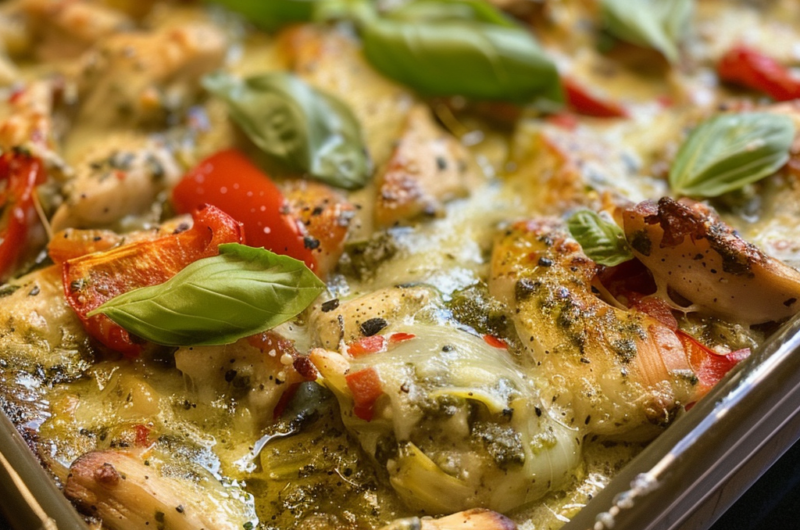
A vibrant, weeknight-friendly bake that balances rich cream and bright basil, transforming pantry staples into a dinner that feels far from ordinary.
📋 In This Article
- Introduction
- Why This Recipe Works
- Ingredients List: The Building Blocks of Flavor
- Shopping List
- Step-by-Step Instructions: Crafting Your Casserole Masterpiece
- Pro Tips for Casserole Perfection
- Common Mistakes to Avoid
- Delicious Variations & Dietary Adaptations
- Storage & Reheating Instructions
- Frequently Asked Questions (FAQ)
- Conclusion
Introduction
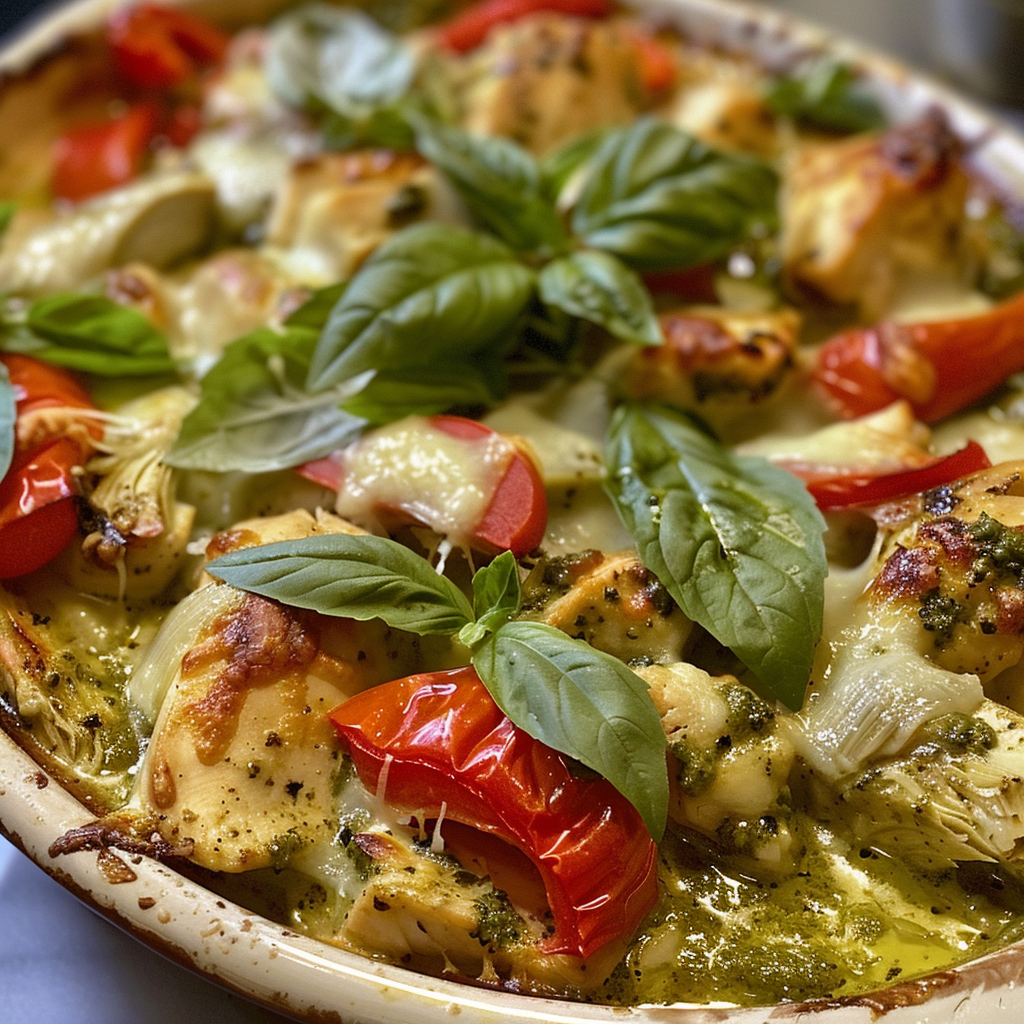
Some casseroles are heavy, beige, and forgettable. This is not one of them. This Creamy Pesto Chicken Casserole with Roasted Red Peppers & Artichoke Hearts is a study in contrast: the bright, herbal punch of pesto cuts through the rich cream, while roasted red peppers and artichoke hearts provide sweet and tangy interruptions to the tender chicken and pasta. It’s the rare dish that feels both comforting and light.
I developed this recipe to solve a specific problem: store-bought pesto can sometimes taste flat when baked. By bolstering it with heavy cream and the briny liquid from the artichoke jars, we create a sauce that retains its character even after 25 minutes in the oven. It’s a strategy that yields a weeknight dinner capable of impressing even the most jaded palates.
Why This Recipe Works
The magic here lies in the layering of flavors. Too often, pasta bakes turn into a homogenous, mushy mass. We avoid that by treating the components with respect before they hit the baking dish.
First, we sear the chicken. This isn’t just about cooking the meat; it’s about the Maillard reaction. When the amino acids and sugars in the meat hit the hot pan, they undergo a chemical change that creates hundreds of new flavor compounds—nutty, savory, and complex. That browned fond (the sticky bits left in the pan) is pure flavor gold. We preserve that fond by building the sauce in the same skillet, ensuring none of that hard-earned taste is left behind.
Second, we consider the pasta. We cook it to just shy of al dente. Why? Because pasta absorbs liquid as it bakes. If you cook it fully on the stove, the oven will turn it mushy. Pulling it two minutes early ensures a perfect texture when the casserole emerges bubbling and golden.
Finally, the sauce balance. Pesto is an oil-based emulsion. High heat can break it, causing the oil to separate. By cutting the pesto with heavy cream, we stabilize the emulsion, creating a velvety sauce that clings to the pasta rather than pooling at the bottom of the dish.
Ingredients List: The Building Blocks of Flavor
For the Chicken & Pasta
- Chicken Breasts: 1.5 pounds boneless, skinless chicken breasts. (Uniform thickness ensures even cooking.)
- Pasta: 12 ounces of short, sturdy shapes like penne, rigatoni, or rotini that can trap the sauce.
- Olive Oil: 2 tablespoons for searing the chicken.
- Seasonings: Kosher salt and freshly ground black pepper.
For the Creamy Pesto Sauce
- Pesto: 1 cup of high-quality basil pesto. (If using store-bought, look for one with basil as the first ingredient, not oil.)
- Heavy Cream: 1 cup. This provides the necessary fat to carry the flavor and prevent the pesto from separating under heat.
- Roasted Red Peppers: 1 cup, chopped. Jarred versions are excellent here; they offer a sweetness that balances the savory pesto.
- Artichoke Hearts: 1 can (14 ounces), drained and roughly chopped. Look for ones packed in water or brine, not oil.
For the Assembly
- Cheese: 1 cup shredded Parmesan cheese. (Please grate it yourself; pre-shredded cheese contains anti-caking agents that prevent smooth melting.)
- Garnish: Fresh basil or parsley.
Shopping List
- Boneless, skinless chicken breasts (1.5 lbs)
- Pesto (1 jar, approx. 7-9 oz, or homemade)
- Jarred roasted red peppers
- Canned artichoke hearts (in water/brine)
- Heavy cream
- Parmesan cheese wedge
- Pasta (penne or rotini)
- Olive oil
- Fresh basil (optional)
Step-by-Step Instructions: Crafting Your Casserole Masterpiece
- Sear the Chicken: Preheat your oven to 375°F (190°C). Pat the chicken breasts dry and season generously with salt and pepper. Heat olive oil in a large oven-safe skillet or Dutch oven over medium-high heat. Add the chicken and cook for 6-7 minutes per side until golden brown and the internal temperature reaches 165°F.
- Science Note: Don’t move the chicken around while it sears. It needs constant contact with the hot metal to trigger the Maillard reaction and develop a proper crust.
- Transfer the chicken to a cutting board and let it rest for 5 minutes. Resting allows the muscle fibers to relax and reabsorb the juices; cut into it immediately, and you lose that moisture on the board. Once rested, chop into bite-sized pieces.
- Boil the Pasta: Bring a large pot of salted water to a boil. Add the pasta and cook for 2 minutes less than the package instructions state. Drain, reserving 1/2 cup of the starchy pasta water.
- Build the Sauce Base: In the same skillet used for the chicken (don’t wash it!), reduce the heat to medium-low. Add the heavy cream and pesto, whisking to combine. Stir in the roasted red peppers and artichoke hearts. Heat gently for 3-4 minutes.
- Troubleshooting: If the sauce looks too thick or “gloppy” add a splash of that reserved pasta water. The starch in the water helps bind the sauce to the pasta.
- Combine and Assemble: Add the cooked pasta and chopped chicken to the skillet. Toss everything together until the pasta is thoroughly coated in the creamy pesto mixture. Remove from heat. If your skillet isn’t oven-safe, transfer the mixture to a greased 9×13-inch casserole dish.
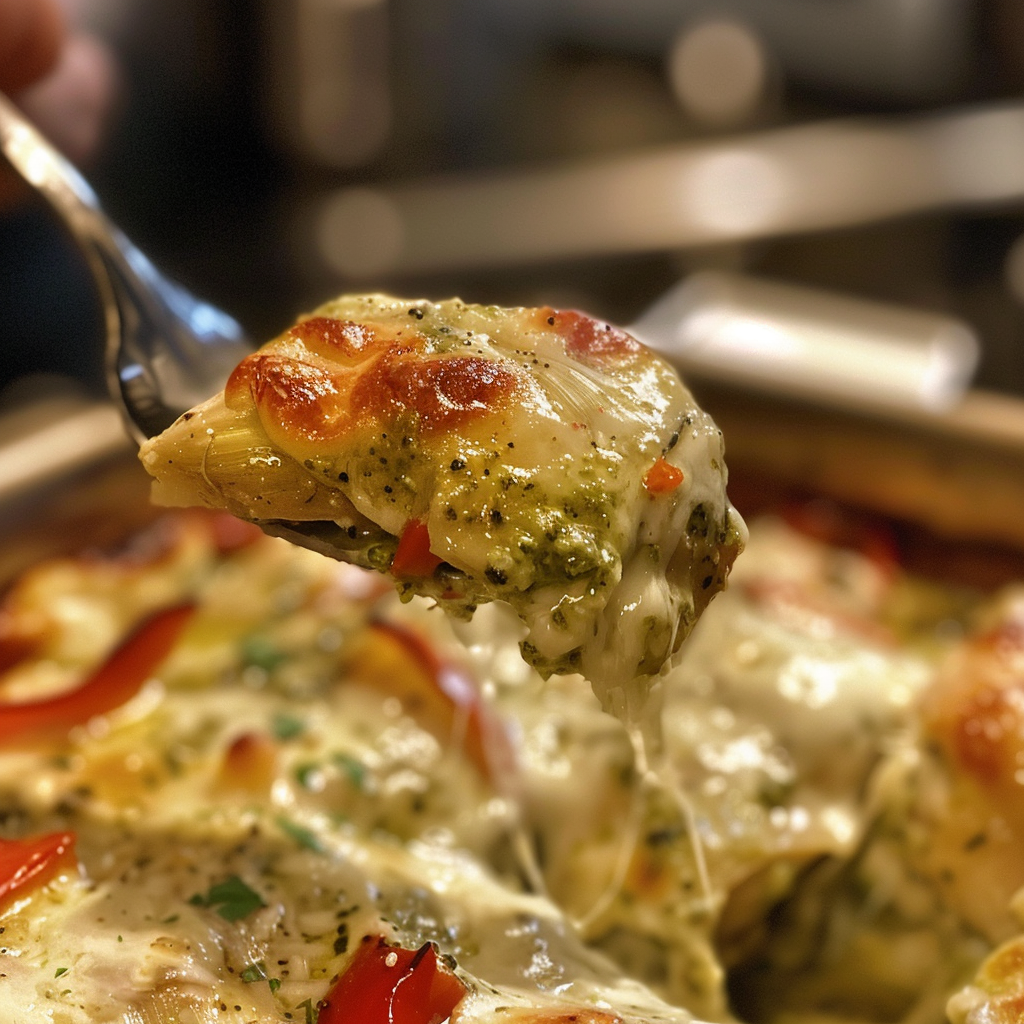
- Bake: Sprinkle the Parmesan cheese evenly over the top. Bake at 375°F for 25-30 minutes, until the cheese is melted and bubbling. If you want a crispy top, switch the broiler on for the final 2 minutes—watch closely so it doesn’t burn.
- Serve: Let the casserole rest for 10 minutes before serving. This allows the sauce to thicken slightly as it cools, ensuring a creamier mouthfeel.
💡 Pro Tips for Casserole Perfection
Brining for Juiciness: If you have an extra 30 minutes, brine the chicken before cooking. Dissolve 1/4 cup salt in 4 cups water, submerge the breasts, and let sit. This alters the protein structure, allowing the meat to retain more moisture during the searing and baking process. It’s a game changer for white meat, which dries out easily.
Sauce Consistency: Pesto brands vary wildly in thickness. If your sauce feels too tight after adding the pasta, rely on the pasta water. That cloudy liquid is liquid gold for emulsification.
The Cheese Factor: I used to buy the bagged pre-shredded cheese for convenience. The first time I switched to a block of Parmesan and grated it myself, the melt was noticeably smoother. The anti-caking agents in bagged cheese (usually potato starch or cellulose) prevent the cheese from forming a cohesive, melty layer. Do yourself a favor: grate your own.
⚠️ Common Mistakes to Avoid
Overcooking the Pasta: This is the most common error. Remember, the pasta will absorb liquid and cook further in the oven. If you boil it to “perfect” on the stove, it will be mushy after baking. Pull it early.
Boiling the Cream: When making the sauce, keep the heat at medium-low. Heavy cream can break or separate if boiled violently. You want it hot enough to meld with the pesto, but not scorching.
Skipping the Rest Period: It smells amazing, and you want to dig in. But if you serve the casserole immediately out of the oven, the sauce will be runny and loose. Giving it 10 minutes allows the starches to set up, giving you that perfect, spoonable consistency.
Delicious Variations & Dietary Adaptations
This recipe is a template, not a law. The Creamy Pesto Chicken Casserole adapts well to changes.
- Protein Swap: For a darker meat flavor, use Italian sausage (casing removed) instead of chicken. Brown it in the skillet first. For a lighter take, shrimp works beautifully—just add them raw to the bake, as they cook quickly.
- Vegetarian Option: Swap the chicken for cannellini beans or chickpeas. Use vegetable broth instead of pasta water to adjust the sauce.
- Gluten-Free: Use gluten-free pasta. Note that GF pasta tends to release more starch, so you may need slightly more cream to keep the sauce loose.
- Dairy-Free: Full-fat coconut cream is a surprisingly good substitute for heavy cream here, adding a subtle sweetness that pairs well with the basil.
Storage & Reheating Instructions
To maintain the texture of the pasta and chicken, proper storage is key.
Refrigeration: Allow the casserole to cool completely. Cover tightly with foil or transfer to an airtight container. It will keep in the fridge for up to 3 days. The flavors often improve the next day as the pesto permeates the chicken.
Freezing: You can freeze this before or after baking. Wrap the dish tightly in plastic wrap and then foil. It keeps for up to 3 months. Thaw overnight in the refrigerator before reheating.
Reheating: The oven is best. Cover with foil and bake at 350°F (175°C) for 20-25 minutes until heated through. If using a microwave, cover the portion with a damp paper towel to create steam and prevent the pasta from drying out.
Frequently Asked Questions (FAQ)
+Can I use rotisserie chicken instead of raw chicken?
Absolutely. Using a store-bought rotisserie chicken is a massive time-saver. Simply shred or chop 3 cups of meat and skip the searing step. You may want to add a little extra olive oil or butter to the pan when making the sauce to compensate for the lost chicken fat.
+Why did my pesto turn brown in the oven?
Basil oxidizes when exposed to heat and air, turning from vibrant green to a drab army color. While it looks unappealing, it’s safe to eat. To minimize this, ensure your pesto is thoroughly mixed with the cream—the dairy acts as a protective barrier. Garnishing with fresh basil after baking brings the color back.
+Can I make this casserole ahead of time?
Yes. Assemble the casserole, cover it tightly, and refrigerate it for up to 24 hours before baking. If baking straight from the fridge, add an extra 10-15 minutes to the cooking time to ensure the center is hot.
+What can I substitute for heavy cream?
If you don’t have heavy cream, you can use half-and-half, though the sauce will be thinner. For a non-dairy option, full-fat coconut milk or cashew cream works well to maintain that velvety texture.
+How do I know when the casserole is fully cooked?
Since the chicken and pasta are already cooked, you are looking for the casserole to be heated through and the cheese to melt. The sauce should be bubbling at the edges. An instant-read thermometer inserted into the center should read 165°F.
Conclusion
This Creamy Pesto Chicken Casserole with Roasted Red Peppers & Artichoke Hearts is more than just a weeknight meal; it’s a lesson in how to treat ingredients with respect. By understanding the science of searing and the timing of pasta, you elevate a simple bake into something memorable. Whether you stick to the script or experiment with sausage and seasonal vegetables, you have a versatile, reliable recipe in your back pocket. Gather your ingredients, preheat that oven, and enjoy the process.