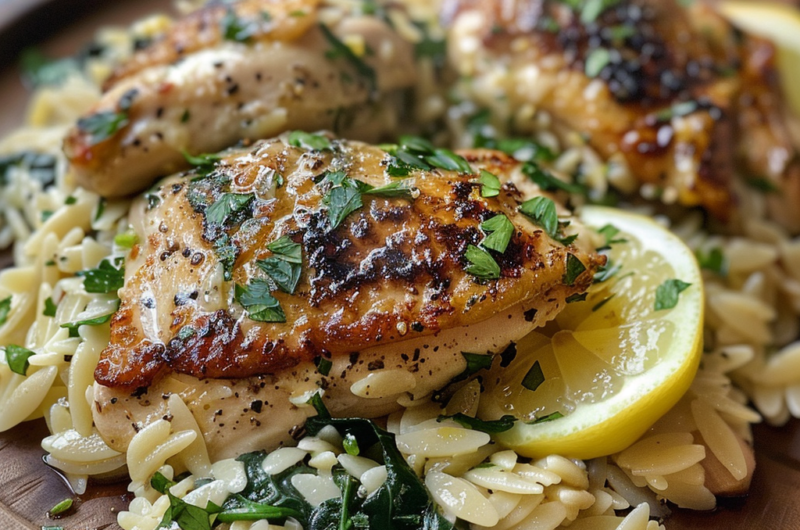
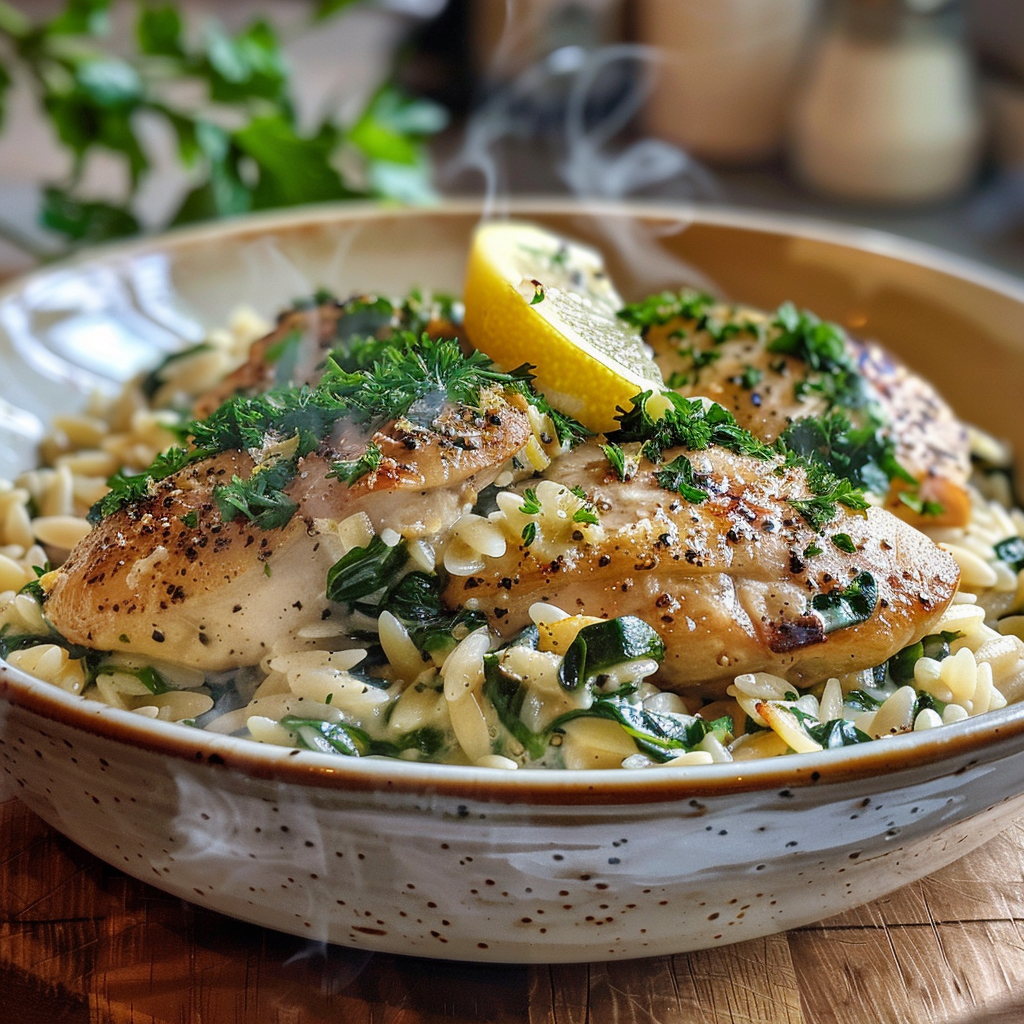
One pan, 30 minutes, and dinner is done — tender chicken thighs and orzo swim in a bright, garlicky cream sauce that feels like it took hours.
📋 In This Article
Introduction
Let’s be honest: weeknight cooking can feel like a negotiation between “what sounds good” and “what can I actually pull off before everyone loses their mind.” This Creamy Lemon Garlic Chicken & Spinach Orzo Skillet is my answer to that nightly standoff. It’s the kind of dish that delivers big, comforting flavors with minimal effort — and yes, it really does come together in about 30 minutes.
What makes this work isn’t just the speed. It’s the way the orzo cooks directly in the skillet, absorbing chicken broth and aromatics until each grain turns velvety and plush. The lemon zest and juice cut through the richness of the cream, while the spinach wilts into the sauce at the very end, adding color and nutrients without any extra prep. One pot. Minimal cleanup. Maximum satisfaction.
Why This Recipe Works
The brilliance of this one-pot orzo skillet lies in how the components build on each other. When you sear the chicken first, you’re not just cooking meat — you’re creating fond, those caramelized bits that stick to the pan and dissolve into the sauce later, adding depth you can’t get from a jar.
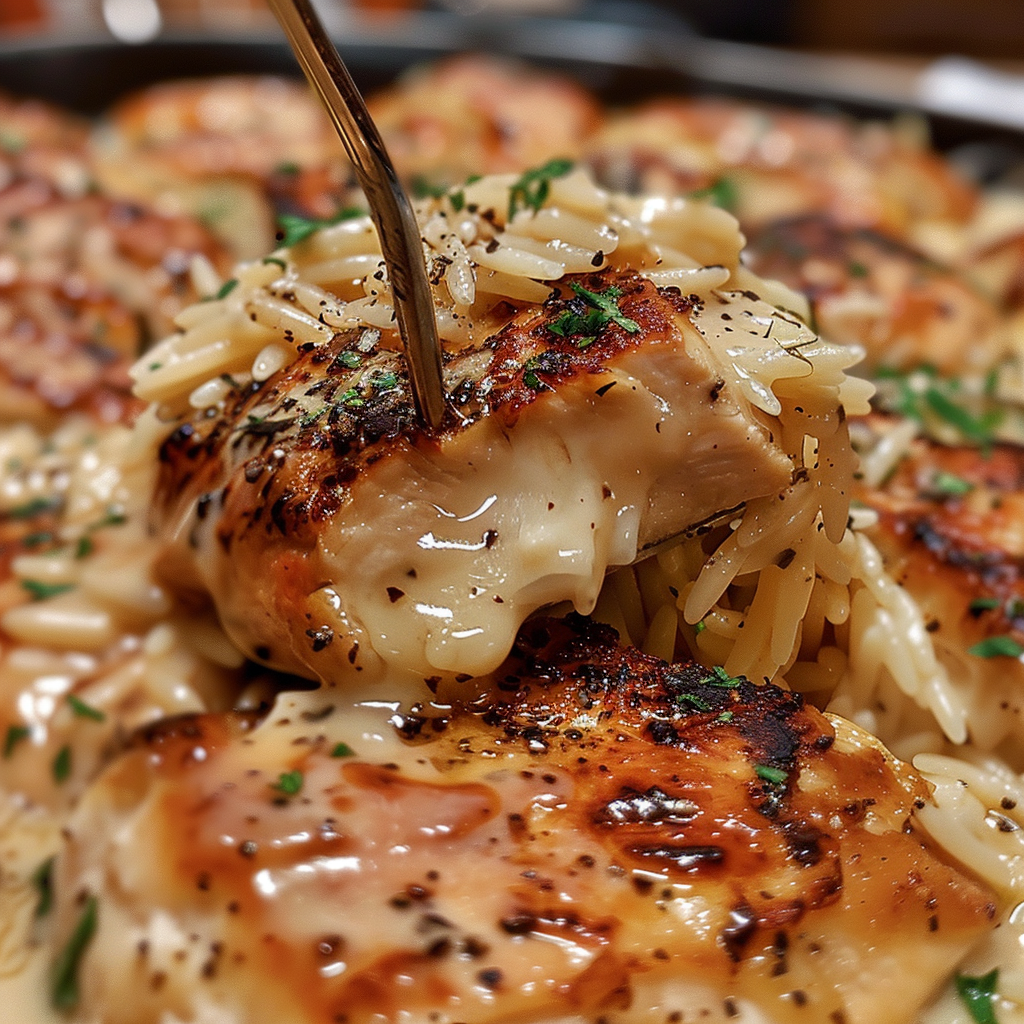
The orzo acts like a sponge. As it simmers in chicken broth, it releases starch that thickens the sauce naturally, eliminating the need for a separate roux. Then comes the heavy cream and Parmesan, which emulsify into that velvety coating you want. The lemon? It’s the bright note that keeps everything from feeling heavy.
And the spinach goes in last — just long enough to wilt but not so long that it turns into gray mush. That’s the kind of detail that separates “fine” from “let’s make this again.”
Ingredients
For the Chicken & Base
- 1 pound boneless, skinless chicken thighs, diced into 1-inch pieces
- 2 tablespoons olive oil
- 1 teaspoon salt, divided
- ½ teaspoon black pepper
- 1 teaspoon onion powder
- 1 teaspoon dried oregano
For the Orzo & Sauce
- 1 cup orzo pasta
- 3 garlic cloves, minced
- 3 cups chicken broth
- 1 cup heavy cream
- Zest of 1 lemon
- Juice of 1 lemon
- 2 cups fresh baby spinach
- ½ cup grated Parmesan cheese
Optional
- Fresh parsley, chopped (for garnish)
Step-by-Step Instructions
1. Season and Sear the Chicken
Pat the diced chicken thighs dry with paper towels — this matters more than you think. Moisture on the surface creates steam, and steam prevents browning. Season the pieces with half the salt, the pepper, onion powder, and oregano, tossing to coat evenly.
In a large skillet (12-inch works best), heat the olive oil over medium-high heat until it shimmers. Add the chicken in a single layer. Here’s the thing: don’t crowd the pan. If you need to work in two batches, do it. Overcrowding drops the temperature and turns searing into steaming.
Cook undisturbed for 3-4 minutes per side until deeply golden. You’re after the Maillard reaction here — that’s the chemical process where amino acids and sugars create hundreds of new flavor compounds under high heat. It’s what gives browned food its characteristic savory depth. Transfer the chicken to a plate.
2. Bloom the Garlic
Reduce the heat to medium. Add the minced garlic to the same skillet with the rendered fat and fond. Stir constantly for about 1 minute until fragrant. You want the garlic to soften and release its aromatic oils, not brown or burn — burnt garlic turns aggressively bitter and will haunt the entire dish.
3. Toast the Orzo
Add the dry orzo to the skillet and stir to coat in the garlicky oil. Toast it for 1-2 minutes, stirring frequently, until the pasta smells nutty and some grains take on a light golden color. This step is optional but worth it — toasting adds a subtle nuttiness and helps the orzo hold its texture as it simmers.
4. Simmer in Broth
Pour in the chicken broth, scraping the bottom of the skillet with a wooden spoon to release the fond. This is deglazing, and it ensures all that concentrated flavor ends up in your sauce, not stuck to the pan. Bring the mixture to a gentle simmer.
5. Cook the Orzo
Let the orzo simmer uncovered for 10-12 minutes, stirring occasionally to prevent sticking. The pasta will absorb the broth and swell. Taste a grain around the 10-minute mark — it should be tender but still have a slight bite. If the broth evaporates before the orzo is done, add a splash more.
6. Finish with Cream and Lemon
Reduce the heat to low. Stir in the heavy cream, lemon zest, and lemon juice. The acid in the lemon juice can cause cream to curdle if the heat is too high, so keep things gentle. Let the sauce simmer for 1-2 minutes until it thickens slightly and coats the back of a spoon.
7. Add the Chicken and Spinach
Return the seared chicken (and any accumulated juices) to the skillet. Add the spinach in handfuls, stirring until it wilts into the sauce — about 1 minute. The residual heat is enough; you don’t want to cook the spinach into oblivion.
8. Fold in Parmesan
Remove the skillet from the heat. Stir in the grated Parmesan until melted and smooth. The cheese adds umami richness and helps thicken the sauce further through emulsification. Taste and adjust seasoning with the remaining salt if needed.
Serve immediately, garnished with fresh parsley if you’re feeling fancy.
⚠️ Common Mistakes to Avoid
Overcrowding the pan. When too much chicken hits the skillet at once, the temperature drops dramatically. Instead of searing, the meat steams in its own juices, leaving you with gray, rubbery pieces. Work in batches if needed — the extra two minutes are worth it.
Burning the garlic. Garlic goes from golden to acrid in seconds. Add it after the chicken is done and the heat has been reduced. If it starts browning too fast, splash in a little broth to cool things down.
Boiling the cream. High heat causes the proteins in cream to separate, creating an unappealing grainy texture. Once you add dairy, keep the heat low and gentle. If the sauce looks like it’s breaking, remove it from the heat immediately and whisk vigorously — sometimes you can save it.
Skipping the lemon zest. The zest contains the lemon’s essential oils, which provide bright, floral notes without the tartness of the juice. Using both gives you layered citrus flavor. The first time I skipped the zest, the dish tasted flat — like something was missing. It was.
Overcooking the spinach. Wilted spinach should still be vibrant green. Once it turns olive-drab, you’ve lost both color and nutrients. Add it at the very end and let the residual heat do the work.
Recipe Variations & Customizations
Swap the protein. Chicken thighs stay juicy, but chicken breast works if that’s what you have — just be careful not to overcook it, as breast meat dries out faster. Shrimp is another excellent option; add it in the last 4-5 minutes of simmering. Sliced Italian sausage brings a fennel-forward punch that plays beautifully with the lemon and cream.
Make it gluten-free. Substitute gluten-free orzo (available at most grocery stores) or use a short-grain rice like arborio, though you’ll need to adjust the cooking time and liquid ratio. Quinoa works too, but the texture will be different — nutty rather than creamy.
Go dairy-free. Replace the heavy cream with full-fat coconut milk for a slightly tropical undertone, or use a store-bought dairy-free cream alternative. Nutritional yeast can stand in for Parmesan, though it won’t melt the same way.
Add vegetables. Sliced mushrooms sautéed with the garlic add earthiness. Sun-dried tomatoes bring concentrated umami and a chewy texture. Peas or asparagus tips can go in with the broth for extra color.
Spice it up. A pinch of red pepper flakes in the garlic adds gentle heat. For something bolder, stir in a spoonful of Calabrian chili paste or a dash of hot sauce at the end.
Storage & Reheating Tips
Leftovers keep well in an airtight container in the refrigerator for 3-4 days. The orzo will absorb more liquid as it sits, so the texture becomes denser — this is normal.
To reheat, the stovetop is your best bet. Add a splash of chicken broth or milk to loosen the sauce, then warm over medium-low heat, stirring gently until heated through. The microwave works in a pinch — heat in 30-second intervals, stirring between each, and add liquid as needed to restore the creamy consistency.
Freezing isn’t ideal. Dairy-based sauces often separate when frozen and thawed, and the orzo turns mushy. If you must freeze, do so without the cream and Parmesan; add those fresh when you reheat.
💡 Pro Tips for a Perfect Skillet Every Time
Mise en place matters. Have everything chopped, measured, and ready before you turn on the stove. This dish moves quickly, and you don’t want to be mincing garlic while the chicken overcooks.
Use a wide, shallow skillet. A deeper pot traps steam and slows evaporation, which can make the orzo gummy. A wide skillet encourages the liquid to reduce at the right pace, concentrating flavor as the pasta cooks.
Don’t walk away during the simmer. Orzo has a tendency to stick, especially as the liquid reduces. Stir every couple of minutes and scrape the bottom of the pan to prevent a starchy layer from forming.
Taste as you go. The saltiness of chicken broth varies wildly between brands. Start with less salt on the chicken and adjust at the end. You can always add more, but you can’t take it away.
Freshly grate your Parmesan. Pre-grated cheese is coated with anti-caking agents that prevent it from melting smoothly. A block of Parmesan, grated on the small holes of a box grater, melts into the sauce seamlessly.
Frequently Asked Questions (FAQ)
+Can I use chicken breast instead of thighs?
Yes, but with a caveat. Chicken breast is leaner and dries out faster than thighs. Cut it into uniform 1-inch pieces and watch the cooking time closely — it’s done when it reaches an internal temperature of 165°F. Overcooked breast turns stringy and tough, while thighs remain forgiving and juicy even if slightly overdone.
+Why is my orzo mushy?
Mushy orzo usually means too much liquid or too long a cook time. Orzo should be tender but still hold its shape. If the package suggests a different cooking time, use that as a rough guide, but always rely on texture. And remember: the orzo continues to soften in the residual heat, so pull it a minute before you think it’s done.
+Can I make this ahead of time?
You can, but the texture is best fresh. If you need to prep ahead, cook the chicken and store it separately from the orzo mixture. When ready to serve, reheat the orzo with a splash of broth, then add the chicken and finish with cream and spinach.
+What can I substitute for heavy cream?
Half-and-half works, though the sauce will be lighter and less velvety. For a non-dairy option, full-fat coconut milk adds creaminess with a subtle coconut flavor. Cashew cream is another alternative — soak raw cashews in hot water, then blend until smooth.
+How do I know when the chicken is done?
The most accurate method is an instant-read thermometer: 165°F in the thickest piece. Visually, the meat should be opaque throughout with no pink remaining, and the juices should run clear. If you’re unsure, cut into the largest piece to check.
+Can I use frozen spinach?
Absolutely. Thaw it completely and squeeze out as much water as possible — frozen spinach holds a surprising amount of liquid that can dilute your sauce. Add it at the same stage as fresh spinach; it only needs to warm through.
Conclusion
This Creamy Lemon Garlic Chicken & Spinach Orzo Skillet is the kind of recipe that earns a permanent spot in your rotation — not because it’s flashy, but because it’s reliable, adaptable, and genuinely delicious. It handles substitutions gracefully, comes together on a weeknight timeline, and leaves you with only one pan to wash. That’s a win in my book.
Next time you’re staring into the fridge at 6 p.m. with no plan, remember: you’re 30 minutes away from a skillet full of comfort.