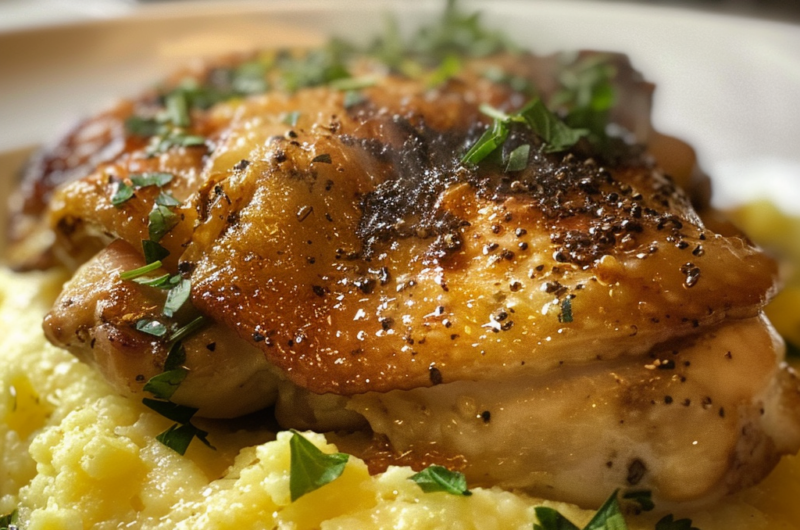
Golden, crispy skin meets velvety, Parmesan-laced cornmeal—pure comfort in under an hour.
📋 In This Article
Introduction
There is a specific kind of magic that happens when bright, sharp lemon meets rich, savory chicken fat. Lemon Herb Roasted Chicken Thighs with Creamy Polenta isn’t just dinner; it’s a masterclass in contrast. You get the aggressive crunch of well-rendered skin giving way to succulent meat, all resting on a pillow of cornmeal that soaks up every drop of the pan drippings.
I’ve spent years testing chicken recipes, and the combo of high heat and a dry brine is the undisputed winner for weeknight cooking. It requires almost no active work. While the oven does the heavy lifting, you turn your attention to the polenta, stirring until it transforms into something akin to savory porridge. It’s the kind of meal that feels indulgent enough for a Saturday night but is easy enough for a Tuesday. Flavorful Slow Cooker Mississippi Chicken Recipe.
Why This Recipe Works
This dish relies on two critical scientific principles: fat rendering and starch gelatinization.
First, the chicken. We roast at 425°F (220°C) because thigh skin needs high heat to effectively render the subcutaneous fat. If you roast at a lower temperature, the fat renders slowly, leaving the skin rubbery. At 425°F, the water evaporates quickly, allowing the skin to reach temperatures where the Maillard reaction creates that deep golden-brown crust.
Second, the polenta. Cornmeal is tough stuff. It needs time and agitation. As the starch granules absorb the hot liquid, they swell and burst (gelatinization). Continuous stirring aligns these starch molecules, creating that smooth, velvety texture rather than a grainy sludge. The addition of butter and cheese at the end forms an emulsion that coats the starch, making the polenta incredibly creamy.
Ingredients
Ingredients for the Chicken
- 4 bone-in, skin-on chicken thighs: The bone insulates the meat, preventing it from drying out, while the skin provides the necessary fat for flavor and crispiness.
- 1 lemon: We use both the zest and the juice. Zest contains aromatic oils, while the juice provides acid to cut through the richness.
- Fresh herbs (rosemary, thyme, oregano): Woody herbs like rosemary and thyme can withstand high roasting temperatures without burning too quickly.
- 4 cloves garlic, minced: For a savory, pungent base note.
- 2 tablespoons olive oil: Helps conduct heat to the skin and ensures the herbs adhere.
- Kosher salt and black pepper: Essential for seasoning.
Ingredients for the Creamy Polenta
- 1 cup polenta (medium-grind): Offers the best balance of texture and cooking time. Instant polenta works but lacks the slight toothsomeness of traditional styles.
- 4 cups chicken broth: Using broth instead of water infuses the cornmeal with flavor from the inside out.
- 1/2 cup heavy cream: Adds richness and stabilizes the texture.
- 1/2 cup grated Parmesan cheese: Provides umami and saltiness.
- 2 tablespoons unsalted butter: For gloss and mouthfeel.
Step-by-Step Instructions
1. Dry Brine the Chicken
Pat the chicken thighs thoroughly dry with paper towels. This step is non-negotiable for crispy skin. In a bowl, combine the lemon zest, 1 tablespoon of the olive oil, minced garlic, and chopped herbs. Rub this mixture under the skin of the chicken as well as on top. Season generously with salt and pepper.
Science Tip: Salt acts as a dry brine here. It dissolves into the surface moisture, creating a concentrated brine that eventually diffuses back into the meat, seasoning it throughout rather than just on the surface.
Let the chicken sit at room temperature for at least 30 minutes. This helps the meat cook more evenly from the start.
2. Roast the Chicken
Preheat your oven to 425°F (220°C). Place the thighs skin-side up on a rimmed baking sheet or in a cast-iron skillet. Do not crowd the pan—air needs to circulate to crisp the skin.
Roast for 35 to 40 minutes. You are looking for an internal temperature of 165°F (74°C) in the thickest part of the thigh. If the skin isn’t deeply golden by then, crank the broiler for 2 minutes. Keep an eye on it; the lemon and herbs can burn quickly under direct heat.
3. Make the Polenta
While the chicken roasts, bring 4 cups of chicken broth to a boil in a heavy-bottomed saucepan. Reduce heat to a simmer. Pour the polenta into the liquid in a steady stream while whisking vigorously. This prevents clumps from forming.
Reduce the heat to low. Simmer gently for 20 to 30 minutes, stirring frequently with a wooden spoon to scrape the bottom where the starch likes to stick. The polenta is done when it pulls away slightly from the sides of the pot and the grains are tender. Delicious Tuscan Chicken for Cozy Evenings.
4. Finish and Serve
Remove the polenta from heat. Stir in the butter, heavy cream, and Parmesan. Taste and adjust salt.
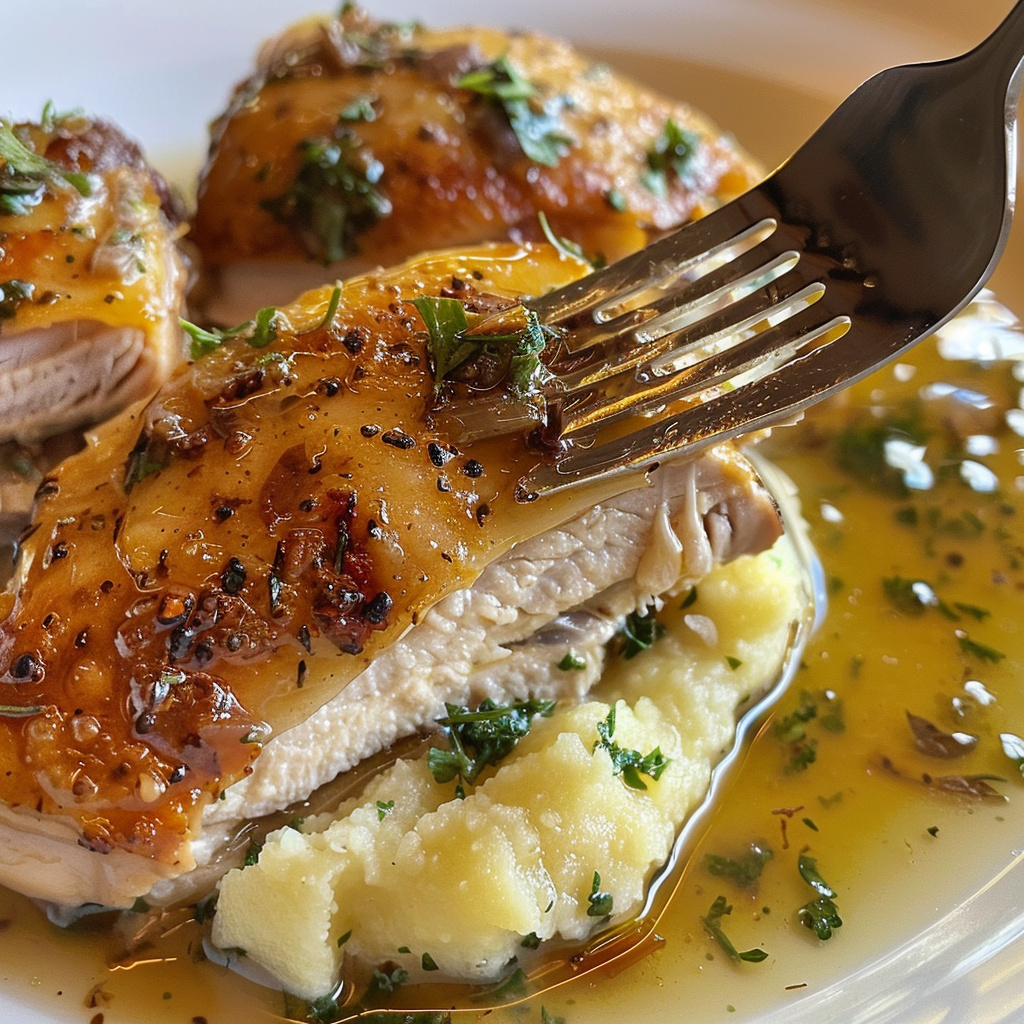
Spoon a generous helping of polenta into shallow bowls. Top with a roasted chicken thigh. Pour any pan drippings over the top.
⚠️ Common Mistakes to Avoid
Even a simple recipe can go sideways. Here is where things usually break down:
- Wet Chicken Skin: If you don’t pat the skin dry, the moisture creates steam in the oven. Steam = rubbery skin. Dry skin = crispy skin.
- Under-seasoning the Polenta: Cornmeal needs a lot of salt. Because the volume expands as it cooks, the salt flavor dilutes. Taste it at the end; it should border on slightly too salty before you add the cheese, which balances it out.
- Overcrowding the Pan: If the chicken thighs are touching, they will braise in their own juices rather than roast. Give them space.
- Ignoring the Pan Drippings: That liquid gold in the bottom of the pan is pure flavor. Do not throw it away. Drizzle it over the finished dish.
Variations & Substitutions
This recipe is flexible.
- Citrus Swap: Try orange or blood orange zest instead of lemon for a sweeter, more aromatic profile.
- Dairy-Free Polenta: Substitute the butter with high-quality olive oil and the cream with a swirl of unsweetened almond milk or just extra broth. Nutritional yeast can replace the Parmesan for a cheesy flavor without dairy.
- Add Vegetables: Toss halved cherry tomatoes or asparagus spears on the sheet pan with the chicken during the last 15 minutes of roasting. They will roast in the chicken fat.
Serving Suggestions & Wine Pairings
The richness of the chicken and polenta calls for something bright on the side. A simple arugula salad with a lemon vinaigrette cuts through the fat perfectly.
For wine, you have two distinct paths. A high-acid Sauvignon Blanc mirrors the lemon in the dish and cleanses the palate. If you prefer red, go for a Pinot Noir. Its low tannins won’t clash with the bitterness of the charred skin, and the fruit-forward notes complement the herbs.
Storage & Reheating Tips
Lemon Herb Roasted Chicken Thighs with Creamy Polenta are best eaten fresh, but leftovers can be saved.
Store the chicken and polenta separately in airtight containers. The chicken will keep for 3 to 4 days in the refrigerator; the polenta is best used within 2 to 3 days as it tends to solidify into a solid block when cold.
To reheat the chicken, avoid the microwave if you want to save the skin texture. Place the thighs in a 375°F (190°C) oven for 15 to 20 minutes until heated through. For the polenta, reheat it in a saucepan over medium-low heat. You will likely need to add a splash of water or broth to loosen it up, as polenta stiffens as it cools. Stir constantly until it returns to a creamy consistency.
💡 Pro Tips for Success
Want to take this from good to great? Focus on the details.
- Use a Wire Rack: If you have one, place the chicken thighs on a wire rack set inside the baking sheet. This allows hot air to circulate under the chicken, rendering fat from both sides and ensuring the skin is crispy all over.
- The Parmesan Rind Trick: If you have a hard Parmesan rind lurking in your cheese drawer, throw it into the broth while the polenta cooks. It infuses the cornmeal with a deep, savory backbone. Remove the rind before serving.
- Rest the Meat: Let the chicken rest for 5 to 10 minutes after taking it out of the oven. If you cut into it immediately, the juices will run out onto the board, leaving the meat dry. Resting allows the proteins to relax and reabsorb that moisture.
Frequently Asked Questions (FAQ)
+Why is my chicken skin soggy instead of crispy?
Soggy skin is almost always caused by trapped moisture. Make sure you pat the chicken completely dry before seasoning, and ensure your oven is fully preheated to 425°F. If the pan is crowded, the chicken will steam rather than roast.
+Can I use chicken breasts instead of thighs?
You can, but bone-in, skin-on breasts are best for this recipe. Boneless breasts will cook much faster and dry out easily. If using breasts, reduce the roasting time to 25 to 30 minutes and check the internal temperature early.
+How do I fix lumpy polenta?
If your polenta has lumps, it usually means the cornmeal was added too quickly to the boiling liquid. You can salvage it by whisking vigorously or running it through a food processor or immersion blender to smooth it out.
+What internal temperature should chicken thighs be cooked to?
Chicken thighs are safe to eat at 165°F (74°C). However, because dark meat has more connective tissue, many chefs prefer taking them to 175°F to 190°F. The meat becomes more tender and falls off the bone, though the texture changes from “juicy” to “shreddable.”
+Can I make the polenta ahead of time?
Yes. Polenta “sets” as it cools. You can make it a day ahead, pour it into a greased pan, and chill it. To reheat, cut it into squares and fry it in butter, or warm it in a pot with extra broth to return it to a creamy state.