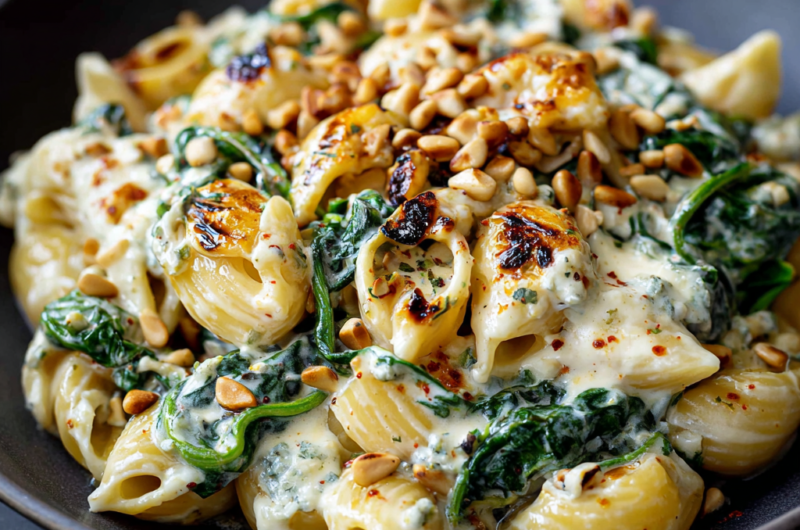
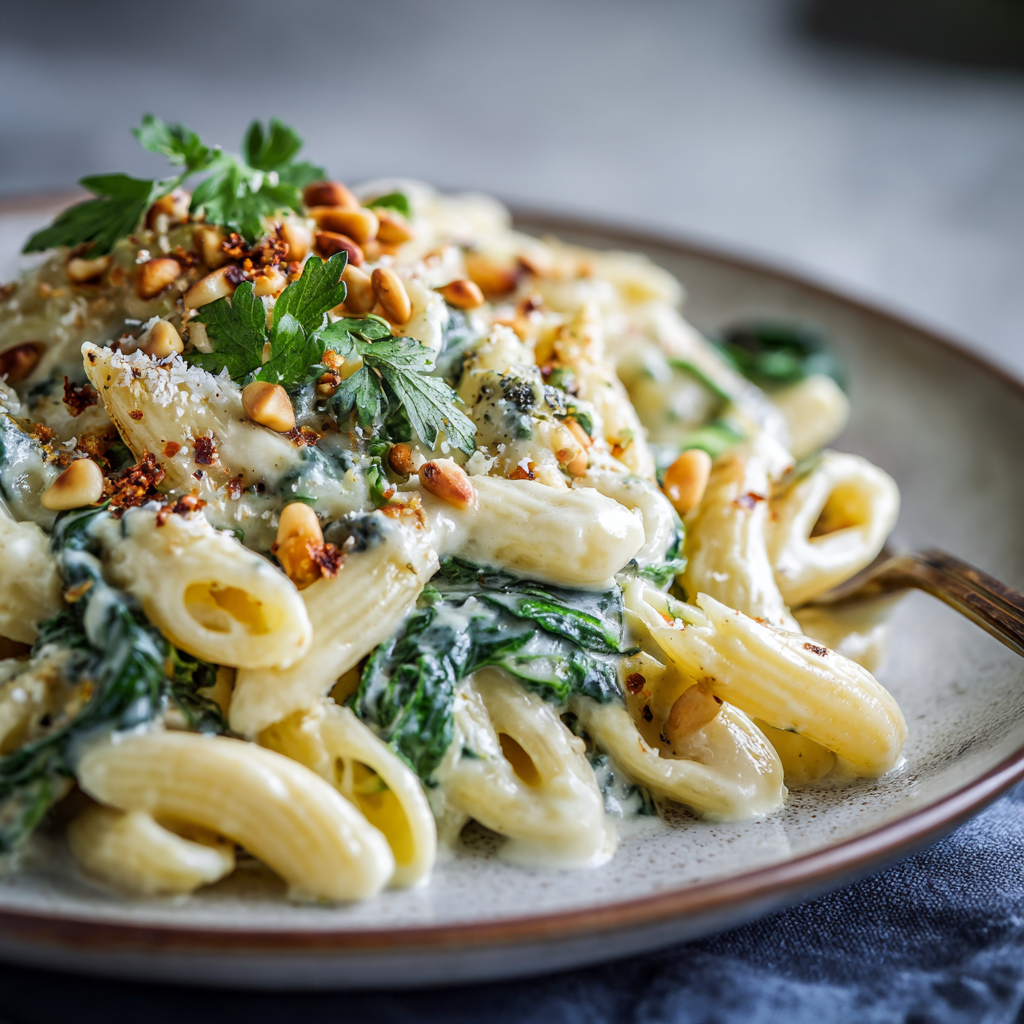
Rich, tangy Gorgonzola meets velvety cream sauce, balanced by fresh spinach and the sweet crunch of pine nuts. It’s a 25-minute meal that tastes like a trip to Northern Italy.
📋 In This Article
Introduction
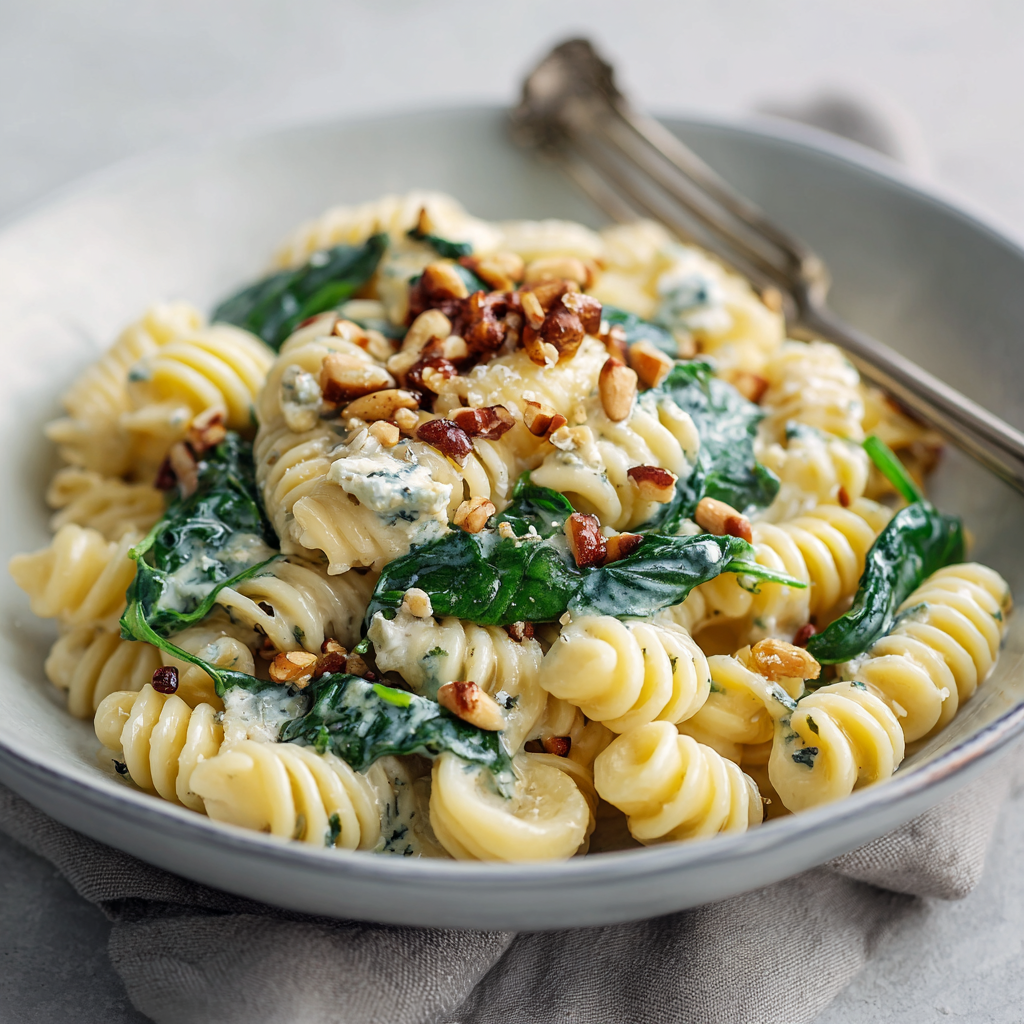
There is a specific kind of comfort found in a bowl of Creamy Gorgonzola Pasta with Spinach and Toasted Pine Nuts. It is the kind of dish that feels distinctly high-end, yet comes together with the ease of a weeknight staple. The magic lies in the contrast: the aggressive, salty punch of the blue cheese tamed by heavy cream, the earthy wilt of fresh spinach, and the sudden, buttery crunch of pine nuts.
But let’s be honest. Gorgonzola can be a bully. It can easily take over a dish, rendering it one-note and cloying. The secret to this recipe isn’t just throwing ingredients in a pan—it’s about managing that intensity. We use a splash of dry white wine to cut through the fat and a finish of lemon juice to wake up the palate. This isn’t just “cheesy pasta”; it’s a study in balance. And yes, it’s ready in the time it takes to boil the water.
Why This Recipe Works & Why You’ll Love It
This isn’t your average blue cheese sauce. Most recipes rely solely on cream, which can result in a heavy, leaden coating. We take a different approach. By building a base with sautéed shallots and deglazing with white wine, we create a complex aromatic foundation that supports the cheese rather than competing with it.
The texture is everything here. We reserve that starchy pasta water—it’s liquid gold. The starch molecules released from the pasta help bind the fat in the cream and cheese, creating a stable emulsion that clings to the noodles rather than pooling at the bottom of the bowl. It’s a simple chemistry trick that separates a “good” pasta from a “craveable” one.
The Essential Ingredients
To make this dish shine, you need quality components. The ingredient list is short, so every item counts.
For the Pasta & Sauce:
- 250g of fettuccine or tagliatelle: Long, flat noodles provide the maximum surface area for the creamy sauce to cling to.
- 150g of Gorgonzola cheese: This is the star. Look for Gorgonzola Dolce if you prefer a milder, creamier melt, or Gorgonzola Piccante if you want a sharp, spicy kick. Cut it into cubes for even melting.
- 300ml of heavy cream: The fat content is crucial here. Lower-fat alternatives risk separating when hit with the acidic cheese.
- 150g of fresh baby spinach: Baby spinach is tender enough to wilt instantly without needing to chop it.
- 125ml of dry white wine: Something crisp like Pinot Grigio or Sauvignon Blanc. Avoid oaky wines, which can make the sauce taste bitter.
For the Aromatics & Finish:
- 100g of shallots: Finely sliced. They offer a sweeter, more delicate flavor than yellow onions.
- 3 cloves of garlic: Thinly sliced.
- 2 tablespoons of good quality olive oil: For sautéing.
- 40g of pine nuts: Toasting is non-negotiable. It wakes up the essential oils and adds a resinous crunch.
- Juice of 1/2 lemon: Essential for cutting the richness.
- Parmesan cheese: For serving.
Step-by-Step Instructions
- Prepare the Ingredients: Before you turn on the stove, get everything ready. Slice the shallots and garlic, cube the Gorgonzola, and measure out your liquids. This dish moves fast once the pasta is done.
- Toast the Pine Nuts: Place a large, cold skillet over medium heat. Add the pine nuts and toast them, stirring constantly, until they are golden brown and fragrant, about 2-3 minutes. Watch them closely—they go from golden to burnt in seconds. Remove them from the pan immediately and set aside. Wipe the pan out.
- Cook the Pasta: Bring a large pot of generously salted water to a boil. The water should taste like a well-seasoned soup. Cook the fettuccine until al dente (usually 1-2 minutes less than the package instructions). Before draining, reserve at least 1 cup of the starchy pasta water.
- Sauté the Aromatics: In the same large skillet (or a new one if you prefer), heat the olive oil over medium heat. Add the sliced shallots and a pinch of salt. Cook until they are softened and translucent, about 3-4 minutes. Add the sliced garlic and cook for another minute until fragrant. Do not let the garlic brown, or it will turn bitter.
- Deglaze and Reduce: Pour in the dry white wine. Use a wooden spoon to scrape up any fond (the browned bits stuck to the pan)—that’s concentrated flavor. Let the wine simmer until it has reduced by about half. This evaporates the harsh alcohol while leaving behind the acidity.
- Build the Cream Sauce: Lower the heat to medium-low. Add the heavy cream. Simmer gently until the mixture has reduced by roughly one-third. You want it to coat the back of a spoon.
- Melt the Cheese: Turn the heat down to low. Add the cubed Gorgonzola a handful at a time, stirring gently until melted and smooth. Do not let the sauce boil once the cheese is added, or the proteins may seize and cause the sauce to break.
- Wilt the Spinach: Toss in the fresh spinach. Stir it into the hot sauce for about 30 seconds to 1 minute, just until it is wilted but still retains a vibrant green color.
- Emulsify and Serve: Add the drained pasta directly to the skillet. Toss well to coat. If the sauce is too thick or sticky, add a splash of that reserved pasta water, tossing vigorously. The starch in the water helps the sauce emulsify, turning it glossy and silky. Squeeze in the lemon juice, season with black pepper (taste before adding salt—the cheese is already salty), and serve immediately topped with the toasted pine nuts and shaved Parmesan.
⚠️ Common Mistakes to Avoid
Even simple dishes have pitfalls. Here is how to steer clear of disaster.
- Boiling the Cheese Sauce: This is the number one error. High heat causes the proteins in the cheese to tighten and squeeze out fat, resulting in a greasy, grainy mess. Keep the heat low and gentle once the cheese hits the pan.
- Skipping the Pasta Water: If you drain your pasta and skip the reserve step, you are missing your best tool for texture. That starchy water is the glue that binds the sauce to the noodle.
- Overcooking the Spinach: Nobody likes gray, slimy spinach. Add it at the very end; the residual heat of the sauce is enough to wilt it perfectly.
- Untoasted Pine Nuts: Raw pine nuts have a waxy texture and muted flavor. Toasting transforms them, releasing natural oils and adding a crucial crunchy contrast to the soft pasta.
Delicious Variations & Pairings
This recipe is a template, not a law. Once you master the technique, feel free to riff.
Protein Additions: While delicious on its own, this pasta welcomes protein. Crispy prosciutto or pancetta adds a salty, meaty crunch that plays beautifully against the creamy sauce. For something heartier, seared chicken thighs or shrimp work well—just cook them in the pan before the aromatics and set aside to toss in at the end.
Vegetable Swaps: Spinach is classic, but not your only option. Peas offer a sweet pop that contrasts the sharp cheese. Sautéed mushrooms, particularly cremini or shiitake, add an earthy, umami-rich depth that makes the dish feel more like a mushroom stroganoff.
Wine Pairings: You are already cooking with white wine, so pour a glass to drink. A Sauvignon Blanc or Pinot Grigio mirrors the acidity in the sauce. If you prefer red, go for something light and low-tannin like a Pinot Noir; heavy tannins clash with blue cheese.
Storage & Reheating Tips
Let’s be real: creamy pasta is best eaten immediately. The sauce continues to absorb into the noodles as it sits. However, if you have leftovers, store them in an airtight container in the refrigerator for up to 3 days.
To reheat, do not use the microwave on high power. It will unevenly cook the dairy. Instead, place the pasta in a skillet over low heat. Add a splash of milk, cream, or water. Stir gently and constantly until the sauce loosens back up and coats the noodles. You may lose a bit of the initial silkiness, but the flavor will remain.
💡 Chef’s Pro Tips for Perfection
- The Cold Pan Trick for Pine Nuts: Start your pine nuts in a cold pan with a tiny bit of oil or just dry. It allows the heat to distribute evenly so the centers toast at the same rate as the exterior.
- Taste Your Cheese: Gorgonzola varies wildly in saltiness and potency. Taste a small crumb before you start. If it is incredibly salty, be conservative with the seasoning later. If it is mild, you might want to add a grating of Parmesan to boost the umami.
- The Lemon Juice Secret: It might seem like an afterthought, but that squeeze of lemon is critical. Acid cuts through the heavy cream and fat of the cheese, “lifting” the flavor so it doesn’t sit heavy on the palate.
- Save More Water Than You Think: I usually reserve a full mug of pasta water. You might not need it all, but it’s better to have it and not need it than to be stuck with a sauce that is too tight.
Frequently Asked Questions (FAQ)
+Why did my Gorgonzola sauce turn grainy?
Graininess usually happens when the sauce gets too hot. The proteins in the cheese tighten up and separate from the fat. To fix it (or prevent it), keep the heat low when melting the cheese. If it happens, you can sometimes save it by whisking in a splash of cold cream off the heat.
+Can I use frozen spinach instead of fresh?
You can, but the texture will be softer. Thaw the spinach completely and squeeze out all the excess water using a clean towel or your hands. If you don’t, the water will dilute your cream sauce, making it thin and watery.
+What can I substitute for pine nuts?
Pine nuts are expensive. Walnuts make an excellent substitute—they offer a similar buttery crunch when toasted. For a nut-free option, try toasted breadcrumbs (panko) tossed with a little garlic and olive oil.
+Is Gorgonzola the same as blue cheese?
All Gorgonzola is blue cheese, but not all blue cheese is Gorgonzola. Gorgonzola is a specific Italian variety that is generally creamier and milder than something like Roquefort or Danish Blue. You can substitute other blue cheeses in this recipe, but expect a sharper, more intense flavor.
+How do I know when the pasta is perfectly al dente?
The best way is to taste it. It should be tender but still offer a slight resistance in the center. Remember, the pasta will cook a little more when you toss it in the hot sauce, so pulling it a minute early is safer than overcooking it.