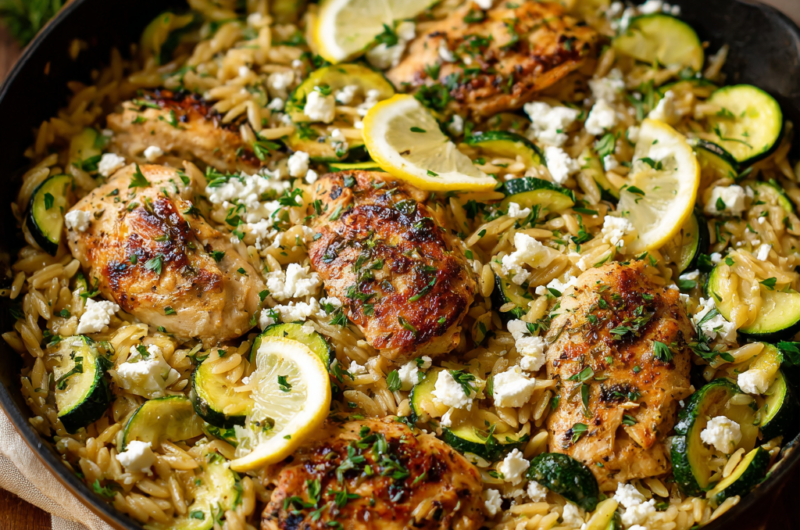
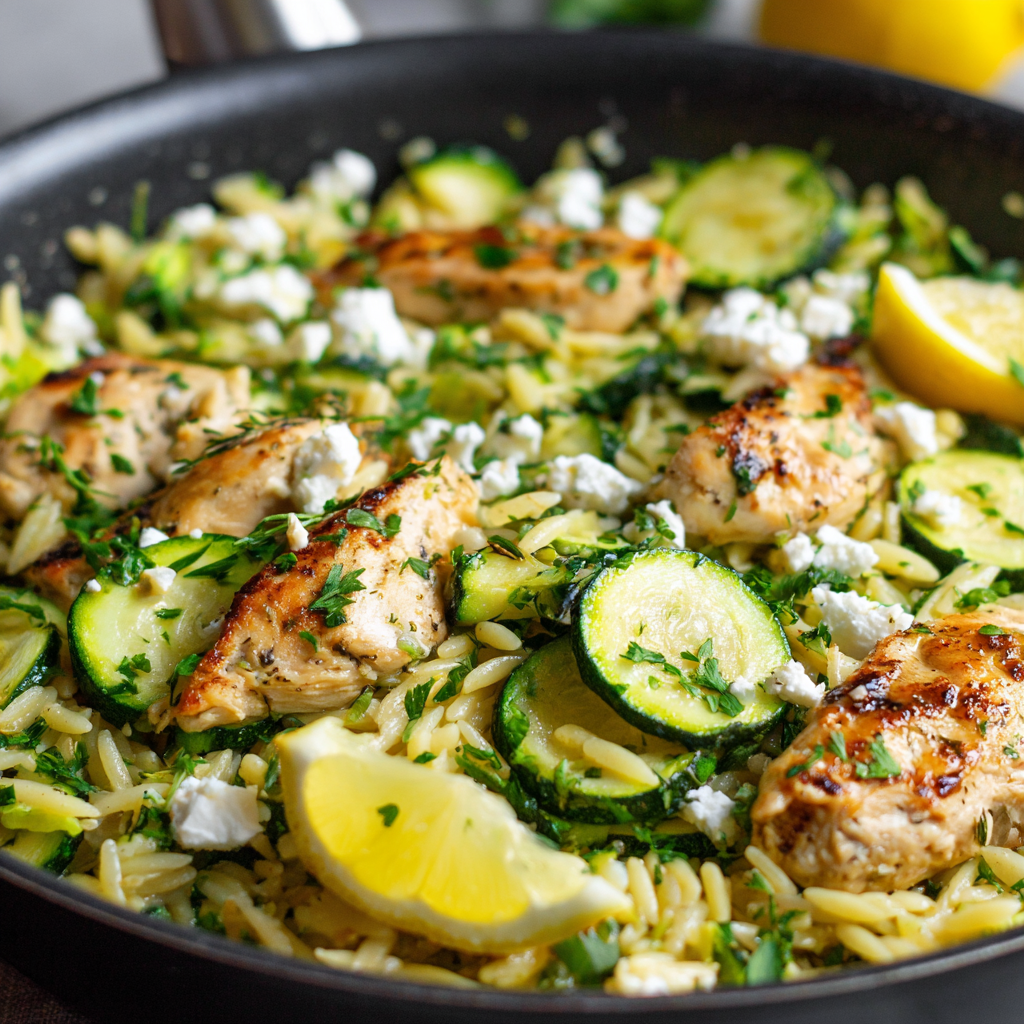
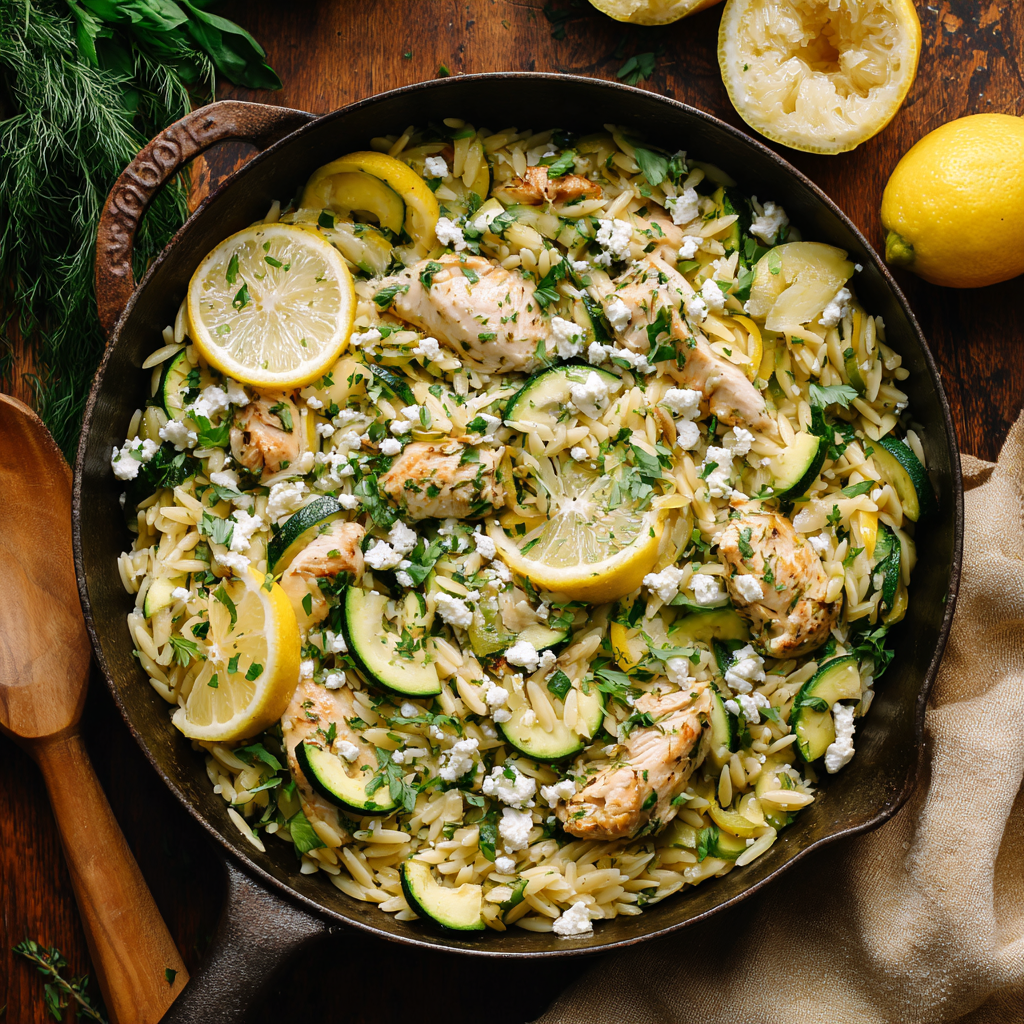
A vibrant, one-pan weeknight dinner featuring juicy seared chicken, tender orzo, and fresh zucchini, all finished with bright lemon and creamy feta.
📋 In This Article
Introduction
Some nights, the only thing standing between you and a takeout menu is the promise of a single pan to wash. This Lemon Herb Chicken Orzo Skillet Packed With Fresh Zucchini and Feta is that promise kept. It’s a complete meal—protein, starch, and vegetables—that comes together in under 30 minutes but tastes like you spent the afternoon simering a pot.
The magic here isn’t just convenience; it’s the way the orzo cooks directly in the chicken broth. As the pasta simmers, it releases starch into the liquid, thickening it into a velvety sauce that clings to every bite. You get the satisfaction of a risotto without the constant stirring. The zucchini adds a necessary fresh crunch, while the feta provides a salty, tangy backbone that ties the bright lemon and savory herbs together. It’s the kind of dish that makes “what’s for dinner?” feel like an opportunity rather than a chore.
Why This Recipe Works
This isn’t just “stuff thrown in a pan.” There is actual culinary strategy at play here.
First, we use boneless, skinless chicken thighs. Unlike breasts, thighs stay juicy even if you accidentally overcook them slightly. They render more fat, which means more flavor left behind in the pan for the orzo to absorb.
Second, the starch release. By toasting the orzo in the fond (those sticky, browned bits left by the chicken) and then simmering it in broth, we create a natural emulsion. This is basic food science: the starch granules swell and burst, thickening the surrounding liquid into a glossy, cohesive sauce rather than a watery soup.
Finally, the timing of the zucchini. If you cook zucchini too long, it turns into mush. By adding it partway through the simmer, it cooks just enough to become tender but retains a slight bite, offering textural contrast to the soft pasta. The result is a dish that feels rich but eats light.
Ingredients You’ll Need
Proteins
- 1.5 pounds boneless, skinless chicken thighs: Cut into 1-inch pieces. Thighs offer better flavor and moisture retention than breasts for skillet cooking.
Produce
- 1 medium zucchini: Diced into ½-inch pieces. Uniform size ensures even cooking.
- 1 small onion: Finely chopped.
- 3 cloves garlic: Minced.
- 1 large lemon: Zested and juiced. You need the oils from the zest for aroma and the juice for acid.
Pasta & Pantry
- 1.5 cups orzo pasta: This is the perfect amount for the liquid ratio.
- 3.5 cups chicken broth: Low sodium is best so you can control the salt level.
- 2 tablespoons olive oil: Divided use for searing and sautéing.
- Salt and black pepper: To taste.
- ½ teaspoon red pepper flakes: Optional, for a background warmth.
Dairy & Finishers
- 4 ounces feta cheese: Crumbled. Buy a block and crumble it yourself for superior texture and flavor; pre-crumbled feta often contains anti-caking agents that prevent melting.
- ¼ cup fresh herbs: A mix of parsley, dill, or basil, chopped.
Step-by-Step Instructions
Step 1: Sear the Chicken
In a large, deep skillet or Dutch oven, heat 1 tablespoon of olive oil over medium-high heat until shimmering. Pat the chicken pieces dry and season generously with salt and pepper. Add the chicken in a single layer—do not crowd the pan, or it will steam rather than sear.
Cook for 4-5 minutes, turning occasionally, until the chicken is deeply golden brown on all sides. It does not need to be cooked through yet. Remove the chicken from the pan and set aside on a plate.
Why this matters: That browning is the Maillard reaction in action. It creates hundreds of flavor compounds that form the savory base of the entire dish.
Step 2: Sauté Aromatics
Reduce the heat to medium. Add the remaining tablespoon of olive oil. Add the chopped onion and a pinch of salt. Sauté for 3-4 minutes until the onion is translucent and softened. Add the garlic and red pepper flakes (if using) and cook for another 30 seconds until fragrant.
Step 3: Toast the Orzo
Add the orzo to the pan. Stir constantly for about 2 minutes. You want the pasta to smell nutty and take on a light golden color.
Why this matters: Toasting the orzo adds depth of flavor and helps the pasta maintain its texture during the simmer, preventing it from turning into paste.
Step 4: Simmer and Steam
Pour in the chicken broth and scrape the bottom of the pan with a wooden spoon to release the browned fond. Bring the mixture to a boil. Once boiling, reduce the heat to low, stir in the diced zucchini, and cover the pan.
Simmer covered for about 8-10 minutes, stirring once or twice, until the orzo is al dente and most of the liquid has been absorbed. If the liquid absorbs too quickly, add a splash of water.
Step 5: Combine and Finish
Return the seared chicken (and any accumulated juices on the plate) to the skillet. Stir in the lemon juice, half of the lemon zest, and half of the feta cheese. Cook for 2 minutes uncovered, just to heat the chicken through.
Remove from the heat. Taste and adjust seasoning—does it need more salt? Probably, depending on your broth.
Step 6: Serve
Transfer to a serving platter or serve directly from the skillet. Top with the remaining feta, the rest of the lemon zest, and the fresh herbs. Drizzle with a final splash of olive oil if desired.
⚠️ Common Mistakes to Avoid
Even simple recipes can go wrong. Here is where most people trip up.
Overcrowding the pan. If you cram all the chicken in at once, the temperature drops, and the chicken boils in its own juices. You lose that deep, savory fond. Cook in batches if your pan is small.
Adding the zucchini too early. Zucchini has a high water content. If you add it with the broth, it will disintegrate. Adding it halfway through the simmer preserves its texture and prevents the dish from becoming watery.
Ignoring the salt. Because we are cooking the orzo in broth, the pasta absorbs salt as it cooks. If your broth is unsalted, the final dish will be bland. Taste the orzo during the simmer, not just at the end.
Using pre-crumbled feta. It contains anti-caking agents that keep it from melting softly into the sauce. It’s a small detail, but it changes the texture of the final dish. Crumble it yourself.
Flavor Variations & Customizations
This recipe is a template. Once you have the technique down, you can riff on it endlessly.
Protein Swaps: Chicken thighs are forgiving, but you can use shrimp. Add them in the last 3 minutes of cooking so they don’t turn rubbery. For a vegetarian version, swap the chicken for chickpeas and use vegetable broth.
Greens: A handful of baby spinach or kale stirred in at the very end wilts perfectly from the residual heat.
Cheese: Not a fan of feta? Goat cheese melts into a creamy, tangy sauce. Parmesan adds a savory, nutty punch but won’t provide the same creaminess.
Spice: Want more heat? Add diced jalapeño with the onion or double the red pepper flakes.
Serving Suggestions
This skillet is a complete meal, but it plays well with others. A crisp side salad with a sharp vinaigrette cuts through the richness of the orzo. If you want to lean into the Mediterranean vibe, serve it with warm pita bread for scooping up the sauce.
For wine, stick to something bright and acidic. A Sauvignon Blanc or a dry Rosé mirrors the lemon and herbs beautifully.
Storage & Reheating Tips
Orzo continues to absorb liquid as it sits, so leftovers will be thicker than the fresh dish.
Refrigerator: Store in an airtight container for up to 3 days. The zucchini may release a little water, which is normal.
Reheating: The microwave works, but the texture is better reheated on the stove. Add a splash of broth or water to loosen the sauce, then warm gently over medium-low heat. I used to skip this step and just nuke it—don’t. It dries out the chicken.
💡 Pro Tips for the Perfect Skillet
Deglaze thoroughly. When you add the broth, really scrape the bottom of the pan. That brown residue is pure concentrated flavor. Leaving it stuck to the pan is wasted potential.
Rest the chicken. When you remove the chicken after searing, let it rest on the plate while the orzo cooks. If you cut into it immediately, the juices run out. Resting allows the muscle fibers to relax and reabsorb that moisture.
Finish with fresh acid. The lemon juice added during cooking provides a base note, but a fresh squeeze right before serving wakes up the flavors. Acid fades with heat, so that final hit is crucial.
Frequently Asked Questions (FAQ)
+Can I use chicken breast instead of thighs?
You can, but be careful. Chicken breast is leaner and dries out faster. Cut the pieces slightly larger than the thighs and check for doneness earlier (around the 4-minute mark during searing).
+Why is my orzo mushy?
Mushy orzo usually means too much liquid or too long a cook time. Stick to the 1:2 ratio of orzo to liquid by volume (roughly). Also, remember that the pasta continues to cook for a minute after you remove it from the heat, so pull it when it’s just shy of perfect.
+Can I make this ahead of time?
You can, but the texture is best fresh. If you must make it ahead, undercook the orzo slightly by 2 minutes. Reheat with extra broth to finish the cooking process.
+What if I don’t have orzo?
Small pasta shapes like ditalini or pastina work well. You can also use pearl couscous (Israeli couscous), though you may need to adjust the liquid amount slightly as couscous absorbs differently.
+Can I freeze this dish?
I don’t recommend it. The texture of the zucchini and the creamy sauce changes significantly upon freezing and thawing, often becoming grainy or watery.
+How do I know when the chicken is done?
The safest way is an instant-read thermometer. You are looking for an internal temperature of 165°F (74°C). If you don’t have a thermometer, cut into the largest piece; the juices should run clear and the meat should be opaque throughout.
Conclusion
This Lemon Herb Chicken Orzo Skillet Packed With Fresh Zucchini and Feta is the definition of a weeknight workhorse. It’s fast, forgiving, and packed with enough bright, savory flavor to make you forget how easy it was to make. Whether you stick to the script or swap in your favorite veggies, it’s a reliable addition to any dinner rotation. Give it a try tonight—your skillet (and your dishwasher) will thank you.
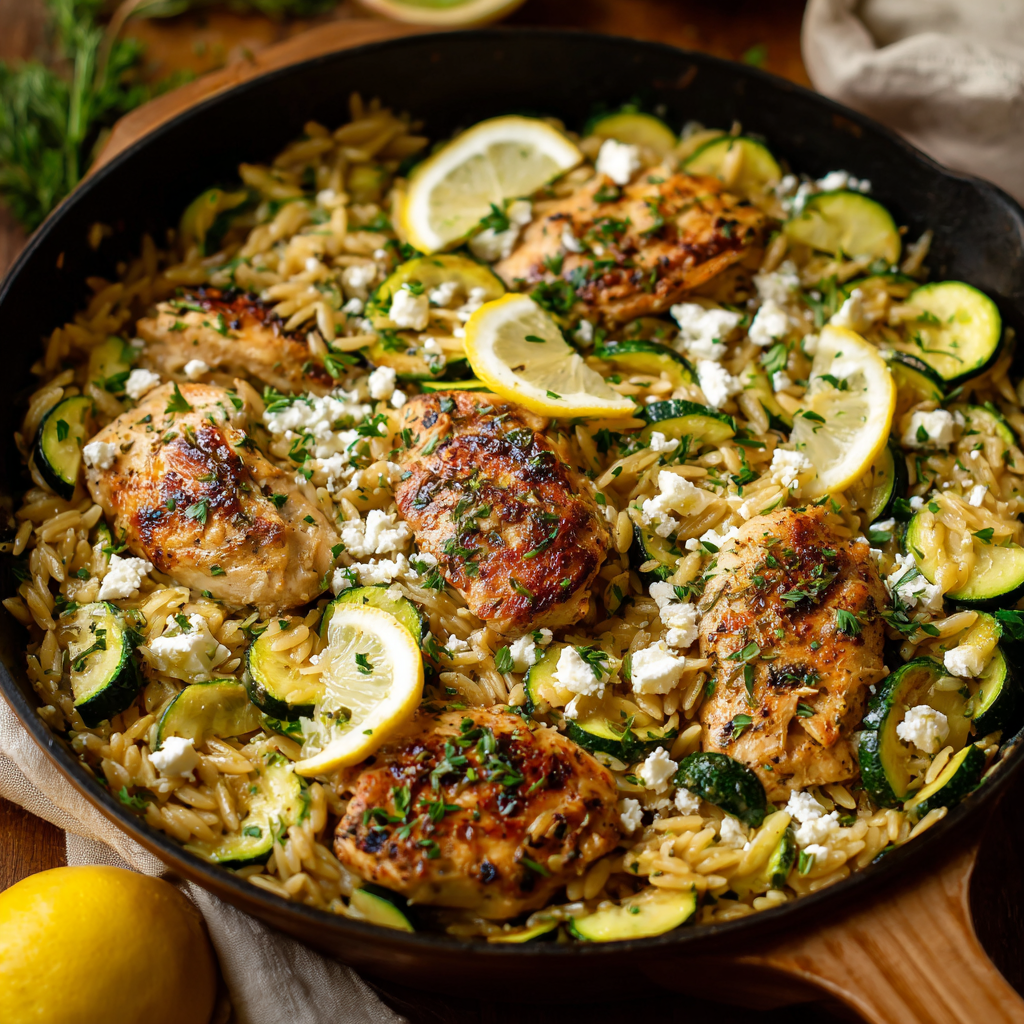
One Pot Feta Lemon Chicken Orzo Pasta
Ingredients
Method
- Preheat the oven to 425ºF.
- Heat the oil in a 12-inch skillet over medium-high heat. Once hot, cook the chicken, stirring occasionally with a wooden spoon, until lightly golden all over, 6 to 8 minutes.
- Add in the onions, garlic, and salt and cook until starting to soften, stirring often.
- Add the orzo and chicken stock and stir to combine. Turn the heat to high and bring the liquid to a boil. Shut off the heat.
- Stir in the lemon zest, lemon juice, zucchini, and feta. Cover the skillet with a lid.
- Bake, covered, for 10 minutes, or until the pasta is tender.
- Stir well to ensure the feta is melted throughout. Serve immediately with fresh basil or dill.
Nutrition
Notes
- For perfectly cooked chicken, ensure it reaches an internal temperature of 165ºF; it should be golden brown on the outside and no longer pink in the center.
- To prevent the orzo from becoming mushy, keep an eye on it while baking; a quick stir halfway through can help distribute the heat evenly.
- If you don’t have feta on hand, try using goat cheese or ricotta for a different flavor profile; both will melt nicely and add creaminess to the dish.
- Leftovers can be stored in the fridge for up to 5 days; for best results, reheat gently in the microwave or on the stovetop with a splash of chicken stock to keep it moist.
- For a quick flavor boost, add a touch of red pepper flakes or a sprinkle of your favorite herbs during cooking to elevate the dish without extra time.