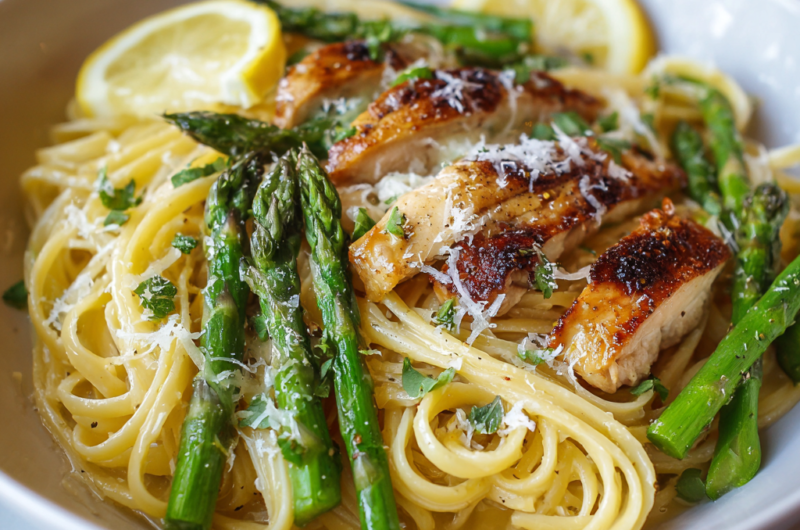
Bright, lemony, and ready in 30 minutes, this pasta swaps heavy cream for a silky white wine emulsion that clings to every strand.
📋 In This Article
Introduction
Let’s be honest: weeknight pasta usually defaults to red sauce or a heavy alfredo. But Chicken and Asparagus Lemon Pasta Tossed in a Light White Wine Sauce hits a different note entirely. It’s fresh, sharp, and surprisingly light. The technique here isn’t complicated, but it relies on one specific thing: building layers of flavor in the same pan. We aren’t just cooking chicken and setting it aside; we are using the fond—the sticky, browned bits left behind—to build a sauce that has actual depth.
This dish works because of contrast. You have the savory, well-seared chicken against the grassy crunch of asparagus. Then there’s the sauce. By using dry white wine and chicken broth, we create a velvety coating that highlights the zest of the lemon without weighing you down. It feels indulgent, sure, but it doesn’t sit heavy. It’s the kind of meal that looks like you fussed over it, but really, it’s just a series of simple, smart moves in a single skillet.
Why This Recipe Works
This isn’t just a thrown-together stir-fry. The success of this Chicken and Asparagus Lemon Pasta Tossed in a Light White Wine Sauce comes down to thermodynamics and chemistry.
First, the chicken. We sear it hard. This triggers the Maillard reaction—the chemical process where amino acids and sugars react under heat to create hundreds of new flavor compounds. That golden crust isn’t just for looks; it’s where the savory depth lives. When we deglaze the pan with wine, we dissolve that fond back into the liquid, turning “stuck-on food” into pure flavor.
Second, the sauce structure. Unlike a cream sauce which relies on fat suspension, this is an emulsion. The starch from the pasta water mixes with the olive oil and butter (if you’re feeling bold) to create a glossy, clinging texture. I tested this recipe using a straight wine reduction versus a wine-broth blend; the blend won hands down. The broth provides a savory backbone that straight wine lacks, preventing the dish from tasting like a glass of Chardonnay.
Ingredients Overview
Gathering your ingredients before you start (mise en place) is crucial here. The actual cooking moves fast.
- Chicken Breast: 1 lb (approx. 2 medium) boneless, skinless chicken breasts. Pound them slightly for even thickness or slice into cutlets.
- Asparagus: 8 oz fresh asparagus, woody ends trimmed and cut into 2-inch pieces.
- Pasta: 12 oz dried pasta. Fettuccine or linguine works best to grab the sauce.
- Lemon: 1 large lemon. We need both the zest and the juice.
- Garlic: 4 cloves, minced. Don’t skimp here.
- White Wine: 1/2 cup dry white wine (Sauvignon Blanc or Pinot Grigio). Avoid “cooking wine”—use something you’d actually drink.
- Chicken Broth: 1 cup low-sodium chicken broth. This gives us control over the salt level.
- Parmesan Cheese: 1/2 cup freshly grated Parmigiano-Reggiano. The pre-grated stuff has anti-caking agents that prevent it from melting smoothly.
- Olive Oil: 2 tablespoons extra virgin olive oil.
- Butter: 1 tablespoon unsalted butter (optional, but helps emulsification).
- Fresh Herbs: Parsley or basil for finishing.
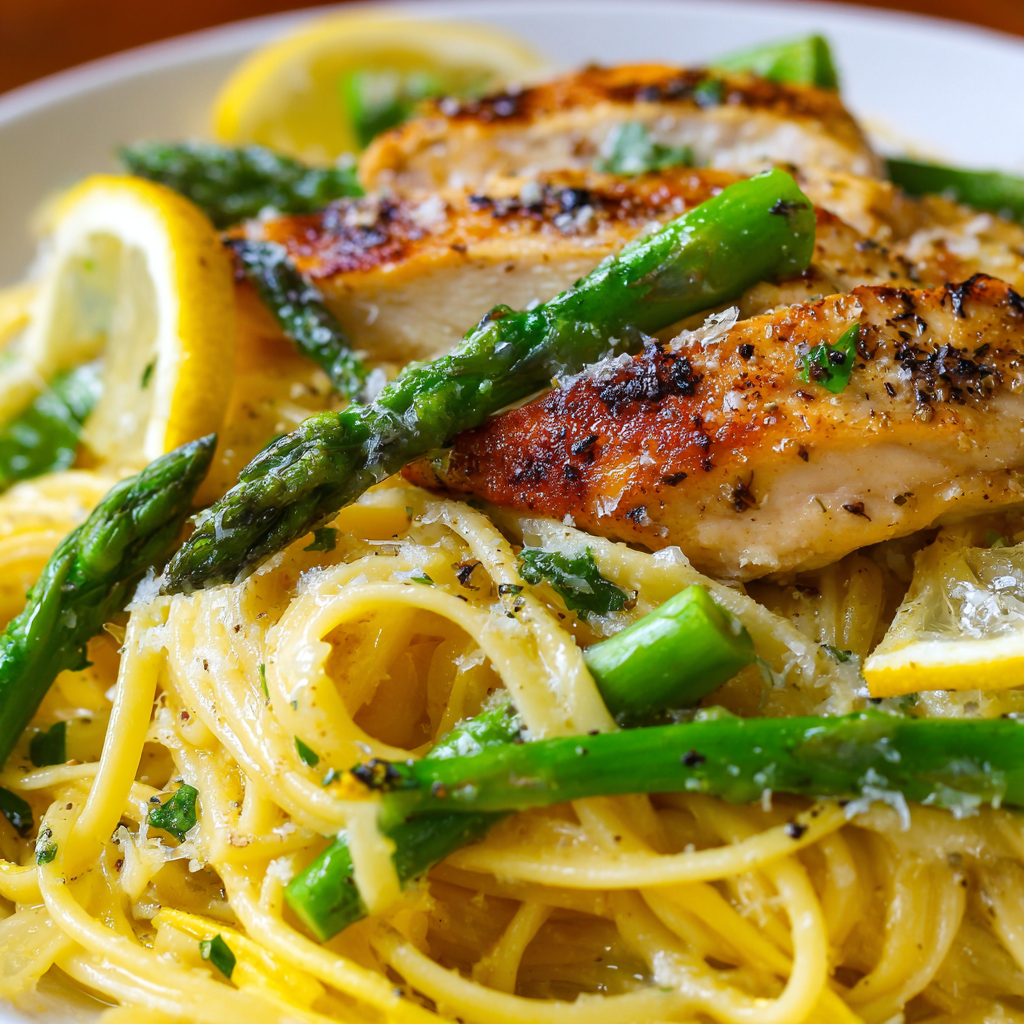
Step-by-Step Instructions
- Prep the Ingredients: Mise en place saves you from panic later. Trim the asparagus, mince the garlic, zest and juice the lemon, and slice the chicken into bite-sized pieces or pound it thin. Season the chicken generously with salt and pepper.
- Boil the Pasta: Bring a large pot of salted water to a boil. It should taste like the ocean. Cook the pasta to just shy of al dente (about 1 minute less than the package instructions). Crucial Step: Reserve 1 cup of the starchy pasta water before draining.
- Sear the Chicken: Heat the olive oil in a large, deep skillet over medium-high heat until shimmering. Add the chicken in a single layer. Don’t crowd the pan or it will steam—do two batches if necessary. Sear for 3-4 minutes per side until deeply golden. Remove chicken and set aside.
- Sauté the Asparagus: In the same skillet (don’t wash it!), add the asparagus. Sauté for 2-3 minutes until bright green and crisp-tender. Add the garlic during the last minute of cooking. Garlic burns fast and turns bitter, so add it late.
- Deglaze and Simmer: Pour in the white wine. Use a wooden spoon to scrape up every bit of browned fond from the bottom of the pan. Let the wine bubble and reduce by half, about 2 minutes. This cooks off the harsh alcohol, leaving behind acidity and complexity. Add the chicken broth and bring to a simmer.
- Emulsify the Sauce: Add the drained pasta, lemon juice, and lemon zest to the skillet. Toss vigorously. Add the butter and a splash of the reserved pasta water. The agitation helps the water, fat, and starch combine into a creamy sauce that clings to the noodles. If it looks dry, add more pasta water a splash at a time.
- Finish and Serve: Add the cooked chicken back in along with the Parmesan. Toss until heated through and the cheese melts into the sauce. Taste. Does it need more salt? Probably not, because of the cheese, but add a crack of black pepper. Garnish with herbs.
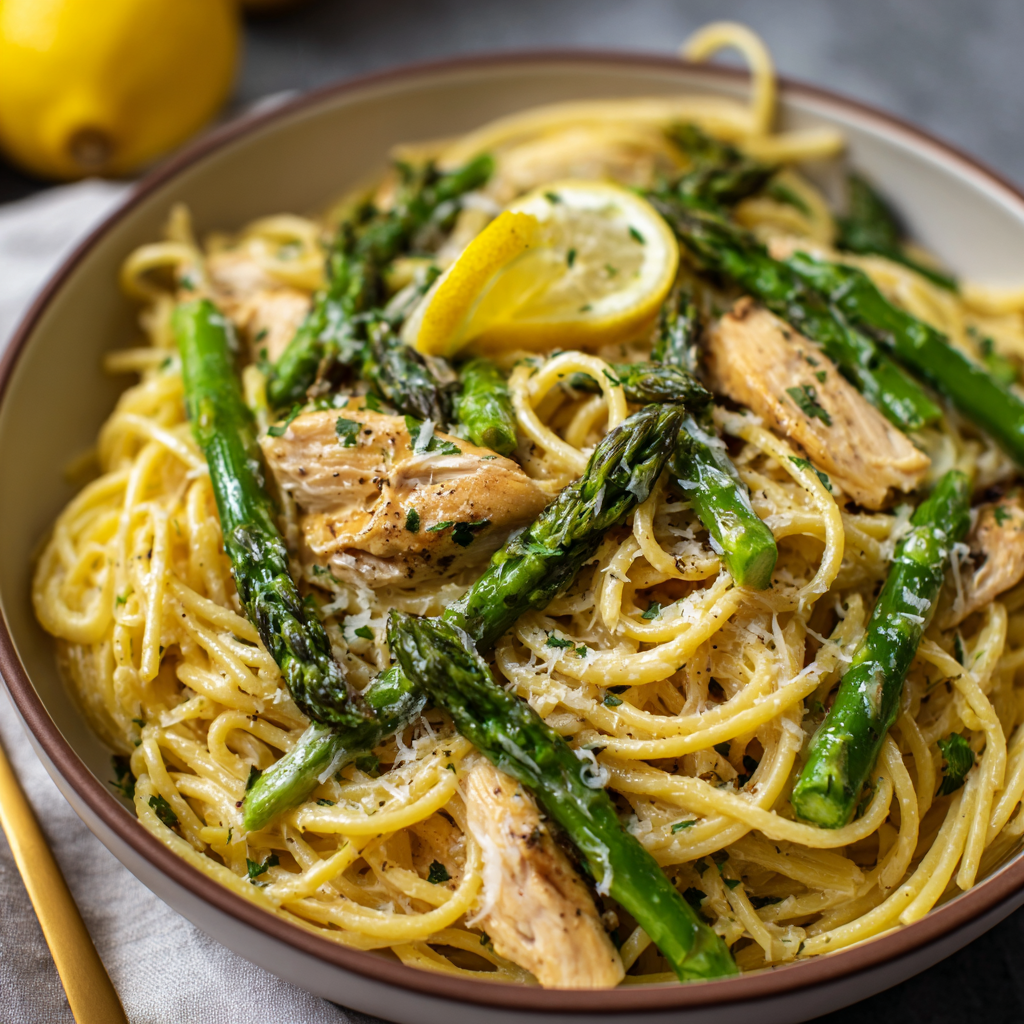
The Science of the White Wine Sauce
Why does this sauce work without cream? It’s all about emulsification.
When you add the starchy pasta water to the reduced wine and broth, the starch molecules swell and act as stabilizers. They allow the water and fat (from the oil and butter) to mix rather than separate. This creates a velvety texture.
The wine provides acidity. Acid cuts through the richness of the chicken and cheese, balancing the palate. Without it, the dish would taste flat. The lemon zest contains essential oils that provide a floral top note, while the juice adds a sharp, bright finish. We add the juice late to preserve its volatile aromatic compounds—heat kills fresh citrus flavor quickly.
⚠️ Common Mistakes to Avoid
Even simple recipes can go sideways. Here is where people usually trip up.
- Overcooking the Asparagus: Nobody likes mushy asparagus. It should be bright green and snap when you bite it. Add it to the pan only after the chicken is done; it needs barely 3 minutes of heat.
- Skipping the Pasta Water: If you drain your pasta and forget to save the water, your sauce will be thin and runny. That starch is the glue. Without it, the sauce slides off the pasta and pools at the bottom of the bowl.
- Using “Cooking Wine”: Supermarket “cooking wine” is loaded with salt and preservatives. It tastes metallic and harsh. Use a dry, drinkable wine. If you wouldn’t sip it, don’t cook with it.
- Adding Lemon Juice Too Early: If you add lemon juice and let it boil for 10 minutes, the bright, fresh notes evaporate. Add it at the very end, off the heat, to keep that zing alive.
Variations & Customizations
This recipe is a template. Once you nail the technique, feel free to riff on it.
- Seafood Swap: Replace the chicken with shrimp. Shrimp cooks faster—about 2 minutes per side—so watch the heat closely.
- Spring Vegetable Mix: Add peas, artichoke hearts, or thin slices of snap peas along with the asparagus for a fuller vegetable profile.
- Creamy Twist: Stir in 1/4 cup of heavy cream or a dollop of mascarpone cheese with the broth if you want a richer, heavier sauce.
- Herb Infusion: Toss in fresh tarragon or dill with the parsley. Tarragon has a slight anise flavor that pairs beautifully with white wine and asparagus.
Serving Suggestions & Pairings
This dish is a meal on its own, but a few sides round it out.
Serve with a crisp green salad dressed in a simple vinaigrette to cut the richness. A slice of warm, crusty bread is non-negotiable for mopping up any extra sauce.
For wine, stick to the varietal you cooked with. A Sauvignon Blanc is ideal. Its grassy, herbal notes mirror the asparagus, and its high acidity matches the lemon in the sauce. If you prefer red, go light—a Pinot Noir won’t overpower the delicate flavors.
Storage & Reheating Tips
Pasta dishes with sauce are best eaten fresh, but leftovers happen.
Store the pasta in an airtight container in the refrigerator for up to 3 days. The pasta will absorb the sauce as it sits, so it might look dry when you pull it out.
To reheat, skip the microwave if you can. Put the leftovers in a skillet over medium-low heat. Add a splash of water or broth and toss until the sauce loosens back up and everything is heated through. This restores the creamy texture better than blasting it with radiation.
💡 Pro Tips for Success
I’ve made this dish dozens of times, and these are the details that matter.
- Dry the Chicken: Pat the chicken completely dry with paper towels before seasoning. Moisture on the surface creates steam, and steam prevents browning. You want a hard sear, not a grey boil.
- Salt Your Pasta Water Aggressively: It should taste like a well-seasoned soup. This is the only chance to season the actual structure of the pasta. If the water is bland, the final dish will be bland.
- Grate Your Own Cheese: I know the pre-grated tub is convenient. I used to use it all the time—don’t. It contains cellulose (wood pulp) to prevent clumping, which prevents it from melting into a smooth sauce. Grate it fresh.
- Taste as You Go: Taste the sauce before adding the final salt. The Parmesan is naturally salty, and the reduction concentrates flavors. You might not need extra salt.
Frequently Asked Questions (FAQ)
+Can I use a different type of pasta?
Absolutely. Penne, bowties, or spaghetti all work. The key is cooking the pasta to al dente so it holds up when tossed in the sauce.
+What can I use instead of white wine?
If you don’t cook with alcohol, substitute the wine with an equal amount of chicken broth plus a teaspoon of white wine vinegar or apple cider vinegar to mimic the acidity.
+Why is my sauce watery?
The sauce likely didn’t reduce enough, or there wasn’t enough starch. Make sure to boil the wine/broth mixture until it thickens slightly, and always use the reserved pasta water to help bind it.
+Can I make this ahead of time?
You can prep the ingredients (chopping veggies, slicing chicken) a day in advance. However, the cooked dish is best served immediately as the sauce can absorb into the pasta upon standing.
Conclusion
This Chicken and Asparagus Lemon Pasta Tossed in a Light White Wine Sauce is proof that you don’t need a pantry full of ingredients or hours of free time to create something memorable. It’s about technique—searing, deglazing, and emulsifying. When you understand why you are doing those steps, the cooking becomes intuitive. It’s a vibrant, satisfying meal that bridges the gap between Tuesday night convenience and something you’d be happy to serve guests. Give it a try, and don’t forget to save that pasta water.
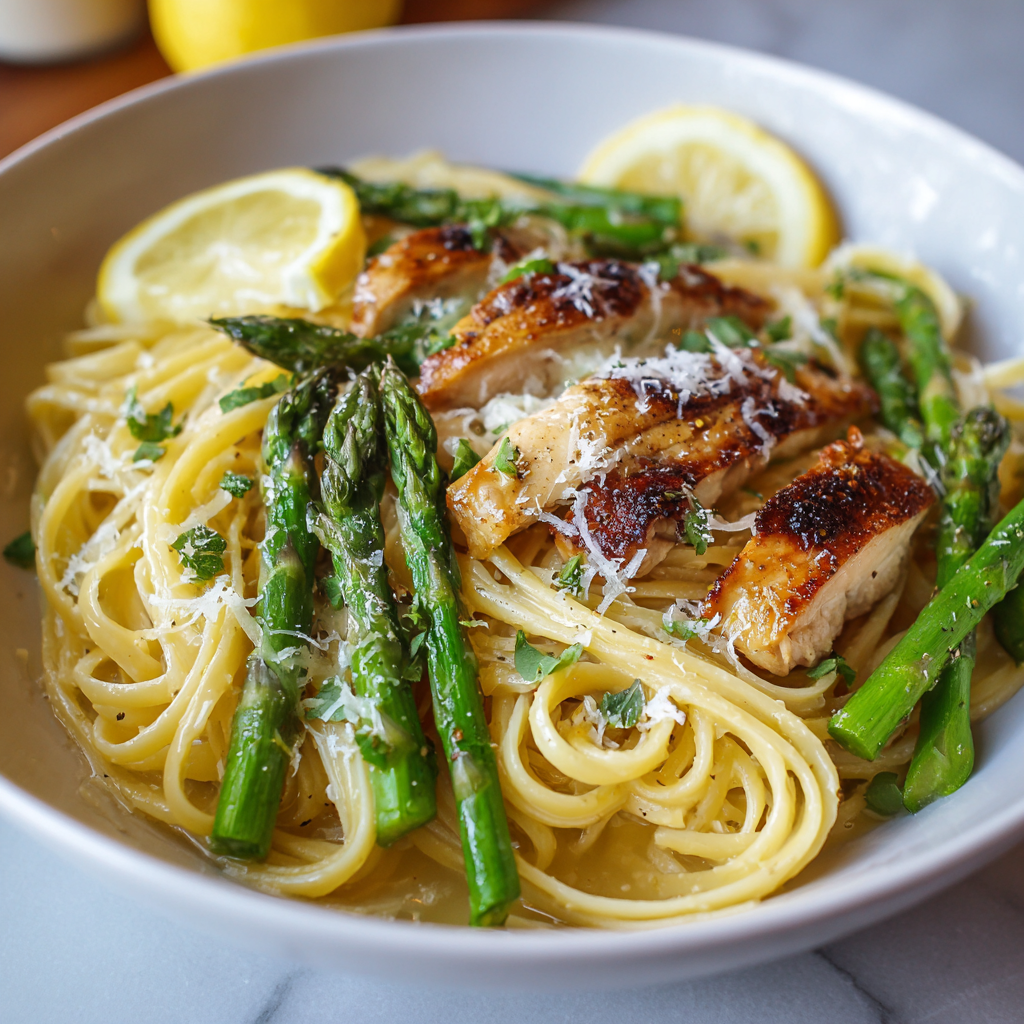
Easy Lemon Chicken Asparagus Pasta in a Skillet
Ingredients
Method
- Prep:
- Cook the Pasta:
- Time to cook in the pan:
- Serve:
Nutrition
Notes
- Ensure your chicken breasts reach an internal temperature of 165°F for safe eating; they should be golden brown on the outside and juices should run clear.
- To keep the pasta from drying out, add a splash of reserved pasta cooking water to the skillet before serving; this helps to loosen the sauce and keeps everything creamy.
- If you don't have shallots, finely chopped green onions or a sweet onion can work as a great substitute, adding a mild flavor without overpowering the dish.
- For quicker prep, you can cook the pasta while sautéing the chicken and asparagus; just make sure to time it right so everything finishes together.
- Leftovers can be stored in an airtight container in the fridge for up to 3 days; when reheating, add a splash of milk or broth to restore creaminess and prevent sticking.