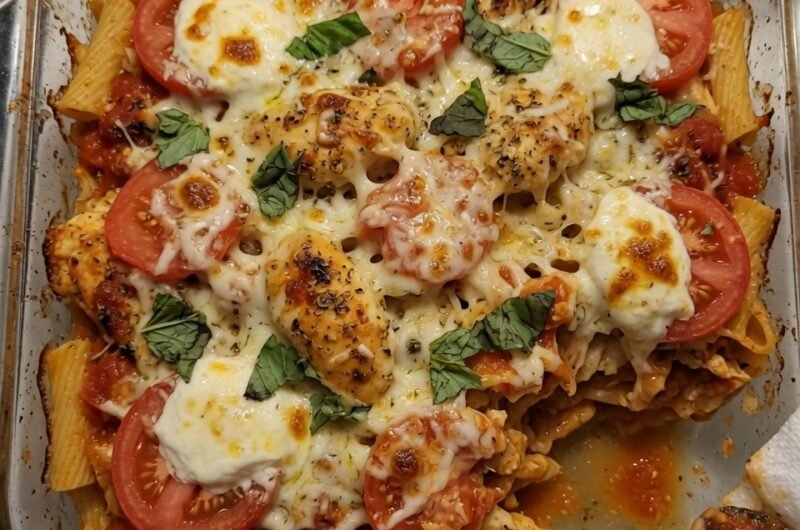
A one-pan wonder that combines juicy seared chicken, al dente pasta, and the classic trio of tomato, basil, and melted mozzarella—finished with a sticky-sweet balsamic reduction.
📋 In This Article
- Introduction
- Why This Caprese Chicken Pasta Bake is a Must-Make
- The Perfect Ingredients for Your Caprese Chicken Pasta Bake
- Step-by-Step: How to Make Caprese Chicken Pasta Bake
- Common Mistakes to Avoid for the Best Pasta Bake
- Caprese Chicken Pasta Bake Variations & Dietary Swaps
- Storage & Reheating Tips
- Pro Tips for an Unforgettable Caprese Chicken Pasta Bake
- Frequently Asked Questions About Caprese Chicken Pasta Bake
- Conclusion
Introduction
Let’s be honest: weeknight dinners need to work hard. This Caprese Chicken Pasta Bake is the answer when you want comfort food that actually tastes like something. It takes the fresh, high-impact flavors of a Caprese salad—ripe tomatoes, fragrant basil, and creamy mozzarella—and translates them into a hearty, oven-baked format.
The secret isn’t just the ingredients; it’s the technique. We’re not just dumping things in a dish. We’re building layers of flavor, starting with properly seared chicken and a tomato sauce that simmers just long enough to deepen. And that balsamic glaze? It’s non-negotiable. The sharp, sweet tang cuts through the rich cheese and savory chicken, balancing every bite. It’s simple, yes, but it eats like a meal you’d pay for. The Ultimate Guide to the Italian Grinder Sandwich: Bold, Flavorful, and Irresistible.
Why This Caprese Chicken Pasta Bake is a Must-Make
There are pasta bakes, and then there’s this. The difference lies in the texture. Too often, these dishes turn into a mushy, homogenous blob. Not here. By cooking the pasta just shy of al dente and using fresh mozzarella which melts differently than the pre-shredded stuff, you get distinct, satisfying bites.
The interplay of temperatures and textures is key. You get the yielding pasta, the burst of warm juice from the cherry tomatoes, and the stretch of the cheese. It’s a masterclass in comfort food balance. Plus, it’s incredibly forgiving. If you have extra spinach wilting in the crisper or a slightly overripe tomato, toss it in. The bake is robust enough to handle it.
The Perfect Ingredients for Your Caprese Chicken Pasta Bake
To build a bake that stands above the rest, you need ingredients that pull their weight.
- Chicken Breast: 1 pound, cut into bite-sized pieces. We cut them small so they cook quickly and stay juicy.
- Penne Pasta: 12 ounces. The tubes catch the sauce inside.
- Fresh Mozzarella: 2 cups, cubed or torn. Avoid the pre-shredded bags; they contain anti-caking agents that inhibit melting.
- Cherry Tomatoes: 2 cups, halved. They provide bursts of fresh sweetness that canned tomatoes can’t replicate.
- Fresh Basil: 1/2 cup, chopped. Add it at the end to keep its aromatic oils intact.
- Garlic: 2 cloves, minced.
- Onion: 1 medium, finely chopped.
- Crushed Tomatoes: 1 can (28 ounces). The backbone of the sauce.
- Chicken Broth: 1 cup. Adds savory depth without making the dish heavy.
- Olive Oil: 3 tablespoons.
- Parmesan Cheese: 1 cup, grated. For a salty, nutty kick.
- Balsamic Vinegar: 1/4 cup for the glaze (plus a splash for the sauce if you like).
- Sugar: 1 teaspoon. Just enough to tame the acidity of the canned tomatoes.
- Salt and Black Pepper: To taste.
- Italian Seasoning: 1 tablespoon.
Optional Additions: A cup of fresh spinach adds color and earthiness, or throw in some sun-dried tomatoes for a chewy, umami-rich texture.
Step-by-Step: How to Make Caprese Chicken Pasta Bake
This isn’t just assembly; it’s about building flavor from the pan up.
Prep Time: 15 minutes | Cook Time: 30 minutes | Total Time: 45 minutes
- Preheat and Prep: Crank your oven to 375°F (190°C). This temperature is the sweet spot—hot enough to bubble the cheese and brown the top, but gentle enough to heat the interior through without drying out the chicken.
- Sear the Chicken: In a large oven-safe skillet (or a regular pan if you’re transferring to a baking dish later), heat 1 tablespoon of olive oil over medium-high heat. Season the chicken pieces generously with salt and pepper. Lay them in the pan and don’t touch them for 3-4 minutes. We want a deep golden-brown crust. This triggers the Maillard reaction—the chemical process where amino acids and sugars react under heat to create hundreds of complex, savory flavor compounds. Flip and cook another 2-3 minutes until cooked through. Remove the chicken and set aside.
- Boil the Pasta: Bring a large pot of salted water to a boil. Cook the pasta for 1 minute less than the package instructions suggest. It should be very firm. Why? The pasta will absorb liquid from the sauce while baking. If you cook it to al dente now, you’ll end up with mush later.
- Build the Sauce Base: In the same pan you used for the chicken (don’t wash it!), add another tablespoon of oil and the onions. Sauté until soft, about 5 minutes. Add the garlic and cook for 30 seconds until fragrant. Pour in the crushed tomatoes and chicken broth, scraping up the browned bits stuck to the bottom of the pan. That brown stuff is called fond, and it’s pure concentrated flavor. Let the sauce simmer for 5 minutes to thicken slightly.
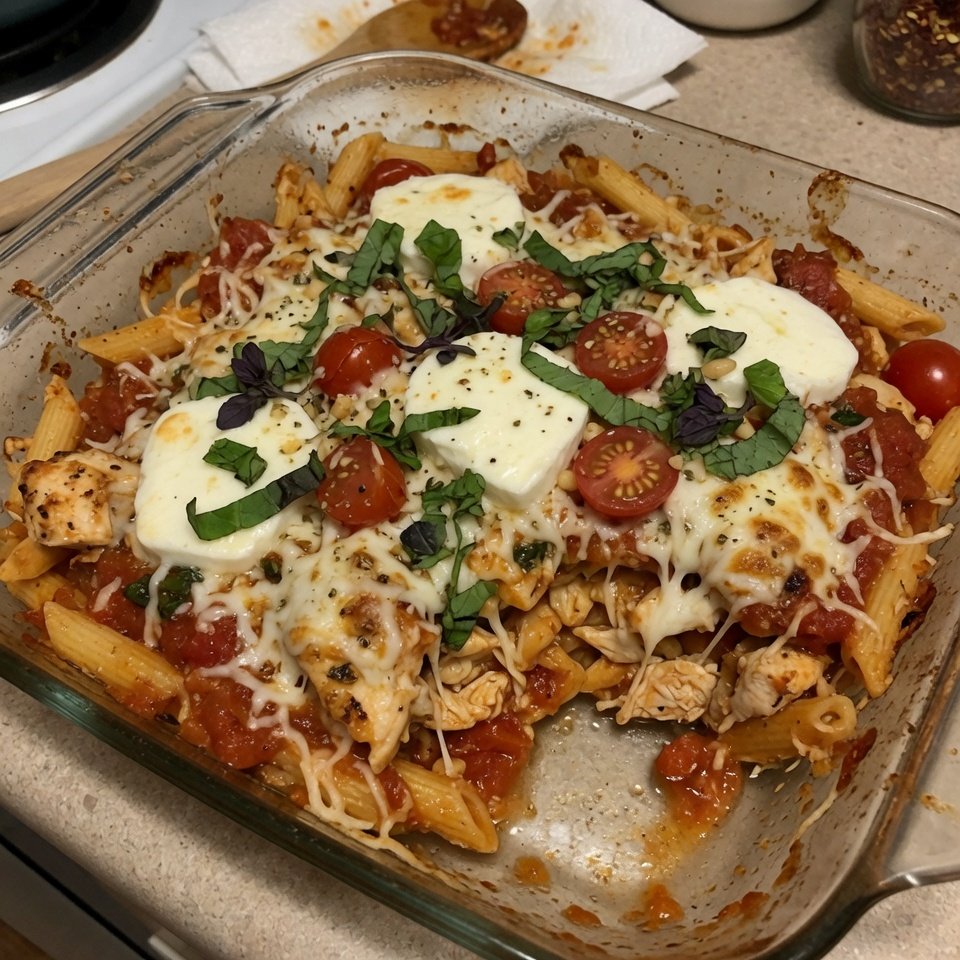
- Combine: Stir in the halved cherry tomatoes and the optional spinach if using. The heat will slightly soften the tomatoes but keep their structure. Add the undercooked pasta and the seared chicken back to the pan. Toss everything to coat evenly. Stir in half of the fresh basil and half the mozzarella.
- Top and Bake: Sprinkle the remaining mozzarella and the parmesan over the top. Bake uncovered for 20 minutes. You’re looking for bubbly edges and golden spots on the cheese.
- The Balsamic Glaze: While the pasta bakes, make the glaze. In a small saucepan, combine the balsamic vinegar and a teaspoon of sugar (or honey). Simmer over medium-low heat for about 10 minutes. It’s ready when it coats the back of a spoon and reduces by about half. This increases the viscosity and concentrates the sugars, turning sharp vinegar into a syrupy finish.
- Finish: Remove the bake from the oven. Drizzle that gorgeous glaze over the cheese. Top with the remaining fresh basil. Serve immediately.
⚠️ Common Mistakes to Avoid for the Best Pasta Bake
Even simple dishes have pitfalls. Here’s how to sidestep them.
- Overcooking the Pasta: This is the number one crime. Remember, the pasta cooks twice: once in the water and once in the sauce. Pulling it early is the only way to guarantee a toothsome texture after baking.
- Skipping the Sear: If you just toss raw chicken into the bake, it steams. It’s bland. Taking the time to sear creates that flavorful crust and fond that infuses the whole dish.
- Watery Sauce: Canned tomatoes vary in liquid content. If your sauce looks too thin before combining, let it simmer a few minutes longer to reduce. A watery sauce leads to a soupy bake.
- Cold Chicken: If you assemble this ahead of time and pull it straight from the fridge, the center will be cold while the cheese burns. Let it sit on the counter for 20 minutes before baking, or add 10 minutes to the cook time.
- Burning the Basil: Fresh basil is delicate. If you bake it for 20 minutes, it turns black and bitter. Always add the bulk of your basil after the bake, right before serving.
Caprese Chicken Pasta Bake Variations & Dietary Swaps
This recipe is a template. Make it work for your table.
- Vegetarian Option: Swap the chicken for cannellini beans or chickpeas. The beans absorb the tomato sauce beautifully and add a creamy texture without the meat.
- Gluten-Free: Use your favorite gluten-free pasta. Just be extra careful not to overcook it in the water phase, as gluten-free pasta can fall apart faster during baking.
- Low-Carb: Substitute the pasta with zucchini noodles or cubed, roasted spaghetti squash. Reduce the bake time to 10 minutes since the “pasta” is already cooked.
- Spicy Kick: Add a teaspoon of red pepper flakes to the tomato sauce while it simmers. The heat plays incredibly well against the sweet balsamic glaze.
Storage & Reheating Tips
Leftovers are a gift to your future self.
Store the cooled pasta bake in an airtight container in the fridge for up to 3-4 days. The flavors actually meld and improve overnight.
For reheating, the microwave is fine for a quick lunch. But if you want to restore that crispy cheese top, use the oven. Cover with foil (to prevent further browning) and bake at 350°F (175°C) for about 20-25 minutes until heated through.
You can freeze it, too. Wrap the dish tightly in plastic and foil. It keeps for 3 months. Thaw overnight in the fridge before reheating.
💡 Pro Tips for an Unforgettable Caprese Chicken Pasta Bake
I’ve made this dish more times than I can count. Here’s what makes the difference.
Use room temperature mozzarella. Cold cheese takes longer to melt, meaning you have to leave the dish in the oven longer, risking dry pasta. Let the mozzarella sit out while you prep the other ingredients.
Salt your pasta water aggressively. It should taste like the ocean. This is the only chance to season the actual structure of the pasta. Since we’re pulling it early, the salt penetrates the surface but doesn’t fully saturate the interior, so a heavily salted water is crucial.
Rest the bake. I know it’s tempting to dive in immediately. But let it sit for 5-10 minutes after it comes out of the oven. This allows the sauce to thicken up slightly as it cools, so when you scoop it, you get a clean serving rather than a sloppy mess.
Frequently Asked Questions About Caprese Chicken Pasta Bake
+Can I use rotisserie chicken instead of raw?
Absolutely. Using a store-bought rotisserie bird saves time. Skip the searing step and simply add the shredded meat when you combine the pasta and sauce. It’s a great shortcut for a Caprese Chicken Pasta Bake on a busy night.
+Why is my pasta bake dry?
Usually, this means the pasta absorbed too much liquid during baking or the sauce was too thick to start. Ensure your sauce is loose and saucy before mixing with the pasta. If it looks dry, add a splash of reserved pasta water or chicken broth before baking.
+Can I make this ahead of time?
Yes. Assemble the dish, cover it tightly, and refrigerate for up to 24 hours. When you’re ready to cook, pull it out to take the chill off for 30 minutes, then bake as directed. You may need to add an extra 5-10 minutes to the baking time.
+What pasta shape works best?
Short, sturdy shapes are ideal. Penne, rigatoni, or fusilli hold the sauce well and don’t fall apart as easily as long noodles like spaghetti during the mixing and baking process.
+Do I have to make the balsamic glaze?
You don’t have to, but you should. The glaze provides a sweetness and acidity that brightens the heavy cheese and starch. Without it, the dish can feel a bit one-note. If you’re short on time, a drizzle of high-quality balsamic vinegar works, though it won’t have the same syrupy texture.
Conclusion
This Caprese Chicken Pasta Bake is more than just dinner; it’s a lesson in how a few high-quality ingredients, treated with a little culinary know-how, can create something greater than the sum of their parts. From the science of the sear to the strategic undercooking of the pasta, these steps ensure a meal that is comforting, vibrant, and deeply satisfying. So grab that mozzarella and get searing—your new favorite weeknight tradition awaits.
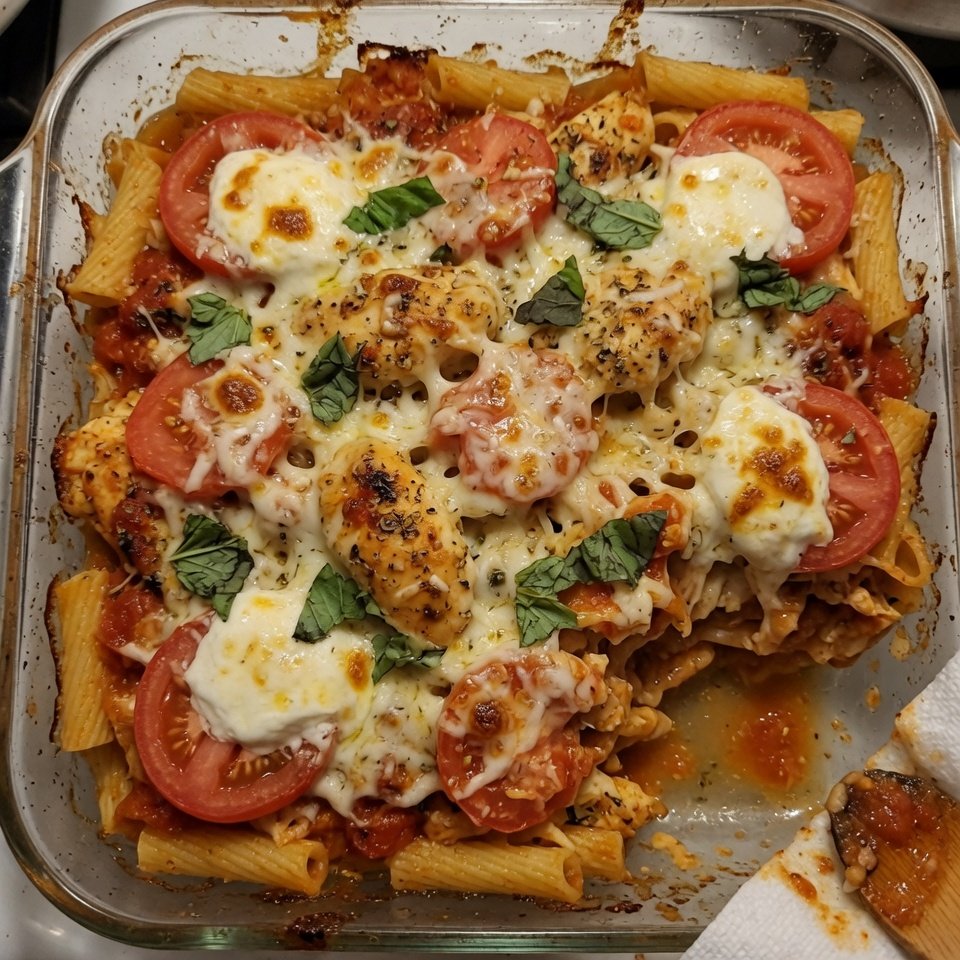
Chicken Caprese Pasta Bake
Ingredients
Method
- Preheat oven to 375 degrees.
- Heat olive oil in a skillet over medium heat. Season chicken with the seasonings, ensuring all pieces are coated evenly.
- Add chicken pieces to the pan, drizzle one tablespoon of balsamic vinegar over the chicken and cook thoroughly
- Once chicken is cooked, remove it from the pan and set it aside. Using the same pan, add the butter and let it melt. Add the minced garlic and saute for 30 seconds.
- Sprinkle the flour into the pan and whisk it around until the butter and oil are absorbed.
- Slowly add the half and half and whisk it around until the flour is incorporated and the sauce is thickened.
- Add 1 1/2 cups of each the mozzarella and Parmesan cheeses and stir into cream sauce.
- Add the chopped tomatoes, spinach, and 1/4 cup chopped basil to the cheese sauce. Mix in the chicken and the pasta, and stir until combined.
- Sprinkle the remaining cheeses on top and place in the oven for 10 minutes.
- Using a small saucepan, add balsamic vinegar and sugar. Cook for 5 minutes until vinegar reduces down and turns into a glaze.
- Remove pasta from the oven, drizzle balsamic glaze over the dish. Top with remaining basil.
Nutrition
Notes
- To ensure your chicken is thoroughly cooked, aim for an internal temperature of 165°F; the pieces should be golden brown and no longer pink inside.
- To prevent the sauce from becoming too watery during baking, make sure to drain excess liquid from the spinach before adding it to the mix.
- If you're short on time, feel free to use rotisserie chicken instead of raw chicken; just shred it and mix it in right before combining with the pasta.
- Leftovers can be stored in an airtight container in the fridge for up to 3 days, and for best results, reheat in the oven at 350°F to maintain the creamy texture.
- For a quick balsamic glaze, simmer the vinegar and sugar while the pasta bake is in the oven to save time and enhance the flavor right before serving.