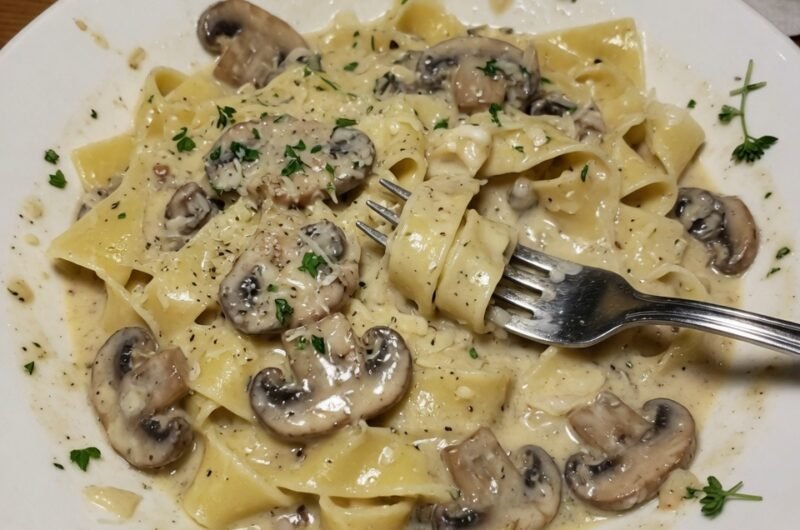
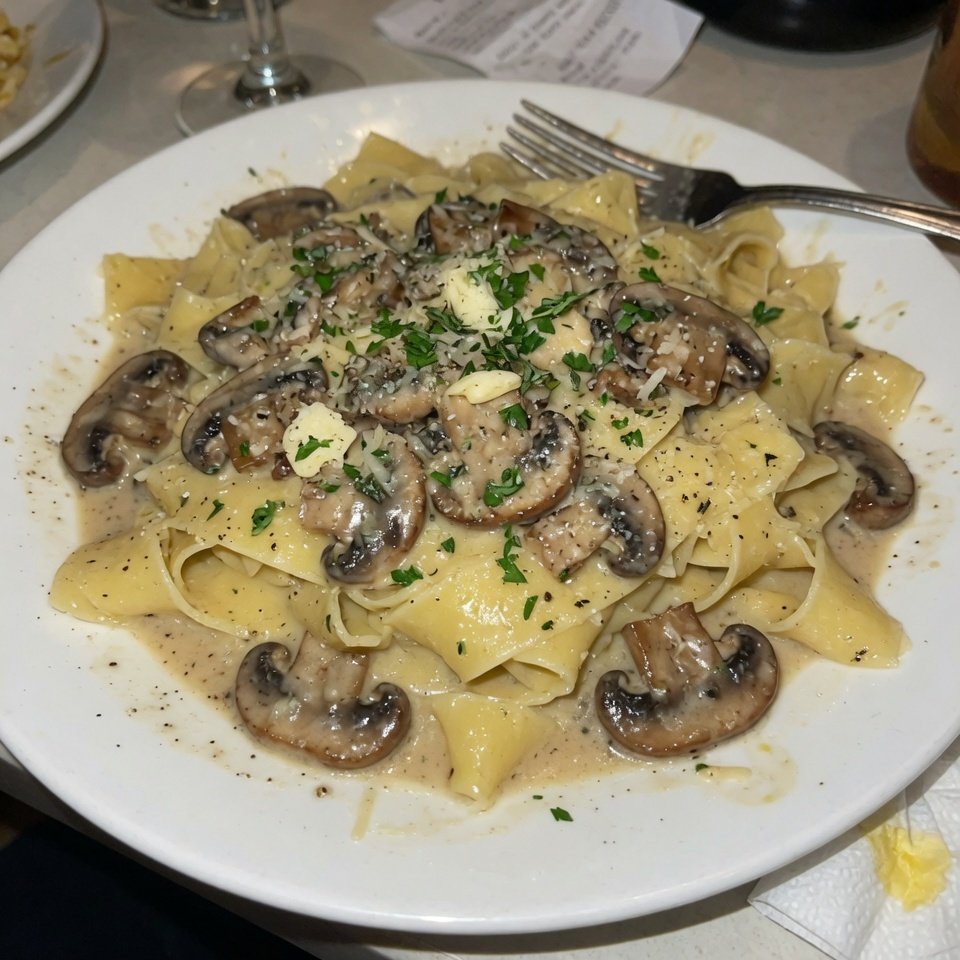
Wide ribbons of pappardelle tangled in a velvety white wine and mushroom sauce—done in 30 minutes, but tasting like a slow-simmered luxury.
📋 In This Article
Introduction
If you’ve ever wondered how a handful of fungi can taste like a steak dinner, this is it. Creamy Mushroom Pappardelle relies on one simple truth: mushrooms are flavor sponges. When treated right, they offer a depth of umami that rivals any meat sauce. The wide, flat surface of pappardelle is designed specifically to grab onto chunky, ragu-style sauces, ensuring you get a perfect ratio of noodle to sauce in every bite.
But let’s talk about the real hero here: the white wine reduction. It cuts through the heavy cream, adding a bright acidity that prevents the dish from feeling like a brick in your stomach. This isn’t just throwing ingredients in a pan; it’s about building layers. First, the caramelization of the mushrooms, then the sweetness of shallots, the sharp bite of wine, and finally, the enveloping richness of cream. It’s a weeknight meal that eats like a weekend project, without the hours of labor.
Why You’ll Love This Recipe
This dish hits that elusive sweet spot between comfort food and elegant dining. It’s fast enough for a Tuesday but impressive enough for a date night. The sauce comes together in the time it takes to boil the water.
Beyond the speed, it’s a masterclass in texture. You get the meatiness of the mushrooms, the silkiness of the sauce, and the tender chew of the pasta. It’s also incredibly adaptable. Whether you’re a meat-eater looking for a lighter option or a vegetarian craving something substantial, this recipe delivers pure, unadulterated comfort.
The Essential Ingredients
To build a sauce with this kind of depth, you need ingredients that pull their weight. Here is what you need to make this Creamy Mushroom Pappardelle shine.
Key Ingredients:
- Mushrooms (8 oz mixed): Don’t settle for just button mushrooms. A mix of Cremini (for earthiness), Shiitake (for smokiness), and Oyster (for delicate texture) creates a complex flavor profile. If you can find dried Porcini, soak them and add them in for an intense umami punch.
- Dry White Wine (1/2 cup): Acidity is non-negotiable. Use a Pinot Grigio or Sauvignon Blanc. Avoid oaky wines like Chardonnay, which can make the sauce taste bitter. If you wouldn’t drink it, don’t cook with it.
- Heavy Cream (1 cup): This provides the velvety body. Heavy cream has a high fat content, which is crucial for emulsifying with the wine and stock without breaking.
- Pappardelle (12 oz): These wide, flat ribbons are sturdy enough to stand up to a chunky mushroom sauce. If you can’t find them, tagliatelle is a fine substitute.
- Shallots (2 medium, minced): Shallots offer a milder, sweeter flavor than yellow onions, which bridges the gap between the garlic and the wine perfectly.
- Garlic (1 clove, minced): Just one clove. You want a background hum, not a spicy kick.
- Parmigiano Reggiano (1/2 cup, freshly grated): The salt and nutty funk of real Parm is the final seasoning agent. Pre-grated cheese contains anti-caking agents that prevent it from melting smoothly—do yourself a favor and grate your own.
- Fresh Thyme (1 tsp): Earthy and floral, thyme is the best friend of both mushrooms and cream.
- Butter and Olive Oil (2 tbsp each): You need the high smoke point of oil to brown the mushrooms, but you want the rich flavor of butter for the aromatics.
Step-by-Step Cooking Instructions
1. Sear the Mushrooms
Heat the olive oil in a large skillet over medium-high heat until shimmering. Add the sliced mushrooms in a single layer. Do not crowd the pan. If they are stacked on top of each other, they will steam and turn gray and soggy. Let them sizzle undisturbed for 3-4 minutes. Flip and cook for another 3 minutes until deeply golden brown.
Science Note: This browning is the Maillard reaction in action. It converts amino acids and sugars into hundreds of new flavor compounds, giving the mushrooms a savory, meaty depth that simply sautéing cannot achieve.
2. Sauté Aromatics
Push the mushrooms to the side of the pan. Add the butter, shallots, and garlic to the empty space. Sauté for 2-3 minutes until the shallots are translucent and the garlic is fragrant. Season with salt, pepper, and the fresh thyme.
3. Deglaze with Wine
Pour in the white wine. Use a wooden spoon to scrape up the browned bits (the fond) stuck to the bottom of the pan. These bits are pure concentrated flavor. Let the wine simmer for 3-4 minutes until it has reduced by about half.
Why reduce? Alcohol needs time to cook off, but more importantly, we are concentrating the acidity. If you skip this step, the sauce will taste harsh and watery.
4. Build the Sauce
Lower the heat to medium-low. Stir in the heavy cream and vegetable broth. Simmer gently for 5 minutes. You want the sauce to thicken enough to coat the back of a spoon.
5. Cook the Pasta
While the sauce reduces, bring a large pot of salted water to a boil. Add the pappardelle and cook until al dente (usually 1-2 minutes less than the package instructions). Crucial: Reserve 1 cup of the starchy pasta water before draining.
6. Emulsify and Serve
Add the drained pasta directly into the skillet with the sauce. Toss vigorously with tongs. As you toss, the starch from the pasta water mixes with the fat in the cream, creating a stable, glossy emulsion that clings to the noodles. Add pasta water a splash at a time if the sauce looks too tight. Remove from heat, stir in the Parmesan, and serve immediately.
💡 Expert Tips for Success
Getting the texture right comes down to a few specific techniques.
Water Management: Mushrooms are roughly 90% water. When you first put them in the pan, they will release liquid. Don’t panic. Keep the heat high and let that water evaporate completely. Only then will they start to brown. If the pan is too crowded, the liquid will trap the mushrooms, and they will boil in their own juices.
The Pasta Water Trick: That cloudy water in your sink? Liquid gold. The starch in it is the glue that binds the sauce to the pasta. I used to skip this step, and my sauce would separate on the plate. Now, I always save a mugful.
Cream Temperature: Cold cream hitting a ripping hot pan can cause curdling. Let your cream sit on the counter for 15 minutes while you prep the other ingredients. It integrates much smoother when it isn’t ice cold.
⚠️ Common Mistakes to Avoid
Even simple recipes can go sideways. Watch out for these pitfalls.
- Overcrowding the Pan: This is the number one crime against mushrooms. Cook them in batches if you have to. Steamed mushrooms are rubbery and bland; seared mushrooms are firm and savory.
- Under-reducing the Wine: If you don’t let the wine reduce, the sauce will be too thin and the alcohol flavor will be sharp. Wait until the sharp smell dissipates before adding the cream.
- Overcooking the Pasta: Pappardelle is wide; if it overcooks, it becomes a gummy mess. Pull it when it still has a bite. It will finish cooking in the sauce.
- Adding Cheese to a Boiling Pan: High heat causes the proteins in cheese to tighten up, leading to a grainy, oily sauce. Take the pan off the heat before stirring in the Parmesan.
Delicious Variations and Substitutions
This recipe is a template, not a law.
- Gluten-Free: Use gluten-free pappardelle (brown rice varieties hold up well) and ensure your broth is certified gluten-free.
- Dairy-Free: Substitute the heavy cream with full-fat coconut milk or a cashew cream. Use nutritional yeast or vegan Parmesan for the cheesy finish.
- Protein Boost: Want to make this a heartier meal? Crisp up some pancetta or bacon in the pan before adding the mushrooms. The rendered fat adds incredible depth.
- Herb Swaps: While thyme is classic, fresh sage leaves fried in butter make a wonderful autumnal variation. Rosemary works too, but use it sparingly—it can be overpowering.
Serving Suggestions
This pasta is rich, so balance the plate.
Serve with a crisp side salad—think bitter radicchio or peppery arugula dressed simply with lemon and olive oil. The acidity cuts right through the cream. A hunk of crusty sourdough is non-negotiable for mopping up any leftover sauce.
For wine pairings, stick to what you cooked with. A glass of the same Pinot Grigio you used in the sauce ties the meal together perfectly.
Storage and Reheating Tips
Cream sauces are finicky when reheated, but it can be done.
Store leftovers in an airtight container in the fridge for up to 3 days. The sauce will thicken considerably as it cools. To reheat, place the pasta in a skillet over low heat. Add a splash of water or broth—this rehydrates the sauce and returns it to a pourable consistency. Stir gently until warmed through. Avoid the microwave if possible; it tends to separate the cream and make the pasta rubbery.
Frequently Asked Questions (FAQ)
+Why is my mushroom sauce watery?
This usually happens if the mushrooms released water but didn’t cook long enough to evaporate it, or if the wine wasn’t reduced sufficiently. Ensure your mushrooms are golden brown before adding liquids, and let the sauce simmer until it coats a spoon.
+Can I make this recipe without wine?
Yes. While wine adds necessary acidity, you can substitute it with an equal amount of vegetable broth mixed with a teaspoon of fresh lemon juice or white wine vinegar.
+What can I use instead of heavy cream?
You can use half-and-half for a lighter sauce, though it won’t be as thick. For a non-dairy option, full-fat coconut milk works surprisingly well, lending a subtle sweetness that pairs nicely with the earthiness of the mushrooms.
+Can I use dried herbs instead of fresh?
You can, but dried herbs are more potent. Use 1/3 of the amount called for (about 1 teaspoon of dried thyme). Add them earlier in the cooking process with the shallots to allow them to rehydrate.
+How do I know when the mushrooms are done browning?
Look for color. They should be a deep, golden brown on the edges, significantly smaller in size, and they should not be releasing any visible steam. They will also sound different—less of a hiss and more of a sizzle as the moisture disappears.
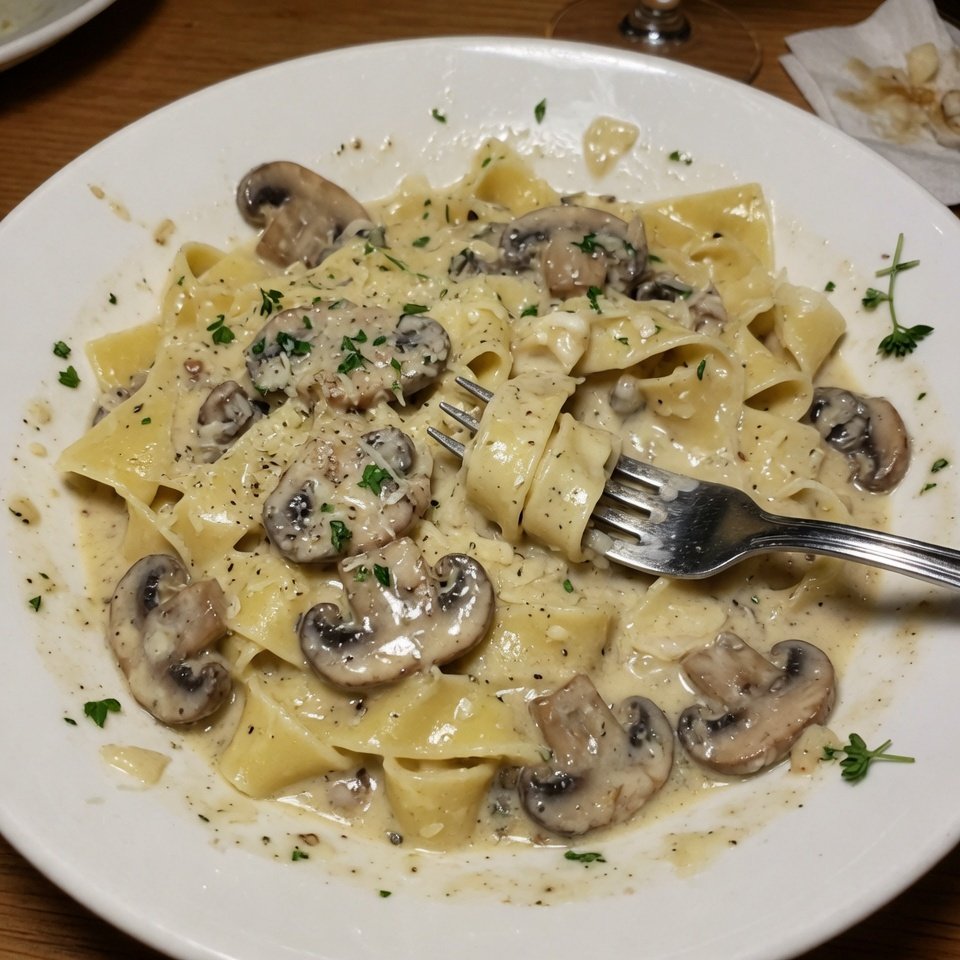
Mushroom Pappardelle
Ingredients
Method
- Slice large mushrooms into strips, about 1/2 inch wide. Small mushrooms can be quartered.
- In a large pan or skillet set on medium-high heat, melt 2 tablespoons of butter and add the mushrooms. Sautee for a few minutes until mushrooms soften, shrink and become aromatic. Do this in batches if needed until all the mushrooms are softened.
- Strip the leaves off 5 sprigs of thyme and add them to the mushrooms. Sautee for 2 minutes.
- Add the shallots and garlic. Sautee for 2-3 minutes.
- Deglaze with the white wine, scraping any bits stuck to the bottom of the pan. Add the cream, lower the heat to low and simmer for 2 minutes.
- The sauce should be ready. Taste and adjust the seasoning to your liking.
- Cook the pasta per package instructions, making sure to reserve some of the pasta water. Once ready, carefully transfer the cooked pasta to the pan with the mushroom sauce. Toss to combine. If you feel the sauce is a little thin, add pasta water. Note: this is not a saucy pasta dish.
- Plate the pasta and garnish with fresh chopped parsley and freshly grated Parmigiano Reggiano.
Nutrition
Notes
- For perfectly cooked mushrooms, sauté them until they are golden brown and have released most of their moisture; this usually takes about 5-7 minutes over medium-high heat.
- To prevent the cream sauce from breaking, keep the heat low once you add the cream, and avoid boiling it—gentle simmering is key.
- If you don't have white wine on hand, a splash of vegetable broth or even lemon juice can add acidity and depth to the sauce without sacrificing flavor.
- When cooking the pappardelle, reserve at least 1/2 cup of pasta water before draining; this starchy water can help adjust the sauce's consistency if needed.
- Leftover Mushroom Pappardelle can be stored in an airtight container in the fridge for up to 3 days; reheat gently on the stovetop over low heat to preserve the creaminess of the sauce.