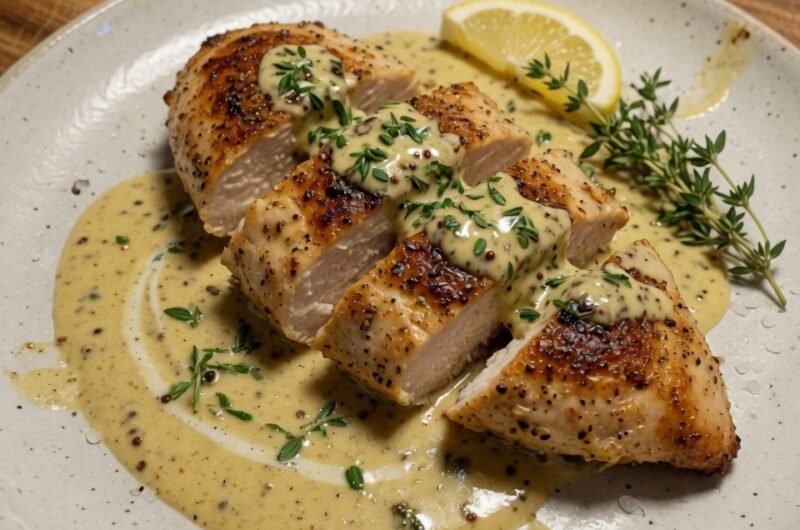
Golden, juicy chicken breasts swimming in a velvety, tangy mustard sauce — this is the weeknight dinner you’ll make on repeat.
📋 In This Article
Introduction
Let’s be honest: boneless, skinless chicken breasts have a reputation. They’re often dry, bland, and uninspiring. But this Pan-Seared Chicken & Creamy Dijon Mustard Sauce changes the game completely. It transforms the ubiquitous lean cut into something genuinely exciting—a quick-seared centerpiece draped in a rich, tangy pan sauce that comes together in the same skillet.
The magic here isn’t just the list of ingredients; it’s the technique. We’re building layers of flavor, starting with a hard sear that creates fond—those sticky, browned bits of protein left in the pan—which forms the backbone of our sauce. The Dijon mustard provides a sharp, aromatic punch that cuts through the richness of the heavy cream, while a touch of honey balances the acidity. It’s a study in contrasts: hot and cool, sharp and creamy. Best of all, it’s a true one-pan meal. From start to finish, you’re looking at about 30 minutes, making it a formidable contender for your weekly dinner rotation.
Why This Recipe Works
This isn’t just “chicken with sauce.” It’s a lesson in thermal dynamics and emulsification.
First, we pound the chicken to an even thickness. This isn’t just for aesthetics; it ensures the meat cooks at a uniform rate, so you don’t end up with a dried-out tip and a raw center. Second, we sear. That golden-brown crust isn’t just color—it’s the Maillard reaction in action, creating hundreds of complex flavor compounds on the surface of the meat.
Then there’s the sauce. By deglazing the pan with broth (or wine), we dissolve the fond, capturing every bit of flavor we developed during searing. The heavy cream acts as our emulsifier, binding the sharp mustard and savory broth into a stable, velvety consistency. The result is a sauce that clings to the meat rather than pooling at the bottom of the plate.
Ingredients
For the Chicken
- 4 (6 oz) boneless, skinless chicken breasts: Look for plump, pink breasts with minimal striations. If the breasts are particularly large, you can slice them horizontally to make cutlets.
- 2 tablespoons olive oil: A neutral oil with a high smoke point is best here; extra virgin might burn at the searing temperature we need.
- Salt and freshly ground black pepper: Essential for seasoning the meat before it hits the heat.
For the Creamy Dijon Sauce
- 2 teaspoons minced garlic (about 2 cloves): Fresh is non-negotiable here; jarred garlic lacks the volatile oils needed for that aromatic punch.
- 1/2 cup low-sodium chicken broth: Using low-sodium allows you to control the final salinity of the sauce.
- 1/2 cup dry white wine (optional): Adds acidity and complexity. If skipping, use more broth.
- 1 cup heavy cream: Do not substitute with half-and-half or milk; the high fat content is necessary to prevent the sauce from breaking when the acidic mustard is introduced.
- 2 tablespoons Dijon mustard: Provides the signature tang. Whole grain mustard works for a rustic texture, but smooth Dijon creates a silkier sauce.
- 1 teaspoon honey: Just enough to temper the mustard’s bite without making the dish sweet.
- 1 1/2 teaspoons chopped fresh thyme: Earthy and floral.
- 1/2 teaspoon dried sage: Optional, but it adds a nice herbal depth.
- Fresh parsley: Minced, for garnish.
Step-by-Step Instructions
Step 1: Prep and Pound
Place the chicken breasts between two sheets of plastic wrap or in a zip-top bag. Using a meat mallet or a rolling pin, pound them to an even thickness of about 1 inch. Don’t go too thin, or the meat will dry out before it browns. Season both sides generously with salt and pepper.
Step 2: Sear the Chicken
In a large skillet (cast iron or stainless steel is best for fond development), heat the olive oil over medium-high heat until it shimmers. This is crucial—if the oil isn’t hot enough, the chicken will steam rather than sear.
Lay the chicken in the pan. Don’t crowd it; do two batches if necessary. Sear undisturbed for 5-6 minutes per side. We want a deep golden-brown crust. Flip and cook the other side until the internal temperature reaches 165°F (75°C). Remove the chicken to a plate and tent loosely with foil. Let it rest.
Step 3: Build the Aromatics
Reduce the heat to medium. Add the garlic to the fat remaining in the pan. Sauté for about 30 seconds until fragrant, but watch it closely—burnt garlic tastes bitter and ruins the sauce.
Step 4: Deglaze and Reduce
Pour in the white wine (or an equal amount of broth) and use a wooden spoon to scrape up the browned bits from the bottom of the pan. This is the fond—the concentrated flavor base. Let the liquid bubble and reduce by half, which should take about 2 minutes.
Step 5: Emulsify the Sauce
Lower the heat to medium-low. Stir in the heavy cream, Dijon mustard, honey, thyme, and sage. Whisk to combine. Let the sauce simmer gently for 3-5 minutes until it thickens enough to coat the back of a spoon. If it looks too thick, add a splash of broth.
Step 6: Finish and Serve
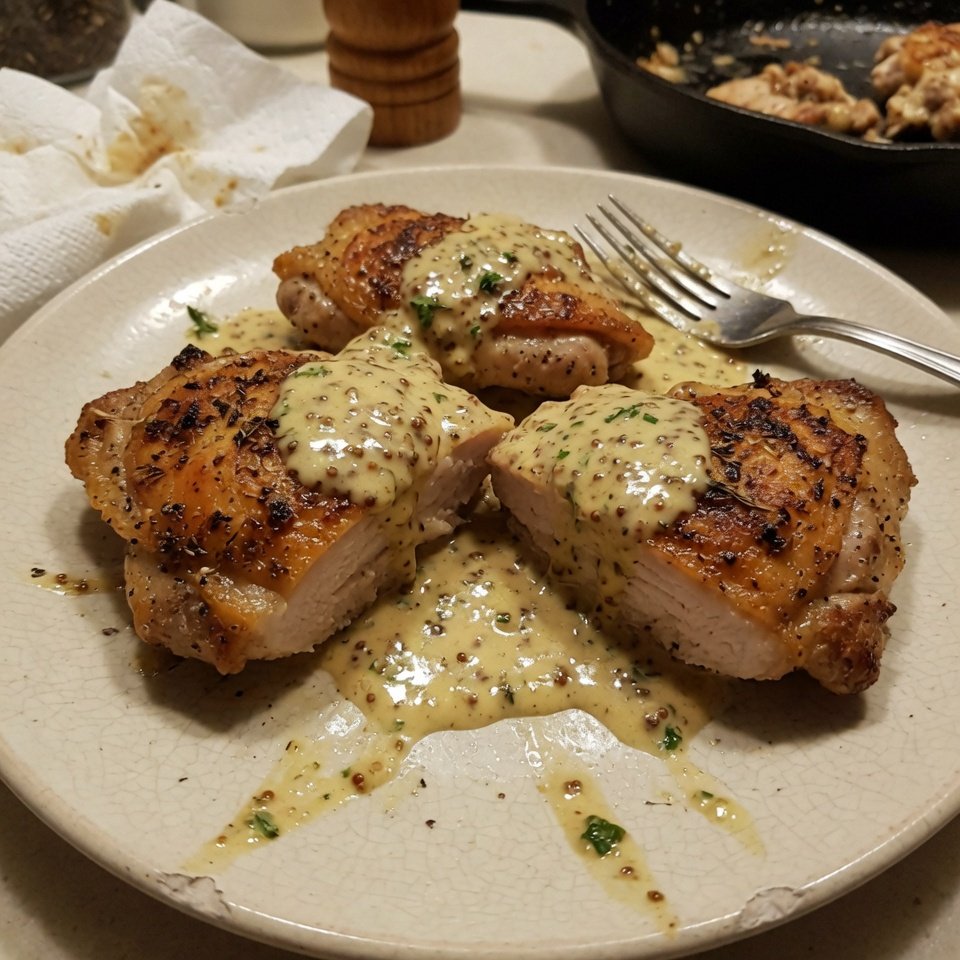
Return the chicken (and any accumulated juices on the plate) to the skillet. Spoon the sauce over the meat and let it warm through for 1 minute. Serve immediately, garnished with fresh parsley.
⚠️ Common Mistakes to Avoid
Even simple recipes can go wrong. Here’s how to dodge the bullet.
Overcooking the chicken. This is the most common sin. Because we’ve pounded the meat, it cooks faster than you might expect. Rely on an instant-read thermometer, not a clock. Pull the chicken at 165°F.
Curdling the sauce. Boiling heavy cream is generally safe, but high heat combined with acid (mustard) can cause separation. Keep the heat at a gentle simmer—no rolling boil.
Not resting the meat. When muscle fibers heat up, they contract and push juices toward the center. If you slice immediately, those juices end up on the cutting board. Resting allows the fibers to relax and reabsorb moisture. I used to skip this step in a rush—don’t. It’s the difference between juicy and dry.
Burning the fond. Those brown bits are gold, but if the heat is too high during searing, they turn black and acrid. If your fond looks like charcoal, wipe the pan out before making the sauce.
Variations & Serving Suggestions
The sauce is a template. Once you master the technique, you can riff on it endlessly.
For a lighter version, substitute pork chops or salmon fillets for the chicken; just adjust the cooking time accordingly. If you want to bulk up the vegetables, sauté sliced mushrooms in the pan after removing the chicken, then proceed with the sauce.
What to serve alongside? The sauce begs for something starchy to soak it up. Creamy mashed potatoes, buttered egg noodles, or a simple crusty baguette work perfectly. For a low-carb option, serve over cauliflower rice or roasted asparagus.
Dietary adjustments: This recipe is naturally gluten-free (check your broth labels). For a dairy-free version, full-fat coconut milk can replace the cream, though it will add a subtle coconut flavor that changes the profile significantly.
Storage & Reheating
Store the chicken and sauce together in an airtight container in the refrigerator for up to 3 days. The sauce may thicken considerably when cold; add a splash of broth or water when reheating.
To reheat, avoid the microwave if possible—it turns rubbery. Instead, place the chicken in a skillet over low heat with a lid. The gentle steam will warm it through without overcooking the protein.
Freezing is possible, but cream sauces can sometimes separate upon thawing. If you plan to freeze, consider making a fresh batch of sauce when you reheat the chicken.
💡 Pro Tips for Success
Dry the meat. Before seasoning, pat the chicken thoroughly dry with paper towels. Moisture on the surface creates steam, and steam prevents browning. You want a dry surface for that Maillard reaction.
Temper the chicken. Pull the meat out of the fridge 15 minutes before cooking. Bringing it closer to room temperature helps it cook more evenly from edge to center.
Taste the sauce. Mustards vary wildly in potency. Taste your sauce before adding the chicken. Too sharp? Add a little more honey or cream. Too bland? A pinch of salt or a squeeze of lemon juice wakes it up.
Don’t move the pan. When searing, the chicken will release naturally once a crust has formed. If it sticks, give it another 30 seconds. Patience creates the crust.
Frequently Asked Questions
+Why is my chicken dry and tough?
Dry chicken is almost always the result of overcooking. Because chicken breasts are lean, they lack the insulating fat of thighs. Use a thermometer and pull the meat the moment it hits 165°F. Carryover cooking will do the rest.
+Can I use milk instead of heavy cream?
You can, but the texture will be much thinner, and there is a higher risk of the sauce curdling due to the lower fat content. If you must use milk, avoid boiling the sauce and consider adding a small amount of flour or cornstarch to stabilize it.
+How do I know when the chicken is done without a thermometer?
The most reliable method is a thermometer. However, you can check by making a small slit in the thickest part of the meat; the juices should run clear, and the meat should be opaque throughout. This method releases juices, so it’s less ideal than using a thermometer.
+Can I make this recipe ahead of time?
You can prep the chicken (pound and season) up to a day in advance. The sauce, however, is best made fresh. Cream sauces tend to thicken and break down upon reheating, losing that velvety texture.
+What sides pair well with Dijon chicken?
Starchy sides like roasted potatoes, rice pilaf, or egg noodles are classic choices for sopping up the sauce. For a green vegetable, roasted broccoli, sautéed green beans, or a simple arugula salad with lemon vinaigrette provide a nice contrast to the rich sauce.
+Can I use chicken thighs instead of breasts?
Absolutely. Boneless, skinless thighs will work beautifully, though they may require an extra minute or two of cooking time. They are more forgiving and remain juicy even if slightly overcooked.
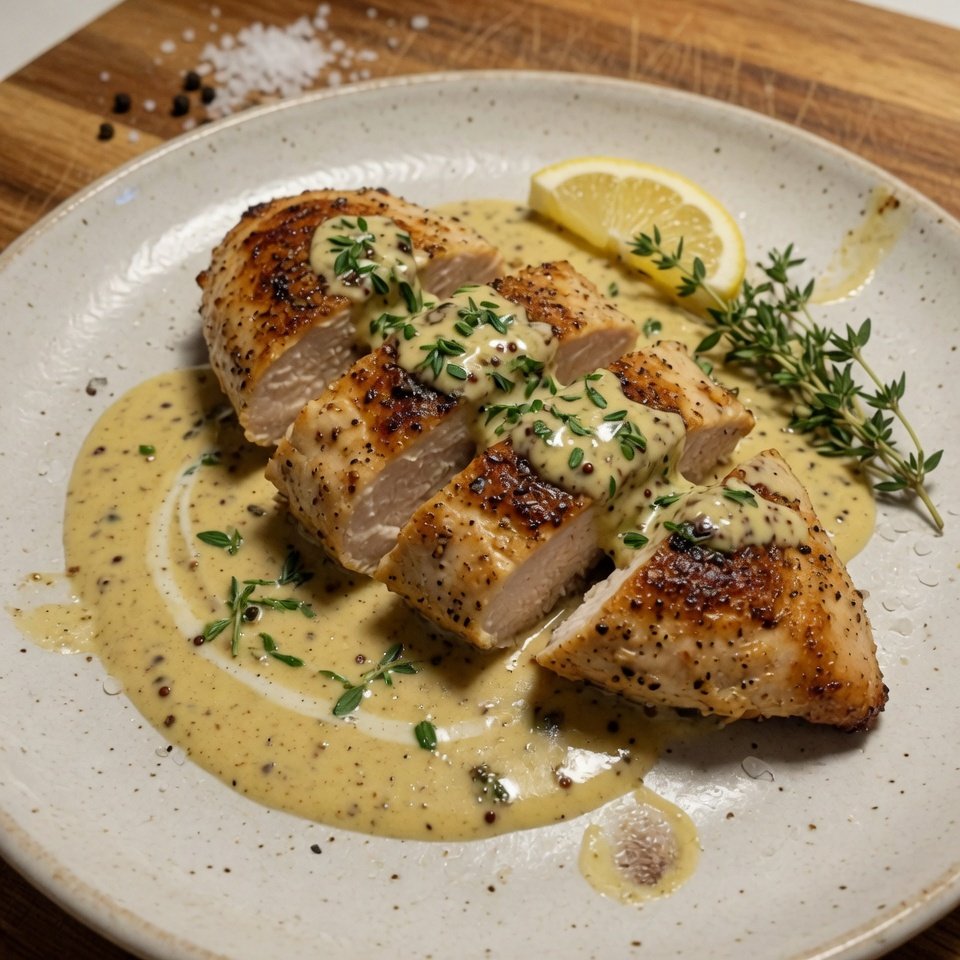
Creamy Dijon Mustard Chicken
Ingredients
Method
- Using a meat mallet flatten the chicken portions out even to about 1/2-inch thickness.
- Heat 1 Tbsp olive oil in a large skillet over medium-high heat. Dab chicken dry with paper towels and season both sides with salt and pepper.
- Add chicken to hot oil in skillet and cook 5 - 6 minutes per side until cooked through (chicken should register 165 degrees in thickest part of chicken on an instant read thermometer). Transfer to a plate, cover with foil to keep warm.
- Return pan to medium-low heat. Add remaining 1 Tbsp oil add the garlic to pan. Saute until just lightly deepening in color and fragrant, about 10 seconds. Pour in chicken broth, thyme and sage and and let liquid reduce by half, for about 1 minute.
- Stir in cream and mustard. Let simmer stirring frequently, until thickened slightly, about 1 minute longer. Stir in honey, season with salt if needed and pepper to taste.
- Serve chicken with sauce over top and garnish with parsley if desired.
Nutrition
Notes
- For perfectly cooked chicken, use an instant-read thermometer; it should reach 165°F in the thickest part for safe eating.
- To prevent dryness, make sure to flatten the chicken evenly and avoid overcooking; aim for a golden brown exterior without burning.
- If you prefer a creamier sauce, consider substituting half of the heavy cream with Greek yogurt, but be sure to add it at a lower temperature to prevent curdling.
- For quick meal prep, pound the chicken breasts ahead of time and store them in the fridge; they can be cooked directly from the fridge with minimal timing adjustments.
- Store any leftovers in an airtight container in the fridge for up to 3 days, and reheat gently on the stove over low heat to maintain the sauce's creaminess.