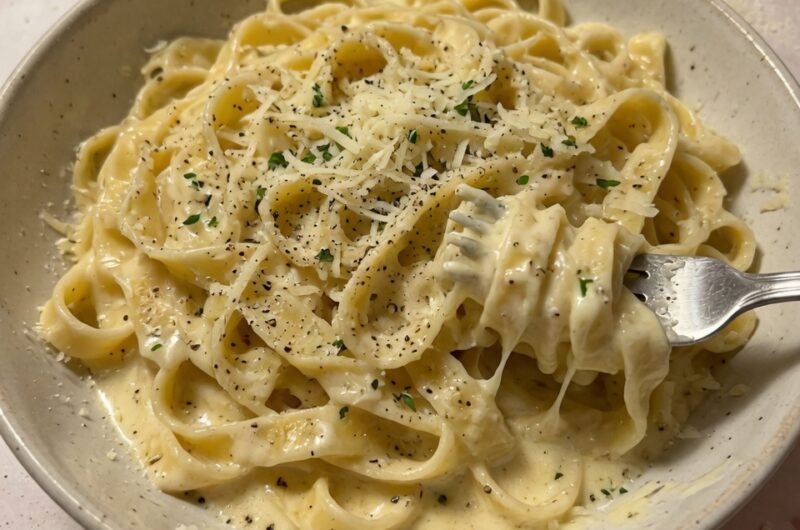
Rich, velvety, and ready in 20 minutes—this classic sauce clings to pasta using nothing but butter, cream, and real Parmesan.
📋 In This Article
- Introduction
- Why This Recipe Works (The ‘Creamy’ Factor)
- Essential Ingredients for Authentic Alfredo
- Step-by-Step Instructions: Mastering Scratch-Made Alfredo
- Common Mistakes to Avoid for Flawless Alfredo
- Flavorful Variations & Serving Suggestions
- Storage & Reheating Tips
- Pro Tips from the Kitchen Architect
- Frequently Asked Questions About Homemade Alfredo
- Conclusion
Introduction
Let’s be honest: jarred Alfredo sauce is a tragedy. It’s often gummy, weirdly tangy, and tastes nothing like the luxurious Roman classic it claims to be. The Creamiest Scratch-Made Fettuccine Alfredo is a different beast entirely. It relies on a simple emulsion of butter, heavy cream, and Parmigiano-Reggiano to create a coating that is simultaneously rich and surprisingly delicate. This isn’t the heavy, leaden “cream sauce” you find at chain restaurants; it is a silky, velvety glaze that hugs every strand of pasta. The first time I tried to make this using pre-shredded cheese, the result was a grainy, oily disaster. That failure sent me down a rabbit hole of food science to figure out exactly how to achieve that restaurant-quality sheen at home. It turns out, the secret isn’t a secret ingredient—it’s technique.
Why This Recipe Works (The ‘Creamy’ Factor)
Most people think Alfredo is just “melted cheese and cream,” but there’s actual chemistry at play here. We are creating a stable emulsion—a scientific mixture of fat and liquid that normally doesn’t want to stay together.
The Heavy Cream provides the necessary fat content (typically 36-40%) to support the emulsion. If you try to swap this for milk or half-and-half, the protein structures in the cheese will seize up, and the sauce will break. The Butter adds richness, but more importantly, it helps lubricate the cheese proteins so they melt smoothly rather than clumping.
Then there’s the Parmesan Cheese. Real Parmigiano-Reggiano is a hard cheese packed with crystallized tyrosine (those crunchy white bits). When you grate it fresh, the proteins are loose and ready to melt. Pre-shredded cheese is dusted with cellulose (wood pulp) to prevent clumping in the bag, which ironically prevents it from melting smoothly in your sauce. We avoid that gritty texture entirely by grating our own.
Finally, we use the Pasta Water trick. As pasta cooks, it releases starch into the water. When you add this starchy liquid to the sauce, the starch swells and acts as a physical barrier, preventing the cheese proteins from bonding too tightly to each other. This keeps the sauce fluid and glossy rather than tight and rubbery.
Essential Ingredients for Authentic Alfredo
To pull this off, you need the right lineup. There are no shortcuts here.
- Fettuccine Pasta: The classic choice. The flat, thick surface area is perfect for holding onto a heavy sauce.
- Unsalted Butter: We control the salt level since Parmesan is naturally salty. European-style butter has a higher fat content, which helps the emulsion, but standard butter works fine.
- Heavy Cream: Do not use half-and-half. You need the fat to keep the sauce stable.
- Parmigiano-Reggiano: This is non-negotiable. Look for the rind; it should have “Parmigiano-Reggiano” stamped into it. Domestic “Parmesan” is fine in a pinch, but it lacks the nutty, complex depth of the real stuff.
- Garlic: Fresh cloves, minced. Garlic powder dissolves strangely in cream; fresh garlic infuses the butter beautifully.
- Salt and Black Pepper: Fresh cracked pepper adds a nice bite that cuts through the fat.
- Nutmeg: Optional, but a tiny pinch highlights the savory notes of the cheese without making it taste like dessert.
Step-by-Step Instructions: Mastering Scratch-Made Alfredo
Step 1: The Pasta Water
Bring a large pot of water to a boil. Season it heavily with salt—it should taste like a well-seasoned soup. Add the fettuccine and cook until it’s just shy of al dente (usually 1 minute less than the package says). Before draining, carefully scoop out at least 1 cup of the starchy pasta water. This is your insurance policy against a broken sauce.
Step 2: Bloom the Garlic
In a large, deep skillet (one that can hold all the pasta later), melt the butter over medium-low heat. Add the minced garlic and sauté for about 1-2 minutes. You want it fragrant and soft, not brown or crispy. Burnt garlic is bitter, and there’s no hiding that flavor in a cream sauce.
Step 3: Simmer the Cream
Pour in the heavy cream. Bring it to a gentle simmer. Do not let it boil violently. High heat can cause the cream proteins to curdle, ruining the texture. Let it simmer for about 2-3 minutes until it reduces slightly and thickens.
Step 4: The Cheese Emulsion
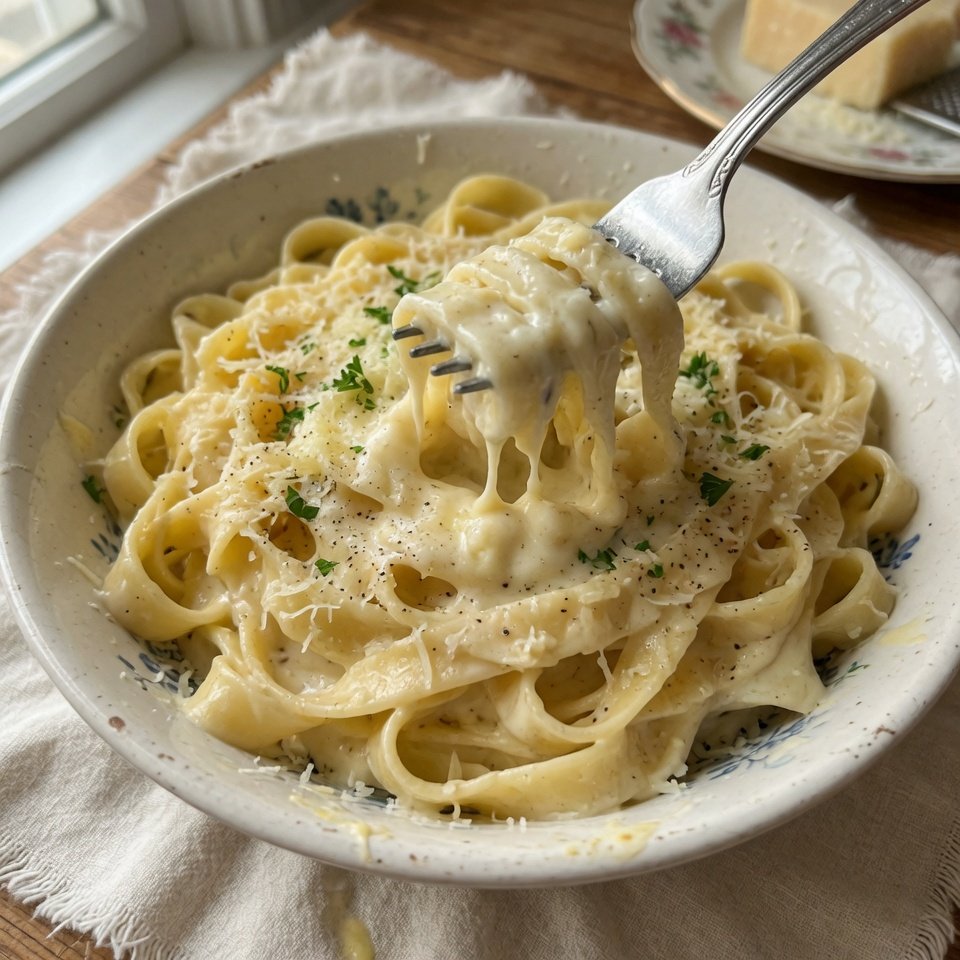
Remove the pan from the heat. This is the most critical step. If you add cheese to boiling cream, the proteins will tighten up instantly, and you’ll get a stringy, clumpy mess. Off the heat, slowly whisk in the freshly grated Parmesan, a handful at a time. Whisk constantly until it melts completely into a smooth, velvety sauce.
Step 5: Marrying Pasta and Sauce
Add the drained fettuccine directly into the skillet. Toss with tongs to coat every strand. If the sauce seems too thick or sticky, add a splash of that reserved pasta water to loosen it. The starch in the water helps the sauce cling to the noodles rather than sliding off.
Step 6: Season and Serve
Taste the sauce. Add salt if needed (remember, the cheese is salty) and plenty of freshly cracked black pepper. If you’re using nutmeg, add it now. Serve immediately while it’s hot and flowing.
⚠️ Common Mistakes to Avoid for Flawless Alfredo
Even with a simple recipe, things can go wrong. Here is where most home cooks trip up.
- Overheating the Sauce: If your sauce looks oily or greasy, the emulsion has broken. This usually happens because the heat was too high. If this happens, remove it from the heat immediately and whisk in a tablespoon of cold water or cream to try and re-emulsify.
- Using Pre-Shredded Cheese: I cannot stress this enough. Pre-shredded cheese contains anti-caking agents like cellulose that prevent it from melting into a smooth liquid. It will leave you with a grainy, unpleasant texture. Always grate it yourself.
- Draining All the Water: Never dump the pasta into a colander and walk away. You absolutely need that starchy pasta water to adjust the consistency. I keep a measuring cup next to the pot so I don’t forget.
- Overcooking the Pasta: The sauce is rich; the pasta needs to have some bite. Mushy noodles will collapse under the weight of the cream. Pull it when it’s al dente.
Flavorful Variations & Serving Suggestions
Once you master the base, you can riff on this endlessly.
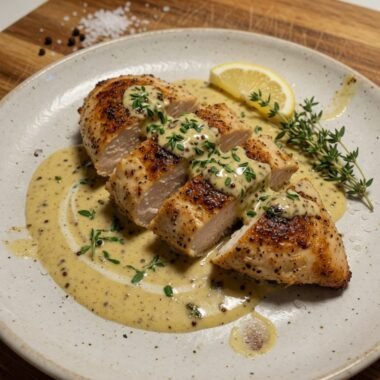
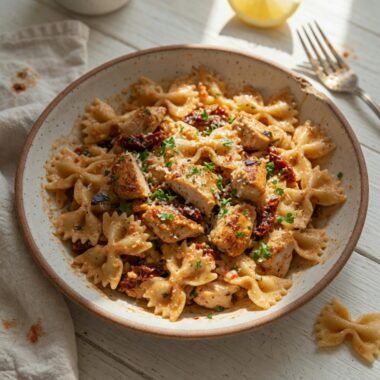
- Chicken Alfredo: Sauté bite-sized chicken breasts in the pan before adding the butter and garlic. The fond (brown bits) left behind add incredible depth to the sauce.
- Shrimp Alfredo: Quickly sauté shrimp in butter with garlic and lemon juice, then set aside. Add them back in at the very end so they don’t overcook in the sauce.
- Broccoli Alfredo: Steam broccoli florets and toss them in with the pasta. The slight bitterness of the greens cuts the richness of the cream.
- Low-Fat Alfredo: You can try using Greek yogurt, but be warned: it will not have the same mouthfeel. If you must, temper the yogurt by mixing a little hot sauce into it before adding it to the pan to prevent curdling.
For sides, serve this with something crisp and acidic. A simple arugula salad with lemon vinaigrette or crispy Garlic Bread provides a necessary contrast to the heavy cream.
Storage & Reheating Tips
Cream sauces are notoriously finicky about being reheated.
Refrigerating: Let the dish cool completely, then store in an airtight container for up to 3 days. The sauce will solidify in the fridge—that’s normal.
Reheating: Do not blast it in the microwave on high. Instead, add the cold pasta to a skillet with a splash of milk or cream. Warm it gently over low heat, tossing constantly until the sauce melts back into a liquid state.
Freezing: I generally don’t recommend freezing this. Dairy sauces tend to separate when thawed, resulting in a curdled, unappealing texture. It’s best eaten fresh.
💡 Pro Tips from the Kitchen Architect
To take this from “good” to “unforgettable,” keep these tips in your back pocket.
- Warm the Cream: Cold cream hitting hot butter can sometimes cause a temporary separation. Letting your cream sit on the counter for 20 minutes helps it incorporate faster.
- Grate Finely: Use the microplane side of your grater for the Parmesan. Finer cheese melts almost instantly, whereas coarse shreds take longer and can leave stringy bits.
- Save the Rind: If you have a Parmesan rind, toss it into the pasta water while it boils. It infuses the water (and thus the pasta) with a subtle, savory umami punch.
Frequently Asked Questions About Homemade Alfredo
+Why is my Alfredo sauce grainy?
Graininess usually happens for two reasons: using pre-shredded cheese (which has anti-caking agents) or boiling the sauce after adding the cheese. Always remove the pan from the heat before stirring in the cheese to ensure a smooth, velvety melt.
+Can I use milk instead of heavy cream?
You can, but the sauce will be much thinner and less stable. To make it work, you would need to create a roux (a mix of butter and flour) to thicken the milk before adding the cheese. It changes the nature of the sauce, but it is a lighter alternative.
+How do I know when the sauce is thick enough?
The sauce should coat the back of a spoon. Run your finger through the sauce on the spoon; if the line stays clear and doesn’t run, it’s ready. Remember, it will thicken further once the pasta is added and it starts to cool.
+What is the best pasta shape for Alfredo?
Fettuccine is the traditional choice because its wide surface area holds the thick sauce well. However, linguine or even penne work nicely if that’s what you have in the pantry.
Conclusion
The Creamiest Scratch-Made Fettuccine Alfredo is proof that simple techniques often yield the most impressive results. By respecting the ingredients—real butter, heavy cream, and freshly grated Parmesan—and managing your heat, you can create a dish that puts the jarred stuff to shame. It’s a recipe that asks for a little patience and a lot of butter, but the payoff is a plate of pasta that feels like pure luxury. Now that you know the science behind the sauce, you’re not just following a recipe; you’re mastering a technique. Go ahead, make it tonight, and see if you ever go back to the jar.