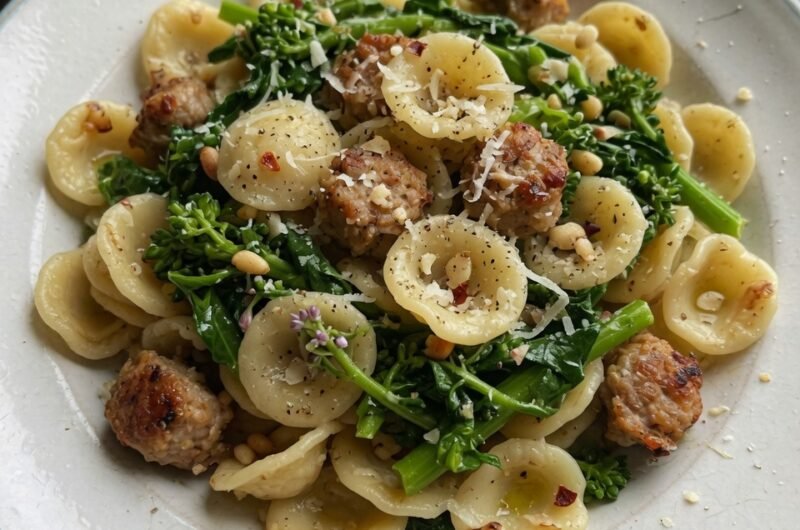
A fast, flavorful weeknight dinner where savory sausage meets bitter greens, bound by a starchy, emulsified sauce that clings to every “little ear.”
📋 In This Article
- Introduction
- Why This Recipe Works (and Outranks the Rest)
- Essential Ingredients: The Foundation of Flavor
- Step-by-Step Cooking Instructions
- Common Mistakes to Avoid
- Delicious Variations & Dietary Adaptations
- Serving Suggestions & Perfect Pairings
- Storage & Reheating Tips
- Pro Tips for the Perfect Plate
- Frequently Asked Questions (FAQ)
Introduction
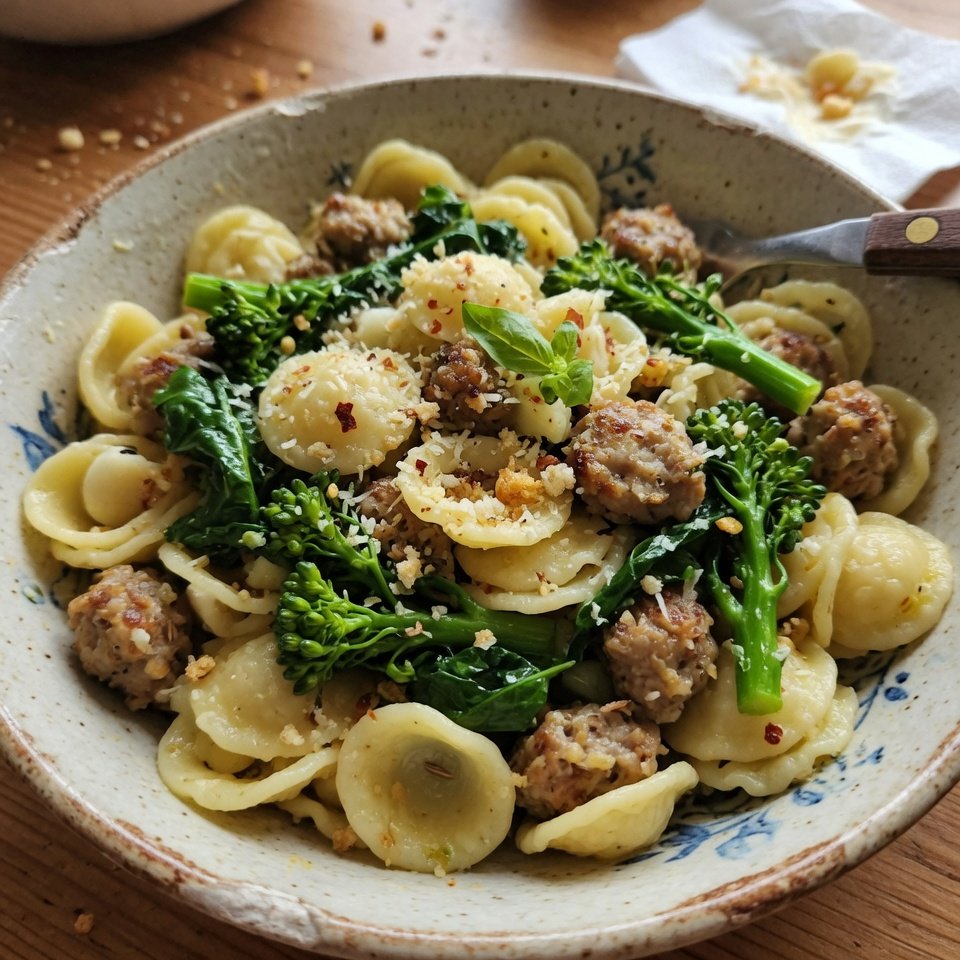
There is a specific kind of satisfaction found in the “little ears” of orecchiette pasta. They cup the sauce, holding onto it like a spoon. Orecchiette With Chicken Sausage & Broccoli Rabe is a staple of Italian-American cooking for a reason: it balances the savory richness of sausage against the sharp, bitter bite of greens. It’s the kind of meal that feels indulgent yet manages to sneak in a serious serving of vegetables. And while it looks elegant plated up with a shower of Parmigiano Reggiano, it comes together in the time it takes to boil water.
Why This Recipe Works (and Outranks the Rest)
Most recipes treat this dish like a simple toss-together. But the difference between a “good” pasta dinner and a “make-this-every-week” masterpiece lies in the science of the sauce. We aren’t just dumping ingredients together; we are building an emulsion.
Here’s the thing: chicken sausage is leaner than pork. That means less rendered fat. To compensate, we use the starch released by the orecchiette to create a creamy, velvety texture without adding heavy cream. By vigorously tossing the pasta with reserved pasta water and olive oil, the starch molecules swell and burst, thickening the liquid into a glossy coating that clings to the pasta.
We also address the elephant in the room: bitterness. Broccoli rabe is notorious for its aggressive bite. Many home cooks skip it because of that harsh flavor. The fix? Blanching. A quick dip in boiling water breaks down the cellular structure, taming the bitter compounds while setting that vibrant green color. It’s a non-negotiable step for balance.
Essential Ingredients: The Foundation of Flavor
- Orecchiette Pasta (10 oz): The shape is critical. Those little cups catch bits of sausage and garlic. If you can’t find orecchiette, campanelle or shells work in a pinch.
- Chicken Sausage (1 lb): Look for loose sausage or links that you can remove from the casing. I prefer spicy Italian-style for a kick, but sweet works if you’re serving kids. Since chicken sausage is lean, much of the flavor comes from the seasoning inside the meat.
- Broccoli Rabe (1 large bunch): You want firm stalks and dark green leaves. Avoid any bunches with yellowing leaves—they’re past their prime.
- Garlic (5-6 cloves, thinly sliced): Not minced. Sliced garlic caramelizes gently in the oil, offering a mellow, sweet base note rather than a harsh, raw bite.
- Red Pepper Flakes (½ tsp, plus more for serving): Adjust based on your heat tolerance. The heat blooms in the oil, infusing the entire dish.
- Parmigiano Reggiano (1/4 cup, grated, plus more for serving): Buy a wedge and grate it yourself. Pre-grated cheese is coated in cellulose, which prevents it from melting smoothly into the sauce.
- Olive Oil (2 tbsp): Extra virgin is best for finishing, but a standard olive oil works well for the initial sauté.
- Salt: You need plenty of salt for the pasta water—it should taste like a well-seasoned soup. This is your only chance to season the pasta itself.
Step-by-Step Cooking Instructions
1. Prep the Ingredients
Before you turn on the stove, get your mise en place. Rinse the broccoli rabe and trim about 2 inches off the woody stems. Chop the remaining stalks and leaves into 2-inch pieces. Remove the chicken sausage from its casing if necessary. Thinly slice the garlic. This step matters more than you think—once the pan is hot, things move fast.
2. Blanch the Broccoli Rabe
Bring a large pot of salted water to a rolling boil. Add the broccoli rabe and blanch for exactly 2 minutes. You aren’t cooking it to death; you’re just softening the bitterness.
The Science: Blanching deactivates the enzyme that causes bitterness to intensify during cooking. It also sets the chlorophyll, keeping the greens bright green instead of olive-drab.
Immediately transfer the greens to an ice bath to halt the cooking. Drain well and squeeze out excess moisture. This prevents the final dish from becoming watery.
3. Brown the Sausage
In a large, deep skillet or Dutch oven, heat 1 tablespoon of olive oil over medium-high heat. Add the chicken sausage. Break it up with a wooden spoon, but then—stop. Let it sit for a minute.
The Science: We want the Maillard reaction. That’s the chemical process where amino acids and sugars react under heat to create hundreds of new flavor compounds. If you stir constantly, you steam the meat. Let it get a deep, golden-brown crust on one side before breaking it up further. Cook for 5-7 minutes until browned and cooked through. Remove sausage from the pan and set aside.
4. Build the Flavor Base
Reduce heat to medium. Add the remaining tablespoon of olive oil. Add the sliced garlic and red pepper flakes. Sauté for about 1 minute, swirling the pan constantly. You want the garlic to turn pale gold, not brown. Brown garlic is bitter; pale gold is sweet and aromatic.
5. Cook the Pasta
Bring the pot of water back to a boil (add more water if needed). Add the orecchiette and cook until al dente—usually 1-2 minutes less than the package instructions. The pasta will finish cooking in the sauce.
6. The Emulsion Technique
Before draining the pasta, scoop out 1 cup of the starchy pasta water. This is liquid gold. Add the blanched broccoli rabe and cooked sausage back into the skillet with the garlic. Add about ½ cup of the pasta water to the pan. Transfer the drained pasta directly into the skillet. Turn the heat to high. Now, toss vigorously. I mean, really toss it. Use tongs to mix the pasta with the sauce, adding more pasta water a splash at a time if it looks dry. The Science: The agitation helps the starch from the pasta water emulsify with the olive oil and rendered sausage fat. This creates a creamy, cohesive sauce that coats the pasta rather than pooling at the bottom of the bowl.
Remove from heat. Stir in the Parmigiano Reggiano. The residual heat will melt it into the sauce. Serve immediately with a drizzle of good olive oil and more cheese.
⚠️ Common Mistakes to Avoid
Overcooking the Pasta Al dente is the goal. Remember, the pasta spends time in the hot skillet sauce. If you boil it to softness, it will turn to mush by the time you plate it. Undercook it slightly in the water.
Skipping the Blanch I used to skip blanching the rabe to save a pot. The result was a dish that tasted like a biology experiment—overwhelmingly bitter. The blanch tames that bite so the greens complement the sausage, not fight it.
Forgetting the Pasta Water If your finished dish looks dry and oily, you forgot the starch. The pasta water binds the oil and flavors together. Without it, you get a greasy separation.
Delicious Variations & Dietary Adaptations
This dish is a template. Once you master the technique, you can swap the components based on what’s in the fridge.
- Protein Swaps: Sweet Italian sausage works beautifully if you prefer a milder flavor. For a lighter twist, use ground turkey seasoned with fennel seeds and paprika to mimic sausage flavor.
- The “White Wine” Hack: After sautéing the garlic, deglaze the pan with a splash of dry white wine before adding the pasta water. The acidity cuts through the richness and adds a sophisticated layer.
- Greens: If broccoli rabe is too intense, use broccolini or regular broccoli florets. Just cut them small enough to match the pasta size.
- Dietary Needs: Gluten-free orecchiette (made from corn or rice) works well here. Just watch the cook time closely, as GF pasta can gummify if overcooked.
Serving Suggestions & Perfect Pairings
This is a rich, savory dish. It needs acid and crunch to balance it out. Serve with a simple arugula salad dressed with lemon juice and olive oil. The peppery greens mirror the rabe without overwhelming the palate. For wine, reach for a Pinot Grigio or a dry Rosé. The acidity cleanses the palate between bites of savory sausage. And crusty bread? Essential. You’re going to want to mop up that emulsified sauce.
Storage & Reheating Tips
Pasta dishes with oil-based sauces store better than cream sauces, but the pasta will absorb the liquid as it sits. Fridge: Store in an airtight container for up to 3 days. Reheating: Do not microwave until dry. Add a splash of water to the pan and reheat on the stovetop over medium heat. Toss until the sauce loosens up and coats the pasta again.
💡 Pro Tips for the Perfect Plate
- Save the Cheese Rind: If you have a hard rind of Parmigiano Reggiano, throw it into the pasta water while it boils. It adds a subtle, savory depth to the water (and thus the sauce).
- Don’t Drain the Fat: Chicken sausage is lean, so there won’t be much fat in the pan. Don’t wipe it out. That browned fond on the bottom of the pan is pure flavor. Deglaze it with the pasta water.
- Finish with Acid: A squeeze of fresh lemon juice right at the end brightens the entire dish. It makes the flavors “pop.”
Frequently Asked Questions (FAQ)
+Why is my broccoli rabe still bitter after blanching?
If the rabe is still too bitter, it might need a longer blanch—try 3 minutes. Alternatively, you can sauté it with a pinch of sugar or honey after blanching to counteract the bitter compounds.
+Can I use regular broccoli instead of broccoli rabe?
You can, but the flavor profile changes completely. Regular broccoli is sweeter and milder. If you make this swap, skip the blanching step and just steam the florets in the pan with a lid before adding the pasta.
+How do I know when the chicken sausage is fully cooked?
Chicken sausage needs to reach an internal temperature of 165°F. Visually, it should be opaque all the way through with no pinkness, and the juices should run clear. Because we are breaking it up, it cooks faster than a whole link.
+Can I make this ahead of time?
You can prep the components—wash and chop the rabe, slice the garlic, and remove the sausage from the casing—a day in advance. But the actual cooking should happen right before serving to preserve the texture of the pasta.
+What’s the best way to reheat leftover pasta?
Add the leftovers to a skillet with a tablespoon of water or broth. Cover and heat on low, stirring occasionally, until warmed through. This re-steams the pasta and re-emulsifies the sauce.
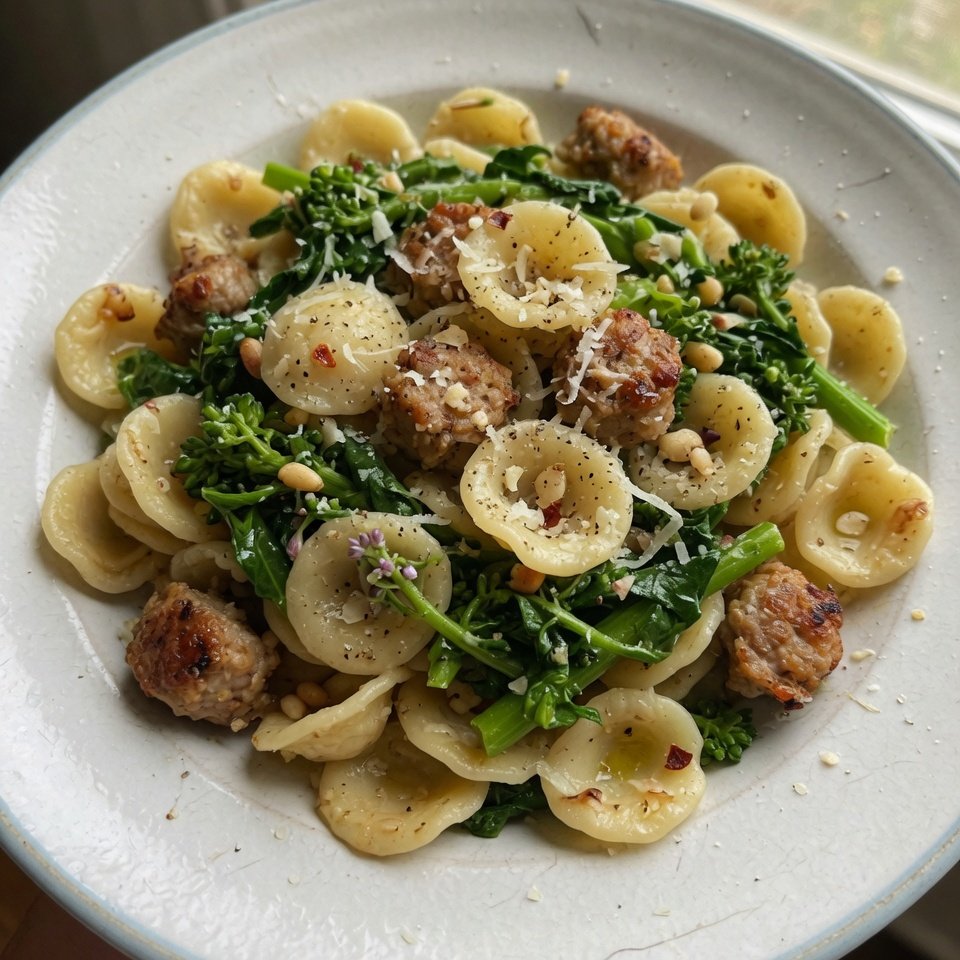
Orecchiette with Sausage and Broccoli Rabe
Ingredients
Method
- Cut broccoli rabe in quarters.
- Bring a large pot of water to boil. When it comes to a rolling boil, add broccoli rabe.
- Blanch for about 1 1/2 - 2 minutes, drain and set aside in a colander.
- Re-fill pot with water and salt for the pasta and bring back to a boil.
- Add pasta and cook according to package directions for al dente.
- In a large deep sauté pan, brown sausage on medium heat, breaking up into small pieces as it cooks.
- When completely cooked through set aside in a dish or a bowl.
- Increase heat to medium high, add olive oil to the pan; when hot add garlic and cook until golden (don't burn).
- Return broccoli rabe to the pan, mix well with the garlic and oil, season with salt and pepper and cook about a minute. Return cooked sausage to the pan and mix well.
- Drain pasta and add to the broccoli rabe. Reduce heat and stir for about 30 seconds.
- Add chicken broth, parmesan cheese and red pepper flakes if using.
- Adjust salt and pepper to taste and toss another 30 seconds so that everything is mixed well and the pasta is coated with the sauce.
- Remove from heat and add to a large pasta dish or divide equally between 6 pasta bowls. Serve with additional grated cheese if you desire.
Nutrition
Notes
- To keep the broccoli rabe vibrant and bright, make sure to blanch it for the recommended time, then immediately plunge it into an ice bath to stop the cooking process.
- When cooking the sausage, ensure it reaches an internal temperature of 165°F and breaks apart easily to avoid any tough or chewy pieces in your final dish.
- If you find the dish too bitter, consider substituting the broccoli rabe with baby broccoli or sautéed spinach for a milder flavor.
- Leftovers can be stored in an airtight container in the fridge for up to three days; reheat gently on the stove with a splash of chicken broth to revive the sauce.
- To save time, you can cook the orecchiette while you sauté the sausage and garlic, ensuring everything is ready to combine at the same time.