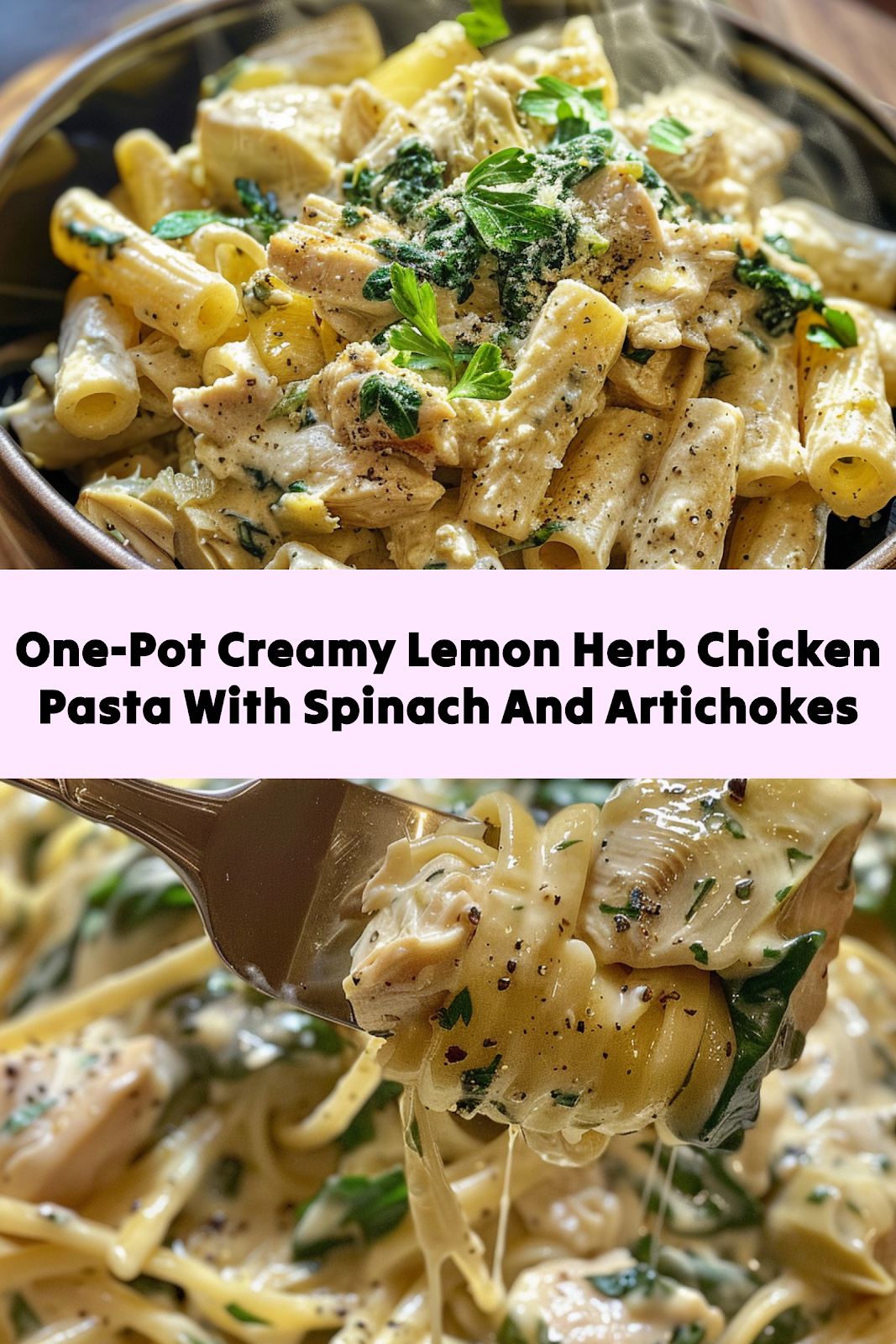
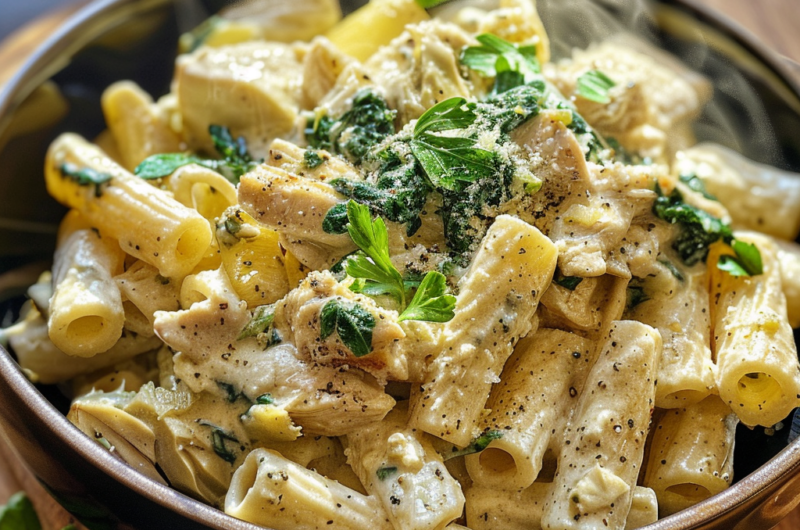
A vibrant, weeknight-friendly dinner where tender chicken, earthy artichokes, and fresh spinach simmer with spaghetti in a velvety, lemon-kissed cream sauce—no colander required.
📋 In This Article
Introduction
Let’s be honest: the phrase “one-pot pasta” usually inspires skepticism. We’ve all seen the recipes that promise convenience but deliver a gummy, starch-thickened sludge that tastes vaguely of dishwater. This is not that recipe. One-Pot Creamy Lemon Herb Chicken Pasta with Spinach and Artichokes is a carefully engineered balancing act where the starch released from the pasta creates a naturally velvety sauce, while the lemon and herbs cut through the richness with precision.
The beauty here lies in the efficiency of flavor transfer. When you cook pasta in a reduced volume of broth, the liquid concentrates, and the noodles absorb that savory liquid directly, rather than plain water that gets poured down the drain. It’s a technique that rewards patience with depth. The result is a dish that feels like it came from a bistro kitchen, yet leaves you with only a single pot to wash. It is, quite simply, the dinner hack that actually works. Creamy Tuscan Chicken Gnocchi (30-Minute One-Pan Recipe).
Why This Recipe Works (The Science of One-Pot)
The “magic” of one-pot cooking isn’t magic at all—it’s starch gelatinization and emulsification. As the pasta hydrates and cooks, it releases amylose and amylopectin (starch molecules) into the surrounding liquid. In a traditional boil-and-drain method, this starch goes straight into the sink. Here, it acts as a thickener. When you introduce heavy cream and Parmesan at the end, the fats bind with this starchy water to create a stable, creamy emulsion that clings to the noodles rather than pooling at the bottom of the bowl.
Furthermore, this method utilizes flavor infusion. By simmering the chicken and aromatics first, then cooking the pasta directly in that broth, you achieve a depth of flavor that layering simply can’t match. The Maillard reaction on the chicken creates fond—those sticky, browned bits on the bottom of the pot—which are then dissolved (deglazed) into the sauce base. This is pure, concentrated savoriness (umami) that permeates every strand of spaghetti. It’s a smarter, more efficient way to build a sauce from the ground up.
Key Ingredients for a Flavorful Meal
Great cooking starts at the grocery store. Here’s how to select the right components for maximum impact.
Proteins
- Chicken Breast: Boneless, skinless breasts are standard, but for guaranteed juiciness, consider pounding them to an even thickness before cutting. This ensures the strips cook at the same rate, preventing dry edges while waiting for the center to cook through.
Pasta
- Pasta (Spaghetti or Linguine): Long noodles work beautifully here, but they must be broken in half to fit comfortably in the pot. High-quality bronze-die cut pasta is ideal; the rougher surface texture grabs onto the cream sauce better than smooth, Teflon-die varieties.
Vegetables
- Artichoke Hearts: Canned or jarred marinated artichoke hearts are a pantry hero. They bring a briny, acidic tang that cuts through the heavy cream. If using frozen artichokes, thaw and squeeze them dry to prevent watering down the sauce.
- Spinach: Fresh baby spinach is best. It requires no chopping and wilts in seconds. If you must use frozen spinach, thaw it completely and squeeze out every drop of excess water—this is non-negotiable for texture.
Dairy & Aromatics
- Heavy Cream: The fat content in heavy cream (36% or higher) is essential. It creates a stable emulsion that won’t curdle under heat. Half-and-half can work, but the sauce will be thinner.
- Parmesan Cheese: Always grate your own. Pre-shredded cheese is coated in anti-caking agents (cellulose) that prevent it from melting smoothly, resulting in a grainy sauce. You want that salty, nutty punch of real Parmigiano-Reggiano.
- Garlic: Fresh cloves, minced fine. Sautéing garlic blooms its essential oils, mellowing the raw bite into a sweet, aromatic base.
Seasonings
- Lemon: You need both zest and juice. The zest contains the essential oils (limonene) which provide pure, bright aroma without the sour acid. The juice adds the sharp acidity needed to balance the fat.
- Herbs: Dried Italian seasoning works well during the simmer, but a hit of fresh parsley or basil at the end wakes the dish up.
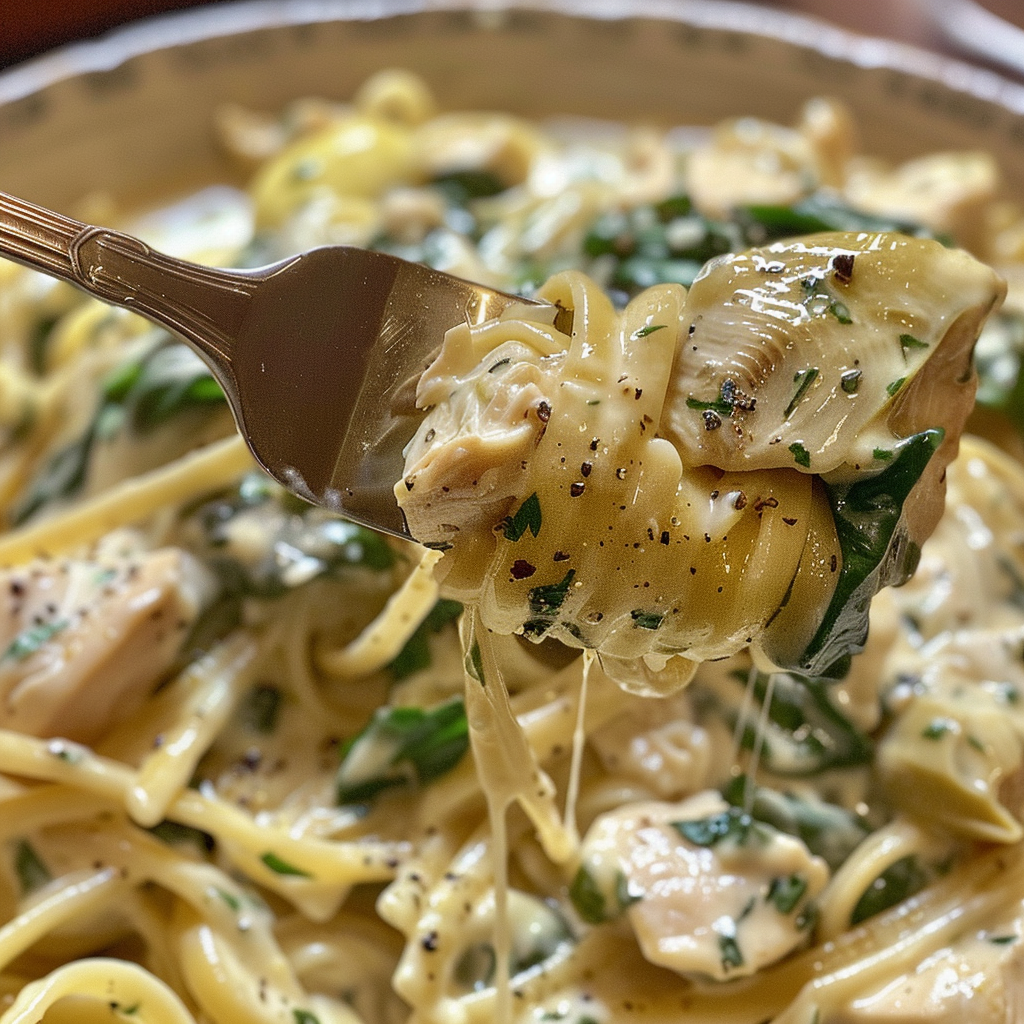
Step-by-Step Cooking Instructions
- Sear the Chicken: Heat 2 tablespoons of olive oil in a large pot or Dutch oven over medium-high heat until shimmering. Add 1 to 1¼ pounds of chicken strips, seasoned generously with salt and pepper. Cook undisturbed for 4-5 minutes. Flip and cook another 3-4 minutes until golden brown and cooked through.
- Science Note: Don’t crowd the pan. If the chicken steams instead of searing, you won’t get that deep, caramelized flavor from the Maillard reaction. Work in batches if necessary.
- Bloom the Aromatics: Reduce heat to medium. Add 4 cloves of minced garlic and cook for 60 seconds until fragrant. Don’t let it burn; burnt garlic is acrid and bitter.
- Deglaze and Simmer: Pour in the liquid from 1 can (14 oz) of artichoke hearts, 1 carton (32 oz) of low-sodium chicken broth, and 1 cup of water. Scrape the bottom of the pot with a wooden spoon to release the fond. Bring to a rolling boil.
- Cook the Pasta: Add 1 pound of broken spaghetti. Reduce heat to maintain a vigorous simmer. Cook for 10-12 minutes, stirring frequently to prevent clumping.
- Technique Check: Stirring isn’t optional. Without the agitation of boiling water, pasta in a shallow pot releases starch rapidly and can stick to the bottom if ignored. Taste a noodle at minute 9; you want it slightly under al dente as it will continue cooking in the sauce.
- Wilt and Brighten: Remove from heat. Stir in 5 ounces of fresh spinach, the chopped artichoke hearts, 1 tablespoon lemon zest, and 2 tablespoons lemon juice. The residual heat is enough to wilt the spinach instantly without turning it into a gray mush.
- Emulsify the Sauce: Stir in ½ cup heavy cream and ½ cup grated Parmesan. Stir vigorously. The starch from the pasta water and the fat from the cream will combine into a glossy sauce. If it looks too thick, add a splash of water.
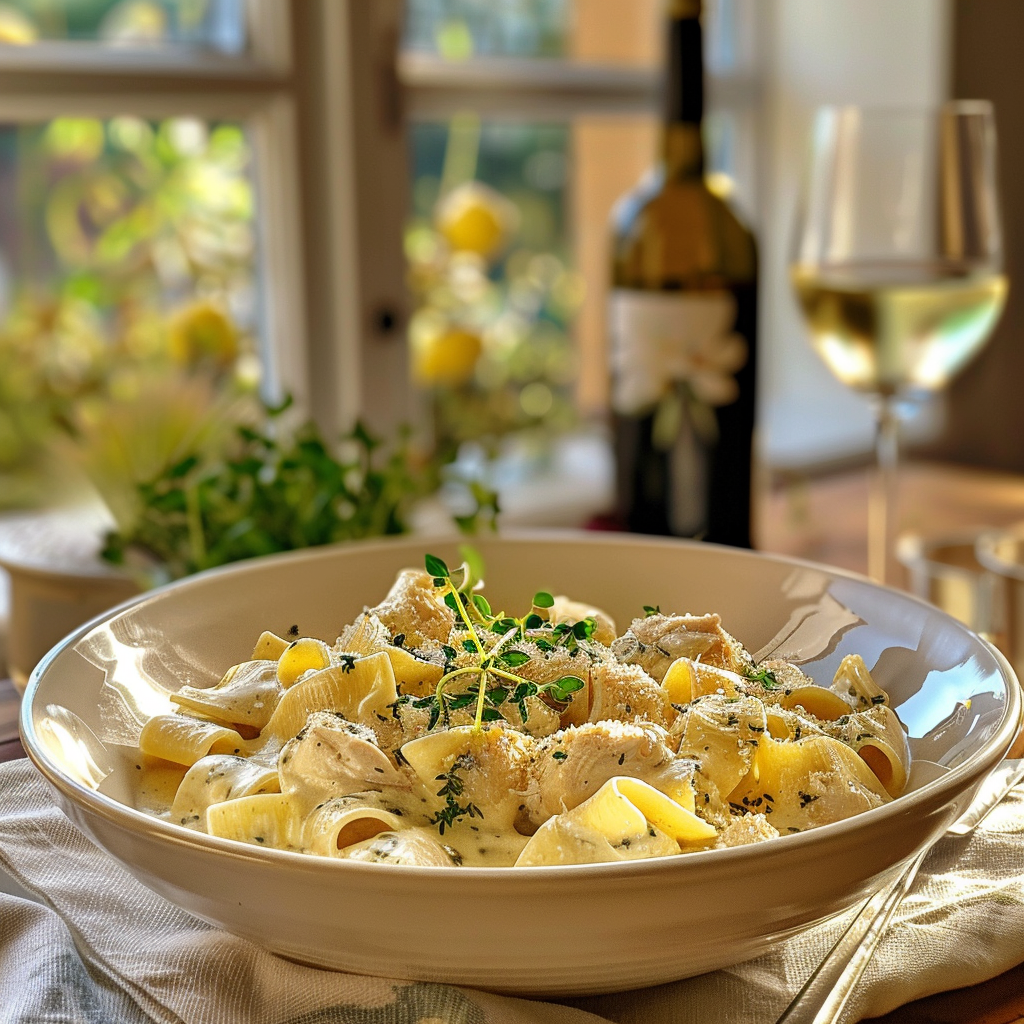
- Serve: Serve immediately, passing extra Parmesan at the table.
⚠️ Common Mistakes to Avoid
Even simple recipes have pitfalls. Here is where things usually go wrong.
Overcooked, Mushy Pasta Because the pasta cooks in a smaller volume of liquid, the window between al dente and mush is narrow. Start tasting early. Remember that the pasta will continue to soften slightly in the residual heat of the sauce.
Sauce That Won’t Thicken If your sauce is watery, you likely didn’t release enough starch. This happens if the heat is too low (gentle boiling is needed to agitate the pasta) or if you didn’t stir enough. Conversely, if it’s too thick, just add a splash of pasta water or broth to loosen it up.
Bland Flavor Profile Canned broth can be salty, but it often lacks depth. This is why deglazing the fond (brown bits) is critical. Also, don’t skimp on the lemon juice at the end—acid is the secret weapon that wakes up the creamy, savory flavors. Without it, the dish feels heavy.
Variations & Customization Ideas
This recipe is a template, not a law.
- Protein Swaps: Sliced sausage (pre-cooked) or shrimp work beautifully. If using shrimp, add them in the last 5 minutes of pasta cooking time so they don’t turn rubbery.
- Dairy-Free: Use full-fat coconut milk instead of cream. It adds a subtle sweetness that pairs surprisingly well with the lemon and artichoke. Nutritional yeast can mimic the nutty funk of Parmesan.
- Gluten-Free: Use your favorite gluten-free pasta. Note that GF pasta tends to shed more starch, which can make the sauce gummy if overcooked. Keep a close eye on the texture.
Storage & Reheating Tips
Creamy pasta is best eaten fresh, but leftovers can be saved.
Refrigeration: Store in an airtight container for up to 3 days. The sauce will solidify when cold—this is normal.
Reheating: The microwave tends to break dairy sauces, making them greasy. Reheat gently in a skillet over low heat. Add a splash of water or broth to the pan before heating. The moisture creates steam that helps revive the sauce’s creamy consistency without separating it. The first time I reheated this without adding liquid, I ended up with a dry, clumpy mess. Learn from my mistake: add the splash.
💡 Pro Tips for Perfect One-Pot Pasta
The “Starch Water” Trick Before adding the cream, take a look at your liquid. It should look cloudy and slightly thickened. That is liquid gold. If you think you have too much liquid, let it boil for another minute uncovered to concentrate it before adding the dairy.
Browning Matters Take the time to get a real crust on the chicken. That golden-brown color isn’t just aesthetic; it’s flavor. If you skip the sear and just boil the chicken, the dish will taste flat and one-dimensional.
Carryover Cooking Remove the pot from the heat before the pasta is perfectly soft. The residual heat in the pot and the liquid will finish the cooking process while you stir in the spinach and cream. If you wait until it’s perfect to turn off the heat, it will be overcooked by the time it hits the table.
Frequently Asked Questions (FAQ)
+Can I use a different type of pasta?
Yes, but timing will vary. Short shapes like penne or rotini may take longer to cook than spaghetti. Check the package instructions and start tasting for doneness 2 minutes before the suggested time.
+Why is my sauce separating?
Dairy sauces break when overheated. Make sure to add the cream and Parmesan after removing the pot from the heat. High heat causes the fat in the cream to separate from the proteins, creating a curdled texture.
+Can I use frozen spinach?
You can, but it requires prep. Thaw the spinach completely and squeeze it in a paper towel or clean dish cloth to remove excess moisture. Frozen spinach carries a lot of water, which will dilute your sauce if not removed.
+How do I know when the chicken is done?
The most accurate method is a meat thermometer; look for an internal temperature of 165°F (74°C). Visually, the meat should be opaque throughout with no pink center, and the juices should run clear.
+Can I make this ahead of time?
You can prep the ingredients (chop chicken, mince garlic, measure liquids) up to a day in advance. However, cooked pasta does not hold well in cream sauce; it tends to absorb all the liquid and become soggy. It is best cooked fresh.
📌 Pin this Recipe for Later!