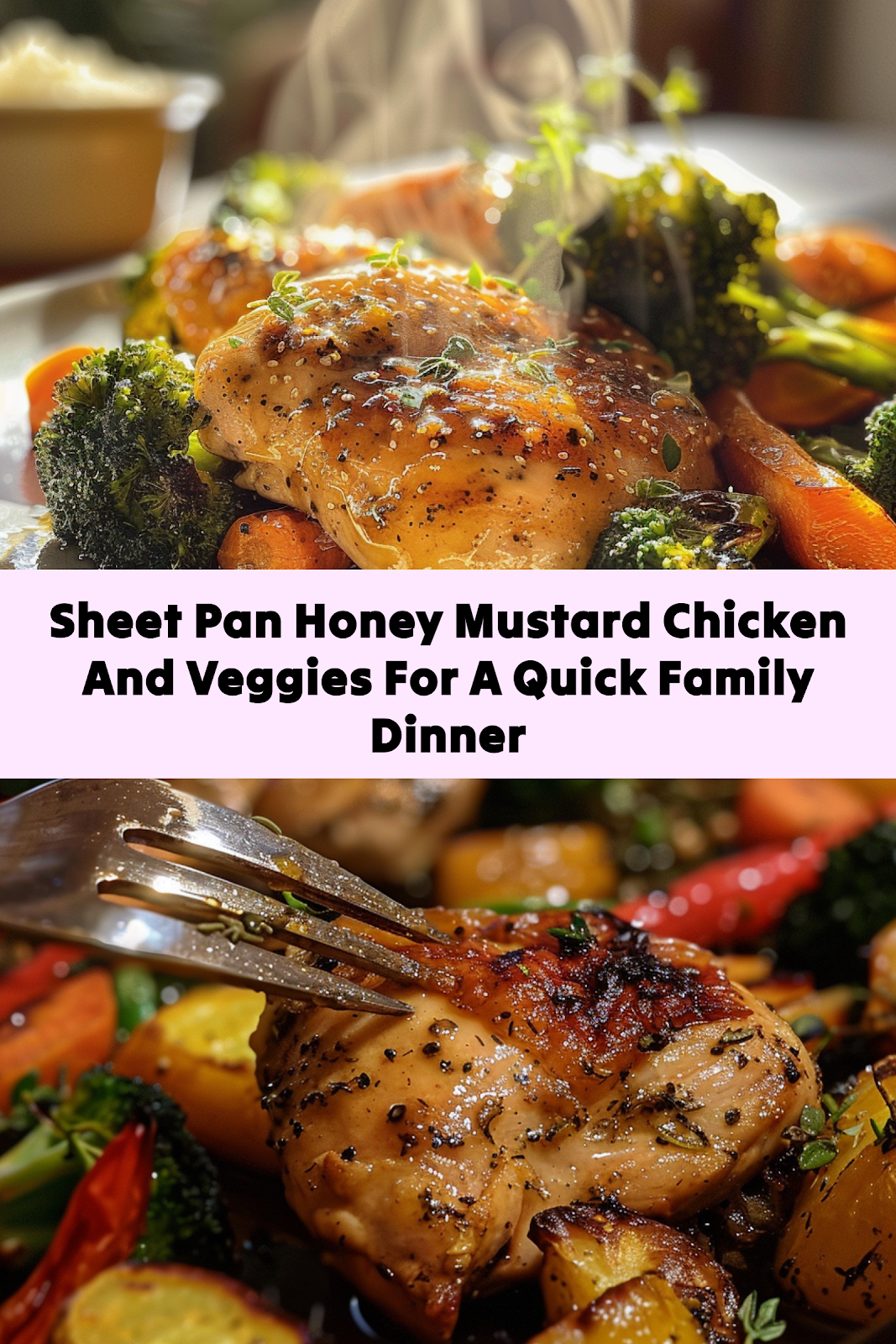
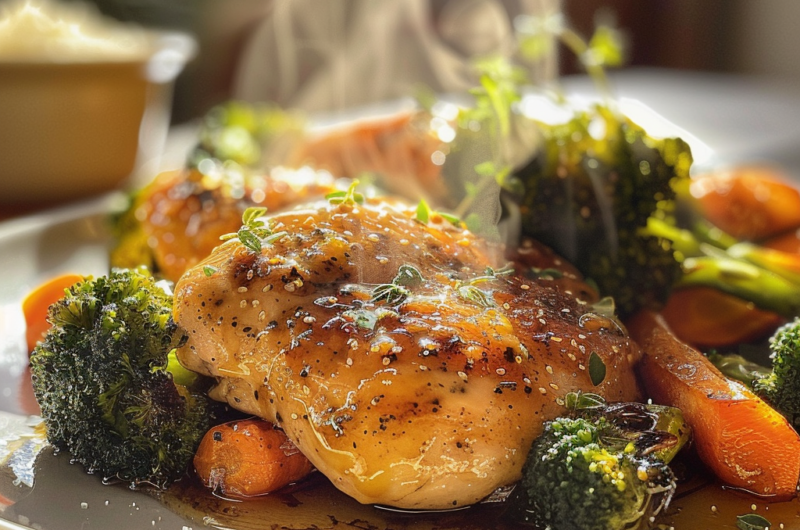
Golden, juicy chicken thighs roasted alongside tender vegetables in a sweet-tangy honey mustard glaze — minimal prep, maximum flavor, and just one pan to wash.
📋 In This Article
Introduction
Some nights, the gap between “I want a home-cooked meal” and “I want to do zero dishes” feels unbridgeable. That’s exactly why Sheet Pan Honey Mustard Chicken and Veggies earned a permanent spot in my weeknight rotation. It hits that elusive trifecta: hands-off cooking, built-in sides, and cleanup that takes literally sixty seconds. The concept is simple — chicken thighs and vegetables roast together on a single baking sheet, basting in a honey mustard glaze that caramelizes and concentrates as it cooks. But simple doesn’t mean thoughtless. The difference between “fine” and “make this again” lives in the details: how you cut your vegetables, whether you crowd the pan, and understanding why that high oven temperature matters more than you’d think.
Why This Recipe Works
Here’s the thing about sheet pan dinners — they’re only as good as their weakest link. Throw everything on a pan at random and you’ll get unevenly cooked vegetables, rubbery chicken, and a sad puddle of liquid where your sauce should be. But when you understand what’s actually happening in that oven, the whole game changes. Sheet Pan Honey Mustard Chicken and Veggies: A 35-Minute Weeknight Win.
Cooking at 425°F (220°C) isn’t arbitrary. At this temperature, the Maillard reaction kicks into high gear — that’s the chemical process where proteins and sugars transform under heat, creating hundreds of new flavor compounds and that deeply golden crust we’re after. Meanwhile, the vegetables undergo caramelization, their natural sugars breaking down into complex, nutty sweetness rather than steaming into bland mush.
The honey mustard sauce does double duty: it glazes the chicken, creating a sticky, caramelized exterior, while excess drips down to coat the vegetables beneath. And because everything cooks together, the chicken juices mingle with the sauce and vegetables, creating a built-in pan sauce that tastes like you worked way harder than you did.
Ingredients You’ll Need
For the Chicken:
- 4 boneless, skinless chicken thighs (about 1.5 lbs) — thighs stay juicy even if you accidentally overcook them by a few minutes; breasts work but dry out faster
For the Honey Mustard Sauce:
- 1/4 cup Dijon mustard — the sharp, vinegary backbone
- 1/4 cup honey — balances the mustard’s bite with floral sweetness
- 1 tablespoon olive oil — helps the sauce emulsify and spread
- 1 teaspoon garlic powder — more reliable than fresh when roasting at high heat
- 1/2 teaspoon salt
- 1/4 teaspoon black pepper
For the Vegetables:
- 3 medium red potatoes (washed and cut into 1-inch cubes) — red potatoes hold their shape better than russets
- 1 red onion (cut into wedges) — sweeter and more visually striking than yellow
- 8 oz. green beans (trimmed) — add freshness and color contrast
- 2 medium carrots (sliced into rounds) — bring sweetness and that satisfying roast-y texture
The beauty of this template is its flexibility. Got broccoli wilting in the crisper? Toss it in. Sweet potatoes instead of red? Go for it. The only rule: cut everything to similar sizes so they finish cooking at roughly the same time.
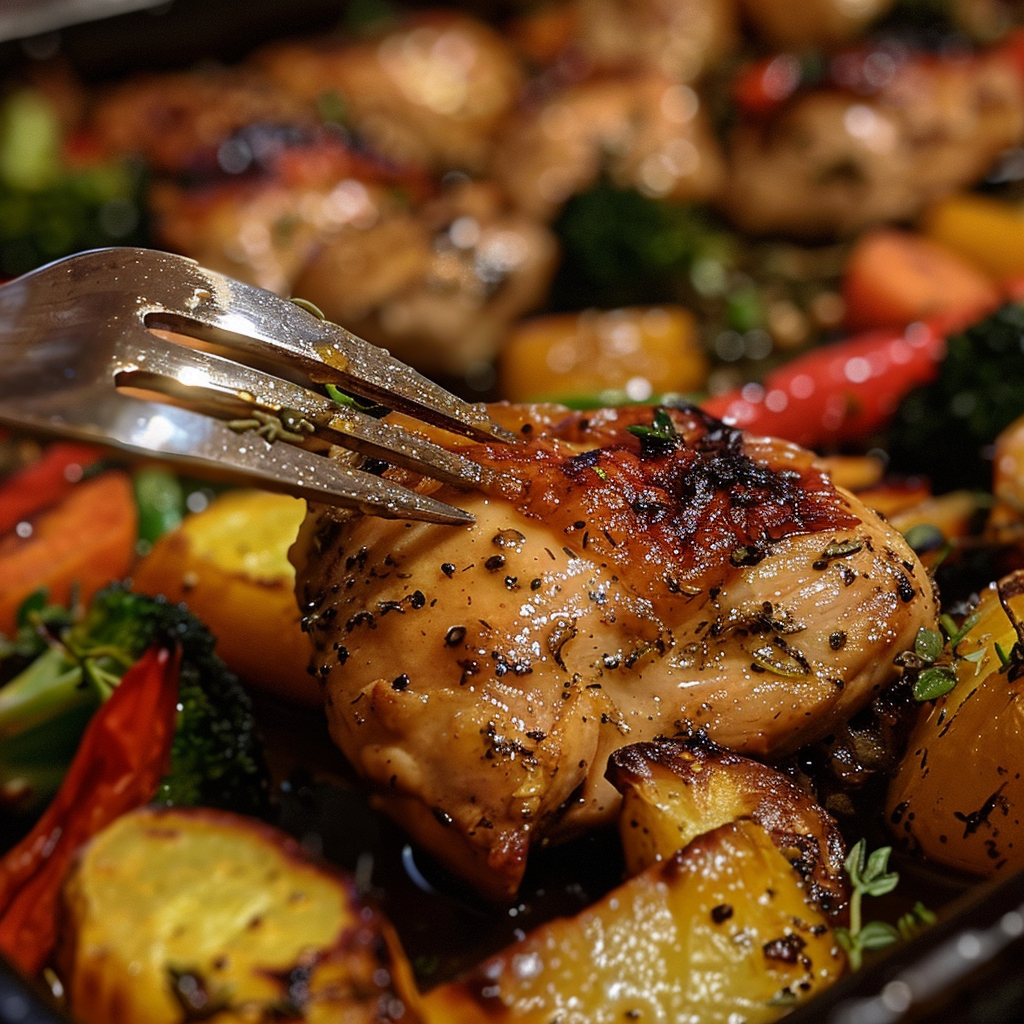
The Honey Mustard Sauce: Why Homemade Wins
You could grab a bottle from the grocery store. I won’t stop you. But here’s what you’re missing: control. Store-bought honey mustard often reads as one-note sweet, with a cloying finish that coats your palate. Homemade lets you dial the balance precisely.
The emulsification matters more than you’d think. When you whisk Dijon, honey, and olive oil together vigorously, you’re not just mixing — you’re creating a temporary emulsion where the fat molecules suspend in the water-based mustard. This helps the sauce cling to the chicken rather than sliding right off. If your mixture looks separated after sitting, just whisk it again before using.
For a creamier variation, a tablespoon of mayonnaise works beautifully — it stabilizes the emulsion and adds richness. And if you want heat, a pinch of cayenne or a dash of hot sauce cuts through the sweetness without competing with the core flavors.
Step-by-Step Cooking Instructions
- Preheat your oven to 425°F (220°C). This isn’t the time to rush — a fully heated oven ensures that initial blast of heat that triggers caramelization rather than steaming.
- Prep your vegetables. Cut potatoes into 1-inch cubes, slice carrots into rounds about 1/4-inch thick, separate the red onion into wedges, and trim your green beans. The goal is uniformity: pieces that are roughly the same size cook at the same rate. I used to rush this step and ended up with burnt edges and raw centers — don’t be me.
- Make the sauce. In a medium bowl, whisk together the honey, Dijon mustard, olive oil, garlic powder, salt, and pepper until smooth. The mixture should be thick enough to coat a spoon but still pourable.
- Season the vegetables. Spread your prepped vegetables on a large rimmed baking sheet. Drizzle with a tablespoon of olive oil, season generously with salt and pepper, and toss to coat. Arrange them in a single layer — overcrowding causes steaming, and steamed vegetables are nobody’s idea of a good time.
- Prep the chicken. Pat the chicken thighs dry with paper towels. Season both sides with salt and pepper, then brush generously with about two-thirds of the honey mustard sauce, reserving the remainder for serving.
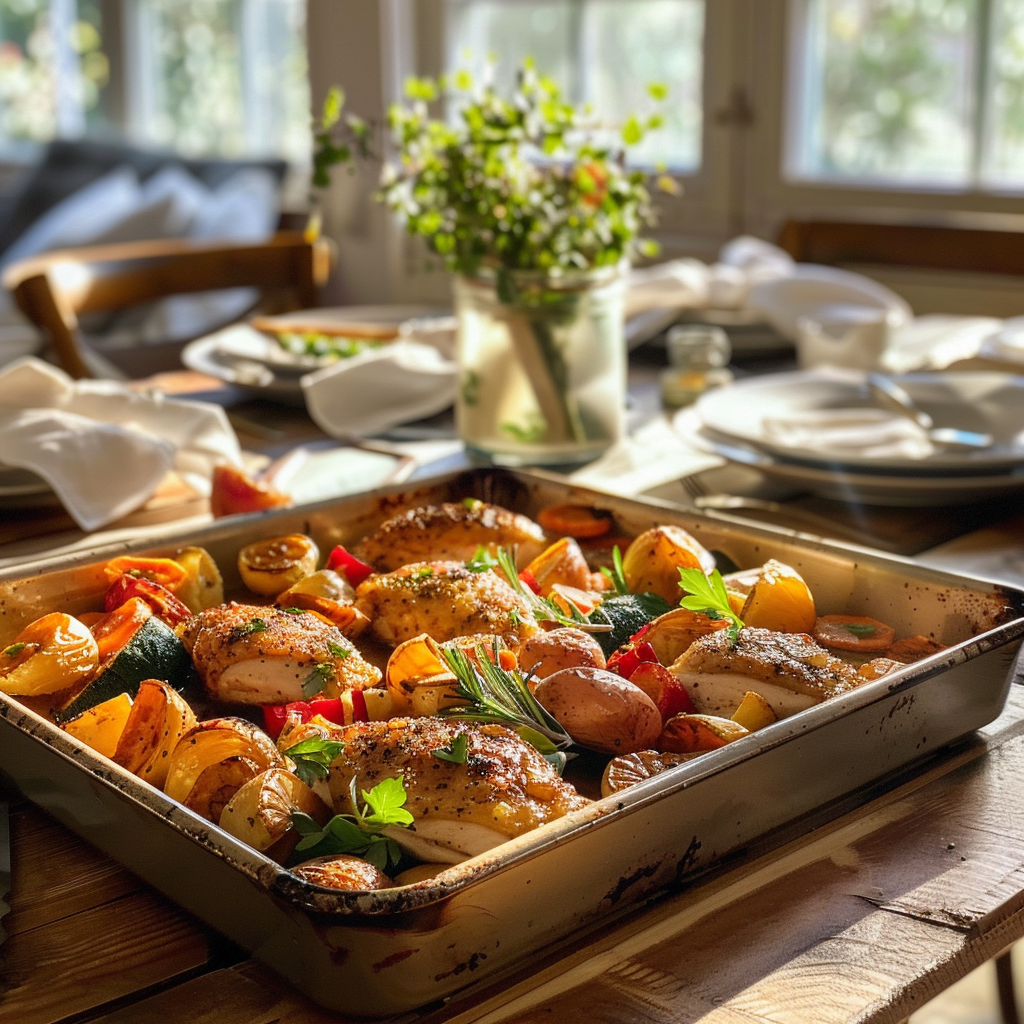
- Arrange and roast. Place the chicken thighs on top of the vegetables, spacing them evenly. Transfer to the oven and roast for 30-35 minutes, until the chicken reaches an internal temperature of 165°F (74°C) and the vegetables are tender with caramelized edges. Halfway through cooking, give the vegetables a quick stir for even browning.
- Rest and serve. Remove from the oven and let the pan rest for 5 minutes. This allows the juices to redistribute through the meat — cut immediately and you’ll lose a significant amount of moisture onto the board. Drizzle with the reserved sauce and serve.
⚠️ Common Mistakes to Avoid
Even a forgiving recipe has its pitfalls. Here’s what trips people up:
Overcrowding the pan. This is the number one offender. When ingredients are packed too tightly, moisture gets trapped and everything steams instead of roasts. You want air circulation between pieces. If your sheet pan looks like a vegetable storage drawer, use two pans or cook in batches.
Inconsistent vegetable cuts. A tiny carrot round will burn before a massive potato chunk cooks through. Take the extra minute to cut evenly — your future self will thank you.
Skipping the preheat. Putting food into a cold or warming oven means the first 10 minutes are essentially a slow warm-up, and you lose that initial high-heat sear that builds flavor.
Under-seasoning. Roasting mellows saltiness. Season more generously than your instincts suggest, especially on the vegetables which have a lot of surface area.
Ignoring carryover cooking. Your chicken continues cooking after it leaves the oven. Pull it at 165°F and it’ll climb another few degrees while resting. Pull it at 170°F and you’re heading into dry territory.
Variations and Substitutions
This recipe is more template than rigid formula. Make it yours:
Protein swaps: Bone-in, skin-on chicken thighs deliver more flavor and stay juicier — just add 5-10 minutes to the cooking time. Chicken breasts work but benefit from a lower temperature (400°F) to prevent drying. Pork chops or salmon (reduce time to 15-20 minutes) are excellent alternatives.
Vegetable variations: Broccoli, Brussels sprouts, sweet potatoes, bell peppers, zucchini, and cauliflower all roast beautifully. Just remember: denser vegetables need smaller cuts or a head start in the oven.
Flavor twists: Add fresh rosemary or thyme sprigs to the pan for an herbed finish. Swap honey for maple syrup for deeper, more molasses-like sweetness. A splash of apple cider vinegar in the sauce brightens everything.
Dietary adjustments: For dairy-free needs, this recipe is already there. Gluten-free? Dijon is typically safe, but check your brand. For Whole30, swap honey for date paste and skip the sugar.
Storage and Reheating
Leftovers keep well in an airtight container in the refrigerator for 3-4 days. The flavors actually deepen overnight, making this a solid meal-prep candidate.
For reheating, the oven is your friend — it restores the caramelized edges that the microwave obliterates. Spread leftovers on a baking sheet, cover loosely with foil, and heat at 350°F for 15-20 minutes until warmed through. If you’re short on time, the microwave works in a pinch; just expect softer vegetables.
Freezing isn’t ideal — the vegetables lose their texture and the sauce can separate — but if you must, freeze for up to 2 months and thaw completely before reheating.
💡 Pro Tips for Better Results
Use parchment paper or foil. Lining your sheet pan means cleanup is a single motion: gather the corners and toss. It also prevents the honey mustard from baking onto the pan and becoming a scrubbing nightmare.
Let the chicken marinate. Even 30 minutes in the sauce before cooking makes a noticeable difference in flavor penetration. The acid in the Dijon starts breaking down proteins, and the honey begins to infuse the meat. Overnight is even better.
Position matters. Place your sheet pan in the center rack for even heat circulation. Too high and the tops burn before the centers cook; too low and the bottom scorches.
Don’t skip the rest. I know it’s tempting to dive in immediately. But those 5 minutes of resting let muscle fibers relax and reabsorb juices. Cut early and you’re essentially pouring flavor onto your cutting board.
Finish with fresh herbs. A sprinkle of chopped parsley, chives, or even cilantro right before serving adds a pop of color and a fresh flavor note that cuts through the richness.
Frequently Asked Questions (FAQ)
+Why does my chicken come out dry?
Dry chicken usually means overcooking or starting with leaner cuts like breasts. Thighs have more fat and forgiving. Also, make sure you’re letting the meat rest after roasting — cutting immediately releases juices that should stay inside.
+Can I use frozen vegetables?
You can, but they’ll release more moisture during cooking, which prevents that roasted, caramelized texture. If frozen is your only option, thaw and pat them completely dry before roasting, and expect slightly softer results.
+How do I know when the chicken is fully cooked?
The most reliable method is an instant-read thermometer inserted into the thickest part: you’re looking for 165°F (74°C). Without a thermometer, the juices should run clear (not pink) when you cut into the thickest part, and the meat should feel firm, not squishy.
+Can I prep this ahead of time?
Absolutely. Chop your vegetables and whisk your sauce up to a day in advance — store them separately in the refrigerator. You can even coat the chicken in the sauce and let it marinate overnight; the flavor only improves.
+What should I serve with this?
Since you’ve got protein and vegetables covered, this works well over rice, quinoa, or with crusty bread to soak up the pan juices. A simple green salad on the side adds freshness without extra cooking.
Conclusion
Sheet Pan Honey Mustard Chicken and Veggies delivers exactly what weeknights demand: a complete meal with minimal effort and cleanup. The combination of juicy chicken, caramelized vegetables, and that sweet-tangy glaze hits comfort-food territory without the heaviness. Once you understand the technique — proper temperature, even cutting, and not overcrowding — you can adapt this formula to whatever ingredients you have on hand.
Give it a try tonight, and don’t be surprised when it becomes a regular in your dinner rotation. If you enjoyed this recipe, share it with a friend who needs more easy weeknight wins — and explore our other sheet pan dinners for more inspiration.
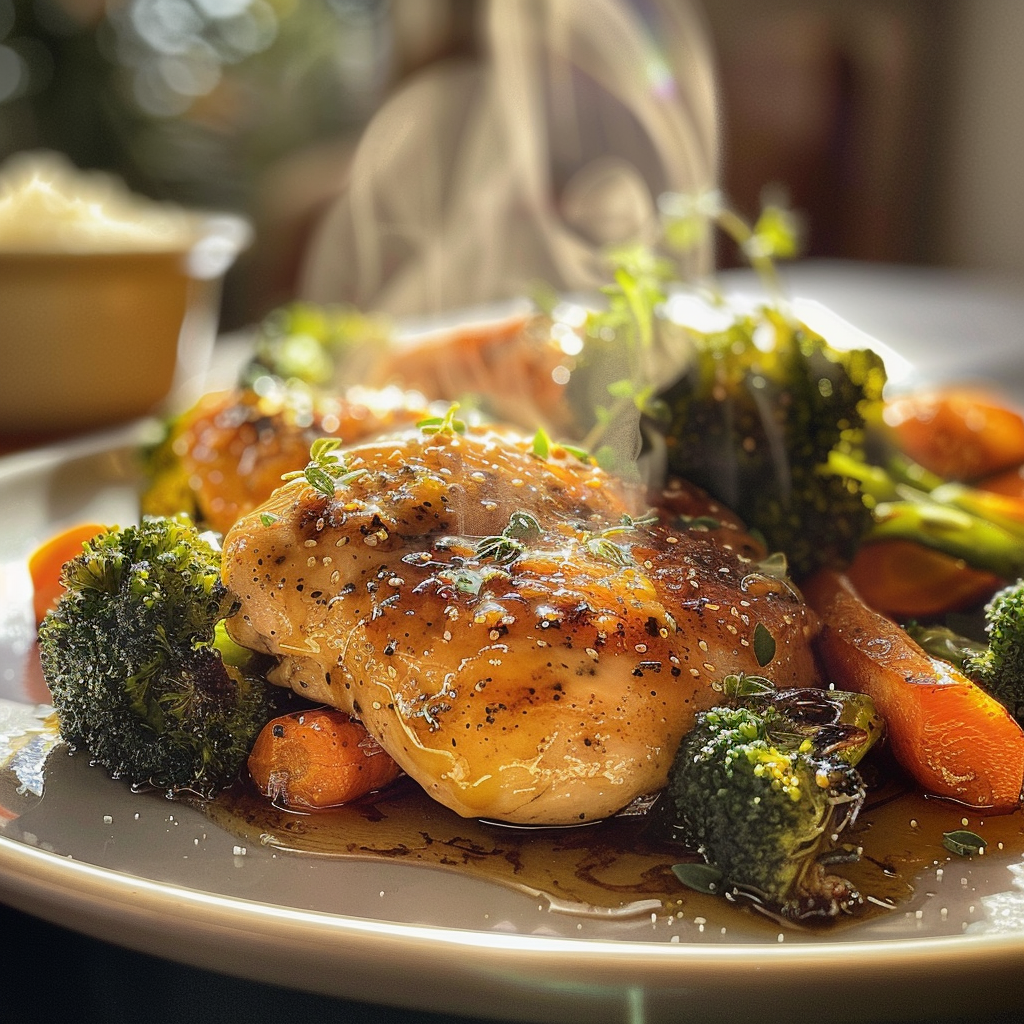
Sheet Pan Honey Mustard Chicken and Veggies
Ingredients
Method
- Preheat the oven to 400°F. Gather all ingredients and wash and cut all the vegetables.
- In a medium bowl, combine the mayonnaise, Dijon mustard, yellow mustard, honey, apple cider vinegar, garlic powder, paprika, ¼ teaspoon salt, and ¼ teaspoon pepper and stir until smooth.
- Add the chicken thighs to the honey mustard and toss to coat.
- Place the cut potatoes, red onions, trimmed green beans, and carrots on an oven-safe sheet pan. Drizzle with vegetable oil and sprinkle with the remaining salt and pepper. Toss to coat and lay the vegetables flat in the pan.
- Lay the chicken thighs on top of the vegetables, pouring all the honey mustard on top of the chicken.
- Place the pan in the preheated oven and cook 25-30 minutes, until the chicken reaches an internal temperature of 165°F.
- Remove the pan from the oven and divide the vegetables and chicken thighs evenly between four plates.
Nutrition
Notes
- For perfectly cooked chicken, use a meat thermometer to check for an internal temperature of 165°F; this ensures it’s safe to eat and juicy.
- To prevent the chicken from drying out, avoid overcooking by checking it at the 25-minute mark, especially if your oven runs hot.
- If you don’t have mayonnaise, Greek yogurt works as a great substitute for the sauce, adding creaminess with a tangy twist.
- For a quicker prep, chop your veggies ahead of time and store them in the fridge; they can be ready to go when you are.
- This dish keeps well in the fridge for up to 3 days; reheat in a 350°F oven for about 15 minutes to maintain the chicken’s tenderness and the veggies’ texture.
Tried this recipe?
Let us know how it was!📌 Pin this Recipe for Later!