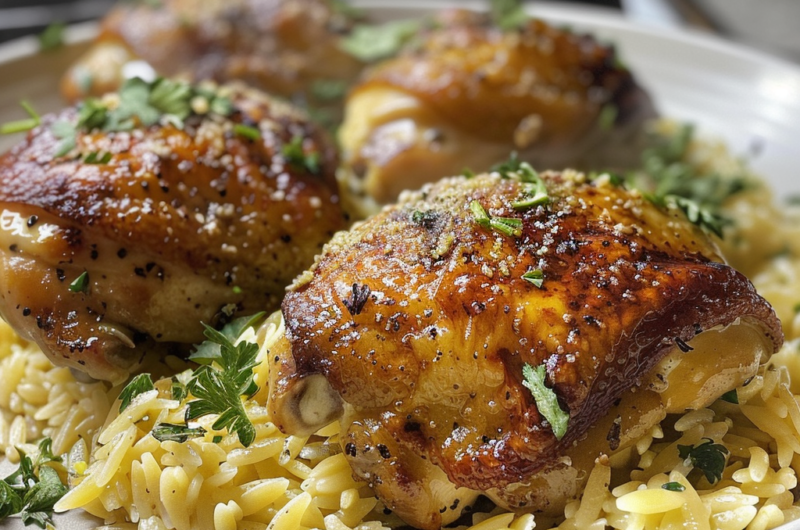
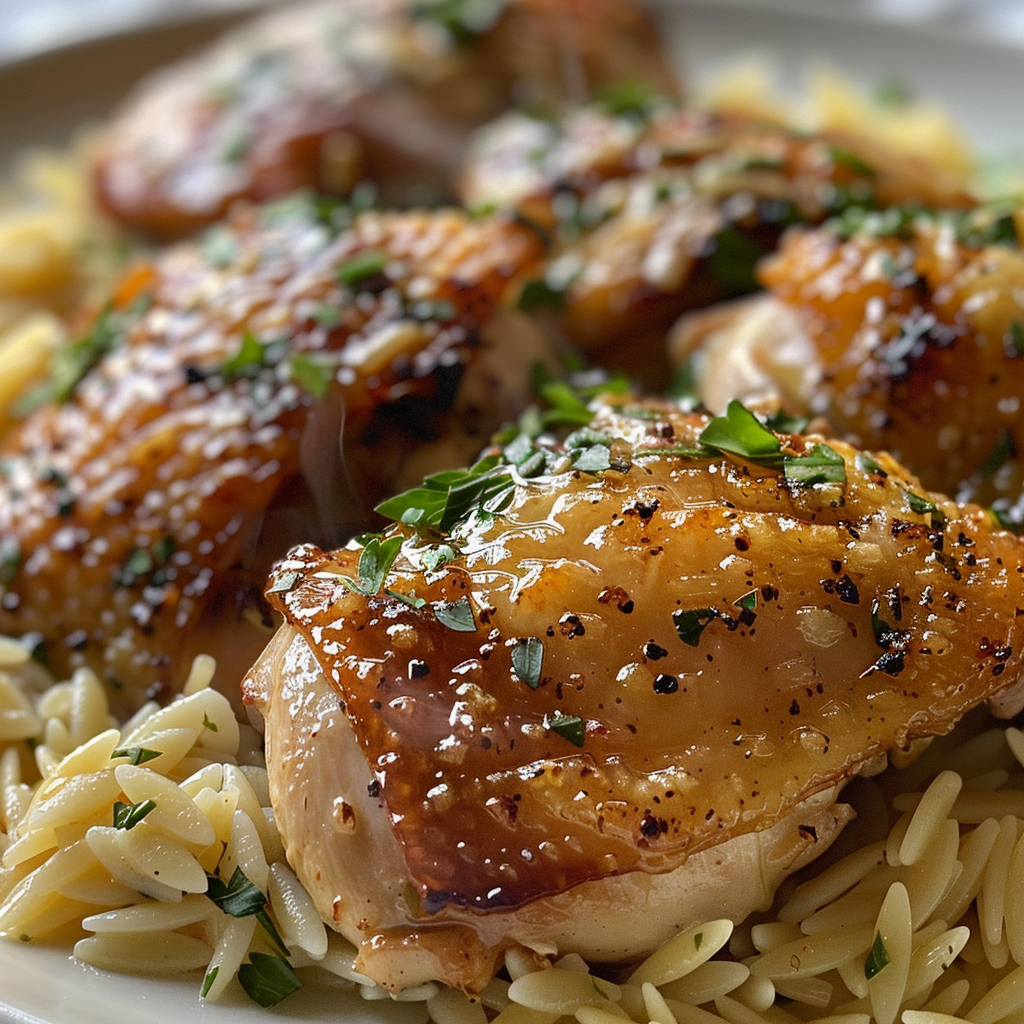
Crispy-skinned chicken thighs nestled in velvety, parmesan-studded orzo — a complete dinner that cooks entirely in one skillet.
📋 In This Article
Introduction
Some nights call for takeout. Others call for Garlic Parmesan Chicken Thighs with Creamy Orzo and Fresh Herbs. This is the latter. The kind of dish that makes your kitchen smell like a bistro and your family think you spent hours at the stove. You didn’t.
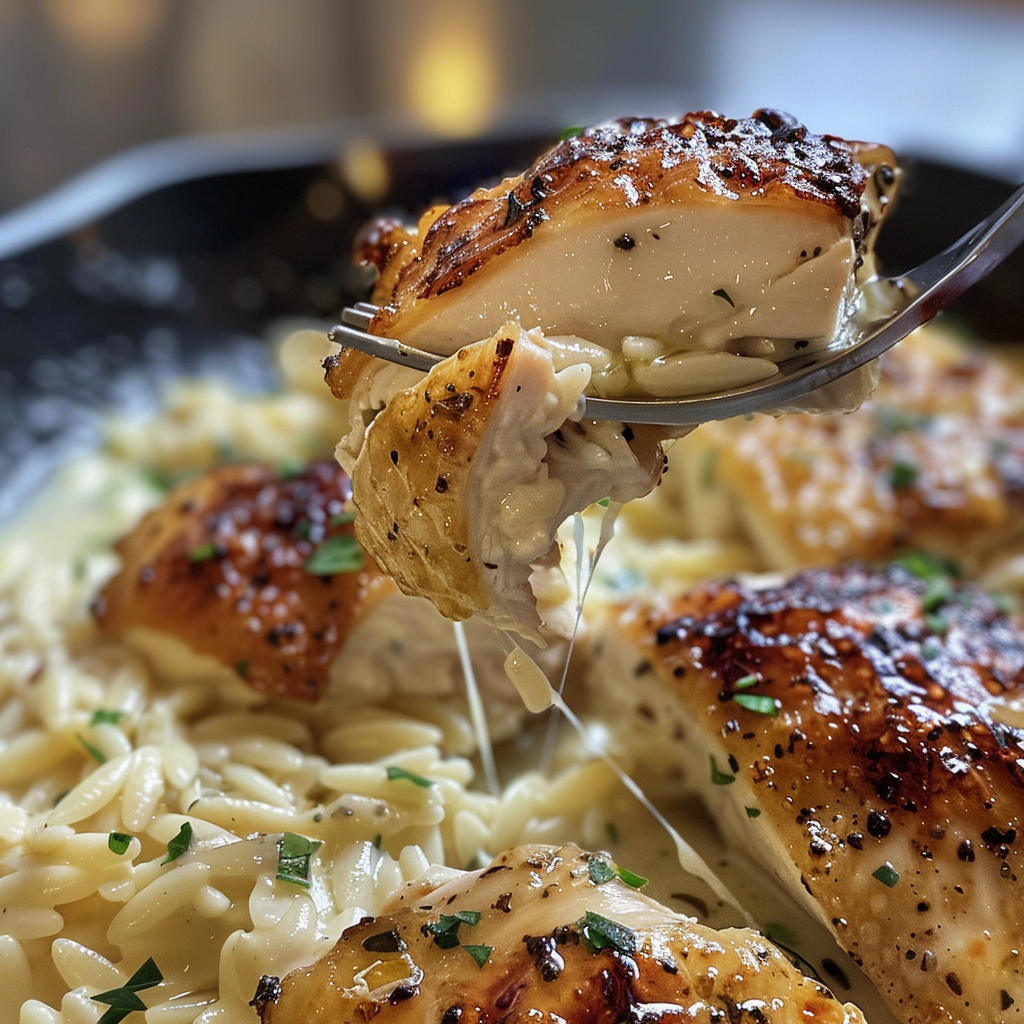
Here’s what happens: bone-in, skin-on chicken thighs get seared until the skin shatters like glass. Then they simmer atop orzo pasta that drinks up every drop of pan drippings and chicken broth, swelling into something creamy and luxurious. Fresh garlic, Parmesan cheese, and a pour of heavy cream tie it all together. Fresh herbs — parsley, basil, maybe a little thyme if you’re feeling fancy — land at the end for brightness. One pan. About 35 minutes. Dinner is served.
Why This Recipe Works (The Science Behind the Flavor)
This isn’t just convenient. It’s engineered. When you sear chicken thighs skin-side down in a hot skillet, you’re not “sealing in juices” — that’s a myth. What you’re actually doing is triggering the Maillard reaction, a chemical process where amino acids and sugars react under heat to create hundreds of new flavor compounds. That golden-brown crust? Pure chemistry. And it leaves behind fond — those caramelized bits stuck to the pan — which become the backbone of your sauce.
The orzo acts like a sponge. As it simmers directly in the chicken broth and pan drippings, it absorbs every molecule of flavor you built during searing. The heavy cream and Parmesan cheese create an emulsion that coats each grain in richness. And because the chicken finishes cooking on top of the orzo, its juices continue to baste the pasta from above. You end up with crispy-skinned chicken and velvety orzo in the same pan — no compromise.
Essential Ingredients
For the Chicken
Bone-in, skin-on chicken thighs are non-negotiable here. The skin renders its fat into the pan, flavoring everything beneath it, and the bone keeps the meat juicy during simmering. Boneless, skinless thighs will work, but you’ll sacrifice both texture and depth. Season generously with salt and black pepper — don’t be shy.
For the Orzo Base
Orzo pasta looks like rice but cooks like pasta, making it ideal for absorbing sauces. Chicken broth forms the cooking liquid — use a good one, because this is where most of your flavor comes from. Fresh garlic, about 4-5 cloves minced, provides the aromatic foundation. Red pepper flakes add a whisper of heat that cuts through the richness.
For the Creamy Finish
Heavy cream creates the luxurious texture — don’t substitute half-and-half or milk, as they’ll break under heat. Parmesan cheese, freshly grated from a wedge, melts into the cream to form a silky sauce. Pre-grated cheese contains anti-caking agents that prevent smooth melting. Butter adds a final layer of richness and helps emulsify the sauce. Fresh herbs — parsley, basil, or a mix — bring everything alive at the end.
Step-by-Step Instructions
Step 1: Sear the Chicken
Pat chicken thighs completely dry with paper towels. Moisture is the enemy of crust development — even a damp surface will steam rather than sear. Season both sides generously with salt and black pepper.
Heat 2 tablespoons olive oil in a large, deep skillet or Dutch oven over medium-high heat until shimmering. You’ll know it’s ready when a drop of water sizzles immediately. Place the chicken skin-side down in the pan. Don’t crowd it — if your pan is small, work in batches.
Let it cook undisturbed for 6-8 minutes. I used to poke and prod at this stage. Don’t. The skin needs continuous contact with the hot metal to develop that shatteringly crisp texture. When the skin is deep golden brown and releases easily from the pan, flip and cook the other side for 4-5 minutes. The chicken won’t be cooked through yet — that’s intentional. Transfer to a plate.
Step 2: Build the Aromatic Base
Reduce heat to medium. You should see a layer of golden-brown fond coating the bottom of your pan. That’s concentrated flavor. Add 4-5 cloves of minced garlic and cook for 30-45 seconds, just until fragrant. Garlic burns fast — the moment you smell it, move on. Burnt garlic tastes bitter and acrid, and there’s no fixing it.
Step 3: Deglaze and Add Orzo
Pour in 1 cup chicken broth. Using a wooden spoon, scrape up every bit of that fond from the bottom of the pan. This is called deglazing, and it dissolves those caramelized proteins into your cooking liquid. Stir in 1 cup uncooked orzo and bring to a gentle simmer.
Step 4: Simmer Together
Return the seared chicken thighs to the pan, skin-side up. Nestle them into the orzo but keep the skin above the liquid — you worked hard for that crispiness. Cover, reduce heat to medium-low, and simmer for 10-12 minutes. The orzo will absorb the broth and become tender while the chicken finishes cooking to an internal temperature of 165°F.
Step 5: Create the Creamy Sauce
Remove the lid. The orzo should be tender and most of the liquid absorbed. If it looks dry, add a splash more broth. Reduce heat to low. Stir in 1 cup heavy cream and 1 cup freshly grated Parmesan cheese. Stir continuously until the cheese melts completely and the sauce coats the back of a spoon. Don’t let it boil — high heat can cause the dairy proteins to seize and separate.
Step 6: Finish and Serve
Remove from heat. Stir in 1 tablespoon butter for extra silkiness, then fold in fresh herbs — about ¼ cup chopped parsley and basil. Taste the orzo and adjust seasoning with more salt or black pepper if needed. Serve immediately, making sure each plate gets a chicken thigh and plenty of that creamy orzo.
⚠️ Common Mistakes to Avoid
Even simple recipes have pitfalls. Here’s what trips people up.
Overcrowding the pan. When chicken pieces touch, they steam instead of sear. You lose that crucial Maillard reaction and end up with rubbery, grey skin. Give each piece room, or cook in batches.
Burning the garlic. Garlic goes from fragrant to acrid in seconds. Add it after you’ve reduced the heat, and keep it moving. If it turns dark brown, you’ve gone too far.
Adding cold cheese to hot liquid. Temperature shock causes cheese to clump instead of melting smoothly. Let your Parmesan come to room temperature first, or grate it while the chicken sears so it’s not ice-cold from the fridge.
Overcooking the orzo. Unlike rice, orzo can turn to mush quickly. Start checking at 10 minutes — it should be al dente, with a slight bite in the center. It will continue softening in the residual heat.
Skipping the rest period. When meat cooks, juices are forced toward the center. Cutting into chicken immediately after cooking means those juices end up on your cutting board, not in your meat. Let it rest 5 minutes before serving. This is called carryover cooking — the internal temperature actually continues rising slightly after you remove it from heat.
Variations & Customizations
This recipe is a framework. Make it yours.
Lighter version: Substitute chicken breast for thighs, but reduce the covered simmer time to 8-10 minutes. Breast meat dries out faster than thighs because it has less fat. Consider pounding it to even thickness first for uniform cooking.
Greener dish: Stir in spinach during the last 2 minutes of simmering, or add halved cherry tomatoes along with the orzo for bursts of sweetness. Mushrooms, sliced and sautéed with the garlic, add earthy depth.
Spicy kick: Increase red pepper flakes to ½ teaspoon, or add a drizzle of calabrian chili paste with the cream. The heat cuts through the richness beautifully.
Different herbs: Fresh thyme and oregano lean Mediterranean. Tarragon adds anise-like sweetness. Chives bring mild onion flavor without the bite.
Dairy-free adaptation: Use full-fat coconut milk instead of heavy cream, and substitute nutritional yeast for Parmesan. The flavor profile shifts, but you still get creaminess.
Gluten-free option: Swap orzo for gluten-free orzo (made from rice or corn) or use short-grain rice, adjusting the liquid ratio and cooking time accordingly.
Serving Suggestions & Pairings
This dish is substantial on its own, but the right sides elevate it.
A simple green salad with a sharp vinaigrette cuts through the richness. Think arugula with lemon juice and olive oil, or romaine with a Dijon dressing. The acid balances the cream.
Crusty bread is non-negotiable in my house. A baguette or ciabatta for sopping up every last bit of sauce. That’s where the flavor lives.
Roasted vegetables add color and texture contrast. Asparagus, broccolini, or roasted bell peppers work particularly well. Roast them while the chicken simmers.
For wine, reach for something crisp and acidic. Sauvignon Blanc or Pinot Grigio cleanse the palate between bites. If you prefer red, a light Pinot Noir won’t overwhelm the dish.
Storage & Reheating Tips
Leftovers keep well, but the texture shifts slightly.
Refrigeration: Store in an airtight container for up to 3-4 days. The orzo will continue absorbing liquid, so it may seem thicker the next day.
Freezing: Freeze the chicken and orzo separately for best results. Orzo tends to become mushy when frozen and thawed. Chicken thighs freeze well for up to 3 months.
Reheating: Add a splash of chicken broth or milk to loosen the orzo. Heat gently in a covered skillet over medium-low heat, stirring occasionally, until warmed through. The microwave works too — cover and heat in 60-second intervals, stirring between each. The internal temperature should reach 165°F for food safety.
💡 Pro Tips from the Chef
A few techniques that make a real difference.
Dry brine the chicken. Season your chicken thighs with salt at least 45 minutes before cooking — ideally overnight in the fridge. Salt initially draws moisture to the surface, but given time, that salty liquid reabsorbs into the meat, seasoning it throughout and helping it retain moisture during cooking. Short on time? 45 minutes gives you about 80% of the benefit.
Don’t touch the chicken while it sears. I tested this side-by-side: chicken I flipped frequently vs. chicken I left alone. The undisturbed chicken developed a significantly better crust. Patience isn’t just virtuous — it’s technically superior.
Grate your own cheese. Pre-grated Parmesan contains cellulose and anti-caking agents that prevent clumping in the bag — and also prevent smooth melting in your sauce. A wedge of Parmigiano-Reggiano and a microplane are worth the extra 60 seconds.
Temper the cream. If your heavy cream is very cold, add it gradually to the warm pan, stirring constantly. Temperature shock can cause the sauce to break. Room-temperature cream incorporates more smoothly.
Taste as you go. The chicken broth, Parmesan, and butter all contain salt. Taste the orzo before adding more — you might not need it.
Frequently Asked Questions (FAQ)
+Why is my chicken skin soggy instead of crispy?
Two likely culprits: the pan wasn’t hot enough when you added the chicken, or the skin wasn’t thoroughly dried before searing. Moisture creates steam, and steam prevents browning. Pat the chicken thighs completely dry, and make sure your oil is shimmering-hot before the meat hits the pan.
+Can I use chicken breast instead of thighs?
Yes, but adjust the cooking time. Chicken breast is leaner and cooks faster than thighs. Reduce the covered simmer time to 8-10 minutes, and check that the internal temperature reaches 165°F. Overcooked breast becomes dry and stringy, so err on the side of caution.
+How do I know when the chicken is fully cooked?
Use an instant-read thermometer inserted into the thickest part of the thigh, avoiding the bone. You’re looking for 165°F internal temperature. If you don’t have a thermometer, the juices should run clear when you cut into the thickest part, and the meat should pull easily from the bone.
+Can I skip the searing step?
Technically yes, but you’ll lose significant flavor. I tested seared versus unseared chicken side-by-side in this recipe. The seared version had noticeably more depth — that Maillard reaction and the fond it creates are foundational to the sauce. If you’re truly pressed for time, the dish will still work, but it won’t have the same richness.
+How long does this dish last in the fridge?
Store Garlic Parmesan Chicken Thighs with Creamy Orzo in an airtight container in the refrigerator for 3-4 days. The orzo will thicken as it sits, so add a splash of broth when reheating to restore the creamy consistency.
+What sides pair well with this dish?
A crisp green salad with vinaigrette, crusty bread for sauce-sopping, and roasted vegetables like asparagus or broccolini all complement the rich, creamy orzo and savory chicken. A glass of Sauvignon Blanc or Pinot Grigio ties it together.