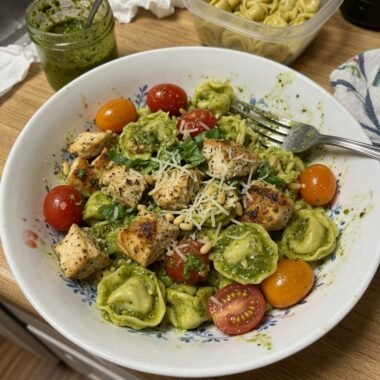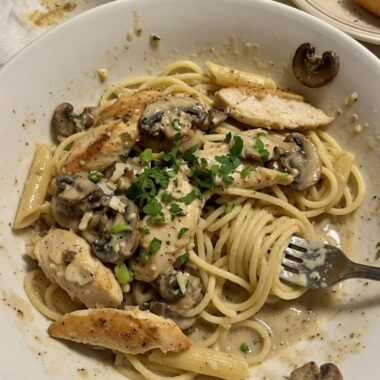
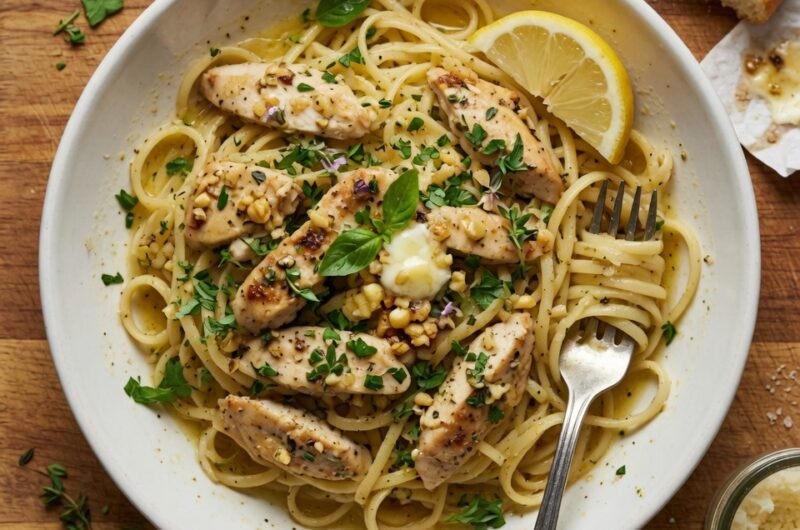
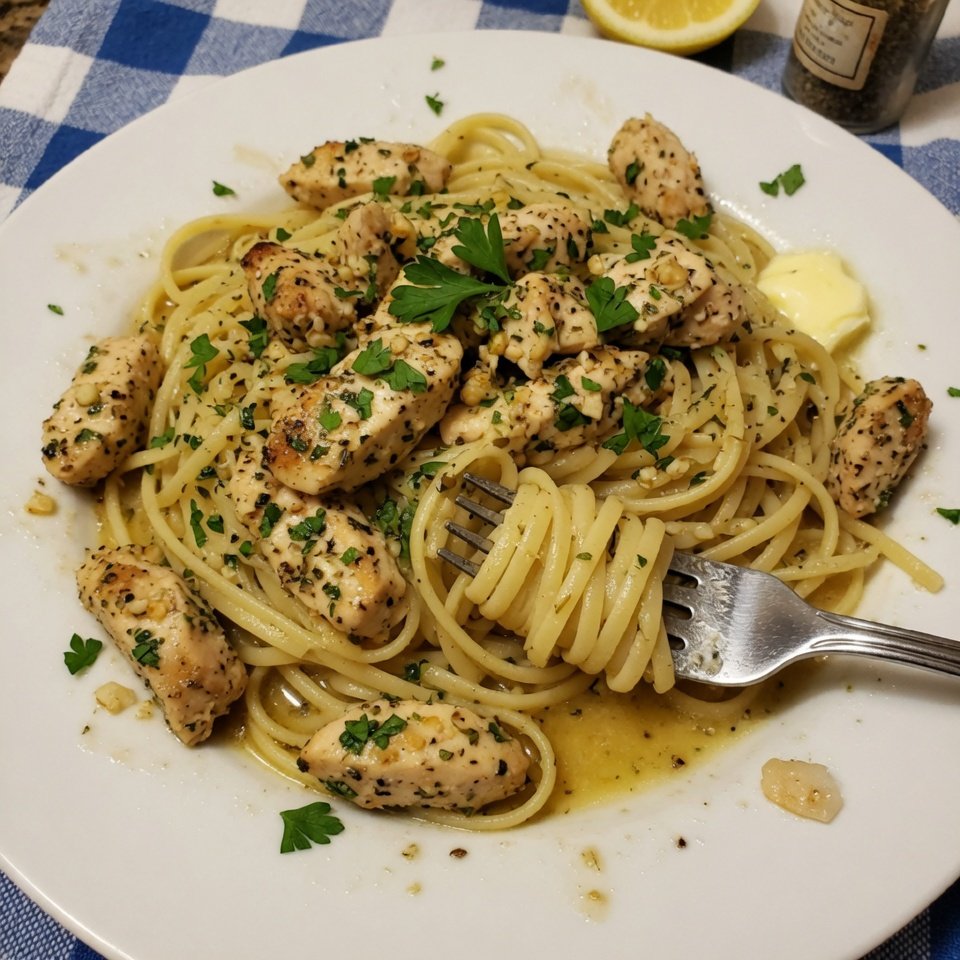
A silky, garlicky butter sauce clings to tender chicken and al dente linguine — all from a single skillet in under 30 minutes.
📋 In This Article
Introduction
Some dishes earn a permanent spot in your weeknight rotation not because they’re flashy, but because they deliver every single time. Garlic Butter Chicken Linguine with Herbs is one of those. It’s the kind of meal that feels like you put in serious effort, yet comes together in one pan with minimal fuss.
The concept is simple: golden-seared chicken meets a velvety garlic butter sauce, fresh herbs, and perfectly cooked pasta. But the execution matters. That’s where most recipes fall short. They tell you to “cook the chicken” without explaining why browning matters, or they skip the deglazing step entirely, leaving flavor stuck to the bottom of your pan. Creamy Chicken Pasta Recipe: A 20-Minute Weeknight Fix.
This version fixes those gaps. I’ve tested the technique side-by-side — searing versus just cooking through — and the difference is substantial. The Maillard reaction creates hundreds of new flavor compounds on the chicken’s surface, which then dissolve into your sauce when you deglaze. Skip that step, and you’re leaving the best part behind.
Why You’ll Love This Recipe
Garlic Butter Chicken Linguine with Herbs solves the weeknight dinner dilemma: it’s fast, deeply flavorful, and leaves you with only one pan to wash. The sauce is where the magic happens. Heavy cream meets garlic butter and chicken fond, creating an emulsion that coats every strand of pasta without separating or turning greasy.
This dish works because every ingredient pulls its weight. The chicken provides protein and browns beautifully. The garlic butter delivers aromatic punch. The cream adds richness. The herbs brighten everything at the finish. And the pasta water? That’s your secret weapon for adjusting consistency without diluting flavor.
Thirty minutes. One skillet. A meal that tastes like it came from a restaurant kitchen, minus the bill.
What is Garlic Herb Butter?
Garlic Herb Butter is a compound butter — unsalted butter blended with garlic and fresh herbs until uniform. Think of it as flavor concentrate. One tablespoon transforms grilled steak, roasted vegetables, or in this case, a simple cream sauce.
The classic blend includes parsley, chives, rosemary, thyme, and oregano, though variations exist. Some versions add paprika, red pepper flakes, black pepper, and onion powder for depth. The garlic can be fresh minced or powdered; fresh hits harder, while powdered distributes more evenly.
You can make it yourself in about five minutes, or buy it pre-made. Either way, it stores well in the refrigerator for a week or freezes for up to three months. If you’re planning to use it regularly, double the batch. It’s that useful.
Ingredients
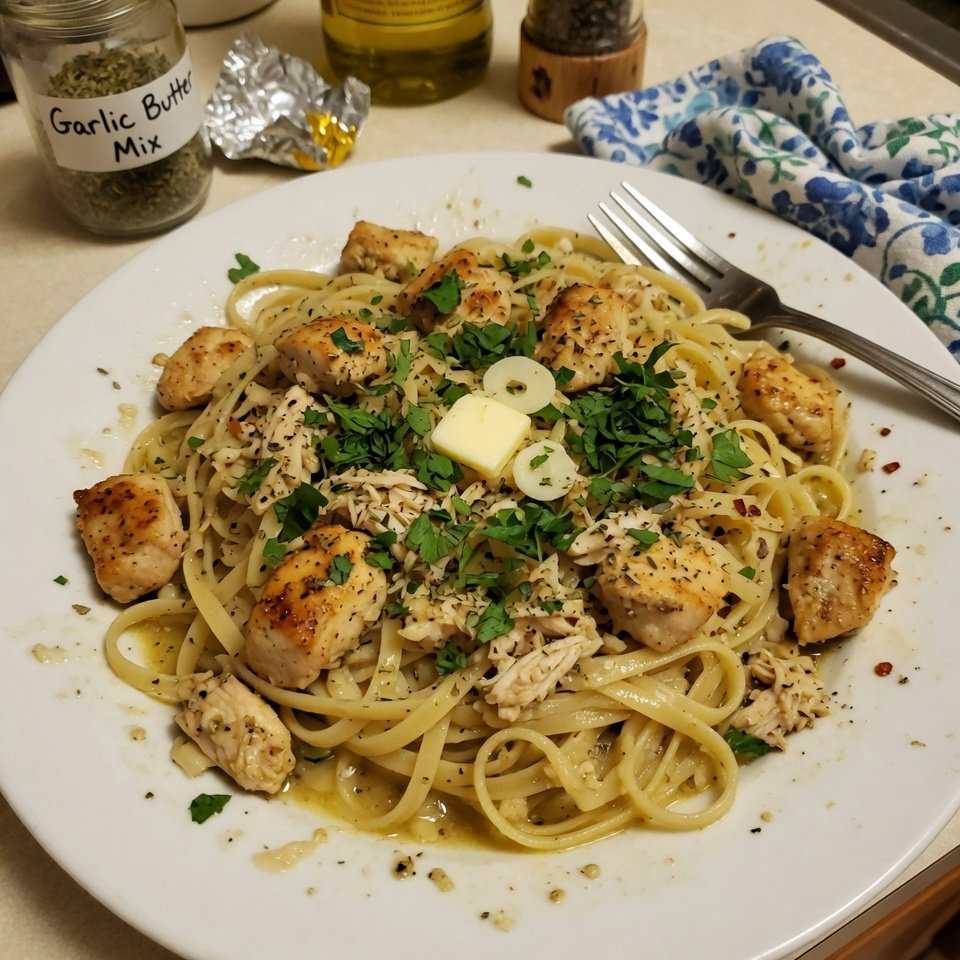
Ingredients for Garlic Butter Chicken Linguine with Herbs
- 8 ounces (225 g) linguine — Dried pasta works best; fresh pasta tends to fall apart in the sauce.
- 1 ½ pounds (680 g) boneless skinless chicken breasts or thighs — Cut into 1-inch pieces. Thighs stay juicier; breasts cook faster.
- 2 tablespoons (30 ml) extra virgin olive oil — Needed for searing. Don’t use butter here; it will burn.
- 1/4 cup (60 g) garlic herb butter — The star. Homemade or store-bought both work.
- 1 cup (240 ml) heavy cream — Provides body and richness. Don’t substitute with milk; the sauce will break.
- 1 cup (240 ml) chicken broth — Balances the cream and adds savory depth.
- 1 tablespoon (15 ml) lemon juice — Freshly squeezed. Cuts through the richness.
- 1/2 cup (50 g) freshly grated Parmesan cheese — Add at the end for umami and slight thickening.
- Salt and black pepper to taste — Season throughout, not just at the end.
- 1/2 teaspoon red pepper flakes — Optional heat. Adjust to your tolerance.
- 1 teaspoon onion powder — Adds savory backbone without raw onion texture.
- 1 cup (30 g) baby spinach (optional) — Wilts into the sauce for color and nutrients.
- 1 cup (150 g) cherry tomatoes (optional) — Halved. Adds sweetness and acidity.
Step-by-Step Instructions
Step 1: Prepare the Chicken
Cut 1 ½ pounds of boneless, skinless chicken into uniform 1-inch pieces. Uniformity matters here — uneven sizes mean uneven cooking. Season generously with salt, pepper, and paprika. Don’t be shy; you want the seasoning to penetrate, not just sit on the surface.
Step 2: Sear the Chicken
Heat 2 tablespoons of olive oil in a large skillet over medium-high heat. Wait until the oil shimmers — that’s your signal it’s hot enough. Add the chicken in a single layer. If your pan is crowded, work in batches. Overcrowding drops the temperature and steams the meat instead of searing it.
Cook for 6-8 minutes, turning occasionally, until the chicken develops a golden-brown crust and reaches an internal temperature of 165°F. That browning isn’t just cosmetic — the Maillard reaction creates new flavor compounds that will later dissolve into your sauce.
Transfer the chicken to a plate and tent loosely with foil. The residual heat will finish the cooking process through carryover cooking.
Step 3: Cook the Pasta
While the chicken sears, bring a large pot of water to a boil. Add enough salt so it tastes like the sea — this is your only chance to season the pasta itself. Add 8 ounces of linguine and cook until al dente, usually 8-10 minutes depending on the brand.
Reserve 1 cup of pasta water before draining. This starchy liquid is liquid gold for adjusting sauce consistency.
Step 4: Build the Sauce
Reduce the skillet heat to medium-low. Add 1/4 cup of garlic herb butter and let it melt, scraping up the browned bits (the fond) from the bottom of the pan. Those stuck-on particles are pure concentrated flavor — deglazing releases them into your sauce.
Pour in 1 cup of heavy cream and 1 cup of chicken broth. Add 1 teaspoon of onion powder and a splash of lemon juice. Stir constantly while the mixture comes to a gentle simmer. Don’t let it boil — high heat can cause the cream to separate.
Simmer for 2-3 minutes until the sauce slightly thickens and coats the back of a spoon.
Step 5: Combine Everything
Add the drained linguine and cooked chicken back to the skillet. Toss vigorously with tongs, ensuring every strand gets coated. If the sauce seems too thick, add pasta water a few tablespoons at a time until you reach your desired consistency.
Remove from heat. Stir in 1/2 cup of freshly grated Parmesan until melted and incorporated. The cheese acts as an additional thickener and adds savory depth.
Step 6: Serve
Serve immediately, garnished with fresh herbs and extra Parmesan if desired. This dish waits for no one — the sauce continues to thicken as it sits, so it’s best enjoyed right away.
💡 Pro Tips for Success
Cook pasta al dente. It should have a slight bite in the center. Why? Al dente pasta continues absorbing sauce after you toss it, achieving perfect texture without turning mushy. Overcooked pasta can’t recover.
Reserve that pasta water. The starch in pasta water helps the sauce cling to the noodles. Without it, you’re left with a thin sauce and slippery pasta that refuse to integrate.
Don’t skip the sear. I tested this recipe side-by-side: one batch with properly seared chicken, one batch where I rushed and didn’t let the pan get hot enough. The seared version had noticeably more depth. The Maillard reaction creates flavor compounds you simply can’t get otherwise.
Deglaze properly. When you add the butter and cream to the pan, really work at those browned bits with your spoon. That’s where the concentrated chicken flavor lives. The first time I skipped this step, the sauce tasted flat — I learned my lesson. Creamy Garlic Shrimp Alfredo Pasta Delight.
Add cream at the right temperature. Cold cream hitting a screaming-hot pan can curdle. Let your cream come to room temperature, or warm it slightly before adding. Alternatively, pull the pan off the heat for 30 seconds, add the cream, then return to medium-low.
Finish with fresh herbs, not dried. Dried herbs need time to rehydrate and release flavor. Fresh herbs added at the end provide brightness and aroma that dried versions can’t match.
⚠️ Common Mistakes to Avoid
Overcooking the chicken. This is the fastest way to ruin the dish. Chicken continues cooking after you remove it from heat. Pull it at 165°F and let it rest. If you cut into it immediately, you’ll lose up to 40% of the juices onto your cutting board.
Forgetting to salt the pasta water. Unsalted pasta is bland pasta. No amount of sauce can fix noodles that taste like nothing. Salt the water generously — it should taste like a well-seasoned soup.
Adding cold cream to a hot pan. Temperature shock can cause cream to curdle. Let ingredients come closer to room temperature, or temper them by adding slowly while stirring constantly.
Overcrowding the pan. When too much chicken hits the pan at once, the temperature drops and steam replaces sear. Work in batches if needed. Brown meat develops flavor; gray meat does not.
Skipping the pasta water. Without that starchy liquid, adjusting sauce consistency means adding more cream or broth, which dilutes flavor. Pasta water thickens without diluting.
Variations & Add-ins
The base recipe is solid, but the variations are where this dish adapts to whatever you have on hand.
Vegetable additions: Mushrooms, asparagus, bell peppers, and cherry tomatoes all work beautifully. Sauté hard vegetables with the chicken; add quick-cooking ones like spinach in the final minute.
Protein swaps: Shrimp cooks faster — add it in the last 3-4 minutes. Sliced sausage brings smokiness. Tofu works for a vegetarian version; press it well and sear until golden.
Spice adjustments: Add red pepper flakes or cayenne for heat. For a milder version, omit them entirely. The garlic butter carries enough flavor without the spice.
Cheese variations: Parmesan is classic, but mozzarella creates a stretchy texture. Asiago adds sharpness. Mix them for complexity.
Dietary modifications: Gluten-free pasta works with this sauce. For dairy-free, use plant-based cream and butter substitutes, though the texture will differ slightly.
Serving Suggestions
Garlic Butter Chicken Linguine with Herbs pairs well with simple sides that don’t compete for attention. A crisp green salad with vinaigrette cuts through the richness. Warm garlic bread is traditional for good reason — it’s perfect for sopping up extra sauce.
Roasted vegetables add color and nutrients. Zucchini, bell peppers, or asparagus roasted with olive oil and salt complement without overwhelming.
For wine, a chilled glass of Sauvignon Blanc or unoaked Chardonnay works. The acidity balances the creamy sauce, and the citrus notes echo the lemon juice in the dish.
Storage & Reheating
This dish is best served immediately, but leftovers store reasonably well. Allow the pasta to cool to room temperature before transferring to airtight containers. Refrigerate for up to 3-4 days.
For longer storage, freeze for up to 2-3 months. Note that cream-based sauces can separate slightly upon thawing — a quick stir while reheating usually brings it back together.
Reheating method: Separate the chicken and sauce from the pasta if possible. Reheat the chicken and sauce in a skillet over medium heat, adding a splash of broth or water to loosen the sauce. Microwave reheating works in a pinch — heat in short intervals, stirring between each, until warmed through. Delightful Creamy Parmesan Butter Noodles Recipe.
Frequently Asked Questions (FAQ)
+Why is my chicken dry?
Overcooking is the culprit. Chicken breasts reach doneness at 165°F internal temperature. Beyond that, proteins tighten and squeeze out moisture. Use a thermometer, and pull the meat as soon as it hits temperature. Thighs are more forgiving — they stay juicy even slightly overcooked.
+Can I use milk instead of heavy cream?
You can, but the sauce will be thinner and less stable. Heavy cream contains enough fat to emulsify properly. Milk has less fat and can curdle or separate when heated. If you must substitute, half-and-half is a better option than whole milk.
+How do I know when the chicken is done?
The most reliable method is an instant-read thermometer inserted into the thickest piece. It should read 165°F. Visually, the meat should be opaque throughout with no pink, and the juices should run clear. If you’re unsure, cut into the largest piece to check.
+Can I make this ahead of time?
You can prep components in advance — cut the chicken, measure ingredients, make the garlic herb butter. But the assembled dish is best eaten immediately. Cream sauces tend to separate when reheated, and pasta continues absorbing liquid as it sits.
+How long does this last in the fridge?
Properly stored in an airtight container, leftovers keep for 3-4 days. The pasta may soften slightly, and the sauce might thicken. Add a splash of broth or water when reheating to restore consistency.
+What sides go with this dish?
A simple green salad, roasted vegetables, or garlic bread all pair well. Keep sides relatively light — the pasta is rich enough on its own. A crisp white wine or sparkling water with lemon balances the meal.
Conclusion
Garlic Butter Chicken Linguine with Herbs delivers on the promise of weeknight cooking: maximum flavor with minimum cleanup. One pan, thirty minutes, and a sauce that actually coats the pasta instead of sliding off. The technique matters here — sear the chicken properly, deglaze the pan, use pasta water to adjust consistency. Follow those steps, and you’ll get restaurant-quality results from your own kitchen.
This isn’t just dinner. It’s the kind of recipe you memorize and make on repeat, the one your family requests and your friends ask about. Try it tonight, and see why it’s earned a permanent spot in my rotation.