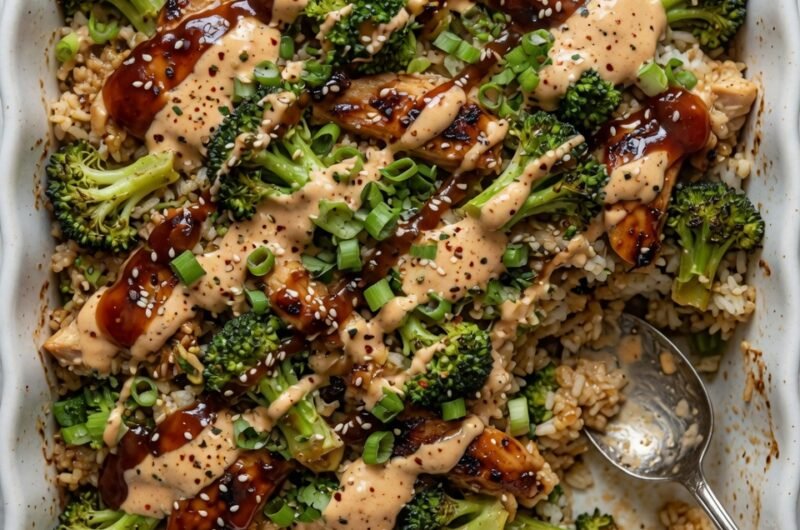
A one-pan wonder where sticky-sweet teriyaki chicken meets fluffy rice and crisp-tender broccoli—no pre-cooking the rice required.
📋 In This Article
- Introduction
- Why This Casserole Works
- The Heart of the Dish: Ingredients You’ll Need
- Step-by-Step Instructions
- Crafting the Perfect Sweet Teriyaki Glaze
- Common Mistakes to Avoid
- Delicious Variations & Customizations
- Storage, Reheating, and Make-Ahead Tips
- Expert Tips for Success
- What to Serve With Your Casserole
- Frequently Asked Questions (FAQ)
- Conclusion
Introduction
Let’s be honest: weeknight dinners usually fall into two categories. There’s the “I forgot to defrost anything” panic, or the “let’s just order takeout” surrender. This Chicken Teriyaki and Rice Casserole Loaded With Broccoli and Sweet Glaze bridges that gap. It delivers the salty-sweet satisfaction of your favorite takeout order, but with the hands-off ease of a casserole.
I’ve spent years testing rice casseroles, and the common failure point is texture—often, you end up with mush. Not here. By toasting the raw rice in the chicken fond (those sticky brown bits left in the pan) before baking, we ensure every grain stays distinct. The broccoli is added midway, ensuring it steams to a vibrant green rather than a gray mush. It’s a complete meal in one dish, balancing protein, carbs, and vegetables in a glaze that’s thick enough to coat the back of a spoon.
Why This Casserole Works
The magic of this dish lies in the layering. We aren’t just dumping ingredients into a dish and hoping for the best. We start by searing the chicken to trigger the Maillard reaction—the chemical process that gives browned food its distinctive savory flavor. This step creates a flavor base that powdered seasonings simply can’t replicate.
Then comes the rice. Toasting the grains in the rendered chicken fat coats them in oil, which helps prevent them from bursting and becoming starchy during the bake. The Chicken Teriyaki and Rice Casserole Loaded With Broccoli and Sweet Glaze also solves the “dry chicken” problem common in baked dishes. By baking the chicken with the rice and broth, it gently poaches in the liquid, staying juicy even as it cooks through. Finally, the broccoli addition is timed perfectly. We add it when the rice has absorbed most of the liquid, allowing it to steam just enough to become tender-crisp without turning into baby food.
The Heart of the Dish: Ingredients You’ll Need
Quality matters here, but flexibility is key.
For the Casserole:
- Chicken Cut Options: Chicken Thighs (boneless, skinless) are my top choice. They have more intramuscular fat, which keeps the meat juicy during the long bake. If you prefer Chicken Breast, be careful not to overcook it during the sear.
- Rice Choices: Stick to Jasmine Rice or Basmati Rice. Long-grain varieties hold their shape best. Avoid short-grain or Arborio rice unless you want a risotto-like texture.
- Vegetable: Fresh Broccoli Florets are ideal for texture. If using frozen broccoli, thaw it completely and pat it dry to prevent excess water from turning your casserole soggy.
- Liquid Base: Chicken Broth adds a savory depth that water lacks.
- Thickening Agent: Cornstarch is essential for the glaze.
For the Sweet Teriyaki Glaze:
- Sauce Essentials: A combination of Soy Sauce (low-sodium lets you control the salt), Honey, and Brown Sugar creates that classic sticky-sweet profile. Rice Vinegar cuts the sweetness with acid.
- Aromatics: Fresh Ginger and Garlic are non-negotiable. Powdered versions lack the punch needed here.
- Finishing Touches: Sesame Oil for nuttiness, plus Sesame Seeds and Green Onions for garnish.
Step-by-Step Instructions
- Preheat and Prep: Preheat your oven to 375°F (190°C). Cut 1 pound of chicken into bite-sized pieces. Pat them dry—moisture is the enemy of a good sear.
- Sear the Chicken: Heat 1 tablespoon of oil in a large oven-safe skillet or Dutch oven over medium-high heat. Season the chicken and sear for 5-7 minutes until golden brown. You aren’t cooking it through here, just developing flavor. Remove the chicken and set aside.
- Toast the Rice: In the same pan, add 2 cups of uncooked rice. Toast it for 1-2 minutes in the remaining chicken fat. This step is a game-changer for texture. The rice should smell nutty.
- Simmer the Base: Pour in 4 cups of chicken broth. Scrape up any browned bits stuck to the bottom of the pan—that is pure flavor. Bring it to a boil, then remove from heat.
- First Bake: Stir in the seared chicken. Cover the pan tightly with a lid or foil. Bake at 375°F (190°C) for 20 minutes. This allows the rice to absorb the liquid.
- Add Broccoli: Remove the pan from the oven. Quickly stir in 2 cups of broccoli florets. It will look like there isn’t enough room, but the broccoli will wilt slightly. Cover and return to the oven for another 10 minutes.
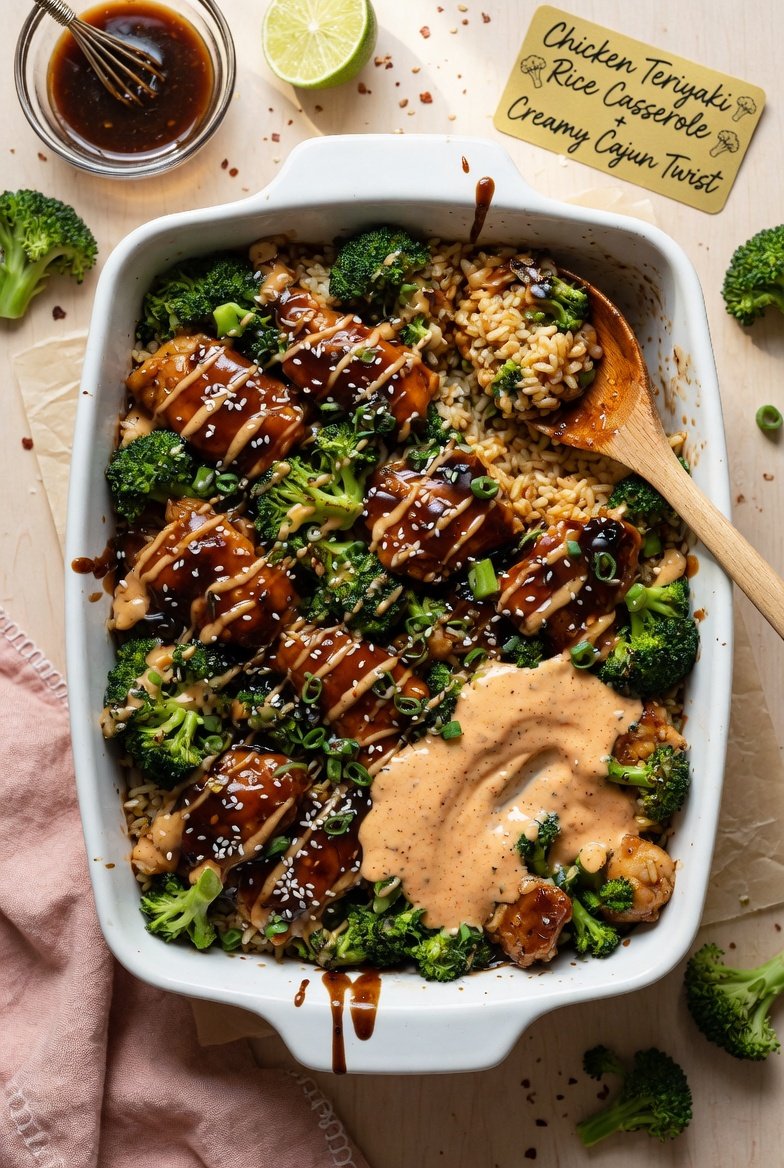
- Glaze and Finish: Remove the lid. The rice should be tender and the liquid mostly absorbed. Pour 1 cup of your prepared teriyaki glaze over the top. Return to the oven uncovered for 5-10 minutes to let the glaze thicken and bubble.
- Rest and Serve: Let the casserole rest for 5 minutes before serving. This allows the sauce to set slightly so it clings to the chicken and rice rather than running all over the plate.
Crafting the Perfect Sweet Teriyaki Glaze
A great glaze is all about viscosity. If it’s too thin, it disappears into the rice. If it’s too thick, it burns.
In a small saucepan, combine ½ cup soy sauce, ¼ cup honey, 2 tablespoons brown sugar, 1 tablespoon rice vinegar, 1 teaspoon grated fresh ginger, and 1 teaspoon grated garlic. Simmer over medium heat. Mix 1 tablespoon of cornstarch with 1 tablespoon of cold water to create a slurry. Whisk this into the simmering sauce.
Here is the science: the heat activates the cornstarch granules, causing them to swell and burst, which thickens the liquid. Simmer until the glaze coats the back of a spoon—this is called “nappe” consistency. Stir in ½ teaspoon of sesame oil at the very end to preserve its aromatic qualities.
⚠️ Common Mistakes to Avoid
Even simple recipes have pitfalls.
- Mushy Rice: This usually happens if the lid isn’t tight enough. Steam escapes, the rice dries out, and you add more water to compensate, leading to gummy grains. Use heavy-duty foil or a heavy lid.
- Burnt Glaze: Sugar burns faster than you think. If you are baking the casserole for longer than 30 minutes total, wait to add the glaze until the final 10 minutes.
- Soggy Broccoli: Nobody likes gray broccoli. Adding it halfway through the baking time ensures it steams perfectly without overcooking.
- Under-seasoned Chicken: The rice absorbs salt from the broth, but the chicken needs its own seasoning. Don’t forget to salt your meat before searing.
Delicious Variations & Customizations
This recipe is a template, not a rulebook.
- Spicy Kick: Add a tablespoon of Sriracha or a teaspoon of red pepper flakes to the glaze. The heat balances the sugar beautifully.
- Pineapple Teriyaki: Stir in ½ cup of crushed pineapple (drained) during the last bake. The enzymes in pineapple also help tenderize the chicken.
- Vegetable Swaps: Snap peas, bell peppers, or carrots work well. Add harder vegetables like carrots with the rice at the start; add softer ones like snap peas with the broccoli.
- Protein Alternatives: Cubed tofu works, but press it firmly to remove water first. Shrimp cooks much faster—add it only in the last 10 minutes of baking.
Storage, Reheating, and Make-Ahead Tips
This dish reheats exceptionally well, making it a meal-prep champion.
Storage: Cool the casserole completely before covering. Store in the refrigerator for up to 4 days. The flavors actually meld and improve overnight.
Reheating: The microwave is fine for single servings (2 minutes on high, stir halfway). For a larger portion, cover with foil and bake at 350°F (175°C) for 20 minutes. Add a splash of water or broth before reheating to revive the rice.
Freezing: Freeze portions in airtight containers for up to 3 months. Thaw overnight in the fridge for best texture results.
💡 Expert Tips for Success
- Use an Oven-Safe Pan: Transferring hot rice and chicken from a skillet to a baking dish is messy and risks breaking the grains. If you have a cast-iron skillet or Dutch oven, use it from stovetop to oven.
- Don’t Peek: Every time you open the oven door, the temperature drops significantly. Trust the timer.
- Check the Rice: Rice varies. If the liquid hasn’t absorbed after the first 20 minutes, give it another 5 minutes before adding the broccoli.
- Resting Period: I used to skip this step—don’t. Those 5 minutes of resting allow the sauce to thicken up and the rice to firm up for serving.
What to Serve With Your Casserole
Because this dish is a complete meal, you only need light sides.
- Simple Green Salad: A vinaigrette dressing cuts through the richness of the glaze.
- Edamame: Sprinkle with sea salt for a quick protein boost.
- Miso Soup: A warm, umami-rich starter that complements the Japanese flavors.
- Pickled Ginger: It acts as a palate cleanser between bites.
Frequently Asked Questions (FAQ)
+Why is my casserole watery?
If your casserole is soupy, the rice likely didn’t absorb enough liquid. This can happen if the lid wasn’t sealed tightly. Return it to the oven (covered) for another 5-10 minutes. If the rice is fully cooked but there is excess liquid, uncover and bake on high heat to evaporate the moisture.
+Can I use brown rice instead of white rice?
Yes, but brown rice requires more liquid and a longer cooking time. Increase the chicken broth to 4.5 cups and bake for 45 minutes before adding the broccoli.
+Do I have to sear the chicken first?
Technically, no. You could toss raw chicken with the rice. However, you will lose the depth of flavor created by the Maillard reaction. The dish will taste flatter and “steamed” rather than roasted.
+Can I use frozen broccoli?
Absolutely. Thaw it first and squeeze out as much excess water as possible. Frozen broccoli tends to be softer than fresh, so add it 5 minutes later in the baking process to prevent it from falling apart.
+How do I know when the chicken is fully cooked?
The safest way is an instant-read thermometer. The internal temperature should reach 165°F (74°C). Visually, the chicken should be opaque all the way through, not pink in the center.
+Can I make this gluten-free?
Easily. Substitute the soy sauce for tamari or coconut aminos. Ensure your chicken broth is certified gluten-free, as some brands contain wheat.
Conclusion
This Chicken Teriyaki and Rice Casserole Loaded With Broccoli and Sweet Glaze is the kind of recipe that stays in your weekly rotation for years. It solves the “what’s for dinner” problem with a balance of sweet, savory, and fresh flavors that appeal to both kids and adults. By understanding the simple science behind the rice and the glaze, you turn a standard weeknight dinner into something truly satisfying.