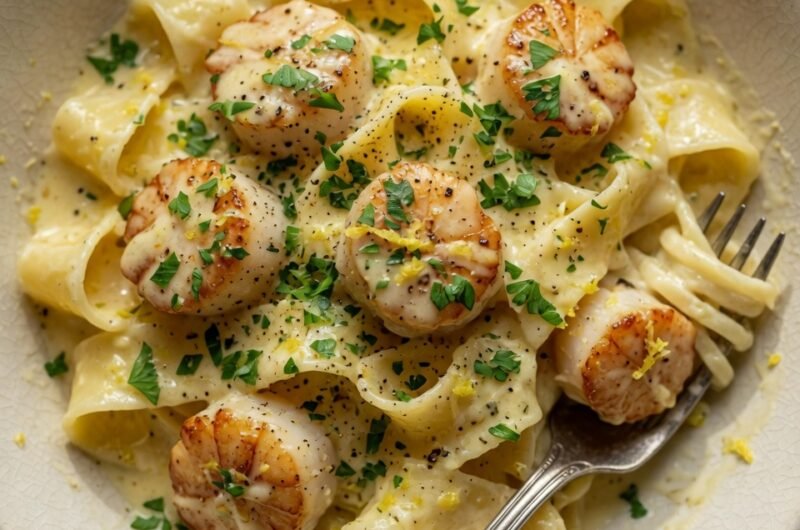
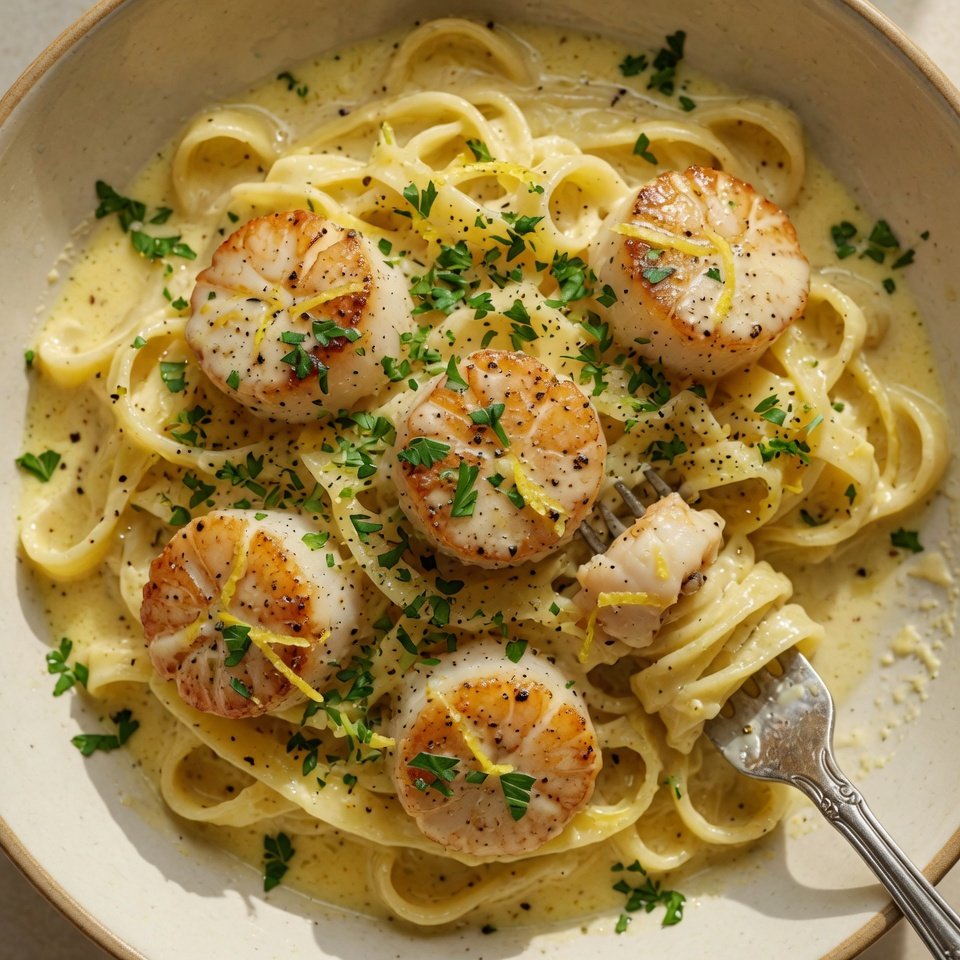
Golden-seared sea scallops meet a bright, velvety lemon-cream sauce in this fast, elegant dinner.
📋 In This Article
Introduction
There is a specific kind of magic that happens when you pair sweet, briny sea scallops with a rich dairy base and a hit of acid. That is exactly what you get with this Velvet Creamy Lemon Scallop Pasta With Fresh Parsley and Black Pepper. It sounds fancy—maybe even intimidating—but the reality is surprisingly grounded. You don’t need a culinary degree to pull this off; you just need to understand heat and timing.
I’ve spent years testing pasta sauces, and the failure point is almost always the same: broken emulsions or rubbery seafood. This recipe solves both. By leveraging the starch from the pasta water and controlling the heat on the cream, you get a sauce that is genuinely silky, not just oily. And the scallops? They take about three minutes. Seriously. It’s high-reward, low-effort cooking at its finest.
Why This Recipe Works
The brilliance of this dish lies in the contrast of textures and temperatures. You have hot, seared meat against a cool, creamy backdrop. But the real secret weapon is the fond—those sticky, browned bits left in the pan after you sear the scallops. Most home cooks wash the pan right after. Don’t. That brown residue is pure concentrated flavor, created by the Maillard reaction, where proteins and sugars transform under high heat into hundreds of new aromatic compounds. By deglazing the pan with white wine, you dissolve that fond back into the sauce, building a depth of flavor you simply cannot get from a jar.
We also use a specific emulsification technique. Heavy cream is stable, but it can still break if you look away for too long. By adding starchy pasta water, the starch molecules act as a physical barrier, preventing fat globules from coalescing. The result? A velvety texture that clings to the noodles rather than pooling at the bottom of the bowl.
Essential Ingredients
Success here depends on quality and temperature.
For the Scallops
- Sea Scallops: Look for “dry-packed” scallops. If they are sitting in a milky liquid in the container, they have been treated with sodium tripolyphosphate (STP). This chemical helps them retain water weight (so you pay more for water), but that moisture prevents them from browning properly. Dry scallops sear; wet scallops steam.
- Olive Oil: A neutral, high-heat oil is best for searing.
- Salt and Black Pepper: Essential for seasoning the crust.
For the Pasta & Sauce
- Dry Pasta: Linguine or fettuccine works best. The flat surface area grabs onto the cream sauce better than round spaghetti.
- Heavy Cream: Do not use half-and-half; the lower fat content increases the risk of curdling when the acid hits.
- Butter: Unsalted, so you can control the seasoning.
- Garlic and Shallots: Finely minced so they melt into the sauce.
- White Wine: Something dry and crisp, like Pinot Grigio or Sauvignon Blanc.
- Lemon: You need both the zest and the juice. The zest contains essential oils that provide a floral top note, while the juice adds the sharp acid needed to cut the richness.
- Fresh Parsley: Flat-leaf parsley adds a fresh, herbal finish.
Step-by-Step Instructions
- Prep the Scallops: Pat the sea scallops thoroughly dry with paper towels. Moisture is the enemy of the crust. If they are very wet, let them air-dry on a paper towel-lined plate in the fridge for 30 minutes. Season generously with salt and black pepper.
- Sear the Scallops: Heat a stainless steel or cast-iron skillet over medium-high heat until it smokes slightly. Add olive oil. Place scallops in the pan, leaving at least an inch between them. If they touch, they steam. Sear for 2-3 minutes until a deep golden crust forms. Flip and cook 1-2 minutes more. Remove immediately and set aside.
- Boil the Pasta: While the scallops rest, drop your dry pasta into heavily salted boiling water. Cook until just shy of al dente. Before draining, scoop out at least 1 cup of the starchy pasta water. This is liquid gold.
- Build the Base: In the same unwashed skillet (you want that fond), reduce heat to medium-low. Add butter, shallots, and garlic. Sauté until soft, about 2 minutes.
- Deglaze and Reduce: Pour in the white wine. Use a wooden spoon to scrape up every browned bit stuck to the pan. Let this simmer until the wine is almost entirely evaporated—this concentrates the acidity without leaving a harsh alcohol taste.
- Create the Velvet Sauce: Pour in the heavy cream. Simmer gently. Do not let it boil violently. Stir in the lemon zest. Once the cream reduces slightly and coats the back of a spoon, turn the heat to low.
- Emulsify: Add the pasta to the sauce. Toss vigorously. Add pasta water a splash at a time, tossing constantly, until the sauce loosens and coats the noodles in a glossy sheen. This agitation creates an emulsion of fat and water.
- Finish: Remove the pan from the heat entirely. Squeeze in fresh lemon juice and stir in the fresh parsley. Adding the lemon off the heat prevents the dairy from curdling due to high heat and acid combined. Gently fold the scallops back in to warm through. Serve with extra black pepper.
⚠️ Common Mistakes to Avoid
There are a few pitfalls that can turn this into a rubbery mess.
First, overcooking the scallops is the cardinal sin. They go from translucent to opaque to rubber in seconds. Once they firm up and lose their raw, glassy look, they are done. Carryover cooking will finish the job while they rest.
Second, ignoring the pasta water. If your sauce looks thick and heavy, don’t add more cream. Add starchy water. It thins the sauce while simultaneously thickening it through starch gelatinization.
Finally, adding lemon juice to boiling cream. High heat plus acid equals broken sauce. The proteins in the cream tighten and squeeze out the fat, leaving you with a curdled mess. Always add citrus off the heat.
Delicious Variations & Pairings
If you want to switch things up, this base is incredibly flexible.
For texture, toss in asparagus tips or peas during the last minute of pasta boiling. They add a pop of green and sweetness that mirrors the scallops. If you want more umami, a tablespoon of Parmesan cheese stirred into the sauce works, but be careful—cheese and lemon can sometimes clash, muting the bright notes you worked to build.
Wine pairing is straightforward. Stick to what you cooked with. A crisp Sauvignon Blanc or an unoaked Chardonnay mirrors the acidity in the sauce. For bread, a simple baguette is fine, but garlic bread is overkill here; the sauce is already rich enough.
Storage & Reheating Tips
Cream sauces are notorious for separating in the fridge. To store, keep the scallops separate from the pasta and sauce if possible. The noodles will absorb the sauce overnight, becoming soft, while the scallops will turn chewy if microwaved.
When reheating, skip the microwave. It heats unevenly and ruins the texture. Instead, place the pasta and sauce in a skillet over low heat. Add a splash of water or broth. Stir gently until the sauce melts back into a cohesive liquid. If the sauce has broken slightly, a tiny knob of butter whisked in at the end usually brings it back together.
💡 Pro Tips for a Perfect Dish
To really nail this, pay attention to the scallop sourcing. “Wet” scallops treated with STP will never brown properly, no matter how hot your pan gets. If that is all you can find, soak them in a solution of 1 quart water, 1/4 cup lemon juice, and 2 tablespoons salt for 30 minutes. This draws out the phosphate and helps them sear better.
Also, don’t skimp on the pepper. The sharp heat of cracked pepper cuts right through the fat of the cream. It is a necessary counterpoint, not just a garnish.
I used to rush the deglazing step, thinking the wine didn’t matter much. I was wrong. Reducing the wine until it’s almost gone leaves behind pure acidity and flavor without the soupy texture. It makes a difference.
Frequently Asked Questions (FAQ)
+Why are my scallops rubbery?
You likely overcooked them or cooked them at too low a temperature. Scallops are lean protein; once the muscle fibers contract fully, they squeeze out moisture. Aim for a quick sear over high heat and remove them the moment they turn opaque.
+Can I use milk instead of heavy cream?
You can, but you risk the sauce breaking, especially with the lemon juice. Milk has much less fat than heavy cream, making the emulsion unstable. If you must use milk, consider adding a slurry of cornstarch to stabilize it.
+Do I need to rinse scallops before cooking?
Only if they look gritty. However, you should always pat them bone-dry after rinsing. Water on the surface creates steam, and steam kills the Maillard reaction needed for that golden crust.
+Can I make this ahead of time?
Not really. Scallops are best eaten immediately after searing. The cream sauce can be made a few hours ahead and gently reheated, but cook the scallops fresh right before serving for the best texture.
+What if I don’t have white wine?
You can substitute an equal amount of chicken broth or even water, though you will lose some acidity. If using broth, add a tiny splash of vinegar or extra lemon juice at the end to brighten the flavors.