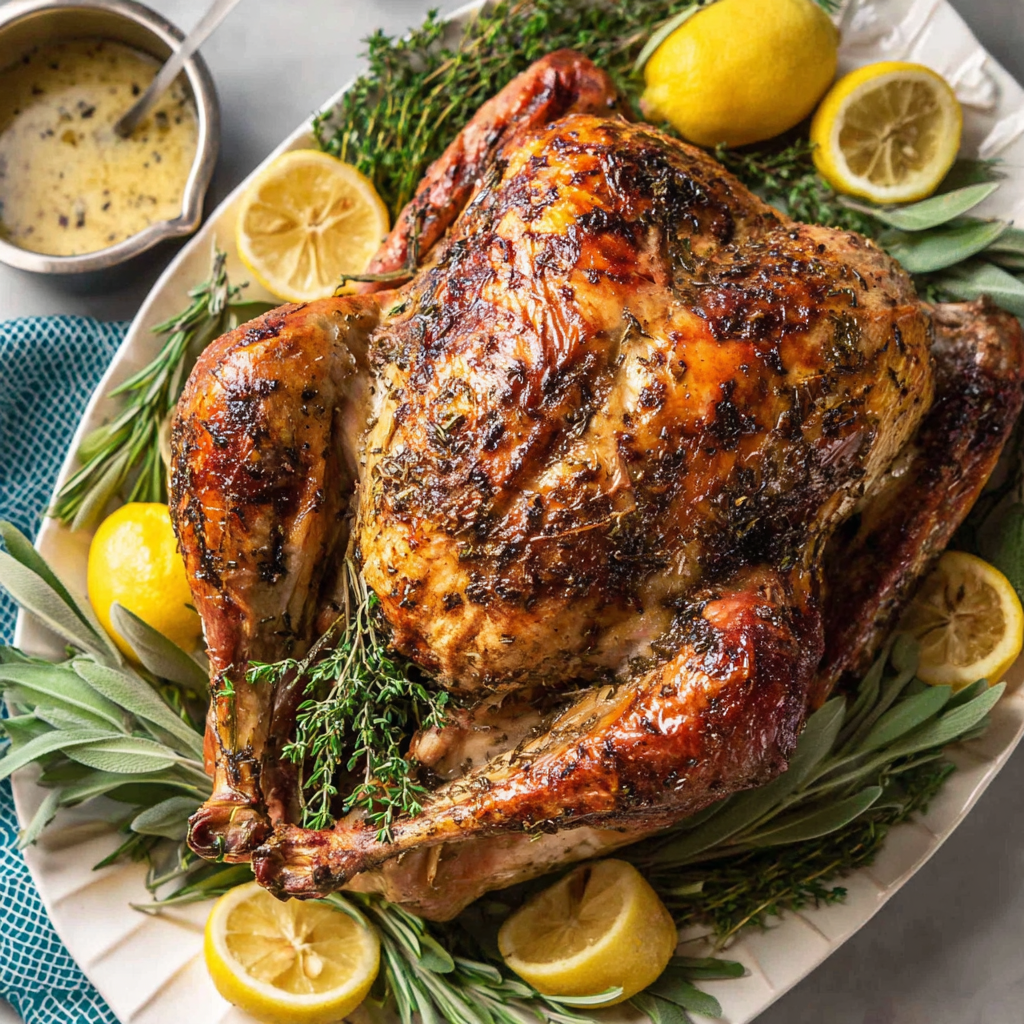
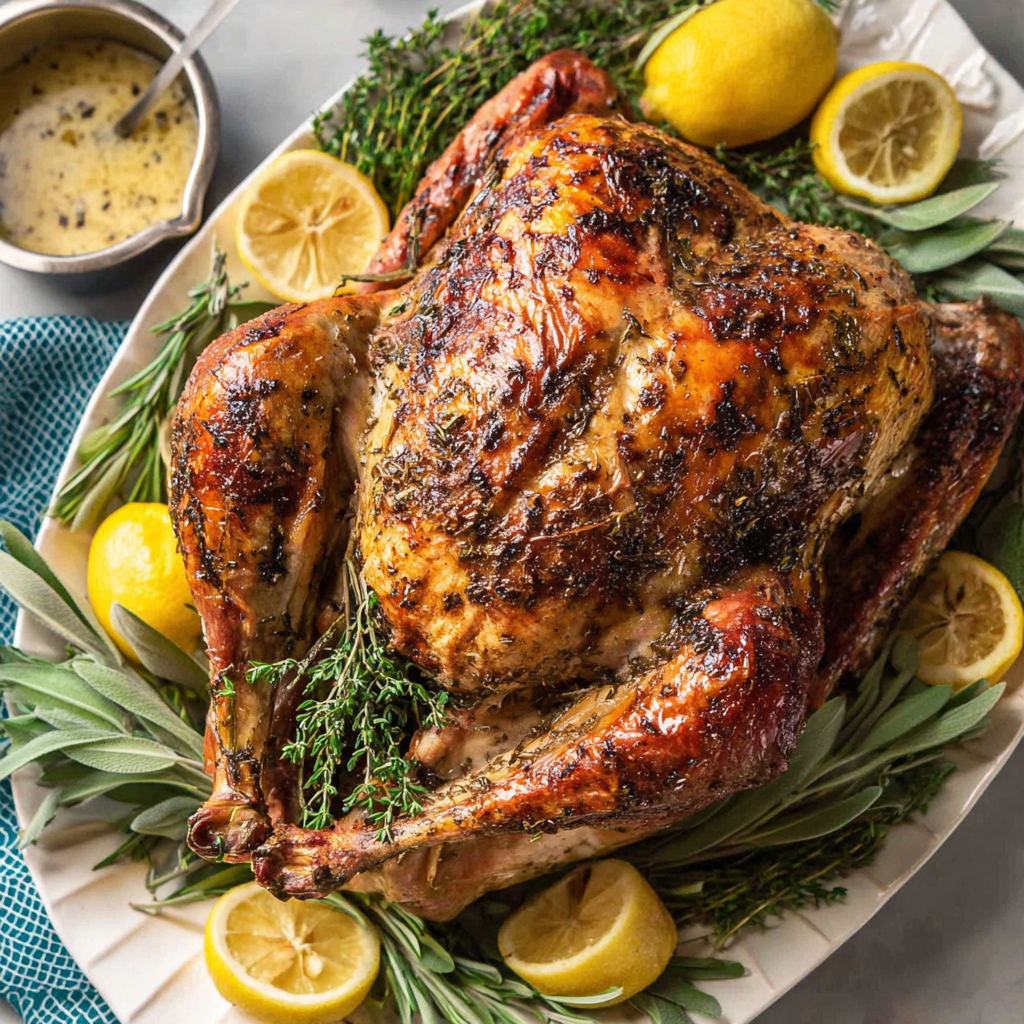
Simple and Flavorful Roast Turkey for Home Chefs
Ingredients
Method
- Preheat the oven to 325°F (165°C).
- Prepare the turkey by removing the giblets and patting it dry.
- Mix softened butter, salt, pepper, garlic powder, and thyme in a bowl.
- Rub the butter mixture all over the turkey, including under the skin.
- Stuff the cavity of the turkey with lemon quarters and fresh herbs.
- Place the turkey on a rack in a roasting pan.
- Roast in the preheated oven, basting every 30 minutes.
- Cook until the internal temperature reaches 165°F (74°C) in the thickest part.
- Let the turkey rest for 20 minutes before carving.
Tried this recipe?
Let us know how it was!Introduction
Roasting a turkey can seem daunting, yet with the right approach, it’s remarkably achievable for any home cook. This classic dish can be the centerpiece of any festive gathering, becoming a delightful opportunity to showcase your culinary skills. Simple techniques and quality ingredients will bring out the best in your turkey, ensuring a juicy and flavorful end result.
A perfectly roasted turkey has a golden, crispy skin outside and tender, moist meat inside, ideal for any occasion. With the right seasoning and cooking method, you can create a dish that will impress your guests and leave them craving more. Follow along to achieve a mouthwatering roast turkey that fits perfectly into your holiday plans or special family meals.
Ingredients
- 1 whole turkey (12-14 pounds)
Selecting a turkey of this size usually provides ample servings for a family gathering or holiday meal. Fresh turkeys offer the best flavor and moistness, but frozen options are perfectly acceptable—just ensure it’s fully thawed before starting preparation. - 1/2 cup unsalted butter, softened
Butter adds rich flavor and moisture to the turkey meat, keeping it juicy during roasting. It also helps the skin become beautifully crisp and golden brown, enhancing both appearance and taste. - 2 tablespoons salt
Salt is essential for seasoning the meat and helps to draw moisture into the turkey, which results in a tender roast. It also enhances every flavor, making it a crucial ingredient for your brining or seasoning process. - 1 tablespoon ground black pepper
Black pepper adds a subtle kick to the flavor profile of the turkey. It pairs beautifully with the butter and other seasonings, providing depth and a balancing spice without overwhelming the turkey's natural taste. - 2 tablespoons garlic powder
Garlic powder infuses the turkey with a savory aroma and flavor, complementing its richness. It dissolves nicely into the butter mixture, allowing for even distribution across the bird. - 1 tablespoon dried thyme
Thyme offers a warm, herbal note that enhances the overall flavor. The earthy tones of thyme are classic in turkey dishes and pair beautifully with other herbs and ingredients. - 1 lemon, quartered
The acidity from lemon helps to brighten and balance the flavors of the dish while infusing the turkey with moisture. Plus, the aromatic citrus aroma that permeates during cooking is simply delightful. - Fresh herbs (rosemary and sage)
Fresh herbs add vibrant flavor and freshness to the turkey, making for a more aromatic and flavorful roast. The herbs can be stuffed into the cavity and mixed with the butter for added fragrance and taste.
Directions & Preparation
Step 1: Preheat the oven to 325°F (165°C).
Preheating your oven is crucial for achieving a consistently cooked turkey. A warm oven allows the bird to roast evenly, ensuring that the skin crisps up while the inside remains moist. It sets the stage for a beautifully cooked turkey, so don't skip this step.
Step 2: Prepare the turkey by removing the giblets and patting it dry.
Removing the giblets prevents any off-flavors and allows you to make a delicious gravy from scratch. Patting the turkey dry is essential for achieving crispy skin, as excess moisture can lead to steaming instead of roasting. By ensuring the cavity and outside are dry, you promote better browning.
Step 3: Mix softened butter, salt, pepper, garlic powder, and thyme in a bowl.
This compound butter will serve as both a seasoning and moisturizer for your turkey. Mixing these ingredients together ensures an even spread over the turkey's skin, resulting in a flavorful and crispy exterior. This step also allows the flavors to meld effectively.
Step 4: Rub the butter mixture all over the turkey, including under the skin.
Rubbing the mixture under the skin delves flavor directly into the meat, ensuring every bite is seasoned well. This technique helps to keep the turkey moist while it roasts, as the butter will melt and baste the bird naturally during cooking. Aim for even coverage for the best results.
Step 5: Stuff the cavity of the turkey with lemon quarters and fresh herbs.
Adding lemon and herbs to the cavity will infuse moisture and flavor from the inside out as the turkey roasts. The citrus aroma combines with the herbal notes, enhancing the overall taste. Additionally, this injection of flavor helps to create a more aromatic cooking experience.
Step 6: Place the turkey on a rack in a roasting pan.
A rack elevates the turkey, allowing hot air to circulate freely around it, which promotes even cooking. The roasting pan captures drippings for gravy while preventing the turkey from swimming in its own fat, keeping it from becoming soggy on the bottom.
Step 7: Roast in the preheated oven, basting every 30 minutes.
Basting using the pan juices keeps the turkey moist, enhancing both its flavor and texture. This self-basting method allows the skin to keep from drying out while the fat contributes to a rich flavor. Pay attention to browning; if the skin gets too dark, tent it with foil.
Step 8: Cook until the internal temperature reaches 165°F (74°C) in the thickest part.
Using a meat thermometer is crucial for ensuring the turkey is safely cooked through without losing moisture. This temperature guarantees that harmful bacteria are killed, and you'll achieve tender, juicy meat. Insert the thermometer into the thigh for the most accurate reading.
Step 9: Let the turkey rest for 20 minutes before carving.
Allowing the turkey to rest is vital, as it helps redistribute the juices throughout the meat. Carving too soon can result in dry turkey, as juices run out when you cut into it. Use this time to prepare side dishes or set the table.

Choosing the Right Turkey
Selecting the right turkey can make a significant difference in the final flavor and texture of your roast. Fresh turkeys often provide superior flavor and tenderness but can be pricey. Frozen turkeys are more budget-friendly and can be just as delicious when cooked properly. Opt for organic or free-range options if possible, as they often yield meat that's more flavorful and satisfying.
Basting Techniques for Moisture
Basting is a critical technique to maintain moisture in your roast turkey. By regularly spooning the pan juices over the turkey as it cooks, you can create a protective layer that keeps the meat juicy and flavorful. If you don’t want to open the oven frequently, consider using a self-basting turkey, which retains moisture through its natural fats.
Tips for Flavorful Leftovers
Transforming leftover turkey into delicious meals can be just as exciting as the feast itself. Shred or slice the turkey and incorporate it into soups, wraps, or salads. To enhance the flavor, consider using leftover pan drippings or creating a quick sauce with herbs and spices. By being resourceful, you can extend the joy of your roast turkey beyond the initial meal.
FAQs
What should I do if my turkey isn't browning well?
If your turkey isn't browning, ensure the oven is at the correct temperature and consider adding a bit more butter on the skin. Cover with foil to prevent over-browning while cooking, then remove it for the last 30 minutes to achieve a golden finish.
How long should I let my turkey rest?
A resting period of about 20 to 30 minutes is ideal for your turkey. This allows juices to redistribute and prevents them from running out when carving, resulting in juicier slices.
Is there a way to improve the flavor if it tastes bland?
If the turkey tastes bland, consider enhancing the flavor with herbs and spices in the butter mixture or making a flavorful gravy with the pan drippings to serve alongside the slices.
Can I use a different herb instead of thyme?
Absolutely! Feel free to substitute thyme with rosemary or oregano. Using fresh herbs instead of dried can also enhance flavor if you prefer a stronger herbal taste.
What can I do if my turkey is undercooked?
If your turkey is undercooked, return it to the oven and continue roasting, checking the temperature every 15 minutes until it reaches the safe internal temperature of 165°F (74°C).
How can I adjust the cooking time for smaller turkeys?
For smaller turkeys, reduce the cooking time according to the size. A general rule is 13-15 minutes per pound. Always use a meat thermometer to check for doneness.
Conclusion
Roasting a turkey indeed requires careful attention, but the rewards are plentiful. With the right techniques and ingredients, you can create a memorable dish that resonates with warmth and flavor. You will not only impress your guests but also enrich your holiday traditions.
Embrace this opportunity to enjoy the process of cooking and sharing a meal that nourishes not just the body, but also the soul. As you perfect your easy roast turkey, you’ll find it becomes a beloved staple for gatherings, creating lasting memories year after year.
Recipe Card
Simple and Flavorful Roast Turkey for Home Chefs
Ingredients
Method
- Preheat the oven to 325°F (165°C).
- Prepare the turkey by removing the giblets and patting it dry.
- Mix softened butter, salt, pepper, garlic powder, and thyme in a bowl.
- Rub the butter mixture all over the turkey, including under the skin.
- Stuff the cavity of the turkey with lemon quarters and fresh herbs.
- Place the turkey on a rack in a roasting pan.
- Roast in the preheated oven, basting every 30 minutes.
- Cook until the internal temperature reaches 165°F (74°C) in the thickest part.
- Let the turkey rest for 20 minutes before carving.
Tried this recipe?
Let us know how it was!Notes
Additional serving suggestions: pair with a crisp salad, garlic bread, or roasted seasonal vegetables for balance.
For make-ahead, prep components separately and assemble just before heating to preserve texture.
Taste and adjust with acid (lemon/vinegar) and salt right at the end to wake up flavors.