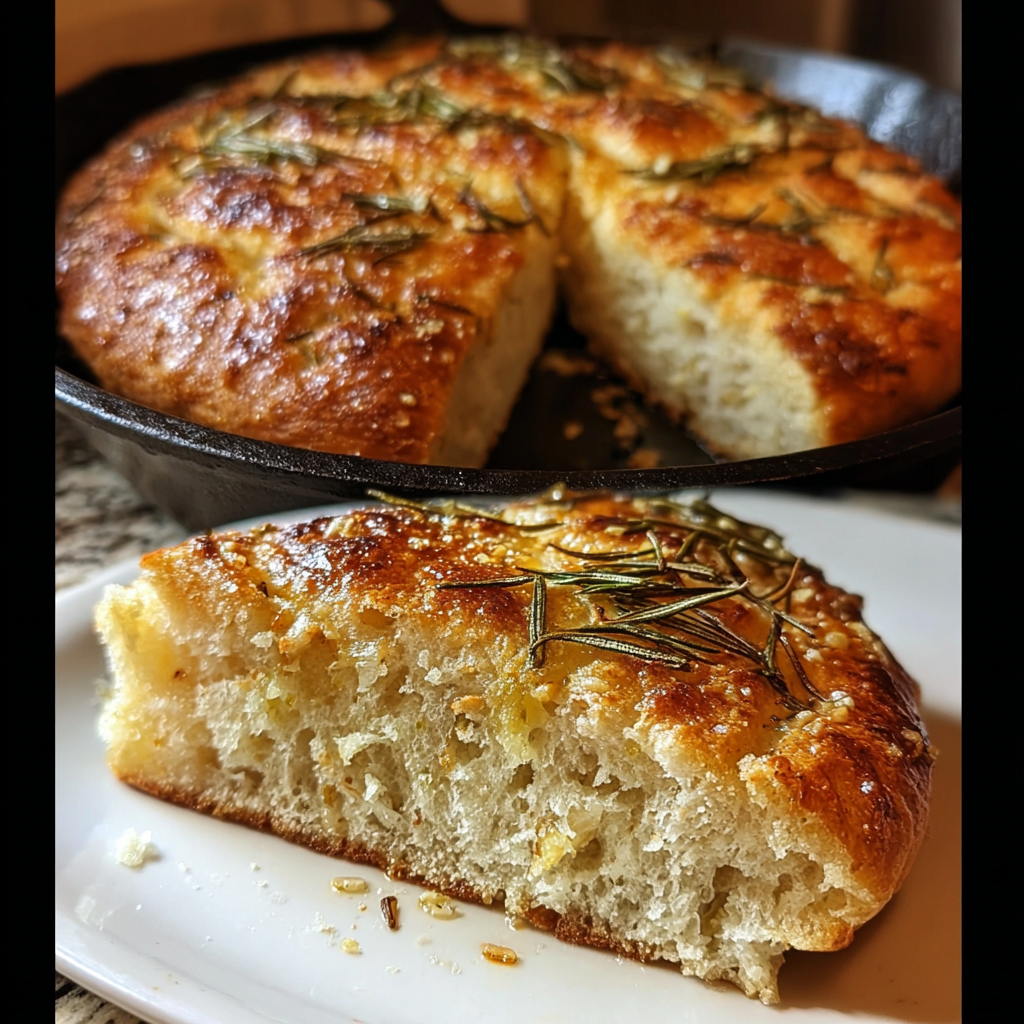
Flavorful Rustic Garlic Rosemary Skillet Bread
Ingredients
Method
- Activate the yeast.
- Mix dry ingredients.
- Combine wet and dry ingredients.
- Knead the dough.
- First rise.
- Shape the dough.
- Second rise.
- Preheat the skillet.
- Bake the bread.
- Cool and serve.
Tried this recipe?
Let us know how it was!Introduction
Baking bread at home can be a rewarding experience, and this rustic garlic rosemary skillet bread is no exception. With its crispy crust and aromatic savoriness, it perfectly encapsulates the essence of rustic cooking. Whether you're preparing it for a cozy family dinner or a casual gathering with friends, this bread will undoubtedly become a favorite.
The combination of garlic and fresh rosemary brings a fragrant touch that elevates the simple bread to something extraordinary. As it bakes, your kitchen will be filled with enticing scents, promising warmth and comfort. This recipe is easy to follow and yields a wonderfully delicious loaf that's as beautiful as it is flavorful.
Get ready to roll up your sleeves and indulge in the art of rustic bread making. With just a few simple ingredients and minimal equipment, you’ll create a handmade loaf that will impress anyone lucky enough to share in your culinary creation.
Ingredients
- 3 cups all-purpose flour
All-purpose flour forms the backbone of the bread, providing structure and chewiness. Its moderate protein content creates the necessary gluten when kneaded, giving the bread its signature texture. - 1 teaspoon salt
Salt enhances the flavor of the bread and helps to control yeast activity. It is essential for balanced taste and ensures the loaf doesn’t taste bland. - 1 packet (2¼ teaspoons) active dry yeast
Yeast is the leavening agent providing lift and lightness to the bread. It ferments the sugars in the dough, producing carbon dioxide which causes the bread to rise during baking. - 1 cup warm water (110°F)
Warm water activates the yeast, allowing it to rise properly. The temperature is crucial; too hot can kill the yeast, while too cold can slow its activation. - 2 tablespoons olive oil
Olive oil adds moisture and richness to the bread. It also enhances flavor and helps create a crispy crust when baked. - 3 cloves garlic, minced
Garlic infuses the bread with a robust and aromatic flavor, making each slice irresistibly savory. - 2 tablespoons fresh rosemary, chopped
Fresh rosemary contributes a fragrant herbal note that complements the garlic wonderfully, adding depth to the bread's flavor.
Directions & Preparation
Step 1: Activate the yeast.
Begin by combining warm water and active dry yeast in a bowl. Let it sit for about 5–10 minutes until it becomes foamy. This step is crucial as it ensures that the yeast is alive and ready to help the bread rise.
Step 2: Mix dry ingredients.
In a separate large bowl, whisk together the flour, salt, minced garlic, and chopped rosemary. This not only combines the ingredients evenly but also distributes the garlic and herbs throughout the flour, setting the foundation for flavorful bread.
Step 3: Combine wet and dry ingredients.
Make a well in the center of the dry ingredients and pour in the activated yeast mixture and olive oil. Stir until a rough dough forms. This step is vital for integrating all the wet and dry ingredients, preparing it for kneading.
Step 4: Knead the dough.
Turn the dough out onto a floured surface and knead for about 8-10 minutes until smooth and elastic. Kneading develops gluten, which provides structure to the bread and allows it to rise properly during baking.
Step 5: First rise.
Place the kneaded dough in an oiled bowl, cover it with a damp cloth, and let it rise in a warm place for about 1 hour or until it doubles in size. This fermentation process allows the flavors to develop and the yeast to work, producing carbon dioxide that makes the bread rise.
Step 6: Shape the dough.
Once the dough has risen, punch it down gently to release the air, then shape it into a round loaf. This step is important to ensure even rising when it bakes and to prevent large air pockets in the final product.
Step 7: Second rise.
Let the loaf rest on a floured surface, covered, for another 30 minutes. This additional rising time gives the bread a final boost and enhances its texture, resulting in a lighter loaf.
Step 8: Preheat the skillet.
While the dough rises, preheat a cast-iron skillet on medium heat. Preheating the skillet ensures that the bread starts to cook immediately upon contact, which is essential for achieving the desired crust.
Step 9: Bake the bread.
Carefully transfer the shaped loaf to the hot skillet. Cover with a lid or foil and bake for about 30–35 minutes. The covered environment traps steam, promoting a perfectly baked loaf with a crispy exterior.
Step 10: Cool and serve.
Once baked, remove the bread from the skillet and let it cool on a wire rack. Cooling allows the bread's texture to set, ensuring it slices beautifully. Serve warm with butter, or enjoy it plain to savor the garlic and rosemary flavors.

The Art of Kneading
Kneading is not just a physical process; it’s a dance between dough and hands. This method helps develop gluten, the protein structure that gives bread its chewiness. While kneading, pay attention to the texture of the dough. It should be smooth and elastic but not sticky. This tactile feedback is key to understanding when you’ve achieved that perfect state that will yield the best baked results.
Herbs and Garlic: Flavor Powerhouses
Using fresh herbs like rosemary and ingredients like garlic significantly enhances the flavor profile of your bread. Fresh rosemary not only adds a distinct taste but also infuses the bread with its essential oils during baking. When combined with garlic, these flavors meld beautifully, creating an aromatic loaf that’s perfect for dipping or enjoying on its own. Experimenting with different herbs can offer exciting variations.
Skillet Baking: A Unique Approach
Baking bread in a skillet offers a unique texture and flavor that traditional oven methods might not achieve. The cast iron retains heat well, providing even cooking for a crisp crust while keeping the interior moist. Additionally, this method allows for easy monitoring of the baking process. As a result, you can enjoy homemade bread with a rustic charm, all made in one pan.
FAQs
What should I do if my dough is too sticky?
If your dough is too sticky to handle, gradually add small amounts of flour while kneading until it reaches a workable consistency. Be cautious not to overdo it, as too much flour can yield a dense loaf.
Can I use dried rosemary instead of fresh?
Yes, you can substitute dried rosemary for fresh. However, adjust the amount to about one teaspoon, as dried herbs are more concentrated in flavor.
What if my bread comes out too dense?
Dense bread can result from insufficient kneading or not allowing the dough to rise long enough. Ensure you knead until smooth and watch for a double in size during rising.
Can I add cheese to the dough?
Absolutely! Adding shredded cheese like Parmesan or cheddar can enhance flavor. Just ensure not to exceed a cup, as too much can weigh the dough down.
Is it possible to bake this bread in a regular oven?
Yes, you can certainly use a regular oven. Preheat it to 400°F, and place the shaped loaf on a baking sheet covered with parchment paper, baking for the same duration.
How can I ensure an even bake without a lid on the skillet?
If baking without a lid, cover the dough with aluminum foil for the first 20 minutes to trap moisture and then remove it to allow the crust to brown.
Conclusion
Embracing the process of making rustic garlic rosemary skillet bread opens the door to a world of flavors and textures that store-bought options simply cannot match. This bread not only satisfies the palate but also nourishes the spirit, reminding us of the joy of homemade food.
With practice, you'll learn to perfect your technique, experiment with flavors, and develop your personal touch. So roll up your sleeves, invite a friend or family member to join, and enjoy creating something truly delicious!
Recipe Card
Flavorful Rustic Garlic Rosemary Skillet Bread
Ingredients
Method
- Activate the yeast.
- Mix dry ingredients.
- Combine wet and dry ingredients.
- Knead the dough.
- First rise.
- Shape the dough.
- Second rise.
- Preheat the skillet.
- Bake the bread.
- Cool and serve.
Tried this recipe?
Let us know how it was!Notes
Additional serving suggestions: pair with a crisp salad, garlic bread, or roasted seasonal vegetables for balance.
For make-ahead, prep components separately and assemble just before heating to preserve texture.
Taste and adjust with acid (lemon/vinegar) and salt right at the end to wake up flavors.