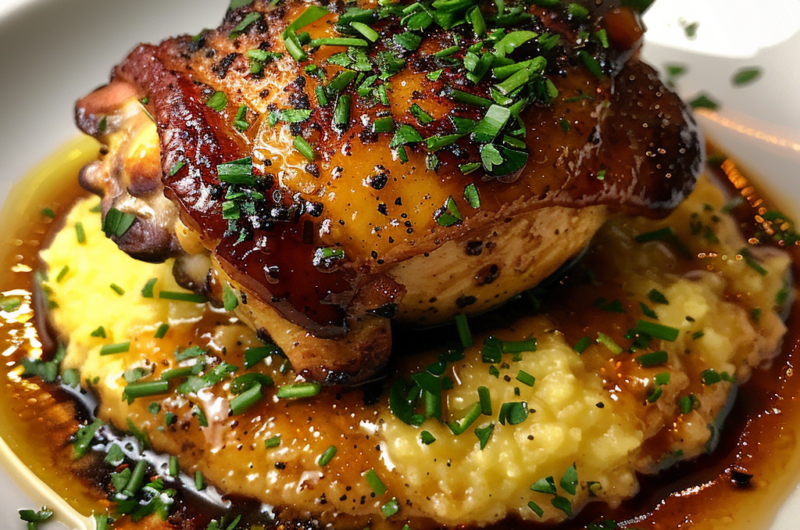
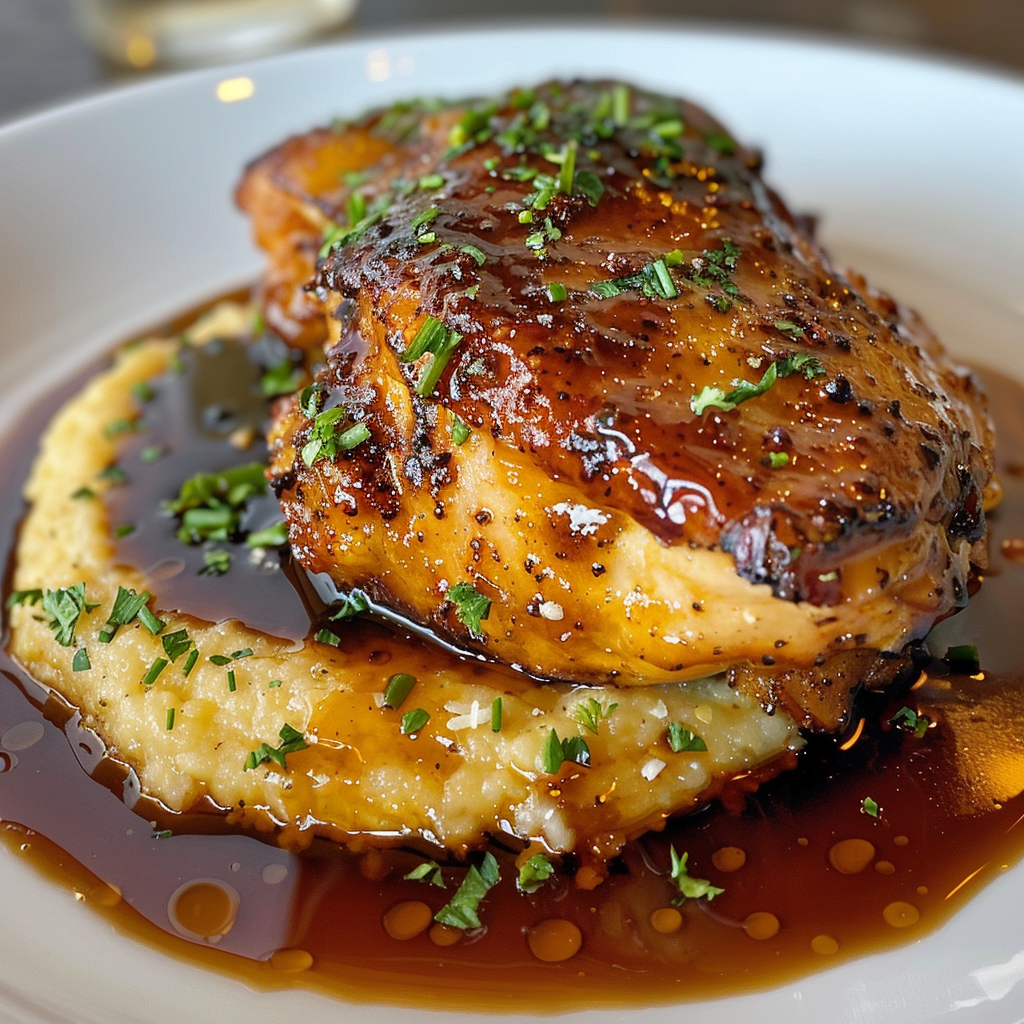
Golden, juicy chicken thighs with impossibly crispy skin, lacquered in a sweet-tangy glaze and served over velvety parmesan polenta.
📋 In This Article
Introduction
There is a specific kind of satisfaction in cracking through chicken skin so crisp it shatters like glass. That sound—the crunch—signals the start of something good. This recipe for Crispy Honey Balsamic Chicken Thighs with Creamy Parmesan Polenta and Fresh Herbs delivers exactly that experience without keeping you in the kitchen for hours. It balances the sharp, syrupy depth of reduced balsamic against the savory richness of the meat, all resting on a bed of polenta so smooth it feels like a luxury.
I’ve spent years testing chicken thigh recipes, and the failure point is almost always the same: soggy skin or burnt sugar. Here, we solve both. By managing heat and timing the glaze application correctly, you get the Maillard reaction working in your favor, not against it. This dish brings a touch of sophistication to your table, making it an impressive meal for any occasion, yet it’s grounded in techniques anyone can master.
Why This Recipe Works
It comes down to the interplay of fat, acid, and heat. The initial sear triggers the Maillard reaction, creating hundreds of new flavor compounds on the surface of the meat—far more complexity than simply roasting alone. We aren’t just “browning” the chicken; we are building a flavor foundation.
Then there’s the glaze. Balsamic vinegar provides the acid needed to cut through the chicken’s richness, while honey contributes the sugars necessary for caramelization. But sugar burns easily. That’s why we sear the chicken first, render the fat, and then introduce the glaze. The creamy polenta acts as a textural counterpoint. By whisking constantly and finishing with butter and cheese, we create a stable emulsion that remains smooth, absorbing the savory pan drippings without turning into a solid block.
Ingredients List
For the Chicken
- 6 bone-in, skin-on chicken thighs (900 g)
- 2 tablespoons good quality olive oil (30 ml)
- 1 teaspoon salt (6 g)
- 1/2 teaspoon freshly cracked black pepper (2 g)
- 1/3 cup aged balsamic vinegar (80 ml)
- 3 tablespoons local honey (45 ml)
- 2 cloves garlic, minced (6 g)
For the Polenta
- 1 cup polenta (coarse cornmeal) (160 g)
- 4 cups milk or chicken broth (960 ml)
- 1 tablespoon butter (15 g)
- 1/4 cup grated Parmesan cheese (25 g)
For Garnish
- Fresh herbs (such as rosemary, thyme, parsley, and chives)
Step-by-Step Instructions
Preparing the Chicken
- Preheat your oven to 400°F (200°C). This temperature is high enough to crisp the skin but controlled enough to cook the meat through without incinerating the glaze.
- Pat the chicken thighs completely dry with paper towels. Moisture is the enemy of crispiness; water turns to steam, and steam creates rubbery skin. Season both sides generously with salt and black pepper.
- In a large oven-safe skillet, heat 2 tablespoons of olive oil over medium-high heat until it shimmers. Place the chicken thighs skin-side down. Sear the chicken for 5-7 minutes. Do not touch them. You want the skin to release naturally once the fat has rendered and the crust has formed.
- Flip the chicken thighs carefully. Add 1/3 cup balsamic vinegar, 3 tablespoons honey, and 2 minced garlic cloves to the pan. The liquid will bubble violently—this is good. Use a spoon to baste the chicken with this mixture.
- Roast the chicken in the preheated oven for 25-30 minutes. You’re looking for an internal temperature of 165°F (74°C). The skin should be deeply golden and the glaze thickened. If the glaze looks too dark too fast, tent the pan loosely with foil.
Making the Polenta
- While the chicken roasts, start the creamy polenta. In a medium saucepan, bring 4 cups of milk or chicken broth to a gentle simmer over medium heat.
- Gradually add 1 cup of polenta, whisking continuously. This prevents the dreaded lumps. I used to rush this step—don’t. It ruins the texture.
- Simmer the polenta for 10-12 minutes, stirring frequently. It will thicken as the cornmeal hydrates. If it becomes too stiff, add a splash more liquid.
- Once the grains are tender, finish with 1 tablespoon butter and 1/4 cup grated Parmesan cheese. Stir until melted and velvety.
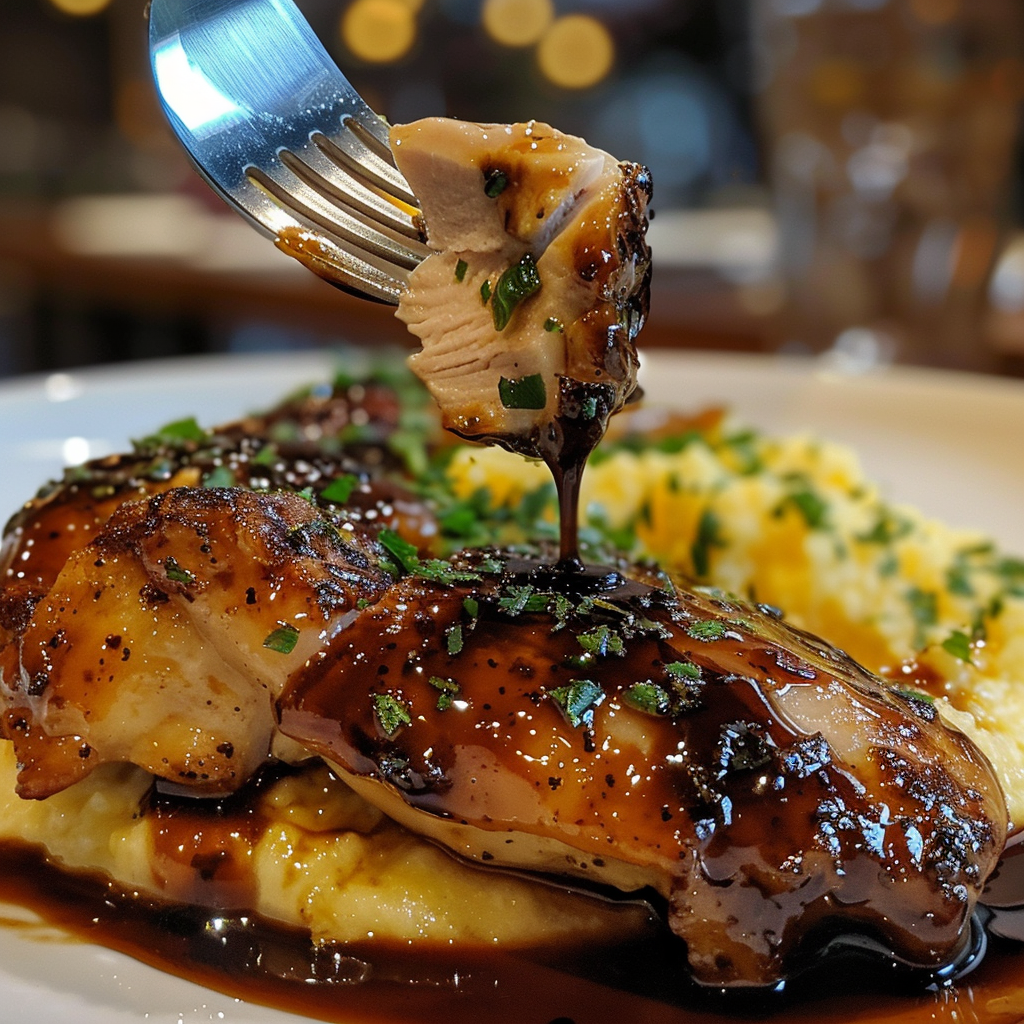
- Serve the chicken over the polenta, drizzling the reduced pan juices over the top and scattering fresh herbs for brightness.
⚠️ Common Mistakes to Avoid
Common Mistakes to Avoid when Making Crispy Honey Balsamic Chicken Thighs with Creamy Parmesan Polenta and Fresh Herbs
One major error is overcrowding the pan. If the thighs are too close, steam builds up and you lose the crisp skin entirely. Give them space to breathe. Another pitfall is adding the glaze too early. Honey burns at high temperatures. If you add it at the start of a long roast, you’ll end up with a bitter, carbonized mess.
For the polenta, neglecting the whisk is the primary culprit for a lumpy texture. Polenta needs agitation to suspend the grains properly. Also, under-seasoning the water or milk is a missed opportunity; the cornmeal needs salt to pop. Finally, watch the glaze consistency during the roast. If the liquid reduces too much, it can scorch. If it looks dry, add a tablespoon of water or broth to loosen the fond.
Recipe Variations & Customizations
For an exciting twist on this dish, consider these variations:
- Chicken Breast Variation: Use bone-in breasts, but reduce the roasting time to 18-22 minutes to prevent drying out.
- Vegetarian Option: Swap chicken for thick slices of roasted cauliflower steak or portobello mushrooms. Baste them in the same glaze.
- Spicy Glaze: Add a pinch of chili flakes or a teaspoon of Calabrian chili paste to the honey-balsamic mix for heat that cuts the sugar.
- Herb Variations: While thyme and rosemary are classic, fresh basil or tarragon added after cooking brings a lighter, anise-tinged aroma.
- Cheese Options: Swap Parmesan for Pecorino Romano for a sharper, saltier kick in the polenta.
Storage & Reheating Tips
Store leftovers in an airtight container in the refrigerator for up to 3 days. For the chicken, reheating in a skillet over medium heat is best to revive the skin’s texture. Add a splash of broth to the pan to create steam and prevent drying. For the creamy polenta, reheat gently in a saucepan with a splash of milk, whisking to restore its creamy consistency. Polenta seizes up when cold, so this extra liquid is essential.
💡 Pro Tips for Success
To master this recipe, patience with searing is non-negotiable. You want the skin to be a deep mahogany before flipping. Also, rest the chicken for 5 to 10 minutes after roasting. Carryover cooking will finish the meat, and resting allows the muscle fibers to relax and reabsorb juices, ensuring every bite is moist.
Use a meat thermometer to guarantee safety without overcooking; 165°F (74°C) is the target. Finally, taste your glaze before it goes in the oven. If the balsamic is too sharp, add more honey. If it’s too sweet, add a pinch of salt. Balance is everything.
Frequently Asked Questions (FAQ)
+Why is my chicken skin not crispy?
This usually happens because the skin wasn’t dried thoroughly before cooking or the pan wasn’t hot enough. Moisture creates steam, which softens the skin. Pat the thighs dry and ensure your oil is shimmering hot before searing.
+Can I use chicken breasts instead of thighs?
You can, but bone-in, skin-on breasts are best for retaining moisture. Boneless breasts will cook much faster and lack the collagen that makes thighs so tender. If using breasts, check for doneness at 160°F as carryover heat will finish the cooking.
+How do I prevent lumpy polenta?
The key is adding the polenta to the liquid gradually while whisking vigorously. Think of it like a steady rain, not a thunderstorm. Once added, keep the whisk moving to break up any clumps before they form.
+What if my balsamic glaze is too thin?
If the glaze hasn’t thickened by the time the chicken is done, remove the chicken from the pan and set the pan over medium-high heat on the stove. Simmer the liquid until it coats the back of a spoon, then pour it over the chicken.
+Is this recipe gluten-free?
Yes, the chicken and polenta are naturally gluten-free. Just ensure your chicken broth is certified gluten-free, as some brands use wheat-based flavorings.
Conclusion
This dish is a masterclass in contrasts—crispy against creamy, tangy against sweet. It proves that you don’t need a restaurant kitchen to produce food with depth and character. By understanding the science of searing and the patience required for polenta, you turn a simple dinner into a memorable meal. Serve this with a crisp green salad or roasted broccoli, and you have a complete menu. Try it once, and it will likely find a permanent spot in your weekly rotation.