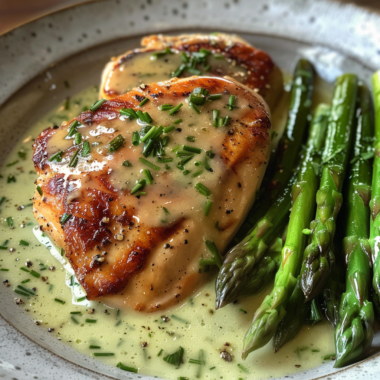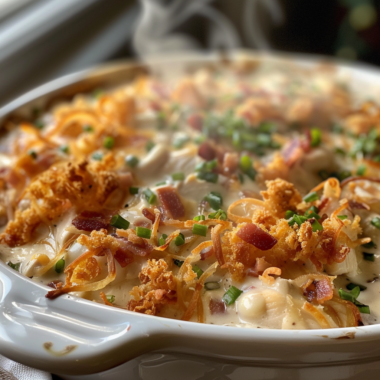
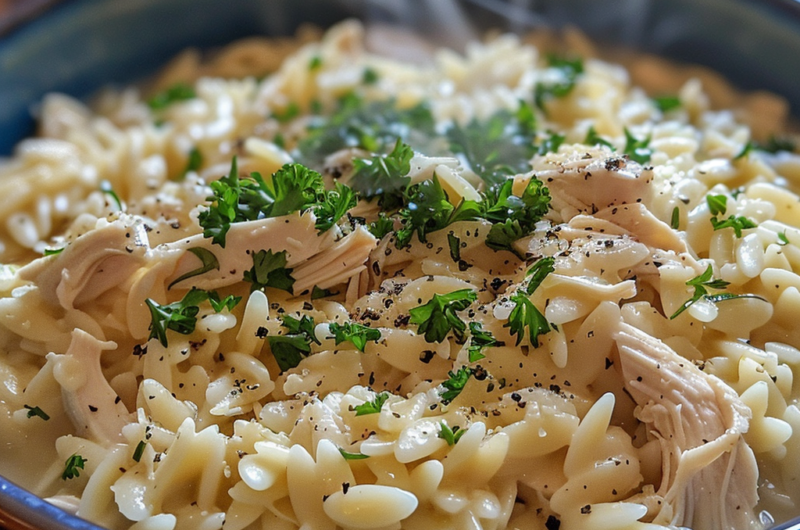
A 30-minute weeknight hero that uses rotisserie chicken and a simple starch-thickened sauce for maximum comfort with minimal cleanup.
📋 In This Article
Introduction
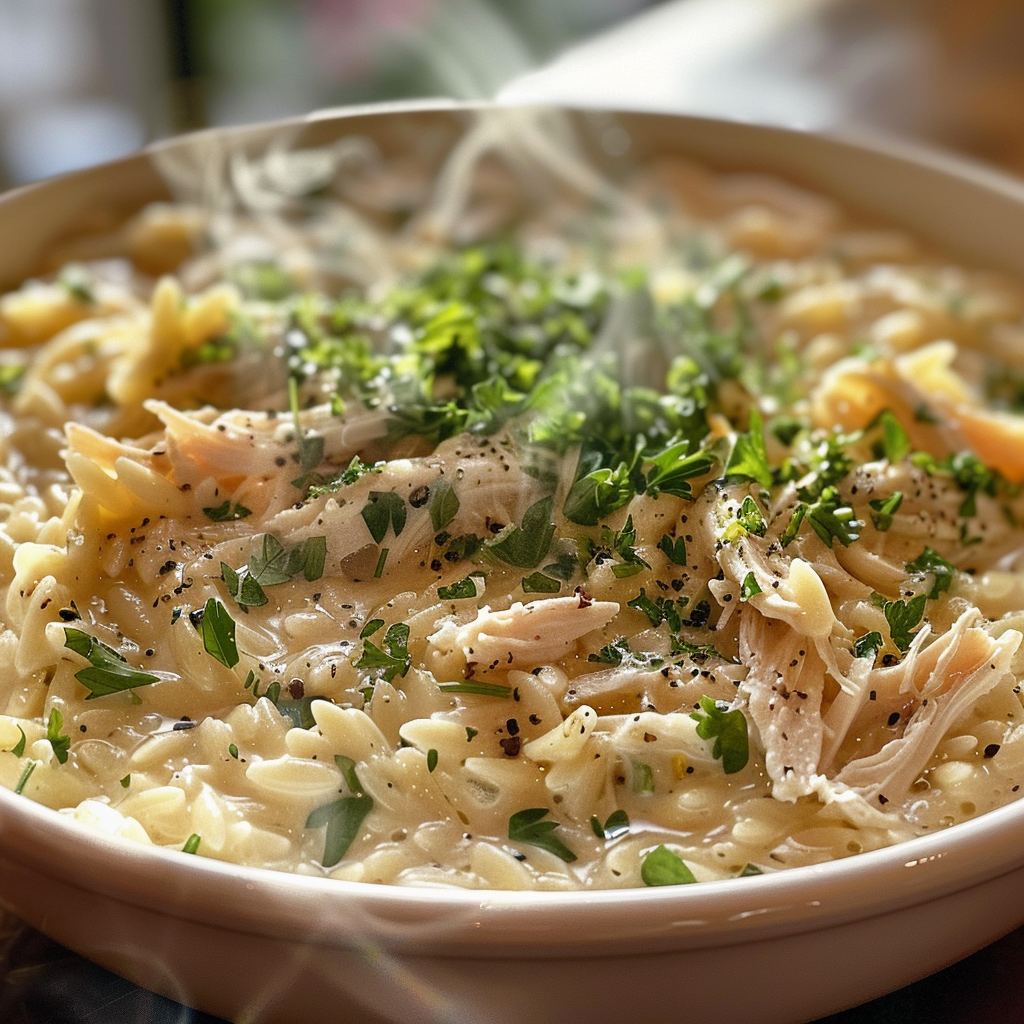
Let’s be honest: the rotisserie chicken is the unsung hero of the home kitchen. It’s the shortcut that makes this Comforting Creamy Garlic Parmesan Orzo with Shredded Rotisserie Chicken possible on a chaotic Tuesday. We aren’t just throwing ingredients in a pot; we are building layers of flavor. By treating the orzo like a risotto—toasting it first, then simmering it directly in the broth—we coax out the natural starches to create a sauce that is thick, velvety, and deeply savory without needing a roux. It’s rich, garlicky, and exactly the kind of meal that makes the lights feel a little warmer and the evening a little calmer.
Why This Recipe Works (and Why You’ll Love It!)
This isn’t just a recipe; it’s a lesson in efficiency. The genius of this one-pot meal lies in the starch release. As the orzo cooks, it exudes amylopectin (a type of starch) into the liquid. This thickens the chicken broth naturally, creating a cohesive, creamy base that binds the tender pasta and juicy rotisserie chicken together.
You’ll love it because it respects your time. We leverage the work already done by the grocery store—namely, that perfectly roasted bird. The garlic Parmesan sauce isn’t a separate step; it happens organically as the pasta absorbs the liquid. In 30 minutes, you get a dish that eats like it simmered all afternoon.
The Star Ingredients: What You’ll Need
Great cooking starts with great ingredients. Here is what you need to make this dish sing.
- Orzo: This small, rice-shaped pasta is the vessel. It cooks quickly and has a high surface-area-to-volume ratio, meaning it grabs onto sauce better than larger noodles.
- Shredded Rotisserie Chicken: The ultimate time-saver. Use the white meat for a leaner bite or dark meat for more richness. If you have leftover turkey, that works too.
- Parmesan Cheese: Please, buy a wedge and grate it yourself. Pre-grated cheese is coated in cellulose (anti-caking powder) which prevents it from melting smoothly into a sauce.
- Cream: Heavy cream gives you maximum luxury, while half-and-half offers a lighter touch. Both work, but heavy cream stands up better to reheating.
- Garlic & Shallots: These aromatics form the flavor backbone. Shallots offer a sweeter, more delicate bite than onions.
- Chicken Broth: The cooking liquid. Since it reduces, use a brand you actually like the taste of, or homemade stock if you have it.
- Butter and Olive Oil: We use a mix. Butter adds flavor, but its milk solids brown too fast. Olive oil raises the smoke point, allowing us to sauté the aromatics without burning the butter.
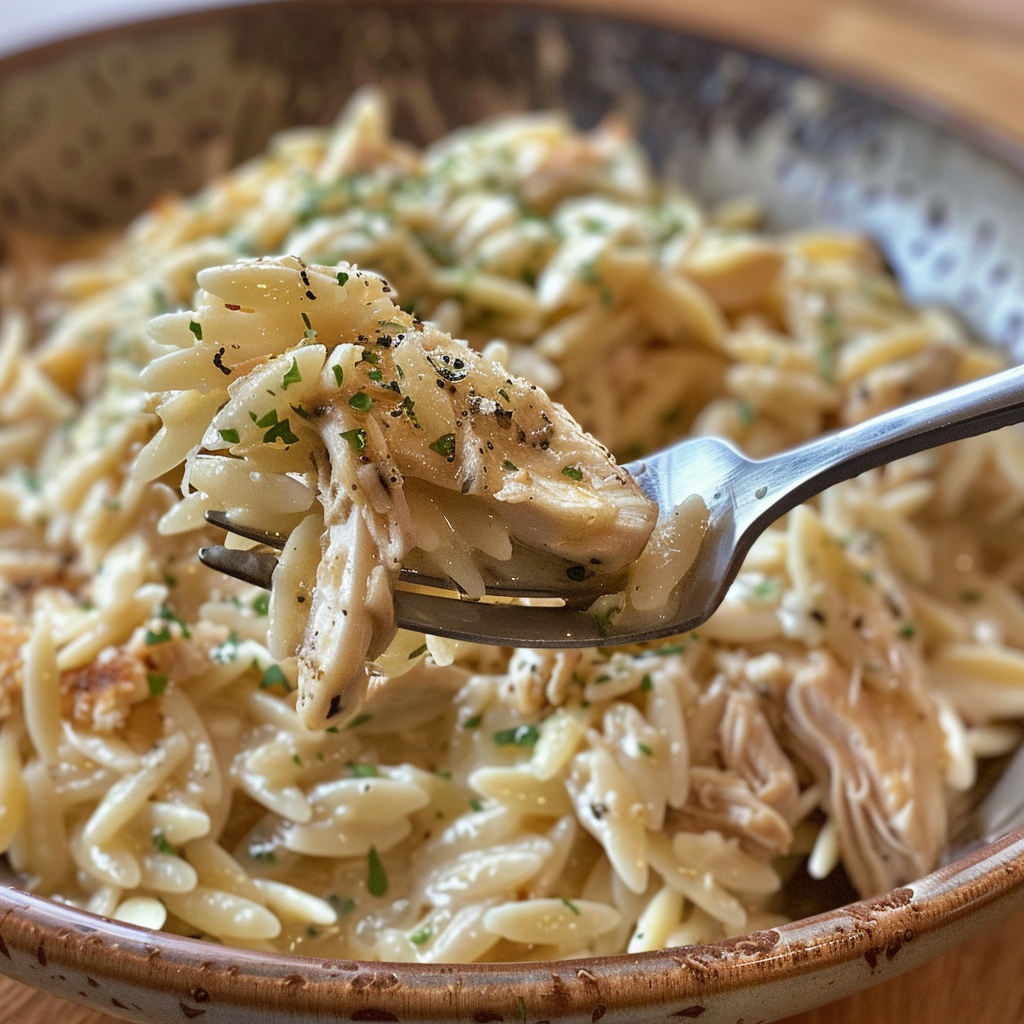
Step-by-Step Instructions
Step 1: Prepare the Ingredients
Before you turn on the stove, get everything ready. Pull the meat from the rotisserie chicken, discarding the skin and bones, and shred it into bite-sized pieces. Finely chop the shallot and mince the garlic. Grate your Parmesan cheese. This “mise en place” approach prevents panic later.
Step 2: Sauté Aromatics and Toast the Orzo
In a large, deep skillet or saucepan, heat 2 tablespoons of olive oil and 1 tablespoon of butter over medium heat. Once the butter foams, add the chopped shallot. Sauté for 2 minutes until translucent. Add the minced garlic and cook for just 30 seconds—burnt garlic is bitter garlic.
Now, add 1 cup of orzo. Stir constantly for about 2 minutes. You want the pasta to smell nutty and turn a light golden brown. This step—pilaf-style toasting—triggers the Maillard reaction, adding a depth of flavor you simply can’t get by boiling pasta in water.
Step 3: Simmer with Broth
Pour in 3 cups of chicken broth. It will bubble vigorously. Scrape the bottom of the pan with a wooden spoon to release any fond (those browned bits of flavor stuck to the pan). Bring to a boil, then reduce heat to a gentle simmer. Cook for 10-12 minutes, stirring occasionally.
Here’s the science: The agitation from simmering helps release starch from the orzo into the broth. If you don’t stir, the starch settles and the orzo sticks. Keep it moving.
Step 4: Incorporate Chicken and Cream
Once the orzo is al dente (tender but with a slight bite) and most of the broth is absorbed, stir in the shredded rotisserie chicken. Lower the heat to the absolute minimum.
Pour in 1/2 cup of cream. Stir gently. Then, add 1 cup of grated Parmesan cheese. Do not boil the sauce once the dairy is added. High heat can cause the proteins in the cream and cheese to seize, resulting in a broken, greasy texture. Stir until the cheese melts into a velvety sauce.
Step 5: Season and Serve
Remove the pan from the heat entirely. Taste the dish. Salt and pepper are critical here—broth and cheese are salty, so taste before adding more salt. If the orzo seems too thick, add a splash of broth or water to loosen it. Garnish with fresh parsley for a pop of color and serve immediately.
💡 Pro Tips for Perfect Creaminess & Flavor
- The Cheese Matters: I tested this with pre-grated cheese and freshly grated cheese side-by-side. The pre-grated version resulted in a slightly grainy, clumpy sauce that refused to emulsify. The fresh cheese? Silky smooth. Take the extra two minutes to grate your own.
- Carryover Cooking: The orzo continues to absorb liquid even after you take it off the heat. Serve it right away for the loosest sauce. If it sits for five minutes, it will thicken up considerably.
- Don’t Rinse the Orzo: Never rinse orzo for this dish. You need that surface starch to create the creamy texture.
- The Drippings Hack: If your rotisserie chicken came with flavorful drippings in the container, add them to the broth. It’s free flavor.
⚠️ Common Mistakes to Avoid
Even simple dishes can go wrong. Here is how to avoid the pitfalls.
- Overcooking the Orzo: Orzo goes from al dente to mush very quickly. Start checking it at the 8-minute mark. Remember, it will continue to soften in the residual heat of the sauce.
- Boiling the Cream: This is the most common error. Once you add the cream and cheese, keep the heat low. Boiling dairy causes the fat to separate from the liquids, breaking your sauce.
- Adding Cheese Too Fast: Dumping a whole cup of cheese in at once causes clumping. Add it in handfuls, stirring vigorously between each addition to ensure a smooth emulsion.
- Ignoring the Toast: Skipping the orzo toasting step results in a flatter flavor profile. That golden brown color is pure flavor.
Delicious Variations & Add-Ins
This recipe is a template. Once you master the technique, make it your own.
- Vegetable Additions: Stir in fresh spinach during the last two minutes of cooking—it wilts perfectly. Peas or sun-dried tomatoes also add brightness and texture contrast.
- Protein Swaps: No rotisserie chicken? Use pan-seared shrimp, cooking them first and setting them aside to add back in at the end. Crumbled bacon is also a phenomenal topping.
- Herb Infusions: Swap parsley for fresh basil or chives. A little lemon zest added at the end cuts through the richness beautifully.
- Spice it Up: A pinch of red pepper flakes sautéed with the garlic adds a gentle heat that balances the cream.
Storage & Reheating Instructions
Store the Comforting Creamy Garlic Parmesan Orzo with Shredded Rotisserie Chicken in an airtight container in the refrigerator for up to 3 days. The orzo will absorb the sauce as it sits, becoming quite thick.
To reheat, do not use the microwave on high power—it makes the texture rubbery. Instead, reheat in a saucepan over low heat. Add a splash of chicken broth or water to “relax” the sauce and bring it back to a creamy consistency. Stir gently until warmed through. Freezing is not recommended, as the pasta texture becomes grainy upon thawing.
Frequently Asked Questions (FAQ)
+Can I use raw chicken instead of rotisserie chicken?
Yes. Cut raw chicken breasts into bite-sized pieces. Sauté them in the pan before the aromatics (Step 2) until cooked through (165°F internal temperature). Remove them from the pan, proceed with the recipe, and add the cooked chicken back in during Step 4.
+Why is my orzo mushy?
Mushy orzo usually comes from two things: using too much liquid or overcooking. Stick to the 3-cup broth ratio and start testing the pasta texture at the 8-minute mark. Remember that carryover cooking continues to soften the pasta even after the heat is off.
+Can I make this dairy-free?
You can, but the texture changes. Use full-fat coconut milk or an unsweetened almond milk alternative in place of cream. For the cheese, nutritional yeast adds a savory, cheesy flavor, though it won’t melt the same way Parmesan does.
+What sides go with creamy chicken orzo?
Because this dish is rich, serve it with something acidic or crisp. A bright arugula salad with lemon vinaigrette or simple roasted asparagus cuts through the creaminess perfectly.
+Is orzo pasta or rice?
Orzo is pasta. It is made from wheat flour and shaped to look like large grains of rice. This is why it cooks faster than rice and releases starches similarly to other pastas.
+How do I fix a separated sauce?
If your sauce looks greasy or broken, it got too hot. Remove it from the heat immediately. Whisk in a tablespoon of cold water or broth, stirring vigorously. This can sometimes bring the emulsion back together.