Chicken and Stuffing Casserole (+Video)
Ingredients
Method
- Preheat the oven to 375°F. Spray an 11x7-inch baking dish with cooking spray, and set aside.
- Cut 2 pounds chicken tenderloins into bite-sized pieces and place them into the baking dish.
- Toss the chicken pieces with 1/2 teaspoon kosher salt and 1/2 teaspoon black pepper.
- In a small bowl, whisk together 10.5 ounce can cream of celery soup, 10.5 ounce can cream of chicken soup and 1/4 cup milk until smooth.
- Pour the sauce over the chicken pieces and smooth it out, so all of the chicken is covered.
- Evenly sprinkle the 6 ounce box Stove Top chicken stuffing mix on top.
- Pour 1 1/2 cups chicken broth on top of the stuffing mix, and make sure that all of the stuffing is moistened by the broth.
- Cover with foil and bake for about 40-45 minutes. Take the foil off and bake for an additional 5 minutes to lightly brown the top. NOTE: Oven times can vary for many reasons. It may take longer or be quicker in your particular oven. The chicken is done when the internal temperature reaches 165F degrees.
- Garnish with fresh or dried parsley (optional) and serve. When serving, scoop up some of the gravy at the bottom and drizzle it over each serving.
Nutrition
Notes
- Ensure the chicken reaches an internal temperature of 165°F for safe consumption; use a meat thermometer for accuracy.
- To keep the casserole moist, make sure all the stuffing is thoroughly soaked in broth before baking; this prevents dryness.
- If you prefer a lighter option, substitute the cream soups with low-fat versions or Greek yogurt to cut down on calories without sacrificing flavor.
- Leftovers can be stored in an airtight container in the fridge for up to 3 days; reheat gently in the oven covered with foil to maintain moisture.
- This casserole freezes well for up to 3 months; just remember to omit the additional broth if you plan to freeze it before baking.
Tried this recipe?
Let us know how it was!A dump-and-bake classic that actually delivers: tender chicken, velvety sauce, and a crispy, savory topping that soaks up every drop of flavor.
📋 In This Article
Introduction
Chicken and Stove Top Stuffing Casserole is the weeknight warrior you need when the clock strikes 6 PM and everyone is hungry. It’s the kind of dish that feels like a warm hug, combining tender chunks of chicken with a creamy base and that unmistakable savory crunch of stuffing. But let’s be clear: this isn’t just about dumping cans into a dish. It’s about understanding how convenience ingredients work together to create something greater than the sum of their parts.
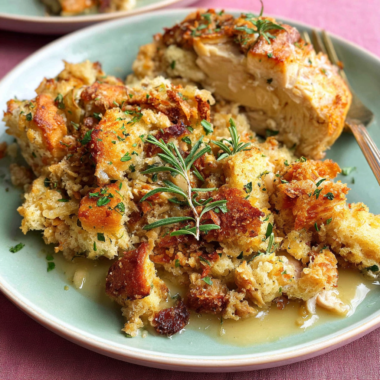
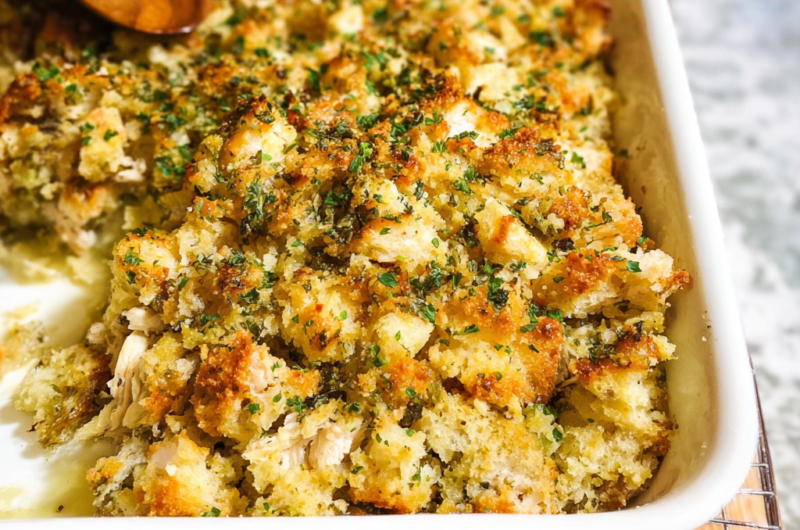
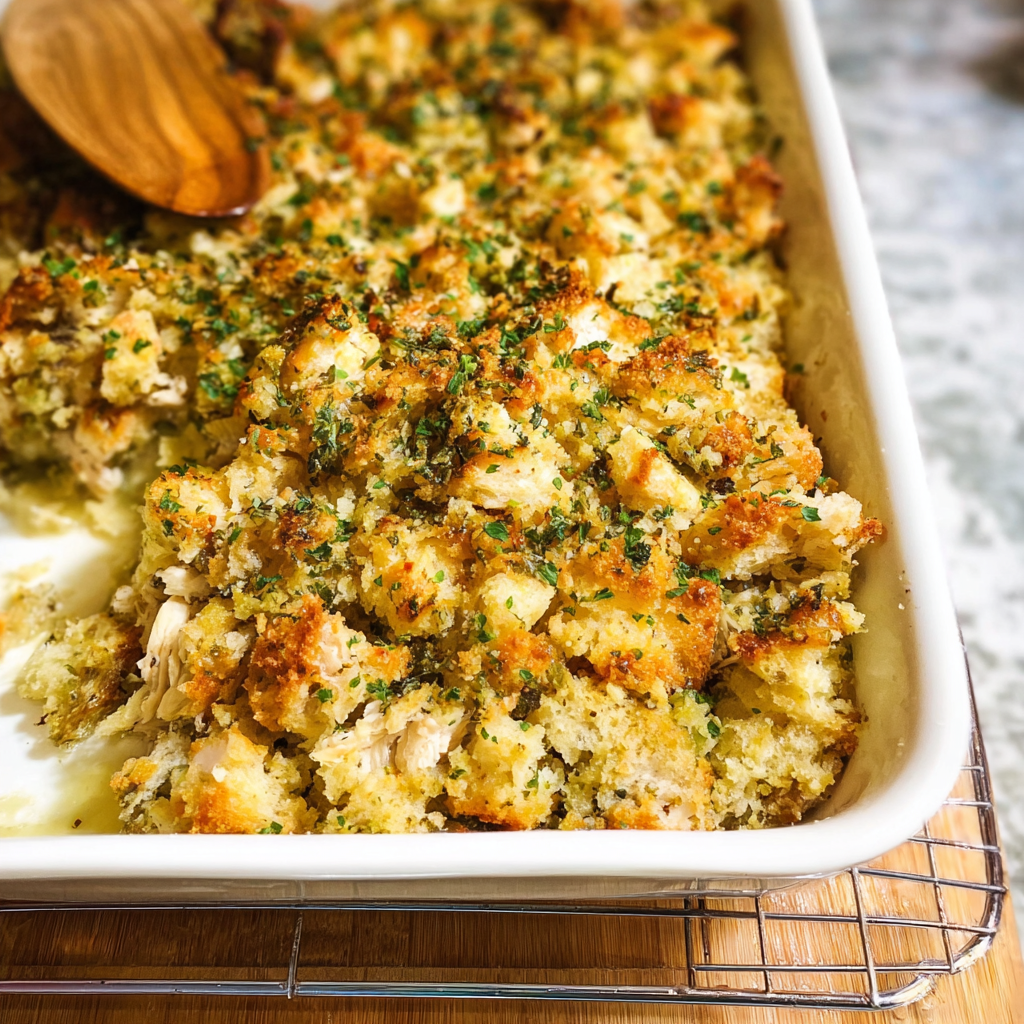
I’ve seen plenty of versions of this recipe that turn out soupy or dry. The secret lies in the layering. By placing the chicken directly in the creamy base, you ensure it stays juicy, while the stuffing on top gets golden and crisp. It’s a simple trick, but it makes all the difference between a mediocre dinner and a family favorite. Chicken and Stuffing Bake: The Ultimate Comfort Casserole.
Why This Recipe Works (and Outranks the Rest!)
Chicken and Stove Top Stuffing Casserole succeeds because it balances convenience with texture. The real genius here is the steam-roasting technique. When you cover the dish initially, the trapped steam gently braises the boneless chicken breasts in the creamy soup mixture, ensuring they stay tender rather than drying out.
Simultaneously, the chicken broth hydrates the Stove Top stuffing mix. Because the broth is poured directly over the dry mix, the stuffing absorbs flavor from both the liquid and the rising steam of the casserole. This dual-action cooking means you get perfectly cooked meat and a fluffy, moist stuffing every time. It’s a complete one-dish meal that requires zero stovetop prep (unless you want to get fancy with a sear), making it the ultimate solution for quick prep dinners.
Ingredients List
Main Ingredients:
- 2 pounds chicken tenderloins (or boneless chicken breasts, cut into bite-sized pieces)
- 1.5 cups chicken broth (low-sodium preferred to control salt levels)
- 1 package (6 oz.) Stove Top stuffing mix for chicken
Creamy Base:
- 1 can (10.5 oz.) cream of chicken soup
- 1 can (10.5 oz.) cream of celery soup
- 1/4 cup milk (for added creaminess; use 2% or whole milk)
Seasoning:
- 1/2 teaspoon kosher salt
- 1/2 teaspoon black pepper
- 1/2 teaspoon onion powder (optional)
- 1/2 teaspoon garlic powder (optional)
Optional Garnish:
- Fresh or dried parsley (for garnish, if desired)
Notes:
- Rotisserie chicken is a fantastic time-saving substitute; if using, simply shred it and reduce the cooking time to about 20-25 minutes, since the meat is already cooked.
- Feel free to adjust seasonings to taste. The stuffing mix already contains salt, so tread lightly if you are salt-sensitive.
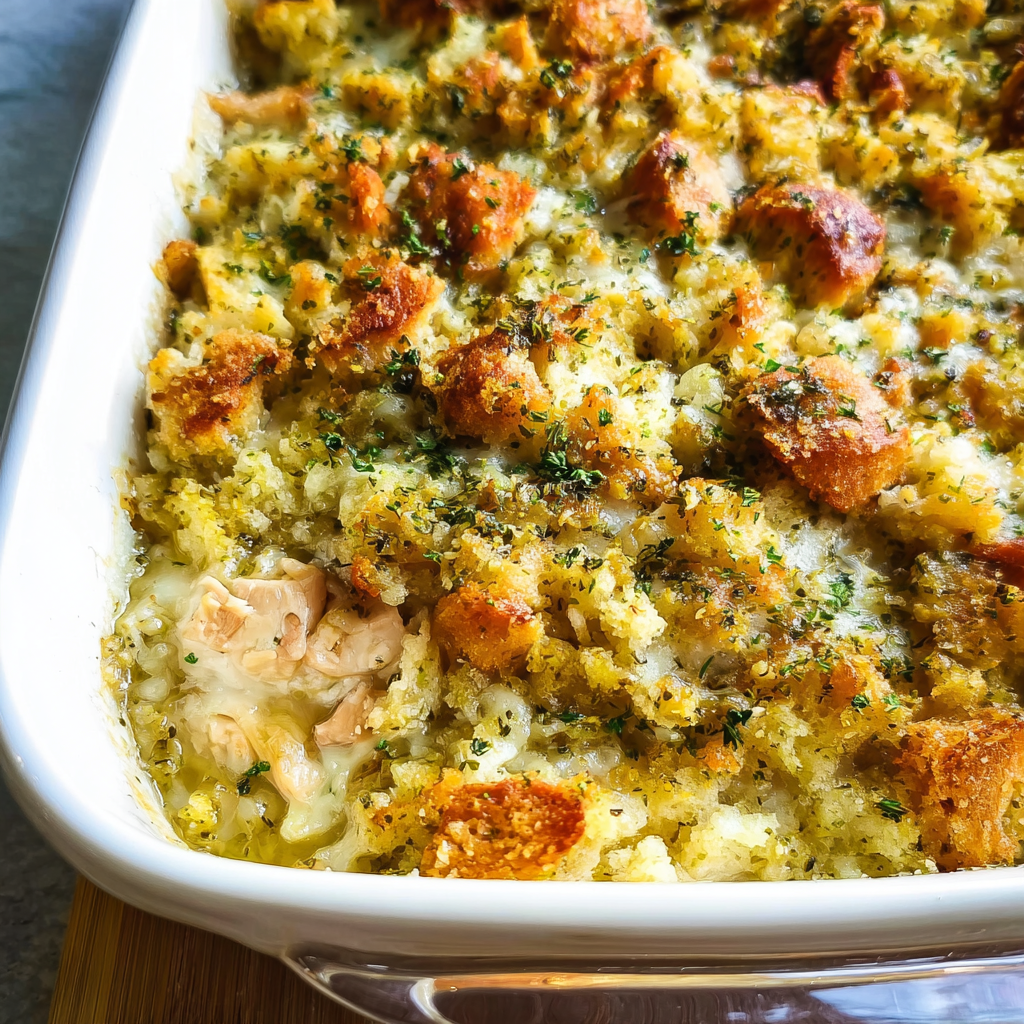
Step-by-Step Instructions
- Preheat your oven to 375°F (190°C). Grease an 11×7-inch baking dish (or a 9×13-inch dish for a thinner casserole) with cooking spray.
- Cut the chicken into bite-sized, even chunks. Season the chicken generously with salt, pepper, onion powder, and garlic powder. Place the seasoned chicken in a single layer in the bottom of the prepared baking dish.
- In a medium bowl, whisk together the cream of chicken soup, cream of celery soup, and milk until smooth. This creates the velvety sauce that will keep the chicken moist during baking.
- Pour the sauce evenly over the seasoned chicken in the baking dish. Use a spatula to spread it out, ensuring all chicken pieces are submerged or coated—this is crucial for preventing dry spots.
- Sprinkle the Stove Top stuffing mix evenly over the top of the chicken and sauce mixture. Do not stir it in; you want a distinct layer on top.
- Add the chicken broth by pouring it slowly over the stuffing. Try to moisten as much of the dry mix as possible. Here’s the thing: the broth provides the necessary hydration for the stuffing to “cook” and fluff up, so don’t skip this step.
- Cover the dish with foil and bake for 40-45 minutes. This covered time allows the chicken to cook through via braising and the stuffing to steam.
- After 40-45 minutes, remove the foil and continue baking for an additional 5-10 minutes, or until the top is lightly golden brown. To ensure food safety, check that the internal temperature of the chicken reaches 165°F (74°C).
- Let the casserole rest for 5-10 minutes before serving. I know it’s hard to wait, but resting allows the sauce to thicken slightly as it cools, making it easier to scoop. Garnish with fresh parsley if you like a pop of color.
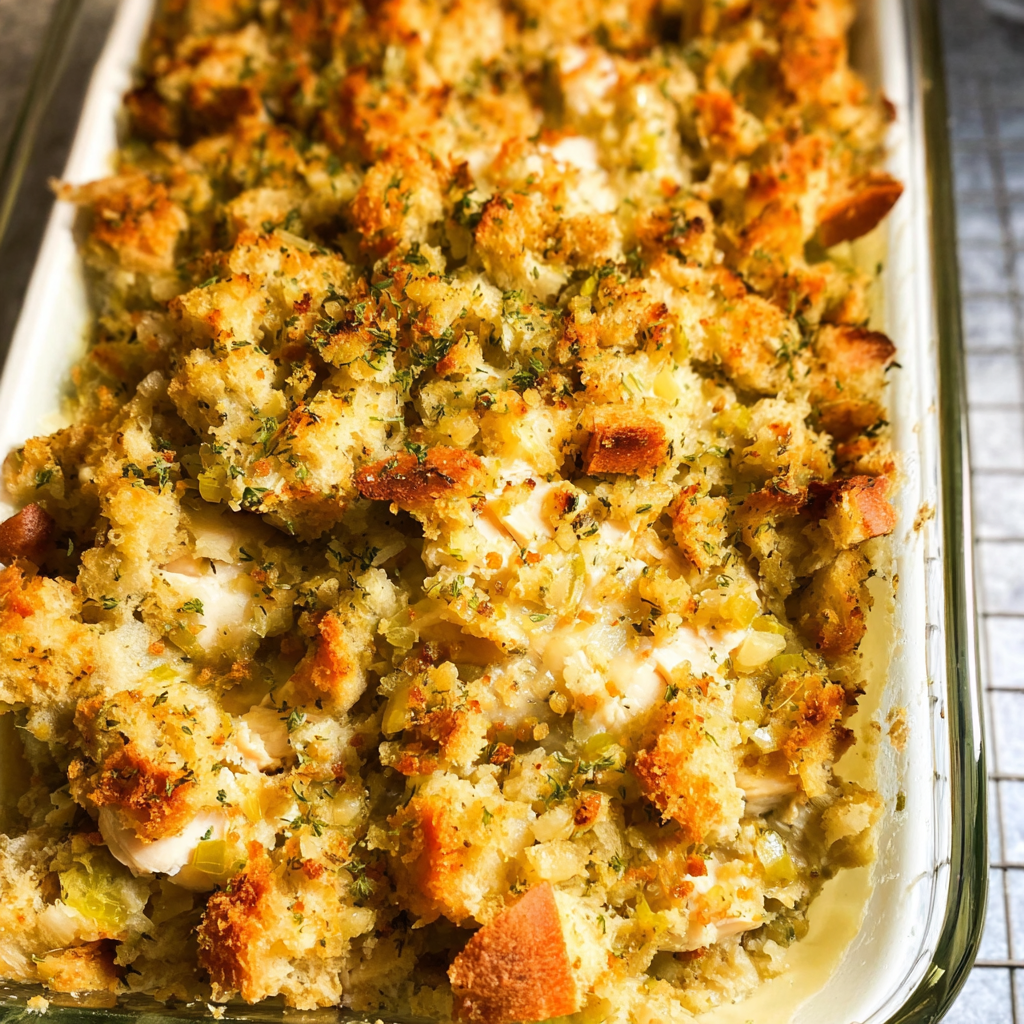
⚠️ Common Mistakes to Avoid
When preparing chicken and stove top stuffing casserole, a few missteps can ruin the texture. The most common issue is dry stuffing, which happens if you skimp on the broth or don’t cover the dish long enough. The foil traps essential moisture; remove it too early, and the top layer dries out before the chicken cooks.
Conversely, soggy stuffing occurs if you add too much liquid or use a dish that is too deep, preventing evaporation. Stick to the recommended broth measurement.
Another critical error is undercooked chicken. Because the chicken is submerged in a cold sauce, it takes time to come to temperature. Always verify the internal temperature with a digital thermometer. If the chicken isn’t 165°F, put it back in. Finally, avoid using a baking dish that is too small; overcrowding leads to uneven cooking, where the center stays raw while the edges overcook.
Variations & Customizations: Make It Your Own!
Transform your chicken and stove top stuffing casserole to fit your taste. One of the easiest upgrades is adding vegetables. A mix of peas, carrots, or broccoli adds color and nutrition. Just toss them in with the raw chicken; they will cook perfectly alongside the meat.
Experiment with different cream soups. Cream of mushroom adds an earthy, umami-rich depth, while cream of celery enhances the herbal notes. If you want a richer flavor profile, try browning the chicken pieces in a skillet with butter before baking. This triggers the Maillard reaction, creating complex flavor compounds that raw chicken simply lacks.
For a cheesy twist, sprinkle cheddar cheese over the stuffing during the last 5 minutes of baking. If you need a lighter version, use gluten-free stuffing, low-sodium soups, or dairy-free milk. You can even substitute regular milk with chicken broth for a lighter sauce.
Serving Suggestions & Pairings
When serving this casserole, think about balancing the richness. A light side salad with a sharp vinaigrette cuts through the creamy sauce beautifully. Green beans, roasted until slightly charred, offer a crisp texture contrast.
For a classic comfort spread, serve with cranberry sauce on the side—the tartness is a perfect match for the savory stuffing. Warm dinner rolls are great for mopping up any extra sauce, or you can go full comfort mode with mashed potatoes, though honestly, the casserole is hearty enough to stand alone.
Storage & Reheating Tips
To maintain the best quality for your chicken and stove top stuffing casserole, proper storage is key. Once the casserole has cooled to room temperature, transfer leftovers into an airtight container. It keeps well in the refrigerator for up to 3 days or can be frozen for up to 3 months.
When reheating, the oven is your best friend for restoring texture.
- Reheat in the Oven: Preheat to 350°F (175°C). Cover with foil to prevent further browning and heat for 25-30 minutes, or until the internal temperature hits 165°F.
- Reheat in the Microwave: For single servings, microwave on medium power for 2-3 minutes. Note that the stuffing may soften more in the microwave.
You can also assemble the casserole ahead of time. Cover it tightly and refrigerate for up to 24 hours before baking. You may need to add 5-10 extra minutes to the baking time if it goes into the oven cold.
💡 Pro Tips for Casserole Perfection
To elevate your chicken and stove top stuffing casserole, consider these professional insights.
Browning the Chicken: If you have an extra 10 minutes, sear the chicken pieces in a hot pan before assembling. While raw chicken cooks fine in the casserole, browning creates a fond in the pan—those sticky, browned bits of protein and fat that are pure flavor. Deglaze that pan with a little chicken broth and add it to your sauce for a depth that tastes like you spent hours cooking.
Resting is Non-Negotiable: I used to skip this step, digging in immediately. Bad move. When the casserole comes out of the oven, the sauce is bubbling and thin. Letting it rest allows the starches in the sauce and the proteins in the chicken to relax and reabsorb moisture. This creates a thicker, velvety consistency rather than a watery soup.
Thermometer Use: Don’t guess. A digital thermometer ensures safety without overcooking. 165°F is the magic number where bacteria are killed, but much higher and the breast meat starts to expel moisture rapidly.
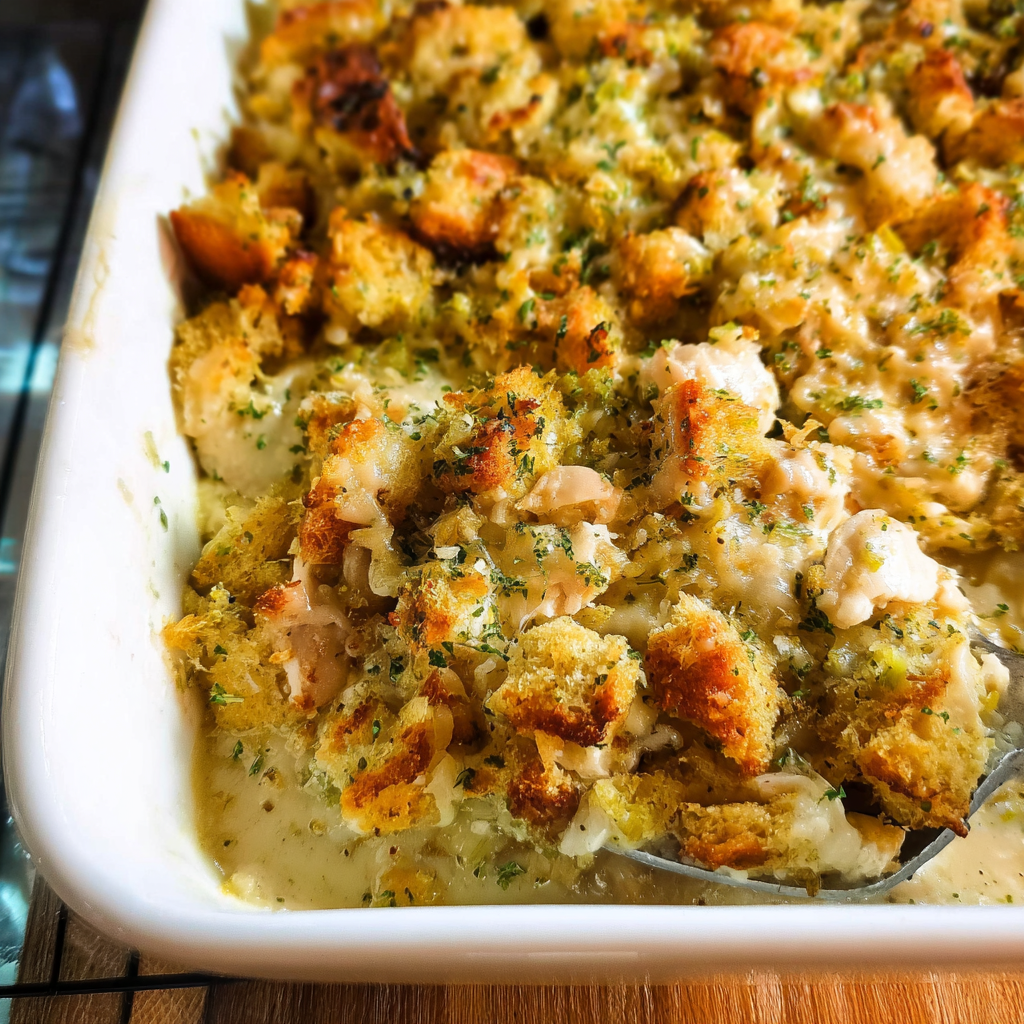
Frequently Asked Questions (FAQ)
+Why is my stuffing soggy?
Soggy stuffing usually results from too much liquid or not enough evaporation time. Ensure you measure the broth accurately and remove the foil for the last 5-10 minutes of baking to let excess moisture escape.
+Can I use cooked chicken instead of raw?
Yes. If using rotisserie chicken or leftovers, reduce the baking time significantly. Bake covered for only 20-25 minutes, just until the sauce is bubbly and the chicken is heated through.
+How do I know when the casserole is done?
The most accurate method is using an instant-read thermometer. Insert it into the center of the casserole; the chicken must read 165°F (74°C). Visually, the sauce should be bubbling around the edges, and the stuffing should be golden brown.
+Can I make this ahead of time?
Absolutely. Assemble the casserole, cover it tightly with foil or plastic wrap, and refrigerate for up to 24 hours. Add a few extra minutes to the baking time since the dish will be cold going into the oven.
+What can I substitute for cream of chicken soup?
If you prefer not to use canned soup, you can make a homemade white sauce (béchamel) with butter, flour, and milk, seasoned with poultry seasoning. Alternatively, cream of mushroom or cream of celery soups work as direct substitutes.
+Can I put raw chicken in a casserole?
Yes, it is safe to put raw chicken in this casserole. The covered baking time allows the chicken to cook gently in the sauce, ensuring it reaches the safe internal temperature of 165°F without drying out.
Chicken and Stuffing Casserole (+Video)
Ingredients
Method
- Preheat the oven to 375°F. Spray an 11x7-inch baking dish with cooking spray, and set aside.
- Cut 2 pounds chicken tenderloins into bite-sized pieces and place them into the baking dish.
- Toss the chicken pieces with 1/2 teaspoon kosher salt and 1/2 teaspoon black pepper.
- In a small bowl, whisk together 10.5 ounce can cream of celery soup, 10.5 ounce can cream of chicken soup and 1/4 cup milk until smooth.
- Pour the sauce over the chicken pieces and smooth it out, so all of the chicken is covered.
- Evenly sprinkle the 6 ounce box Stove Top chicken stuffing mix on top.
- Pour 1 1/2 cups chicken broth on top of the stuffing mix, and make sure that all of the stuffing is moistened by the broth.
- Cover with foil and bake for about 40-45 minutes. Take the foil off and bake for an additional 5 minutes to lightly brown the top. NOTE: Oven times can vary for many reasons. It may take longer or be quicker in your particular oven. The chicken is done when the internal temperature reaches 165F degrees.
- Garnish with fresh or dried parsley (optional) and serve. When serving, scoop up some of the gravy at the bottom and drizzle it over each serving.
Nutrition
Notes
- Ensure the chicken reaches an internal temperature of 165°F for safe consumption; use a meat thermometer for accuracy.
- To keep the casserole moist, make sure all the stuffing is thoroughly soaked in broth before baking; this prevents dryness.
- If you prefer a lighter option, substitute the cream soups with low-fat versions or Greek yogurt to cut down on calories without sacrificing flavor.
- Leftovers can be stored in an airtight container in the fridge for up to 3 days; reheat gently in the oven covered with foil to maintain moisture.
- This casserole freezes well for up to 3 months; just remember to omit the additional broth if you plan to freeze it before baking.