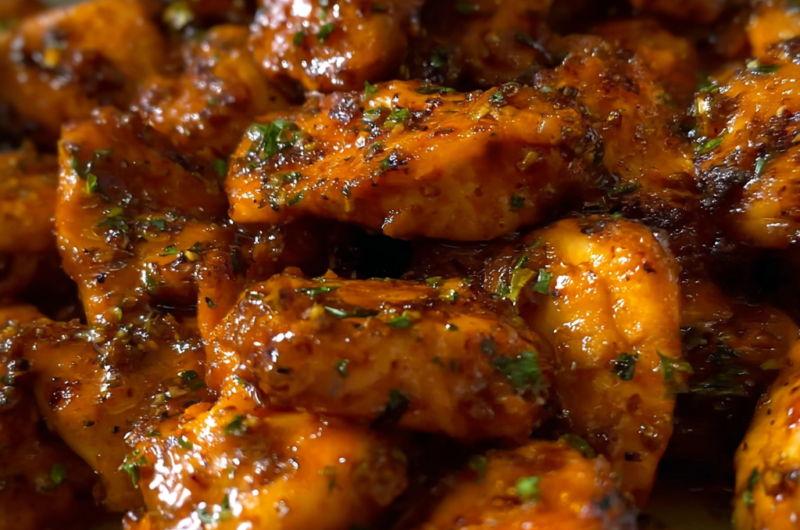
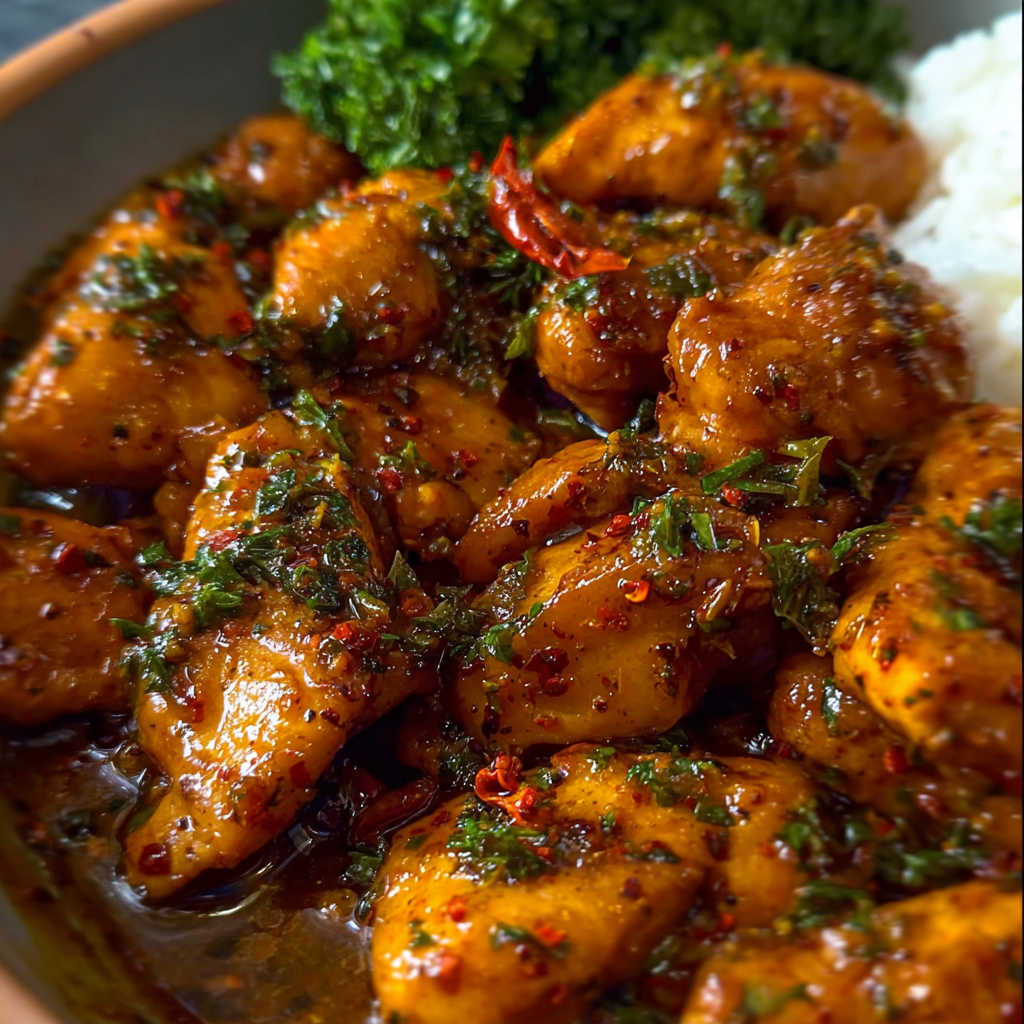
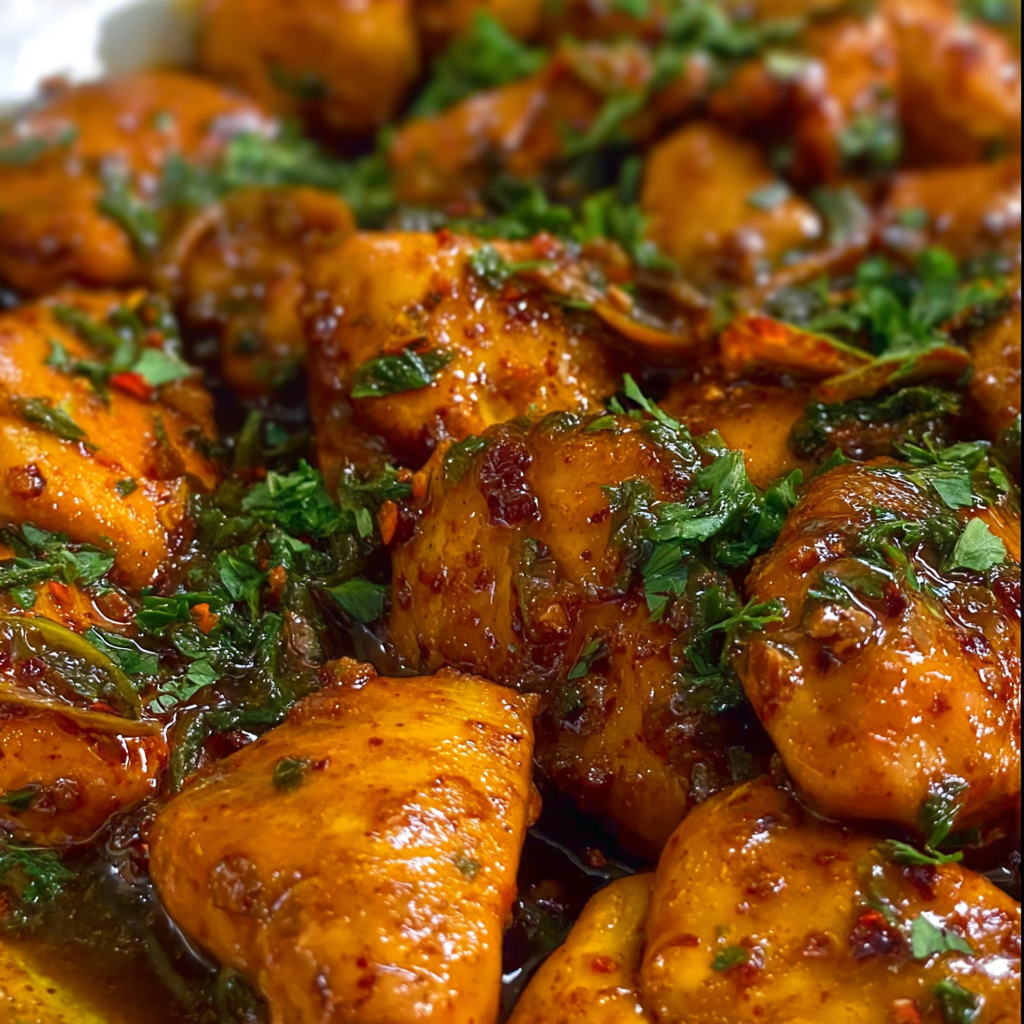
Crispy-seared chicken pieces cloaked in a glossy, spicy garlic butter sauce. It comes together in one skillet in under 25 minutes.
📋 In This Article
Introduction
Let’s be honest: weeknight dinners need to be fast, but they don’t have to be boring. This Spicy Butter Garlic Chicken is the answer to the “what’s for dinner?” rut. It hits that perfect trifecta of savory, spicy, and sweet, all coated in a buttery sauce that begs to be soaked up by rice or crusty bread. While it looks impressive enough for guests, it’s really a stealthily simple stir-fry designed for maximum flavor with minimum effort.
Why This Recipe Works
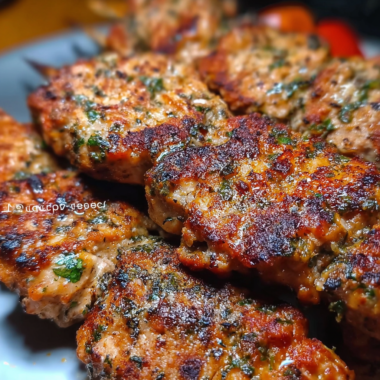
This isn’t just “chicken with sauce.” The success lies in the layering. We start by marinating the meat, not just for flavor, but because the salt and acid in the marinade begin breaking down muscle fibers immediately, ensuring juiciness. Then, we build the sauce in the same pan used to sear the chicken. This captures the fond—those sticky, browned bits left behind after searing—which holds immense savory depth. By deglazing the pan with chicken broth, we dissolve that flavor back into the sauce rather than scrubbing it away. Finally, finishing with butter off the heat creates a velvety emulsion rather than a greasy pool. The Juiciest Chicken Kebabs Recipe (Science-Backed Secrets).
Ingredients You’ll Need
For the Chicken:
- Chicken Breasts (450g) or Chicken Thighs (450g): Thighs offer more fat and flavor, but breasts work well if you’re careful not to overcook them.
- Italian Seasoning (1 tsp): A dried herb blend that adds instant complexity.
- Garlic Powder (1 tsp): Provides a savory base note in the meat itself.
- Salt (1/2 tsp): Essential for moisture retention.
- Black Pepper (1/2 tsp): Adds a mild background heat.
- Chili Powder (1/2 tsp): For a subtle, earthy spice.
For the Sauce:
- Neutral Oil (2 tbsp): Used for searing; it has a higher smoke point than butter.
- Unsalted Butter (2 tbsp): Added later for richness and emulsification.
- Fresh Garlic (4 cloves, minced): The star aromatic. Fresh is non-negotiable here.
- Chicken Broth (1/2 cup): The liquid base for the sauce.
- Hot Sauce (1.5 tbsp): Use your favorite (like Frank’s or Sriracha) to set the heat level.
- Honey (2 tsp): Balances the acidity and heat.
- Lemon Juice (2 tsp): Brightens the heavy butter flavors.
- Dried Oregano (1 tsp): Reinforces the herbal notes.
- Red Pepper Flakes (1.5 tsp): For that final, spicy kick.
- Cornstarch (1 tsp) mixed with 3 tbsp of water: A slurry to give the sauce body.
Garnish:
- Fresh Parsley: For color.
- Green Onions (chopped): Adds a mild onion crunch.
- Sesame Seeds: Optional, for texture.
Step-by-Step Cooking Instructions
- Marinate the Chicken: Dice the 450g of chicken into bite-sized, even pieces. In a bowl, toss the chicken with the Italian seasoning, garlic powder, salt, pepper, and chili powder. Let it sit for at least 15 minutes. This short rest allows the salt to dissolve and penetrate the meat fibers, ensuring every bite is seasoned, not just the surface.
- Mix the Sauce: In a small bowl or measuring cup, whisk together the chicken broth, hot sauce, honey, lemon juice, oregano, and red pepper flakes. Set this aside. Having your sauce ready to go prevents the garlic from burning while you scramble for ingredients later.
- Sear the Chicken: Heat the neutral oil in a large skillet over medium-high heat. Once the oil shimmers, add the chicken in a single layer. Do not crowd the pan—if the pieces touch too much, they will steam instead of sear. Cook for 4-5 minutes, turning occasionally, until golden brown and cooked through. Remove the chicken and set it aside on a plate.
- Sauté the Aromatics: Lower the heat to medium-low. Add the butter to the pan. Once melted, add the minced garlic and extra red pepper flakes. Sauté for just 30-45 seconds. You want the garlic fragrant and pale gold, not brown. Burnt garlic turns acrid and bitter instantly—trust me, I’ve ruined a few pans learning this the hard way.
- Create the Sauce: Pour the sauce mixture into the pan. As it hits the hot surface, use a wooden spoon to scrape up the fond from the bottom—this is pure flavor. Bring to a simmer. Stir the cornstarch slurry again (cornstarch settles quickly) and pour it into the bubbling sauce. Whisk constantly for 1-2 minutes until the sauce thickens enough to coat the back of a spoon.
- Combine: Return the seared chicken (and any juices on the plate) to the skillet. Toss well to coat every piece in the glossy sauce.
- Garnish and Serve: Top with green onions and sesame seeds. Serve immediately over steamed rice or noodles.
⚠️ Common Mistakes to Avoid
Even simple recipes have pitfalls. Here is how to dodge them:
- Overcrowding the Pan: If you dump all the chicken in at once, the temperature drops, and the chicken boils in its own juices. You lose that caramelized crust. Cook in two batches if necessary.
- Burning the Garlic: Garlic has a much lower burn point than onions. If your heat is too high when the garlic hits the butter, it will turn black in seconds. Keep the heat moderate and watch it like a hawk.
- Skipping the Rest: If you cut into the chicken immediately after cooking, the juices run out onto the board, leaving the meat dry. Letting it rest while you make the sauce allows those juices to redistribute.
- Thin Sauce: Nobody wants watery sauce. Ensure your cornstarch slurry is thoroughly mixed and that the sauce simmers actively to activate the starch’s thickening power.
💡 Pro Tips for Next-Level Flavor
Want to take this from good to great? Here’s how.
Use a Cast Iron Skillet: Cast iron retains heat better than thin stainless steel or non-stick pans. This ensures a deep, dark sear on the chicken (the Maillard reaction), which creates hundreds of new flavor compounds.
Deglaze with Purpose: When you add the chicken broth to the pan, listen for the sizzle. Use that liquid to scrape up every bit of browned fond. That stuff is essentially “liquid gold” for your sauce base.
Adjust Heat with Fat: If you accidentally make the sauce too spicy, don’t add water—add more butter or a splash of heavy cream. Capsaicin (the spicy compound) is oil-soluble, meaning fat will disperse the heat better than water ever could. Simple Garlic Pasta Recipe: 15-Minute Butter & Garlic Pasta.
Finish with Fresh Acid: A final squeeze of fresh lemon juice right before serving “wakes up” the flavors. The acid cuts through the richness of the butter and highlights the spices.
Serving Suggestions & Variations
This dish is incredibly versatile. For a classic approach, serve it over steamed jasmine rice or mashed potatoes to soak up the extra sauce. For a lighter meal, cauliflower rice or zucchini noodles work beautifully.
Variations
- Creamy Version: Stir in 2 tablespoons of heavy cream or a dollop of cream cheese at the very end for a richer texture.
- Honey Garlic Twist: Double the honey and skip the hot sauce for a kid-friendly, sweet version.
- Gochujang Kick: Replace the hot sauce with Gochujang (Korean chili paste) for a deeper, fermented umami flavor.
Dietary Adaptations
This recipe is naturally gluten-free if you use a certified GF chicken broth and cornstarch. For Dairy-Free needs, swap the butter for a high-quality plant-based butter stick or ghee. If you are following a Low-Carb or Keto diet, replace the honey with a sugar-free sweetener like monk fruit and serve over shirataki noodles or roasted broccoli.
Storage & Reheating Tips
Store leftovers in an airtight container in the refrigerator for up to 3 days. The sauce may thicken up considerably when cold—that’s normal.
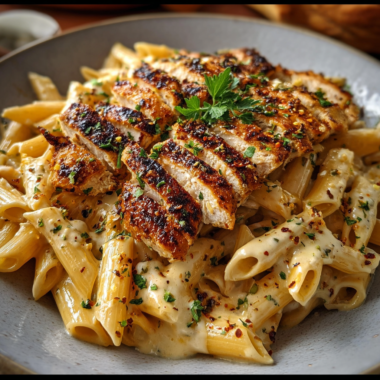
To reheat, avoid the microwave if possible, as it can rubberize the chicken. Instead, place the chicken in a skillet over medium-low heat. Add a splash of water or broth to loosen the sauce, cover, and heat until warmed through. If frozen, this dish keeps well for up to 3 months. Thaw overnight in the fridge before reheating. Chicken Pasta Alfredo Bake: Creamy, Cheesy, and Ready in 45 Minutes.
Frequently Asked Questions (FAQ)
+Can I use chicken thighs instead of breasts?
Absolutely. Boneless, skinless chicken thighs are actually preferred by many chefs because they have more intramuscular fat, keeping them juicier and more forgiving if slightly overcooked.
+Why is my garlic burning so fast?
Garlic has low water content and burns quickly. Always sauté garlic over medium-low heat, and add it only after your butter has melted and stopped foaming. If it starts browning too fast, remove the pan from the heat entirely.
+How do I know when the chicken is fully cooked?
The safest way is an instant-read thermometer; chicken is safe at 165°F (74°C). Visually, the meat should be opaque all the way through, and the juices should run clear when you cut into the thickest piece.
+Can I make this sauce ahead of time?
You can mix the liquid ingredients (broth, hot sauce, honey, lemon) and store them in the fridge for up to a week. However, the garlic and butter should be cooked fresh to maintain their aromatic punch.
+What if I don’t have cornstarch for the slurry?
You can use arrowroot powder or flour, though flour requires a longer cooking time to lose its raw taste. If using flour, mix 1 tablespoon of flour with 2 tablespoons of butter to make a roux before adding the liquids, rather than a slurry at the end.