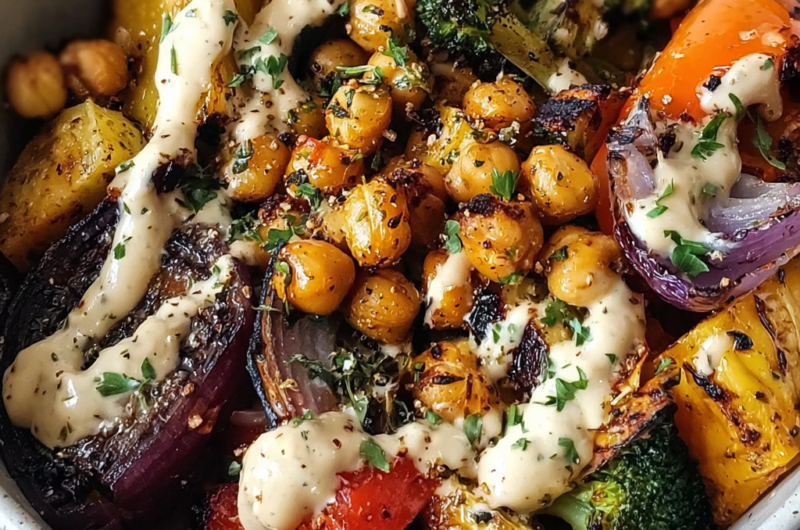
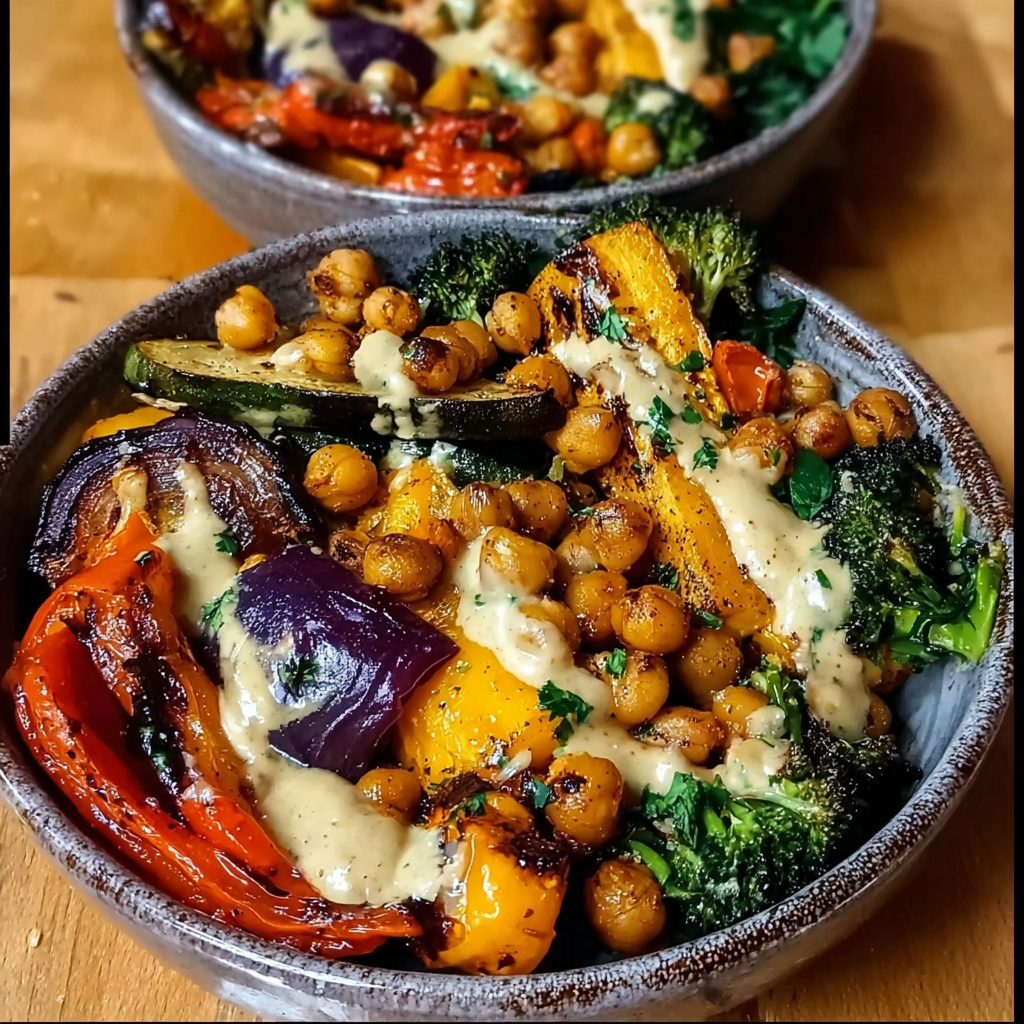
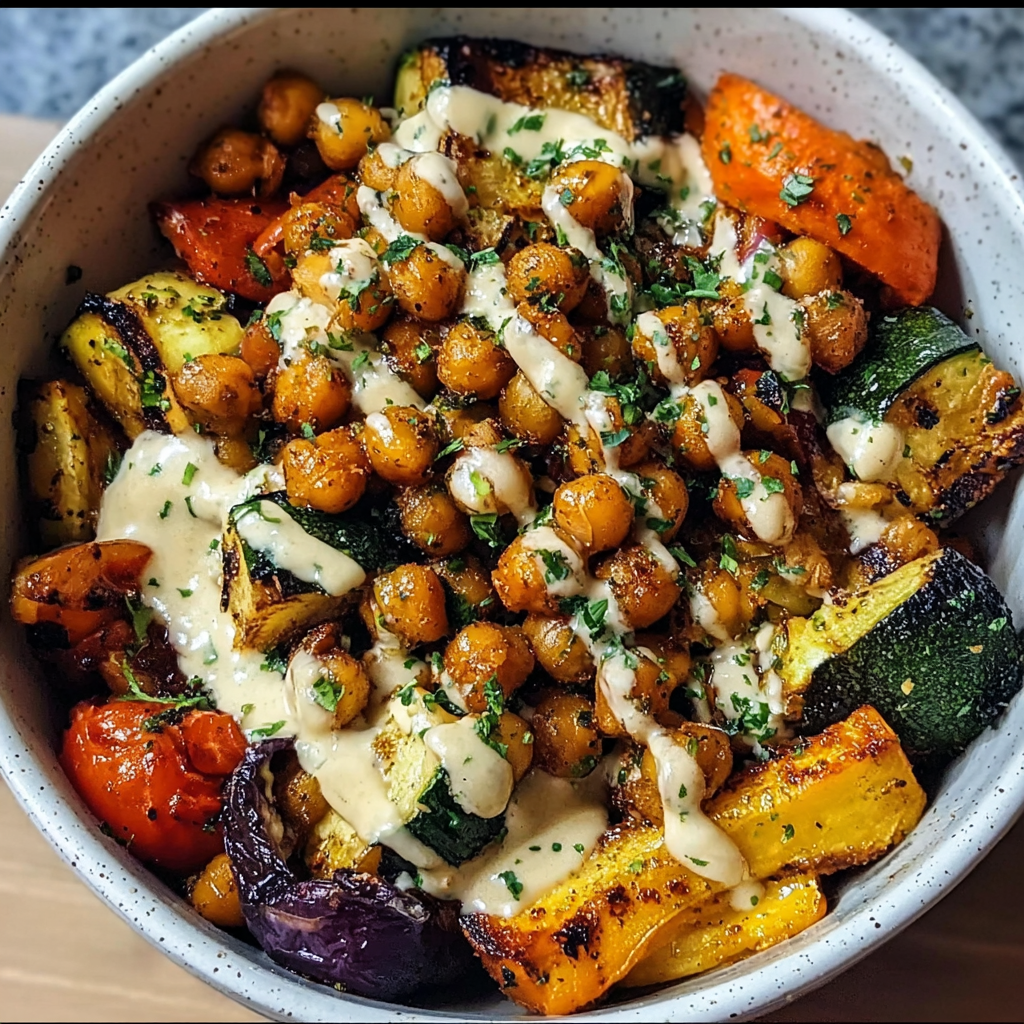
Crispy, spiced chickpeas and caramelized vegetables drizzled with a velvety, punchy tahini sauce—the kind of weeknight dinner that feels effortless but tastes like a triumph.
📋 In This Article
- Introduction
- Why You’ll Love This Recipe
- Key Ingredients for Your Mediterranean Bowls
- How to Make the Creamy Tahini Dressing
- Roasting Perfect Veggies & Crispy Chickpeas
- Assembling Your Mediterranean Bowl
- Common Mistakes to Avoid
- Variations & Substitutions
- Meal Prep & Storage Tips
- Pro Tips for Next-Level Bowls
- Frequently Asked Questions (FAQ)
- Conclusion
Introduction
Let’s get one thing straight: not all grain bowls are created equal. Some are sad, soggy assemblages of leftovers; others are dry, lifeless health food. This is neither. Mediterranean Roasted Veggie and Chickpea Bowls with Tahini Dressing is the recipe that changed my mind about meatless Mondays. It relies on high heat, smart seasoning, and texture contrast to deliver a meal that feels substantial rather than virtuous.
The magic lies in the duality. You have warm, caramelized vegetables and crispy chickpeas playing against cool, crisp cucumbers and a lush, nutty dressing. It’s a study in contrasts. And the best part? It holds up beautifully for lunch the next day, making it the undisputed king of my meal-prep rotation.
Why You’ll Love This Recipe
Why make this specific bowl? Because it solves the “boring healthy food” problem.
It starts with texture. We aren’t just roasting vegetables; we are driving off moisture to create crisp edges and concentrated sugars. We aren’t just opening a can of chickpeas; we are treating them like croutons—spiced, oiled, and baked until they shatter in your mouth. Then there’s the tahini dressing. If you’ve only ever had tahini as a thin, bitter drizzle, you’re in for a surprise. Whisked correctly, it becomes a creamy, emulsified sauce that binds every element together.
This dish is vegan, gluten-free, and adaptable, but those are just bonuses. The real reason to make it is the flavor. It’s smoky, bright, nutty, and fresh all at once.
Key Ingredients for Your Mediterranean Bowls
The strength of this dish relies on a few power players. You don’t need much, but quality matters here.
The Roasted Base
- Chickpeas: Use canned for convenience, but dry them thoroughly. Moisture is the enemy of crispiness. Toss them with cumin, coriander, and a hit of paprika for earthy depth.
- Seasonal Vegetables: Zucchini, bell peppers, and red onions are standard, but don’t sleep on broccoli or cauliflower florets. They roast beautifully, developing a nutty sweetness that soft vegetables like zucchini lack. Coat them in olive oil—don’t be shy—and season aggressively.
- Spices: We’re building a flavor profile that leans on cumin and coriander. Toasting these spices briefly in the pan or oven wakes up their volatile oils, transforming them from dusty powders into aromatic powerhouses.
The Fresh Elements
- Greens: A base of brown rice or quinoa provides a chewy, nutty foundation. I like tossing warm grains with fresh spinach—the residual heat wilts it just enough.
- Crunch: Cherry tomatoes and cucumber are non-negotiable. They provide a burst of acidity and water content that cuts through the dense roasted elements.
The Tahini Dressing
- Tahini: Look for a brand that is 100% sesame seeds with no added oils. It should taste nutty, not bitter.
- Acid: Lemon juice is classic, but a splash of apple cider vinegar works in a pinch. Acid is crucial for balancing the fat.
- Sweetener: A touch of maple syrup or honey cuts the bitterness of the sesame. It’s a small step that makes a big difference.
How to Make the Creamy Tahini Dressing
Tahini can be finicky. If you’ve ever had it seize up into a paste when you added liquid, you know the frustration. Here is the science: tahini is an emulsion of sesame oil and solids. When you add water (or lemon juice), the liquids initially repel each other.
To fix this, start with 1/4 cup of tahini in a bowl. Add 1/4 cup of warm water slowly while whisking vigorously. The warm water helps the proteins in the sesame paste relax and accept the liquid. It will look like a mess for a second, then suddenly transform into a smooth, pale cream.
Whisk in the juice of 1/2 to 1 lemon, 1 clove of minced garlic, and 1 teaspoon of maple syrup. Season with salt and pepper. If it’s too thick, add more water one tablespoon at a time. You want a “drizzle” consistency, not a “dollop” consistency.
Roasting Perfect Veggies & Crispy Chickpeas
This is where the rubber meets the road. Preheat your oven to 425°F (220°C). High heat is non-negotiable for caramelization.
- Prep the Chickpeas: Rinse and—this is critical—dry them completely. I spread them on a clean towel and rub them gently. The skins pop off? Good, discard them. They are the main barrier to crunch. Toss the dried chickpeas with olive oil, salt, and spices. Spread them on a baking sheet.
- Prep the Veggies: Cut your vegetables into uniform pieces. If they are too big, they won’t cook through; too small, they burn. Toss with oil, salt, and pepper. Spread them on a separate sheet. Do not overcrowd the pan—vegetables need space for hot air to circulate. If they are crowded, they will steam in their own juices and turn mushy.
- Roast: Slide both pans into the oven. The chickpeas need about 20-25 minutes to get crispy. Shake the pan halfway through. The vegetables need about 25-30 minutes. Look for dark, caramelized edges on the onions and peppers.
Assembling Your Mediterranean Bowl
Assembly matters more than you think. You want every bite to be balanced.
Start with your grain base—brown rice or quinoa. While still warm, toss in your fresh greens like spinach. The heat wilts them slightly, removing that raw, grassy bite. Next, pile on the roasted vegetables and crispy chickpeas. Add the cold elements: cucumber, cherry tomatoes, and maybe some thinly sliced red onion.
Finally, drizzle the tahini dressing generously. Don’t just top it with herbs; toss fresh parsley or mint right into the mix. Their volatile oils release when slightly bruised, adding a fresh top note that cuts through the roasted flavors.
⚠️ Common Mistakes to Avoid
Even a simple recipe has pitfalls. Here’s how to dodge them:
- Mushy Chickpeas: The culprit is almost always moisture. If you didn’t dry them well, or if you crowded the pan, they steamed. They need space and dry heat. Also, don’t use olive oil that has water content; use a quality oil.
- Seized Tahini: If your dressing looks like curdled clay, you added cold liquid too fast. Warm it up slightly or use warm water to start. If it’s already seized, keep whisking and adding warm water—it usually comes back together.
- Under-seasoned Veggies: Roasting mellows salt. You need to season the vegetables aggressively before they hit the oven. A bland raw vegetable becomes a bland roasted vegetable.
- Over-roasting: At 425°F, sugars caramelize quickly. Keep an eye on the chickpeas in the last 5 minutes; they go from golden to burnt fast.
Variations & Substitutions
This bowl is a framework, not a law. Adapt it to what’s in your fridge.
- The Grain: Swap brown rice for farro, couscous, or even cauliflower rice for a low-carb version. Each brings a different texture—farro is chewy, couscous is fluffy.
- The Veg: Sweet potatoes roast beautifully and add a sugary contrast to the savory tahini. In summer, use zucchini and eggplant; in winter, lean on cauliflower and broccoli.
- The Protein: While chickpeas are classic, white beans or roasted tofu cubes work too. If you aren’t strictly vegan, a poached egg on top turns this into a rich, brunch-worthy dish.
- Spicy Kick: Whisk harissa paste or sriracha into the tahini for a spicy version that wakes up the palate.
Meal Prep & Storage Tips
This is the ultimate “make-ahead” meal, but you have to store it correctly to preserve the textures.
- Storage: Store components separately. Keep the roasted veggies and chickpeas in one container and the fresh veggies in another. The tahini dressing should live in a glass jar in the fridge.
- Shelf Life: Roasted veggies last 4-5 days. Crispy chickpeas last 3-4 days (they soften over time; re-crisp in a toaster oven). The dressing keeps for a week.
- Freezing: You can freeze the roasted vegetables and chickpeas for up to 3 months. Thaw and reheat in a skillet to bring back some texture. Do not freeze the fresh components or the dressing.
💡 Pro Tips for Next-Level Bowls
- Toast Your Spices: Before tossing spices with the chickpeas, warm them in a dry pan for 30 seconds. It releases aromatic oils and deepens the flavor profile significantly.
- Quality Tahini Matters: Cheap tahini often tastes bitter and gritty. Look for brands that use Ethiopian sesame seeds for a smoother, nuttier finish.
- Don’t Skip Fresh Herbs: Dried herbs can’t replicate the brightness of fresh mint or cilantro. Add them right before eating for a burst of freshness.
- Rest Your Veggies: Let the roasted vegetables sit for 5 minutes after pulling them from the oven. This resting period allows the flavors to settle and prevents them from wilting the fresh greens immediately.
Frequently Asked Questions (FAQ)
+Why are my roasted chickpeas still soft?
The most common reason is moisture. You need to dry the chickpeas completely with a towel before roasting. Also, ensure your oven is fully preheated to 425°F; a cooler oven won’t drive off moisture fast enough. If they still feel soft after 20 minutes, give them another 5-10 minutes.
+Can I use dried chickpeas instead of canned?
Absolutely. Soak and cook dried chickpeas first until tender, then follow the drying and roasting steps. Dried chickpeas often have better texture and flavor than canned, but they require planning ahead.
+How do I fix separated tahini dressing?
If your dressing looks clumpy or separated, it usually means the emulsion broke or the liquid was too cold. Add a teaspoon of very warm water and whisk vigorously. If that doesn’t work, blend it in a small blender or food processor to force the emulsion back together.
+How long does this recipe last in the fridge?
Stored properly in airtight containers, the roasted components will last 4-5 days. The tahini dressing will keep for up to a week. Keep the fresh vegetables separate until you are ready to eat to prevent sogginess.
+Is this recipe suitable for freezing?
You can freeze the roasted vegetables and chickpeas, but I don’t recommend freezing the assembled bowls or the tahini dressing. The texture of the fresh vegetables and the emulsion of the dressing will suffer. Freeze just the roasted elements for a quick meal starter.
Conclusion
The Mediterranean Roasted Veggie and Chickpea Bowls with Tahini Dressing is more than just a healthy lunch option; it’s a masterclass in texture and flavor balance. It proves that plant-based eating doesn’t have to be boring or repetitive. By focusing on proper roasting techniques and building layers of flavor—from the spiced chickpeas to the creamy tahini—you create a dish that stands up to any restaurant offering. Whether you are meal-prepping for the week or serving a casual dinner, this bowl delivers satisfaction in every bite. Give it a try, and don’t be afraid to experiment with the variations—your perfect bowl is waiting.