Layers of Elegance: Baking Opera Cake at Home
Ingredients
Method
- Preheat your oven to 180°C (350°F).
- Prepare your baking sheets with parchment paper.
- In a bowl, whisk the eggs and sugar until pale and fluffy.
- Fold in the almond flour and all-purpose flour gently.
- Add melted butter and coffee, mixing until just combined.
- Evenly distribute the batter onto prepared sheets.
- Bake for 10-12 minutes until golden.
- Cool the cake layers completely on wire racks.
- Prepare the coffee buttercream by beating butter until creamy.
- Add powdered sugar and coffee extract and mix until combined.
- Assemble by spreading the buttercream between layers.
- Prepare ganache by melting dark chocolate and mixing in butter.
- Pour ganache over the assembled cake and smooth out.
- Chill in the refrigerator to set.
- Slice and serve, garnishing as desired.
Tried this recipe?
Let us know how it was!Introduction
Opera cake is a luxurious French dessert that delights with its intricate layers and rich flavors. Originating from the 19th-century Parisian café culture, this cake is a celebration of fine patisserie techniques and quality ingredients.
Its harmonious blend of almond sponge cake, coffee buttercream, and chocolate ganache creates a symphony of taste and texture. Making opera cake at home might seem daunting, but with patience and practice, you can impress yourself and others with this exquisite treat.
Ingredients
- 6 large eggs
Eggs provide structure and stability to the cake layers, trapping air when beaten. This results in a light, airy texture that is essential for a delicate sponge. - 150g granulated sugar
Sugar not only sweetens the cake but also helps to create a tender crumb by interfering with gluten formation. Additionally, it contributes to the caramelization during baking. - 150g almond flour
Almond flour adds a nutty flavor and moisture, lending richness to the sponge layers. It also keeps the cake gluten-free, enhancing the texture. - 100g all-purpose flour
This flour provides structure to the sponge while keeping it light. It offers the right balance to prevent the cake from being too dense. - 1 tablespoon baking powder
Baking powder acts as a leavening agent, allowing the cake to rise and become fluffy, resulting in light layers. - 120g unsalted butter (melted)
Butter enriches the cake and keeps it moist. The melted form ensures easy incorporation into the batter, creating a uniform texture. - 1 cup strong brewed coffee (cooled)
Coffee adds depth of flavor to the cake and enhances the intensity of the chocolate and cream. Its bitterness beautifully balances the sweetness. - 150g dark chocolate (for ganache)
Dark chocolate provides a rich, intense flavor to the ganache. It solidifies slightly when chilled, creating a smooth texture between layers. - 200g unsalted butter (for buttercream)
Butter is the primary fat in the buttercream, creating a creamy texture. It also helps to emulsify the ingredients, giving a smooth finish. - 200g powdered sugar
Powdered sugar sweetens the buttercream and provides a smooth consistency, allowing it to spread beautifully between the layers. - 2 tablespoons coffee extract
Coffee extract intensifies the flavor profile of the buttercream, creating a delightful coffee experience that complements the cake.
Directions & Preparation
Step 1: Preheat your oven to 180°C (350°F).
Preheating the oven is crucial for ensuring an even bake right from the start. An appropriately heated oven will help the cake rise perfectly, preventing dense or uneven layers.
Step 2: Prepare your baking sheets with parchment paper.
Lining baking sheets with parchment prevents the cake from sticking, allowing for easier removal once baked. This step also ensures that your layers maintain their delicate structure.
Step 3: In a bowl, whisk the eggs and sugar until pale and fluffy.
This step is crucial as it incorporates air into the mixture, which is essential for the lift and lightness of the sponge. Whisking until pale indicates that sufficient air has been added.
Step 4: Fold in the almond flour and all-purpose flour gently.
Gently folding in the dry ingredients helps retain the airiness you've created. Overmixing can lead to a tough texture due to gluten development, so be careful here.
Step 5: Add melted butter and coffee, mixing until just combined.
Incorporating melted butter and coffee adds richness and flavor. Ensure everything is combined without overmixing, maintaining the lightness of the batter.
Step 6: Evenly distribute the batter onto prepared sheets.
Spreading the batter evenly helps to achieve uniform layers that bake evenly. This attention to detail ensures that all layers rise and set to the same degree.
Step 7: Bake for 10-12 minutes until golden.
Watch closely as baking progresses; the cakes should be golden and spring back when lightly pressed. Undercooking can result in soggy layers, while overcooking leads to dryness.
Step 8: Cool the cake layers completely on wire racks.
Cooling on wire racks prevents the bottom from becoming soggy as air circulates around the layers. This step is important for maintaining the intended texture.
Step 9: Prepare the coffee buttercream by beating butter until creamy.
Beating the butter until creamy helps to aerate it, creating a fluffy base for your buttercream. This texture will ensure smooth spreading between layers.
Step 10: Add powdered sugar and coffee extract and mix until combined.
Gradually adding the powdered sugar helps control lumps while incorporating flavor. Ensure a smooth, sweet, and creamy consistency for the buttercream.
Step 11: Assemble by spreading the buttercream between layers.
Assembling the cake in this manner allows the flavors to meld beautifully. Alternating layers of buttercream and sponge ensures each bite is a perfect harmony of cake and cream.
Step 12: Prepare ganache by melting dark chocolate and mixing in butter.
The ganache forms an elegant finish for your cake. Be sure to let it cool a bit before pouring to avoid melting the layers beneath.
Step 13: Pour ganache over the assembled cake and smooth out.
Evening out the ganache provides a polished appearance and seals in the layers. This step enhances the overall aesthetic, making your opera cake look refined.
Step 14: Chill in the refrigerator to set.
Chilling allows the ganache to firm up, holding the cake together and making it easier to slice. It also lets the flavors develop further, enhancing the overall taste.
Step 15: Slice and serve, garnishing as desired.
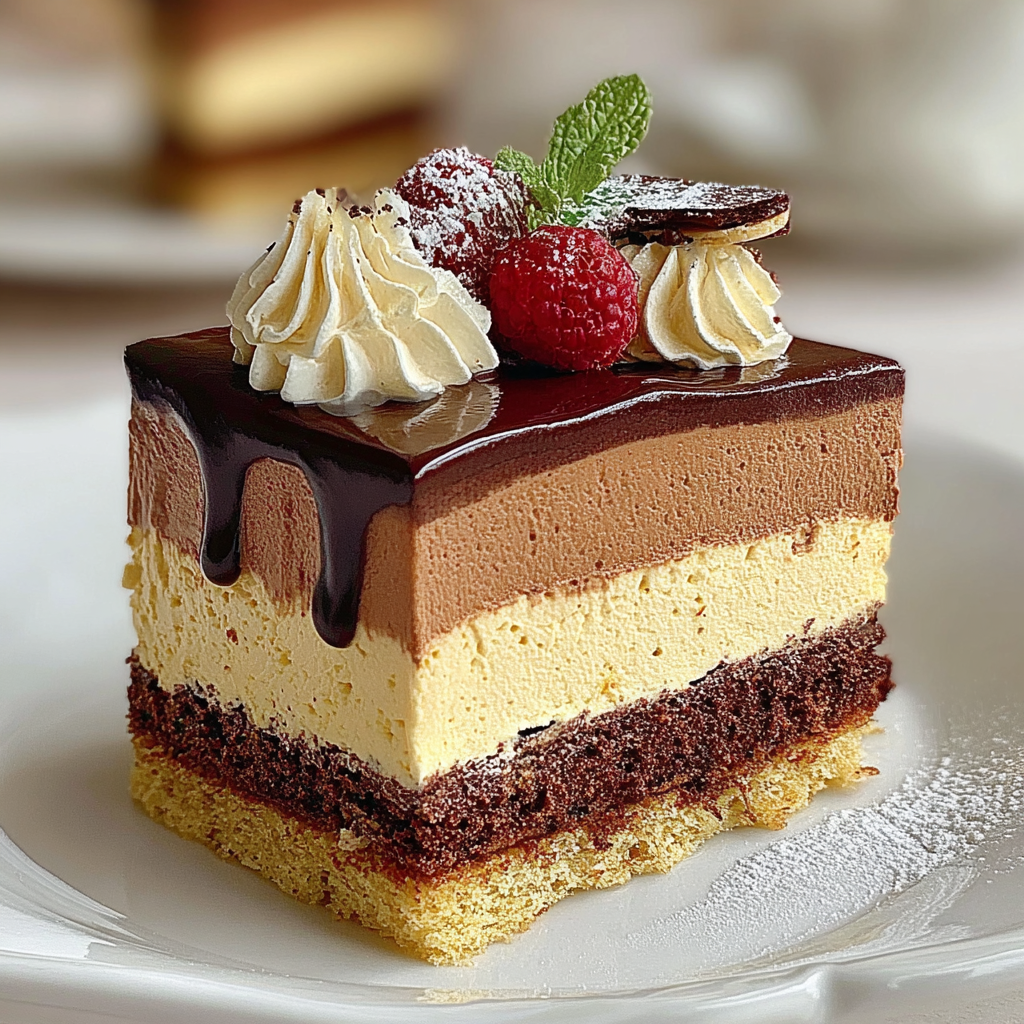
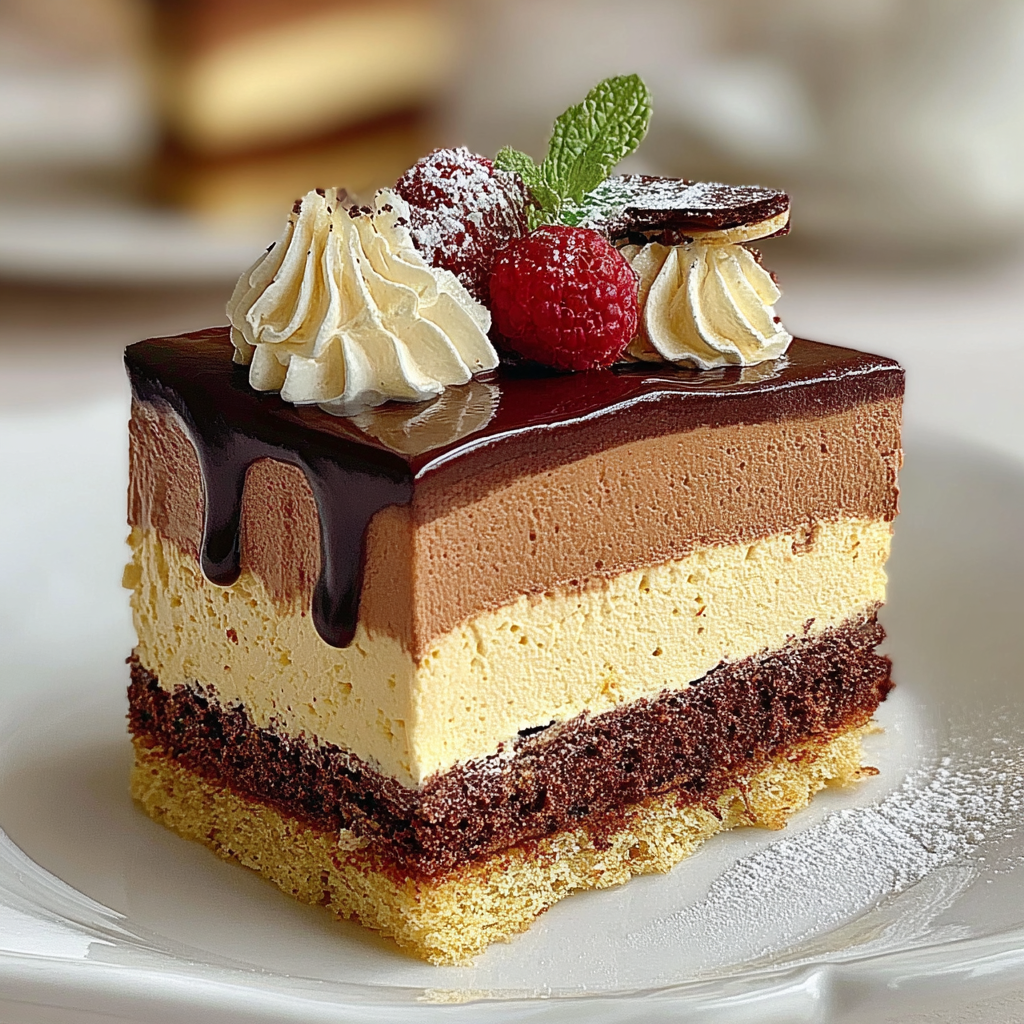
Garnishing can elevate the presentation of your opera cake. Pay attention to the slices showing the distinct layers, inviting your guests to enjoy this decadent treat.

The Art of Layering in Opera Cake
Creating the distinct layers of opera cake is not just a technical requirement; it is where the cake’s beauty lies. Each layer serves a purpose, from the almond sponge which offers a nutty foundation, to coffee buttercream adding depth. Mastering the layering technique allows for visual appeal and a symphony of textures that elevate the dessert.
Choosing the Right Coffee for Your Cake
The coffee you select can significantly influence the overall flavor of the opera cake. Use high-quality coffee that you enjoy drinking, as its essence will permeate the sponge and buttercream. Opt for strong, bold varieties that can stand up to the sweetness, enhancing the indulgent experience without being overly bitter.
Finishing Touches: Ganache and Garnish
The ganache is not merely a cover; it is the rich finale that seals together the work you’ve done. Its glossy sheen creates an irresistible allure. Consider garnishing your opera cake with chocolate shavings or a sprinkle of edible gold to elevate its elegance, making it a standout centerpiece for any gathering.
FAQs
What should I do if my buttercream is too thin?
If your buttercream is too thin, gradually add more powdered sugar until it reaches a spreadable consistency. Ensure it's well-mixed to prevent any lumps.
What can I do if the cake layers are too thick?
If your cake layers turn out thicker than desired, try using a serrated knife to level them before assembling. This will help maintain a balanced layer structure.
How do I know when the ganache is ready?
The ganache is ready when it has a smooth, shiny finish and coats the back of a spoon. Allow it to cool slightly before pouring to prevent melting the layers.
Can I adjust the sweetness of the buttercream?
To adjust the sweetness, reduce the amount of powdered sugar or balance it with additional coffee extract for flavor without adding more sugar.
What happens if my cake batter is too runny?
If your batter is too runny, try adding a little more flour, but do so gradually, mixing gently to avoid over-developing gluten.
How can I customize flavors in my opera cake?
You can customize flavors by adding different extracts like hazelnut or vanilla to the buttercream or experimenting with flavored chocolates for the ganache.
Conclusion
Baking opera cake is an endeavor that brings the thrill of French patisserie into your home. With its layers of flavor and texture, it transforms any occasion into a celebration.
Embrace the process and remember that even the best bakers had to start somewhere. Enjoy every slice as a testament to your culinary journey.
Recipe Card
Layers of Elegance: Baking Opera Cake at Home
Ingredients
Method
- Preheat your oven to 180°C (350°F).
- Prepare your baking sheets with parchment paper.
- In a bowl, whisk the eggs and sugar until pale and fluffy.
- Fold in the almond flour and all-purpose flour gently.
- Add melted butter and coffee, mixing until just combined.
- Evenly distribute the batter onto prepared sheets.
- Bake for 10-12 minutes until golden.
- Cool the cake layers completely on wire racks.
- Prepare the coffee buttercream by beating butter until creamy.
- Add powdered sugar and coffee extract and mix until combined.
- Assemble by spreading the buttercream between layers.
- Prepare ganache by melting dark chocolate and mixing in butter.
- Pour ganache over the assembled cake and smooth out.
- Chill in the refrigerator to set.
- Slice and serve, garnishing as desired.
Tried this recipe?
Let us know how it was!Notes
Additional serving suggestions: pair with a crisp salad, garlic bread, or roasted seasonal vegetables for balance.
For make-ahead, prep components separately and assemble just before heating to preserve texture.
Taste and adjust with acid (lemon/vinegar) and salt right at the end to wake up flavors.