
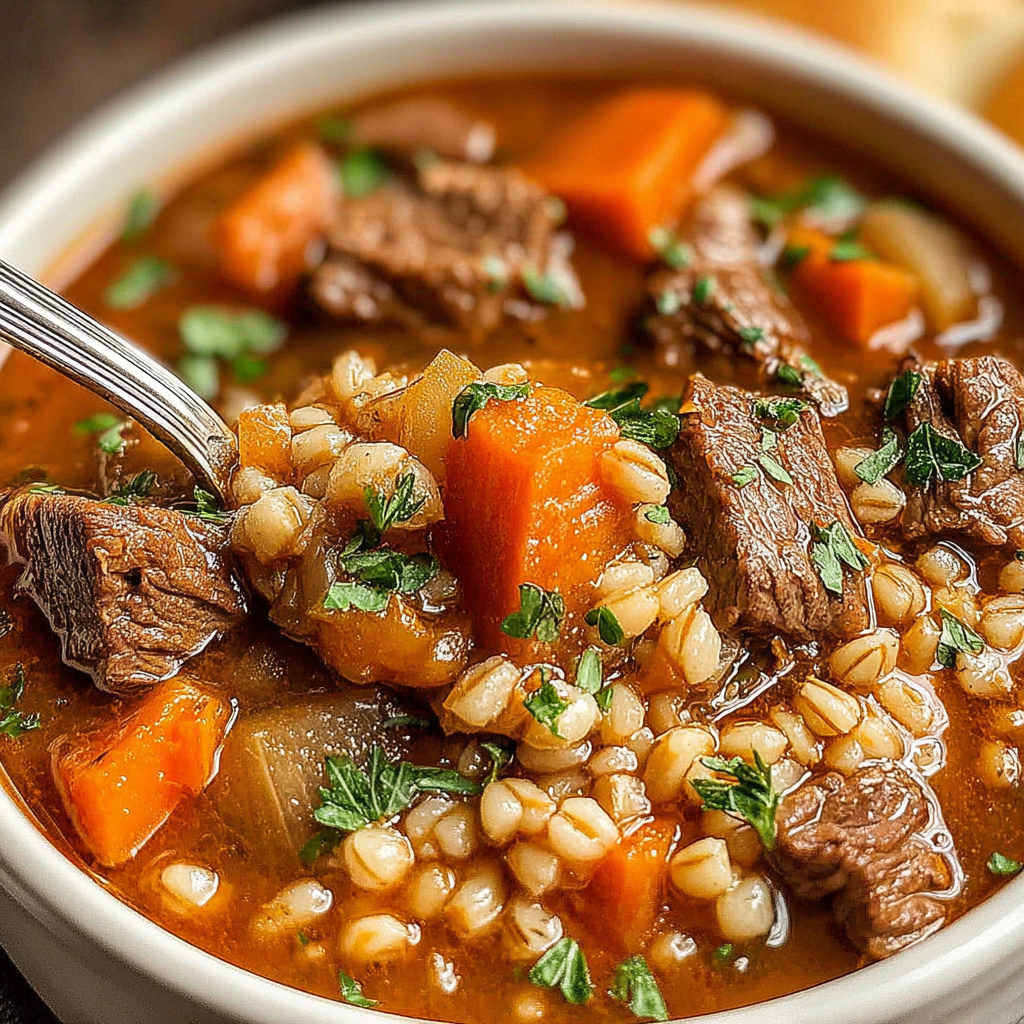
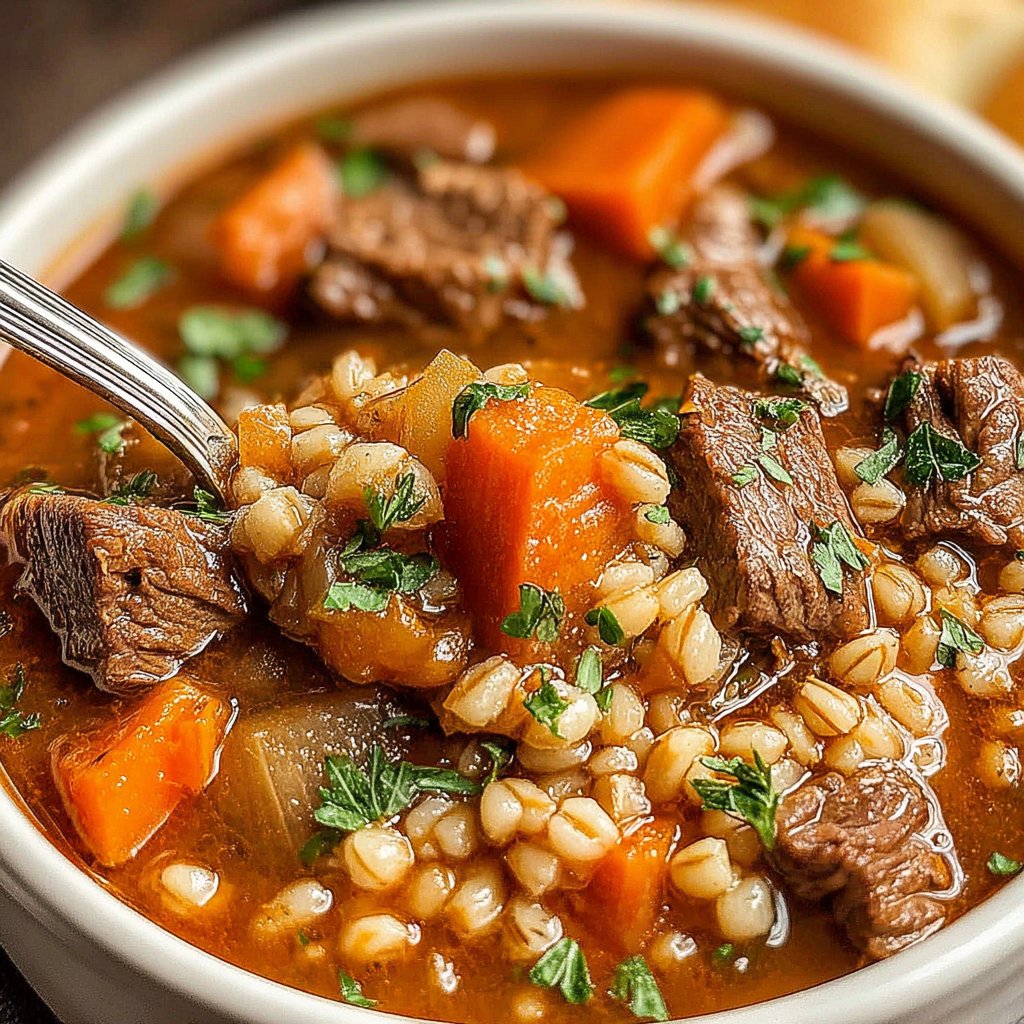
Hearty Beef and Barley Soup for Chilly Days
Ingredients
Method
- Heat a large pot over medium-high heat and add a splash of oil.
- Add the beef stew meat, seasoning with salt and pepper, and brown on all sides.
- Remove the meat and set aside. In the same pot, add onions, carrots, and celery.
- Add the garlic and cook for an additional minute.
- Return the browned beef to the pot, then add the broth, barley, bay leaf, and thyme.
- Bring the soup to a boil, then reduce heat to low and simmer for at least an hour.
- Taste and adjust seasoning if necessary. Remove the bay leaf before serving.
Tried this recipe?
Let us know how it was!Introduction
As the leaves start to turn and the air grows crisp, there's nothing quite like a warm bowl of soup to bring comfort and nourishment. Beef and barley soup embodies the essence of autumn, blending tender meat, wholesome grains, and garden-fresh vegetables into a dish that's both hearty and nutritious.
This classic recipe not only satisfies with its rich flavors, but it also allows for a bit of creativity in the kitchen. Whether you’re feeding a family or simply seeking solace in a warm meal, this beef and barley soup will surely become a staple in your home.
Ingredients
- 1 lb beef stew meat, cubed
Beef stew meat provides richness and a hearty texture that serves as the base of the soup. Choosing well-marbled cuts ensures tenderness after long cooking. - 1/2 cup pearl barley
Pearl barley adds a chewy texture and nutty flavor to the soup. It's also packed with fiber, making the dish more filling and nutritious. - 1 medium onion, chopped
Onions form the flavor foundation of the soup, bringing natural sweetness and depth. As they sauté, they release their sugars, enhancing overall taste. - 2 carrots, diced
Carrots contribute natural sweetness and color to the dish. Their texture holds up well during cooking, adding a delightful bite. - 2 celery stalks, diced
Celery adds a fresh, slightly peppery note to the soup. Its crunchy texture contrasts beautifully with the softer elements of the dish. - 3 cloves garlic, minced
Garlic brings an aromatic quality that elevates the soup's flavor profile. It adds depth and a hint of warmth. - 6 cups beef broth
Beef broth is the soul of the soup, providing a savory and rich base. The quality of the broth significantly affects the dish's overall flavor. - 1 bay leaf
Bay leaves infuse the soup with a subtle herbal essence. They add a complexity that complements the robust flavors of the beef. - 1 tsp dried thyme
Thyme lends an earthy, aromatic quality that pairs beautifully with beef. It enhances the dish without overpowering more delicate flavors. - Salt and pepper to taste
These essential seasonings brighten the soup and enhance all the flavors. Adding them at the right moments is crucial for a balanced taste.
Directions & Preparation
Step 1: Heat a large pot over medium-high heat and add a splash of oil.
Starting with a hot pot helps to sear the beef and develop a richer flavor through browning. Choose an oil with a high smoke point, such as canola or vegetable oil, to avoid burning. Searing creates a depth of flavor that will enrich the overall soup.
Step 2: Add the beef stew meat, seasoning with salt and pepper, and brown on all sides.
Browning the meat is crucial for flavor development. The Maillard reaction occurs here, creating complex flavors. Make sure not to overcrowd the pot; work in batches if necessary to achieve a good sear.
Step 3: Remove the meat and set aside. In the same pot, add onions, carrots, and celery.
Using the same pot ensures that the fond—those flavorful bits left from browning the beef—infuses the vegetables. Sautéing these aromatics softens them and releases their natural sweetness, creating a flavor base for the soup.
Step 4: Add the garlic and cook for an additional minute.
Garlic can burn quickly; thus, it is added after the harder vegetables. Cooking it briefly releases its aromatic oils without losing its fresh flavor. Pay attention and stir frequently to avoid scorching.
Step 5: Return the browned beef to the pot, then add the broth, barley, bay leaf, and thyme.
Combining the beef back with the aromatics allows the flavors to meld while adding the broth establishes the soup's body. Pearl barley absorbs liquids as it cooks, thickening the soup and making it heartier.
Step 6: Bring the soup to a boil, then reduce heat to low and simmer for at least an hour.
Simmering gently allows flavors to develop fully. The beef will become tender, while the barley will soften and thicken the broth. Stir occasionally and adjust the heat as necessary to maintain a gentle simmer.
Step 7: Taste and adjust seasoning if necessary. Remove the bay leaf before serving.
Adjusting seasoning at the end ensures that flavors are balanced. This is your opportunity to enhance the soup based on personal preference, ensuring every bowl is just right. The bay leaf should be removed since it’s inedible and can disrupt the smooth texture.

Choosing the Right Beef for Your Soup
Selecting the right cut of beef is vital for achieving tender and flavorful soup. Cuts like chuck or round work well because they contain connective tissues that break down during simmering, resulting in succulent meat. Avoid lean cuts, as they won't offer the same rich flavor profile.
The Importance of Good Broth
The broth serves as the backbone of beef and barley soup, imparting it with depth and character. Opt for high-quality beef broth, either homemade or store-bought, as it can make or break the final dish. It's worth investing in the best you can find, as it significantly enhances the soup's overall taste.
Variations to Elevate Your Soup
While this recipe offers a classic approach, there are countless variations to explore. Consider adding mushrooms for an umami boost, or using different vegetables like peas or turnips for added texture. Herbs can also be varied; try fresh rosemary or parsley for a spring-like freshness in your winter soup.
FAQs
What if my soup turns out too thick?
If your soup is too thick, simply thin it out by adding more broth or water until the desired consistency is reached. Stir well to incorporate.
How can I make the soup more flavorful?
Increase the depth of flavor by adding a splash of Worcestershire sauce or a dash of soy sauce. These ingredients can enhance the savory notes.
Can I use a different grain instead of barley?
Yes, you can substitute barley with grains like farro or brown rice, adjusting cooking time according to the grain used for proper tenderness.
Why did my beef become tough?
Overcooking or using low-quality beef can result in toughness. Ensure the beef simmers gently until fork-tender and use well-marbled cuts.
What vegetables can I add for extra nutrition?
Incorporating greens like spinach or kale in the last 10 minutes of cooking can add nutrients and color. Additionally, adding bell peppers or zucchini can enhance texture.
Can I make this soup in a slow cooker?
Certainly! Brown the beef and sauté the vegetables first, then transfer to a slow cooker with the remaining ingredients. Cook on low for 6-8 hours.
Conclusion
Beef and barley soup is more than just a meal; it's a warm embrace on chilly days. With its rich flavors and wholesome ingredients, it’s easy to understand why it’s a beloved classic.
As you experiment with this recipe, don’t hesitate to make it your own. Each bowl offers the opportunity to infuse your creativity, making this comforting dish a personal favorite.
Recipe Card
Hearty Beef and Barley Soup for Chilly Days
Ingredients
Method
- Heat a large pot over medium-high heat and add a splash of oil.
- Add the beef stew meat, seasoning with salt and pepper, and brown on all sides.
- Remove the meat and set aside. In the same pot, add onions, carrots, and celery.
- Add the garlic and cook for an additional minute.
- Return the browned beef to the pot, then add the broth, barley, bay leaf, and thyme.
- Bring the soup to a boil, then reduce heat to low and simmer for at least an hour.
- Taste and adjust seasoning if necessary. Remove the bay leaf before serving.
Tried this recipe?
Let us know how it was!Notes
Additional serving suggestions: pair with a crisp salad, garlic bread, or roasted seasonal vegetables for balance.
For make-ahead, prep components separately and assemble just before heating to preserve texture.
Taste and adjust with acid (lemon/vinegar) and salt right at the end to wake up flavors.