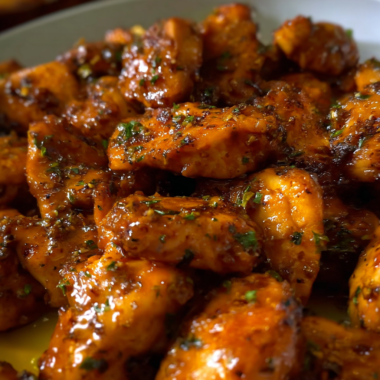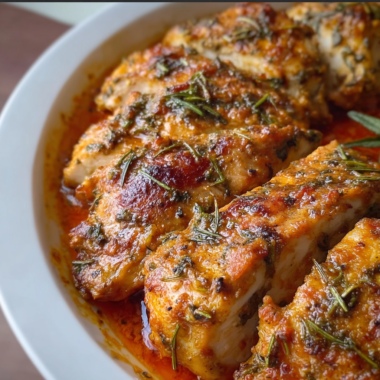
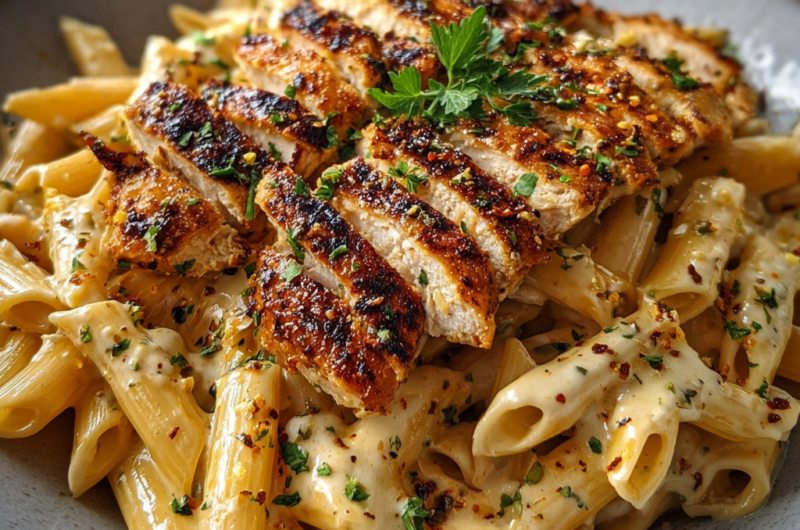
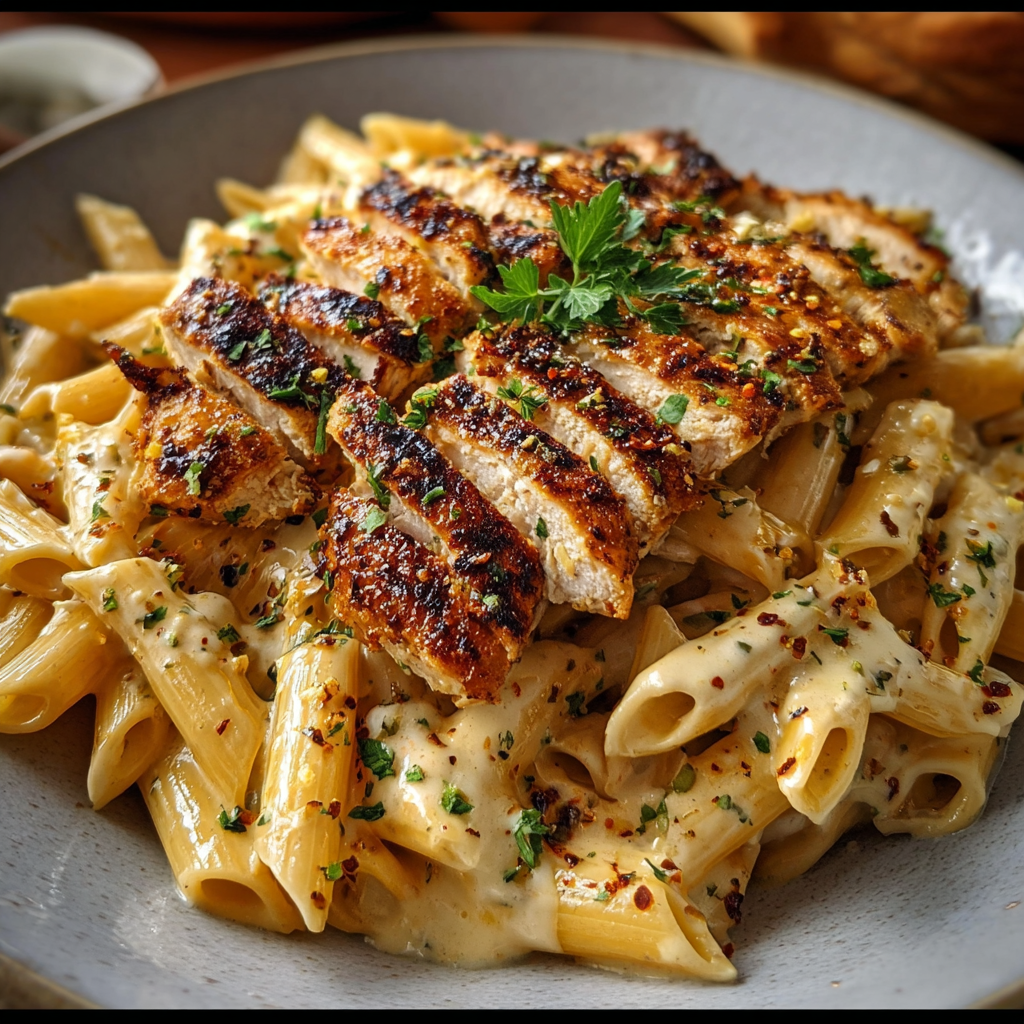
Chicken Penne Pasta
Ingredients
Method
- To make the bruschetta topping, combine the tomatoes, basil, olive oil, balsamic vinegar, garlic, salt, and pepper. Let sit while you make the chicken and pasta.
- Boil a large pot of water and salt generously. Cook the pasta until al dente, according to package instructions. Drain and set aside.
- In a large skillet, heat the olive oil over medium heat. Add the chicken, in a single layer, and season with a little salt and pepper. Cook for 5 to 7 minutes, stirring occasionally, until chicken is cooked through. Remove the chicken from the pan and set aside on a clean plate.
- Melt the butter in the pan and add the shallot and garlic. Cook for 1 minute. Whisk in the flour. Slowly pour in the chicken broth, whisking continuously so the flour doesn’t clump up.
- Pour in the white wine. Cook on low for 3 to 5 minutes until sauce starts to thicken. Add the chicken back into the pan.
- Stir in the heavy cream, Italian seasoning, and crushed red pepper flakes. On medium-low, bring the sauce to a simmer and then stir in the Parmesan cheese.
- Add the pasta to the pan and stir until pasta is well coated. Remove the pan from heat. Taste and season with salt and pepper, if necessary.
- Spoon the pasta onto plates or bowls and top with extra Parmesan cheese and bruschetta topping. Serve immediately.
Nutrition
Notes
- To ensure your chicken is perfectly cooked, aim for an internal temperature of 165°F; the meat should be white throughout and juices should run clear.
- When making the sauce, add the cream gradually to prevent it from breaking; keep the heat low and stir continuously for a smooth texture.
- If you're short on time, you can use pre-cooked rotisserie chicken to cut down on cooking time; just add it in during the last few minutes of sauce preparation to heat through.
- For the best flavor, let your bruschetta topping sit for at least 10 minutes before serving, allowing the flavors to meld beautifully.
- Leftover chicken penne pasta can be stored in an airtight container in the refrigerator for up to 4 days; reheat gently on the stovetop with a splash of chicken broth to revive the sauce.
Tried this recipe?
Let us know how it was!Smoky grilled chicken and al dente penne meet a velvety garlic-Parmesan cream sauce—dinner is served in under 30 minutes.
📋 In This Article
- Introduction
- Why This Recipe Works
- The Stars of the Show: Ingredients You’ll Need
- Step-by-Instructions: Mastering Your Grilled Chicken Penne
- Pro Tips for a Restaurant-Quality Dish
- Common Mistakes to Avoid
- Delicious Variations & Customizations
- Serving Suggestions & Pairings
- Storage & Reheating Tips
- Frequently Asked Questions (FAQ)
- Conclusion
Introduction
There is a specific kind of satisfaction that comes from Grilled Chicken Penne Pasta with Creamy Sauce. It’s the kind of meal that feels like a hug after a long Tuesday, balancing the charred, savory depth of grilled meat with the soothing richness of a dairy-heavy pan sauce. But let’s be honest: weeknight cooking is a juggling act. You want flavor, but you need speed. This recipe bridges that gap.
I’ve spent years testing pasta dishes, and too often, “creamy” pasta turns into a gloppy, broken mess by the time it hits the table. Here, we focus on emulsification—binding the fat and liquid into a cohesive, velvety coating rather than a heavy blanket. The grilled chicken isn’t just an afterthought; it provides a textural contrast and a smoky backbone that pan-searing simply can’t match. Whether you are cooking for a hungry family or meal-prepping for the week, this dish delivers reliability and comfort in equal measure. Simple Garlic Pasta Recipe: 15-Minute Butter & Garlic Pasta.
Why This Recipe Works
This isn’t just another pasta recipe. It is designed to solve the common pitfalls of home cooking: dry chicken, bland sauce, and clunky textures.
The real magic lies in the layering of flavor. We start by searing the chicken to trigger the Maillard reaction—that chemical process responsible for the savory, complex crust on the meat. This depth permeates the dish. For the sauce, we build a roux-based foundation which guarantees stability, ensuring your creamy sauce stays silky even as it cools. Finally, we leverage starch migration. By finishing the pasta in the sauce with a splash of pasta water, the starches bind the fats and liquids, creating a restaurant-quality texture that clings to every ridge of the penne.
The Stars of the Show: Ingredients You’ll Need
Great cooking starts with great ingredients. Here is what you need to make this dish sing.
For the Grilled Chicken:
- 1 lb boneless, skinless chicken breasts (pounded to even thickness for uniform cooking)
- 1 tablespoon olive oil
- 1 teaspoon Italian seasoning
- Salt and black pepper
For the Creamy Sauce:
- 2 tablespoons unsalted butter
- 1 shallot (finely diced)
- 5 cloves garlic (minced)
- 1 tablespoon all-purpose flour
- 1 cup chicken broth
- 1/4 cup white wine
- 1 cup heavy cream
- 1/4 teaspoon crushed red pepper flakes
- 1 cup freshly grated Parmesan cheese
For the Pasta & Finish:
- 10 ounces penne pasta
- 2 cups cherry tomatoes (halved)
- 3 tablespoons fresh basil (chopped)
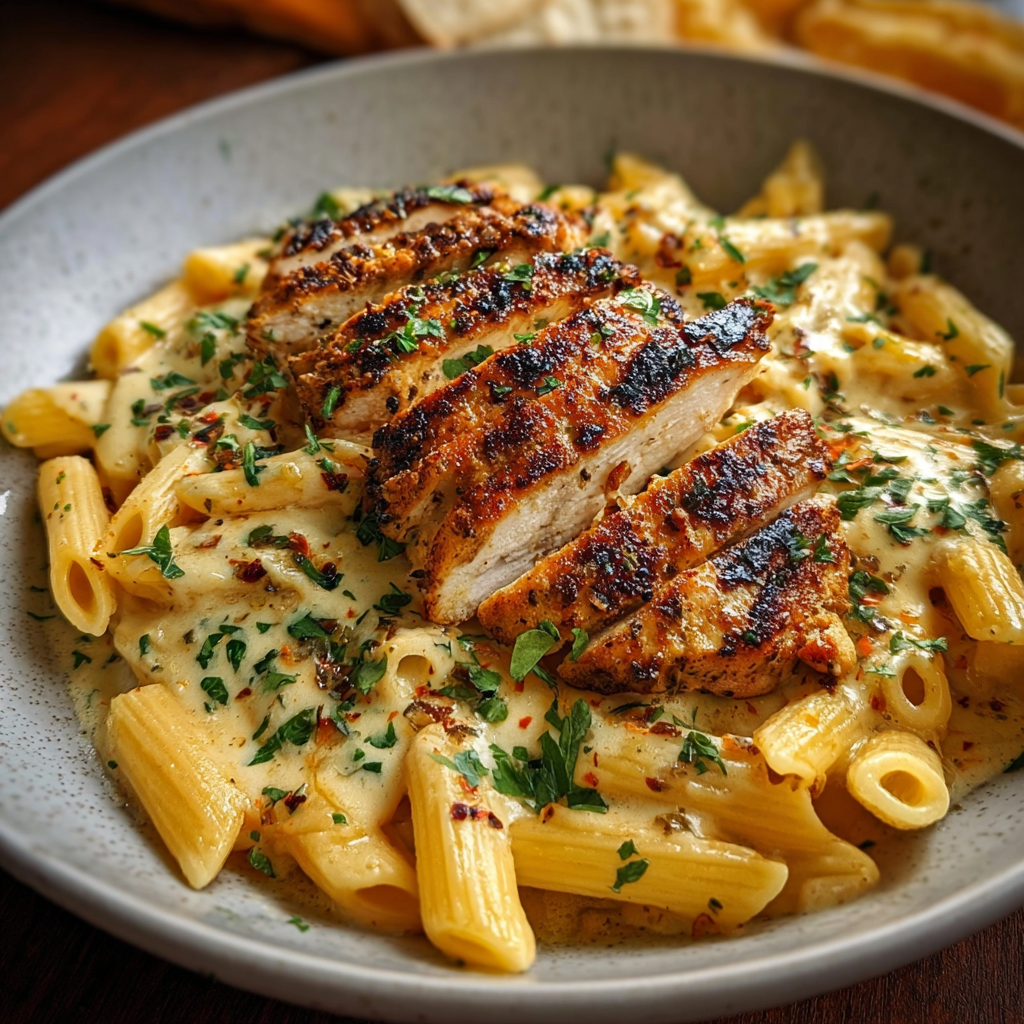
Step-by-Instructions: Mastering Your Grilled Chicken Penne
Preparing the Grilled Chicken
- Season the meat. Pat the chicken breasts dry and coat them with olive oil, Italian seasoning, salt, and pepper. Science Note: Drying the surface is crucial—moisture creates steam, which inhibits the Maillard reaction and prevents browning.
- Grill. Preheat your grill to medium-high. Cook the chicken for 6-8 minutes per side until the internal temperature hits 165°F.
- Rest. Let the chicken rest for 5 minutes before slicing. I used to skip this step—don’t. Cutting immediately allows the juices to run out onto the board; resting lets the muscle fibers relax and reabsorb that moisture.
Cooking the Penne
- Boil. Bring 4 quarts of water to a rolling boil. Add a generous handful of salt—it should taste like a seasoned soup, not the ocean (that’s a myth).
- Cook. Add the penne pasta and cook to al dente according to package directions, usually 1-2 minutes less than the box suggests. Reserve 1 cup of pasta water before draining.
Crafting the Creamy Sauce
- Build the base. In a large skillet, melt the butter over medium heat. Sauté the shallot until translucent, about 3 minutes. Add the garlic and cook for another minute until fragrant.
- Make the roux. Sprinkle in the flour and whisk constantly for 1 minute. This cooks out the raw flour taste.
- Deglaze and simmer. Pour in the white wine to scrape up any fond (the browned bits stuck to the pan), then add the chicken broth and heavy cream. Simmer for 3-5 minutes until the sauce coats the back of a spoon.
- Finish. Reduce heat to low. Stir in the Parmesan cheese and red pepper flakes until melted.
Bringing It All Together
- Combine. Toss the drained pasta and sliced chicken directly into the skillet. Add the cherry tomatoes. Splash in reserved pasta water as needed to loosen the sauce. Stir vigorously for 30 seconds—the friction helps the sauce adhere to the pasta. Garnish with fresh basil and serve immediately.
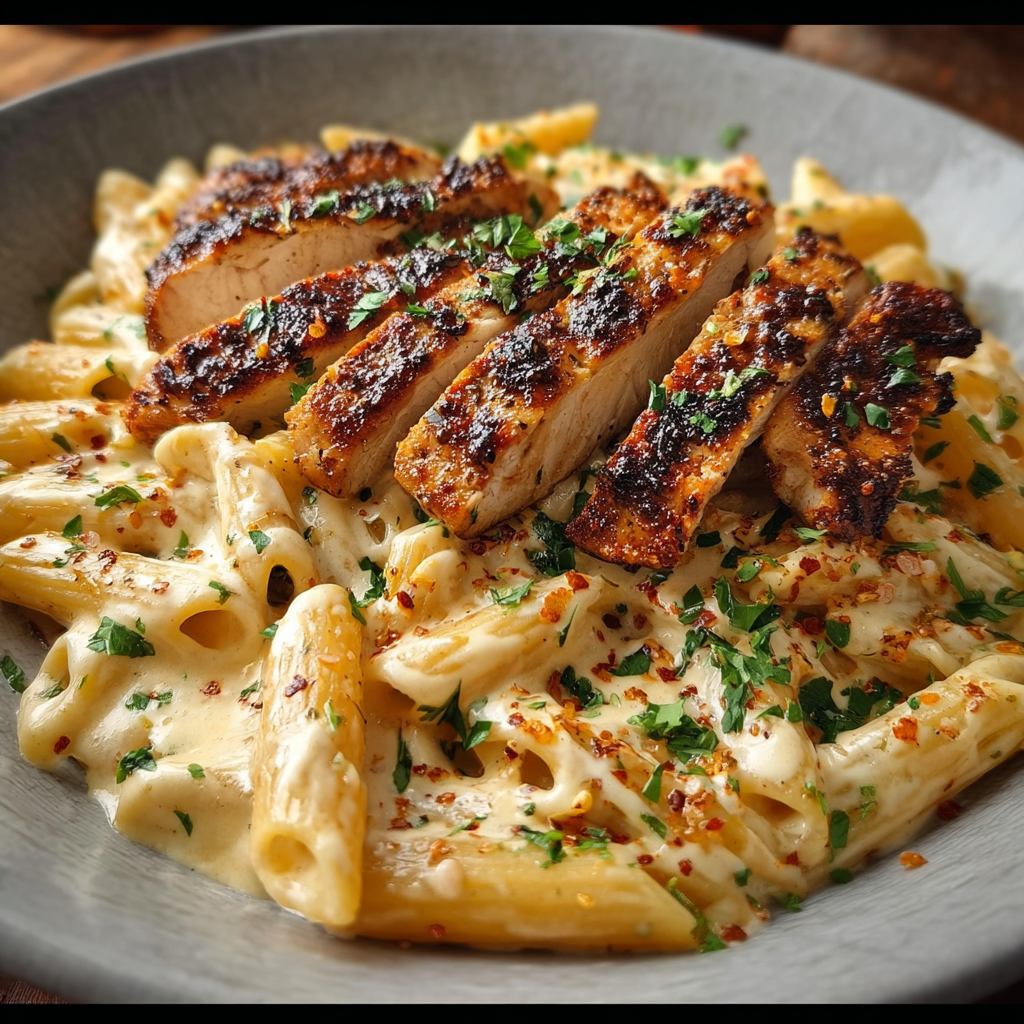
💡 Pro Tips for a Restaurant-Quality Dish
Room Temp Chicken Take your chicken out of the fridge 20 minutes before grilling. Cold chicken hits the grill and seizes up, leading to uneven cooking. Room temperature meat cooks faster and more evenly.
The Pasta Water Secret Your pasta water is liquid gold. It is filled with starch and salt. Adding a splash to your cream sauce acts as a binder, helping the fats and liquids emulsify into a smooth, cohesive mixture rather than separating. This is the difference between a sauce that coats and a sauce that pools at the bottom of the bowl.
Grate Your Own Cheese Always buy a block of Parmesan and grate it yourself. Pre-shredded cheese is coated in cellulose (anti-caking agents) that prevent it from melting smoothly. It creates a grainy texture that ruins the velvety mouthfeel you are working toward.
Don’t Walk Away from the Roux When adding the flour to the butter, keep the whisk moving. A burned roux tastes bitter and acrid. You want it to smell slightly nutty and look pale blonde.
⚠️ Common Mistakes to Avoid
Overcooking the Chicken This is the number one complaint with chicken pasta. By the time you slice it, it’s dry. Use a meat thermometer. Pull the chicken at 160°F; carryover cooking will bring it up to 165°F while it rests.
Breaking the Sauce If your sauce looks curdled, the heat was too high. High heat causes the proteins in the cream to separate. If this happens, remove the pan from the heat immediately and whisk in a tablespoon of cold pasta water or an ice cube to shock it back together. Delicious Chicken Alfredo Pasta for Cozy Nights.
Rinsing the Pasta Never rinse your pasta after draining. You wash away the surface starch that helps the sauce stick. The pasta should go straight from the colander into the sauce.
Under-seasoning the Water If the water doesn’t taste good, the pasta won’t taste good. Salt is the only chance you have to season the actual noodle, not just the coating.
Delicious Variations & Customizations
Spicy Cajun Twist Swap the Italian seasoning for Cajun seasoning on the chicken. Add diced bell peppers to the sauce with the shallots. The sweetness of the peppers balances the heat perfectly.
Sun-Dried Tomato Pesto Stir in 1/4 cup of oil-packed sun-dried tomatoes and a tablespoon of pesto into the cream sauce. This adds a punch of umami and a vibrant color.
Lemon Garlic Shrimp Not a fan of chicken? Swap it for large shrimp. Shrimp cooks much faster—about 2 minutes per side on the grill—so keep a close eye on them.
Serving Suggestions & Pairings
This dish is rich, so you want sides that cut through the fat. A crisp Green Salad with a sharp vinaigrette provides a necessary acidic contrast. If you want to lean into the comfort food vibe, serve it with warm Garlic Bread to soak up any extra sauce.
For wine pairings, look for high acidity. A Sauvignon Blanc has the brightness to match the tomatoes and cream, while a light Pinot Noir complements the grilled chicken without overpowering the sauce.
Storage & Reheating Tips
Store leftovers in an airtight container in the refrigerator for up to 4 days. Cream sauces can separate when reheated, so use gentle heat. Warm it in a skillet over low heat, adding a splash of milk or broth to bring the sauce back to life. Microwave reheating often creates hot spots that cook the cream further, making it grainy, so stir frequently if you go that route. Indulgent Creamy Pesto Pasta Recipes for Home Cooks.
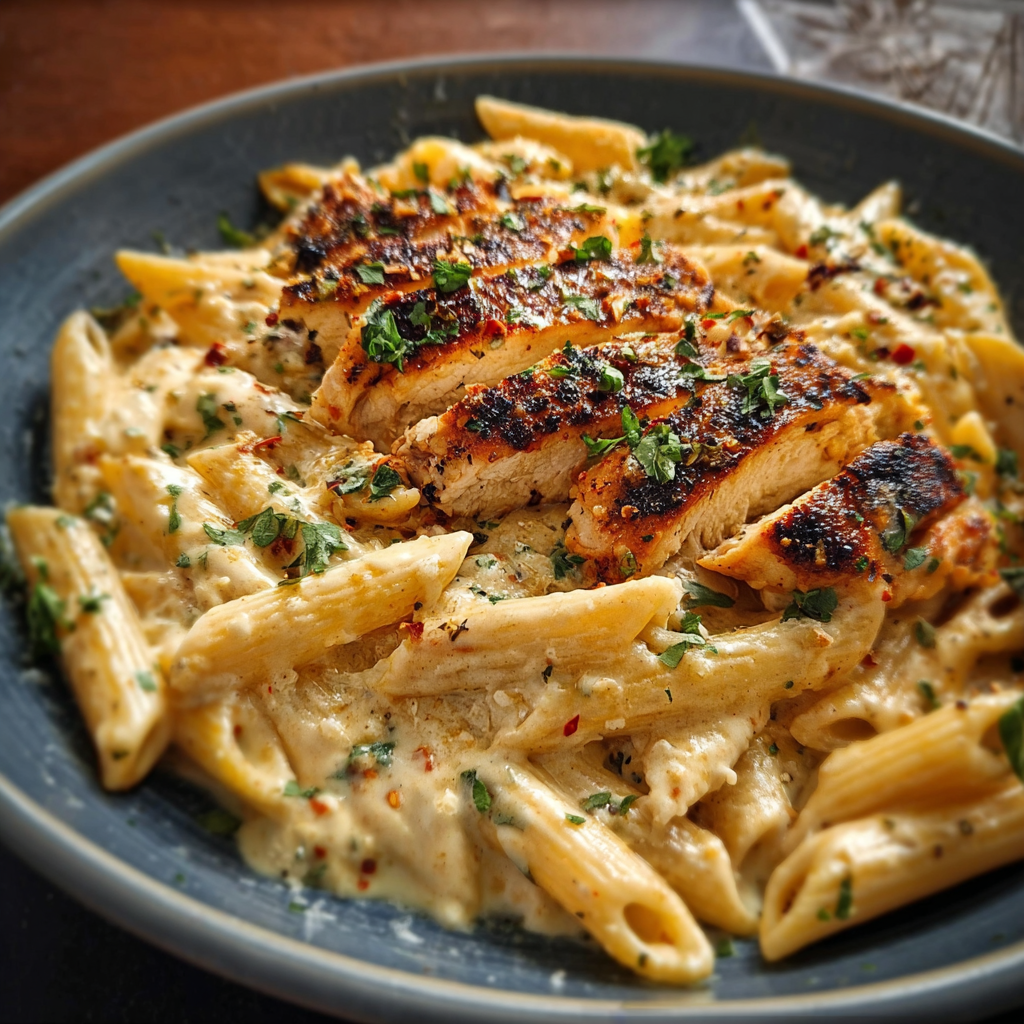
Frequently Asked Questions (FAQ)
+Why is my grilled chicken dry?
Dry chicken is usually the result of overcooking or failing to rest the meat. Always pull the chicken off the heat a few degrees early and let the residual heat finish the job.
+Can I use milk instead of heavy cream?
You can, but the sauce will be much thinner. If you use milk, simmer it longer to reduce it slightly, or use a little extra flour in your roux to thicken it up.
+How do I know when the pasta is al dente?
Taste it. The pasta should be tender but still offer a slight resistance in the center. It shouldn’t be crunchy, but it shouldn’t be mushy either.
+Can I make this recipe ahead of time?
You can prep the components ahead. Grill the chicken and make the sauce, storing them separately. Cook the pasta fresh when you are ready to eat for the best texture.
+What can I substitute for white wine?
If you don’t cook with wine, use an equal amount of chicken broth. You can also add a teaspoon of lemon juice to mimic the acidity that the wine would have provided.
Conclusion
Grilled Chicken Penne Pasta with Creamy Sauce is more than just a weeknight dinner; it is a masterclass in balancing textures and flavors. With smoky meat, a stable, creamy sauce, and the fresh pop of tomatoes, it hits every note on the palate. Cooking is about technique, not just following instructions. Once you master the emulsification of the sauce and the timing of the chicken, this recipe becomes a canvas for your own creativity. Give it a try tonight—just don’t forget to salt your pasta water.
Chicken Penne Pasta
Ingredients
Method
- To make the bruschetta topping, combine the tomatoes, basil, olive oil, balsamic vinegar, garlic, salt, and pepper. Let sit while you make the chicken and pasta.
- Boil a large pot of water and salt generously. Cook the pasta until al dente, according to package instructions. Drain and set aside.
- In a large skillet, heat the olive oil over medium heat. Add the chicken, in a single layer, and season with a little salt and pepper. Cook for 5 to 7 minutes, stirring occasionally, until chicken is cooked through. Remove the chicken from the pan and set aside on a clean plate.
- Melt the butter in the pan and add the shallot and garlic. Cook for 1 minute. Whisk in the flour. Slowly pour in the chicken broth, whisking continuously so the flour doesn’t clump up.
- Pour in the white wine. Cook on low for 3 to 5 minutes until sauce starts to thicken. Add the chicken back into the pan.
- Stir in the heavy cream, Italian seasoning, and crushed red pepper flakes. On medium-low, bring the sauce to a simmer and then stir in the Parmesan cheese.
- Add the pasta to the pan and stir until pasta is well coated. Remove the pan from heat. Taste and season with salt and pepper, if necessary.
- Spoon the pasta onto plates or bowls and top with extra Parmesan cheese and bruschetta topping. Serve immediately.
Nutrition
Notes
- To ensure your chicken is perfectly cooked, aim for an internal temperature of 165°F; the meat should be white throughout and juices should run clear.
- When making the sauce, add the cream gradually to prevent it from breaking; keep the heat low and stir continuously for a smooth texture.
- If you're short on time, you can use pre-cooked rotisserie chicken to cut down on cooking time; just add it in during the last few minutes of sauce preparation to heat through.
- For the best flavor, let your bruschetta topping sit for at least 10 minutes before serving, allowing the flavors to meld beautifully.
- Leftover chicken penne pasta can be stored in an airtight container in the refrigerator for up to 4 days; reheat gently on the stovetop with a splash of chicken broth to revive the sauce.