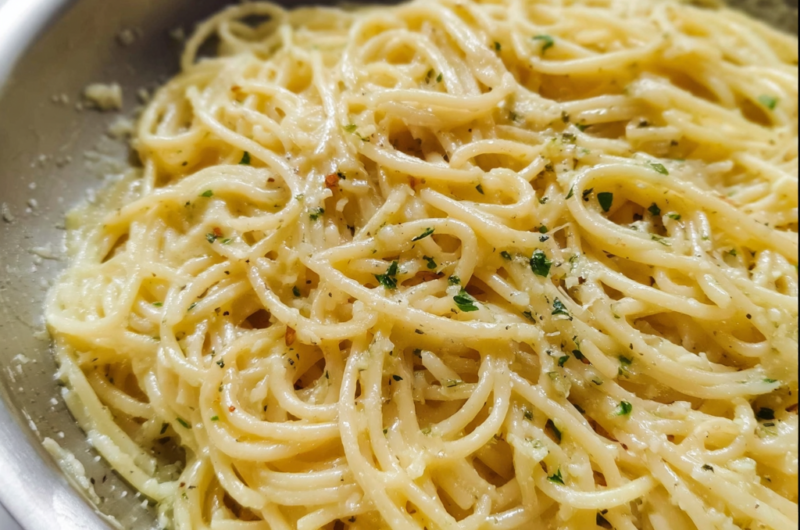
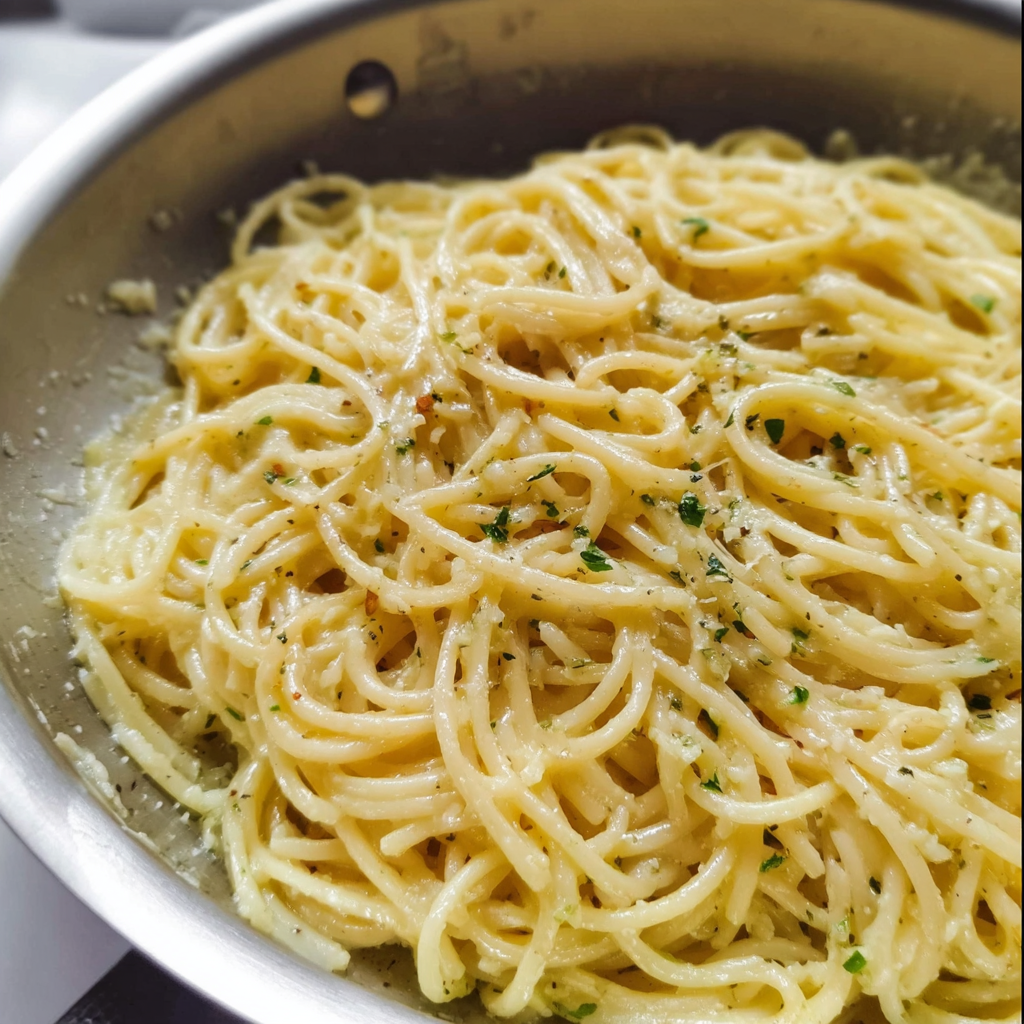
Garlic Butter Pasta
Ingredients
Method
- In a medium-sized saucepot, boil water and salt it. Add your pasta, and cook according to the package instructions. When the pasta is cooked, reserve 1 cup of the pasta water and drain the pasta.
- In a skillet, melt 2 tablespoons of butter over medium heat and saute the sliced garlic very lightly.
- Add the hot pasta along with a part of the pasta water, and toss it using kitchen tongs until a sort of thick sauce is coating the pasta. Add the remaining butter and keep on tossing until it melts, and add more pasta water if needed.
- Remove from heat, and add freshly grated parmesan cheese and chopped parsley leaves. Toss continuously and season with salt if needed. Serve warm with extra grated parmesan cheese and enjoy!
Nutrition
Notes
- To ensure the pasta is perfectly al dente, taste it a minute or two before the package's cooking time is up; it should have a slight bite to it.
- Prevent the sauce from breaking by adding reserved pasta water gradually; this helps emulsify the butter and creates a silky texture.
- If you're out of parmesan, try using pecorino romano or nutritional yeast for a dairy-free option, both of which will add a nice depth of flavor.
- Store leftovers in an airtight container in the fridge for up to three days; to reheat, warm gently in a skillet over low heat with a splash of reserved pasta water to keep it saucy.
- For extra flavor, consider adding a pinch of red pepper flakes when sautéing the garlic, or finish with a squeeze of lemon juice for brightness.
Tried this recipe?
Let us know how it was!Silky, buttery noodles with golden garlic in just 15 minutes — this is the back-pocket recipe you’ll make on repeat.
📋 In This Article
Introduction
Some nights call for a project. This isn’t one of them. Simple Garlic Pasta Recipe exists for those moments when you need dinner on the table fast, but you’re not willing to sacrifice flavor for speed. The concept is almost absurdly basic: pasta, garlic, butter, cheese. Yet somehow, these four ingredients transform into something that tastes like it came from a trattoria kitchen, not your 9pm desperation.
The secret lies in technique, not ingredient count. When you emulsify starchy pasta water with butter and garlic oil, you create a velvety sauce that clings to every strand — no heavy cream required. It’s the kind of dish that makes you understand why Italian nonnas have been making variations of this for centuries. Simple doesn’t mean boring. It means letting each ingredient do its job without interference. Chicken Pasta Alfredo Bake: Creamy, Cheesy, and Ready in 45 Minutes.
Why This Recipe Works
Here’s what separates this from the garlic butter pasta you might have made in college. Most people dump butter on cooked pasta and call it a day. The result? Greasy noodles with a pool of melted fat at the bottom of the bowl.
Emulsification changes everything. When you vigorously toss hot pasta with butter and a splash of starchy pasta water, the starch molecules act as a binder, creating a cohesive sauce that coats each strand rather than sliding off. The water you reserved isn’t just liquid — it’s the foundation of your sauce.
Then there’s the garlic treatment. Sliced thin and cooked gently in butter and olive oil, garlic releases its aromatic compounds slowly, becoming sweet and mellow instead of sharp and aggressive. Burn it, and you’ll taste acrid bitterness. Treat it right, and you get that deep, savory foundation that makes this dish sing. The Maillard reaction occurs subtly here — those golden edges on your garlic slices aren’t just pretty; they’re packed with complex flavor compounds that raw garlic simply doesn’t have.
Ingredients You’ll Need
For the Pasta Base
- 8 ounces dried pasta (spaghetti or linguine work beautifully, but use what you have)
- 4 tablespoons unsalted butter (cut into pieces so it melts evenly)
- 2 tablespoons olive oil (not extra virgin — it has a lower smoke point and burns too easily)
- 3 cloves fresh garlic, thinly sliced (uniform slices cook evenly)
For Finishing
- ½ cup grated Parmesan cheese (grate it yourself — pre-shredded has anti-caking agents that prevent smooth melting)
- ¼ cup fresh parsley, chopped (adds brightness and color)
- ½ teaspoon salt, plus more for pasta water
- ¼ teaspoon black pepper
- Red pepper flakes (optional, for heat)
Note: The ingredient list is short, which means quality matters. Aged Parmesan, fresh garlic, and decent butter will give you results that commodity ingredients simply can’t match.
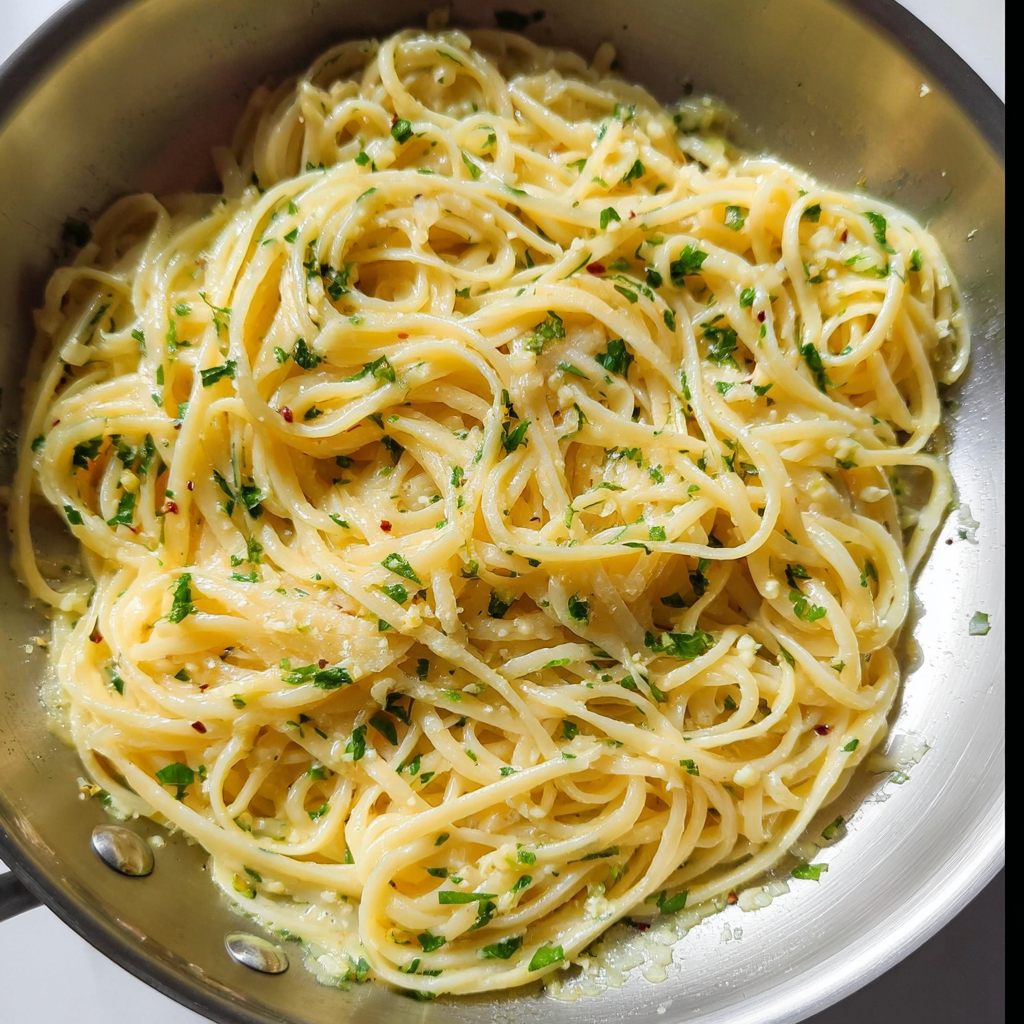
Step-by-Step Instructions
- Salt your water generously. Bring a large pot of water to a boil and add enough salt that it tastes like a properly seasoned soup — not quite seawater, but close. This is your only chance to season the pasta itself. Add 8 ounces of pasta and cook to 1 minute shy of al dente. The pasta will finish cooking in the sauce.
- Reserve that liquid gold. Before draining, scoop out 1 cup of the starchy cooking water. This is non-negotiable. Set it aside.
- Start the garlic infusion. In a large skillet (one big enough to hold all the pasta), combine 4 tablespoons butter and 2 tablespoons olive oil over medium-low heat. Once the butter melts and foams, add your sliced garlic. Cook gently for 2-3 minutes, stirring occasionally. You want the garlic to soften and turn pale gold, not brown. The moment it smells sweet and nutty, you’re there.
- The critical transfer. Using tongs, move the pasta directly from the water into the skillet — don’t drain it first. Some water clinging to the noodles is good. Add ½ cup of the reserved pasta water and increase heat to medium.
- Toss with intention. Here’s where the magic happens. Toss the pasta vigorously, coating each strand in the garlicky fat. As you toss, the starchy water and butter emulsify into a creamy sauce that clings to the noodles. Add more pasta water, a splash at a time, until the sauce is silky and loose but not watery. This should take about 1 minute of active tossing.
- Finish off the heat. Remove the pan from the burner. Add ½ cup Parmesan, the parsley, salt, and pepper. Toss again until the cheese melts into the sauce. The residual heat will melt it perfectly without becoming stringy or greasy.
- Serve immediately. Divide between bowls and top with extra Parmesan and a pinch of red pepper flakes if you like heat.
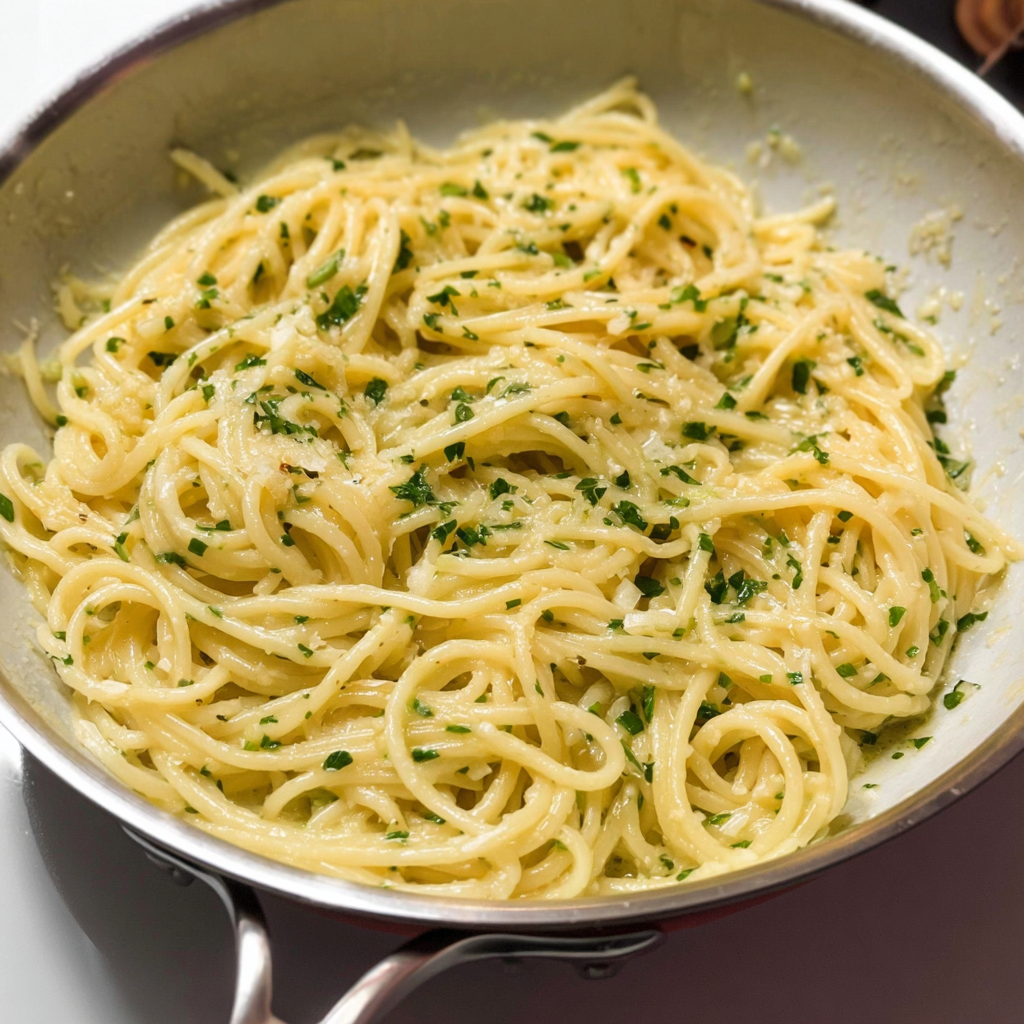
⚠️ Common Mistakes to Avoid
Burning the garlic. This is the most common error, and it ruins everything. Garlic goes from golden to burnt in seconds, and burnt garlic tastes bitter and acrid. Use medium-low heat and watch it like a hawk. The moment it turns pale gold, move forward with the recipe.
Skipping the pasta water. Without that starchy liquid, your butter and oil will separate from the noodles, leaving you with greasy pasta and a sad puddle at the bottom of the bowl. The starch is what brings everything together into a cohesive sauce.
Using pre-shredded cheese. Those convenient bags of shredded Parmesan contain cellulose and other anti-caking agents that prevent the cheese from melting smoothly. You’ll end up with a grainy sauce instead of a silky one. Five seconds with a microplane is worth it.
Overcooking the pasta. Since the pasta finishes cooking in the sauce, it needs to be slightly underdone when it leaves the boiling water. If it’s fully cooked before hitting the skillet, you’ll end up with mushy noodles by the time the sauce comes together.
Adding cheese over direct heat. High heat makes cheese proteins seize and separate, resulting in a clumpy, oily mess. Always add cheese off the heat and let residual warmth do the work.
Variations & Customizations
This dish is a blank canvas. Here’s how to make it your own:
Add protein. Toss in grilled chicken strips, sautéed shrimp, or crispy pancetta during the final toss. The garlic butter base works with almost anything.
Bulk it up with vegetables. Sautéed spinach, blistered cherry tomatoes, or roasted broccoli all pair beautifully. Add them to the skillet just before the pasta so they warm through.
Make it lemony. A teaspoon of lemon zest added at the end brightens the whole dish. The acid cuts through the rich butter and makes the flavors pop.
Go spicy. Increase the red pepper flakes, or add a dab of Calabrian chili paste to the garlic butter for deeper, more complex heat.
Make it vegan. Swap the butter for vegan butter or more olive oil, and use nutritional yeast instead of Parmesan. The technique remains exactly the same. Creamy Chicken Pasta Recipe: A 20-Minute Weeknight Fix.
Try different pasta shapes. While spaghetti and linguine are classic, short shapes like fusilli or orecchiette catch the sauce in their nooks and crannies. Just adjust the cooking time accordingly.
What to Serve With Garlic Pasta
This pasta works as a main or a side. Here are some winning combinations:
As a main dish: Pair with a crisp green salad (arugula with lemon vinaigrette cuts the richness perfectly) and crusty bread for sauce-mopping. A glass of Pinot Grigio or Sauvignon Blanc balances the butter and garlic.
As a side dish: It’s the perfect accompaniment to grilled chicken, pan-seared salmon, or a simple roast. The garlic flavor complements without competing.
For a complete meal: Add protein directly to the pasta. A handful of shrimp or some shredded rotisserie chicken turns this into a satisfying one-dish dinner.
Storage & Reheating Tips
Garlic pasta is best eaten immediately, but leftovers happen. Store in an airtight container in the refrigerator for up to 3 days.
To reheat, skip the microwave if you can. Instead, warm the pasta in a skillet over medium-low heat with a splash of water or broth. Toss constantly until the sauce re-emulsifies and the pasta is heated through. The microwave tends to make the sauce separate and the noodles rubbery.
Freezing isn’t recommended. The sauce will break upon thawing, leaving you with oily, clumpy pasta that bears little resemblance to the original dish.
💡 Pro Tips for Next-Level Flavor
Toast some extra garlic. I learned this trick from an Italian line cook years ago. Slice an extra clove or two and let it cook slightly longer until deeply golden and crisp. Scatter these over the finished pasta for a crunchy, intensely garlicky garnish.
Use two fats. The combination of butter and olive oil isn’t just about flavor. Butter alone burns at high heat; olive oil raises the smoke point while adding its own fruity notes. Together, they create a more stable, more flavorful cooking medium.
Finish with flaky salt. A pinch of Maldon or other flaky sea salt on top adds texture and bright pops of salinity that bring all the flavors into focus.
Grate cheese directly over the pasta. The warmth melts it slightly, creating those wonderful cheese strings that make every bite more luxurious.
Reserve more water than you think you need. You might not use it all, but running out halfway through emulsifying is frustrating. Better to have extra than to scramble. Pasta Salad with Italian Dressing: The Ultimate Potluck Side.
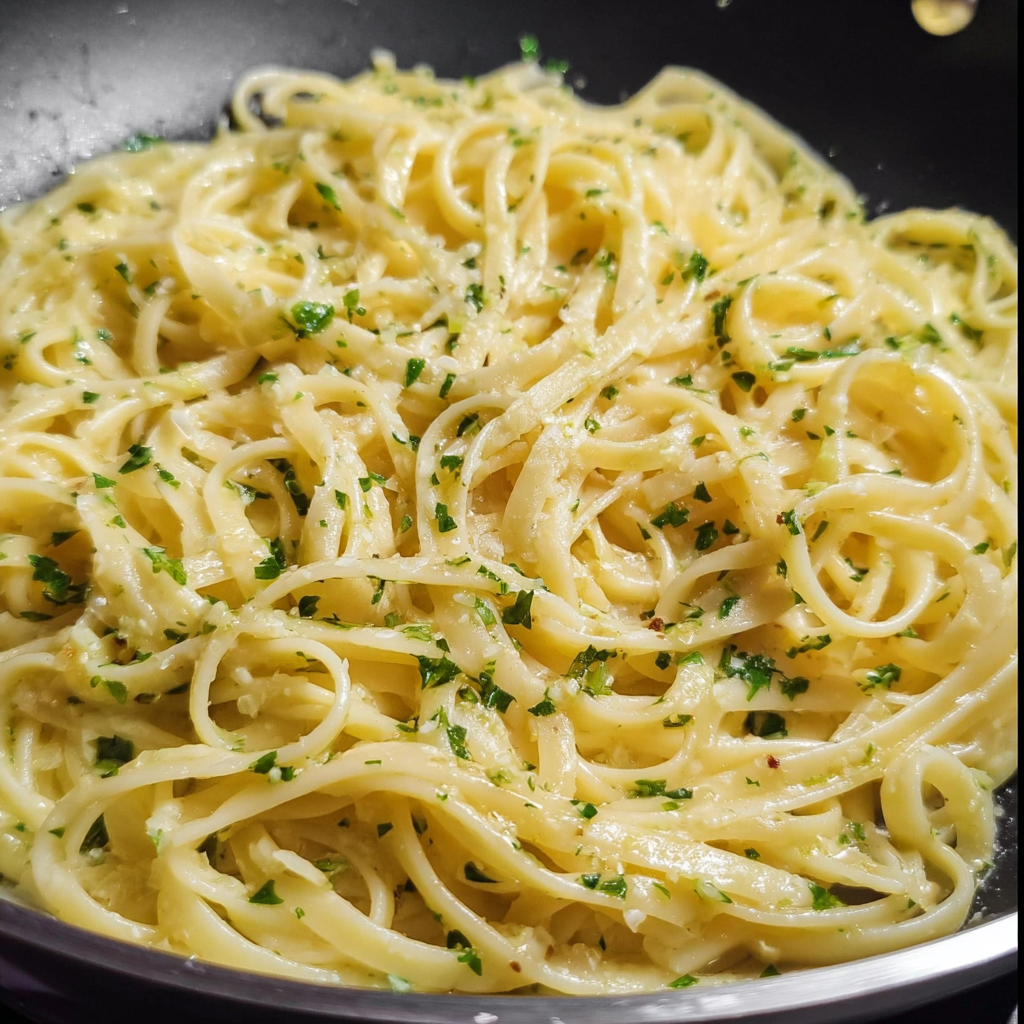
Frequently Asked Questions (FAQ)
+Why does my garlic pasta taste bitter?
You likely burned the garlic. Garlic becomes bitter and acrid when cooked past golden brown. Use medium-low heat and remove the garlic from the heat source the moment it turns pale gold. The residual heat will continue cooking it slightly, so pull it just before you think it’s done.
+Can I use olive oil instead of butter?
You can, but you’ll lose the richness and body that butter provides. Olive oil alone makes a lighter, more aggressively flavored dish. For the best results, use a combination — the butter for richness and emulsification, the olive oil to prevent burning and add complexity.
+How do I keep my garlic pasta sauce from separating?
Vigorous tossing is key. When you add pasta water and toss quickly, the starch molecules bind with the fat, creating a stable emulsion. Add the water gradually, toss constantly, and never add cheese over direct heat. If the sauce does separate, add another splash of pasta water and toss vigorously to bring it back together.
+Can I make garlic pasta ahead of time?
Not really. This dish relies on the emulsification of hot pasta water with butter, which is temporary. As it sits, the sauce will separate and the pasta will absorb the moisture, becoming gummy. It’s best made and eaten immediately. If you must prep ahead, cook the garlic in butter and oil, then reheat and toss with freshly cooked pasta when ready to serve.
+What’s the best pasta shape for garlic pasta?
Long strands like spaghetti, linguine, or fettuccine are traditional because the sauce coats them evenly. However, short shapes like fusilli, penne, or orecchiette work well too — they trap the garlicky oil in their crevices. Avoid very delicate shapes like angel hair, which can overcook before the sauce comes together.
Conclusion
The Simple Garlic Pasta Recipe proves that extraordinary food doesn’t require extraordinary effort. With just a handful of ingredients and a few key techniques — emulsifying pasta water with butter, gently cooking garlic, tossing off the heat — you can create something that tastes like it came from a restaurant kitchen.
This is the recipe you’ll reach for on busy weeknights, when the pantry is bare but you still want something satisfying. It’s the dish you’ll make for yourself when you need comfort, and the one you’ll serve to friends when you want to impress without stress. Master this, and you’ll never look at a box of pasta the same way again.
Garlic Butter Pasta
Ingredients
Method
- In a medium-sized saucepot, boil water and salt it. Add your pasta, and cook according to the package instructions. When the pasta is cooked, reserve 1 cup of the pasta water and drain the pasta.
- In a skillet, melt 2 tablespoons of butter over medium heat and saute the sliced garlic very lightly.
- Add the hot pasta along with a part of the pasta water, and toss it using kitchen tongs until a sort of thick sauce is coating the pasta. Add the remaining butter and keep on tossing until it melts, and add more pasta water if needed.
- Remove from heat, and add freshly grated parmesan cheese and chopped parsley leaves. Toss continuously and season with salt if needed. Serve warm with extra grated parmesan cheese and enjoy!
Nutrition
Notes
- To ensure the pasta is perfectly al dente, taste it a minute or two before the package's cooking time is up; it should have a slight bite to it.
- Prevent the sauce from breaking by adding reserved pasta water gradually; this helps emulsify the butter and creates a silky texture.
- If you're out of parmesan, try using pecorino romano or nutritional yeast for a dairy-free option, both of which will add a nice depth of flavor.
- Store leftovers in an airtight container in the fridge for up to three days; to reheat, warm gently in a skillet over low heat with a splash of reserved pasta water to keep it saucy.
- For extra flavor, consider adding a pinch of red pepper flakes when sautéing the garlic, or finish with a squeeze of lemon juice for brightness.