Deliciously Herb-Infused Buttery Stuffing Recipe
Ingredients
Method
- Preheat your oven to 350°F (175°C).
- Melt the butter in a large skillet over medium heat. Add the chopped onion and celery, cooking until softened (about 5-7 minutes).
- Add the thyme, sage, and rosemary; stir to combine and cook for another 1-2 minutes until fragrant.
- In a large mixing bowl, combine the cubed bread and the sautéed mixture. Slowly pour in the chicken broth, tossing gently until the bread is evenly moistened.
- Season with salt and pepper, and fold in the fresh parsley, mixing thoroughly.
- Transfer the stuffing to a greased baking dish, spreading it out evenly.
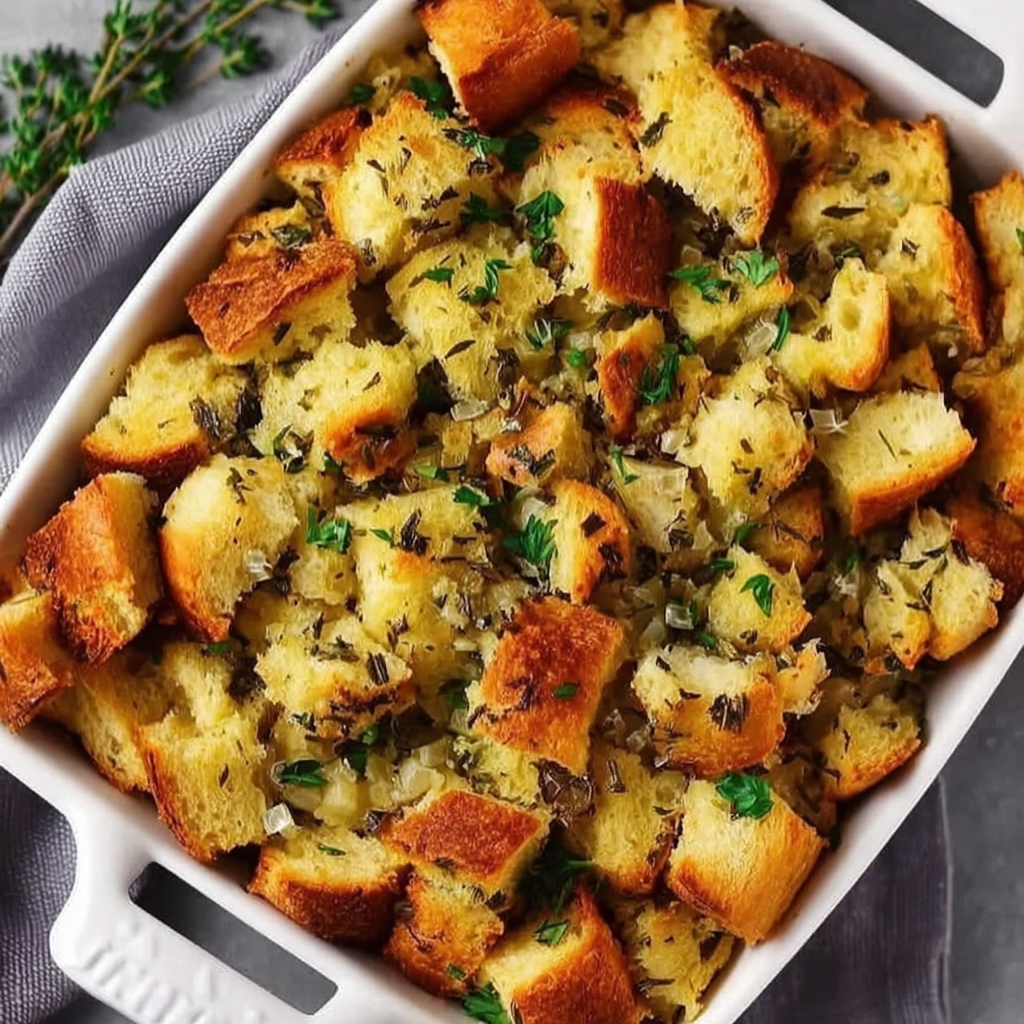
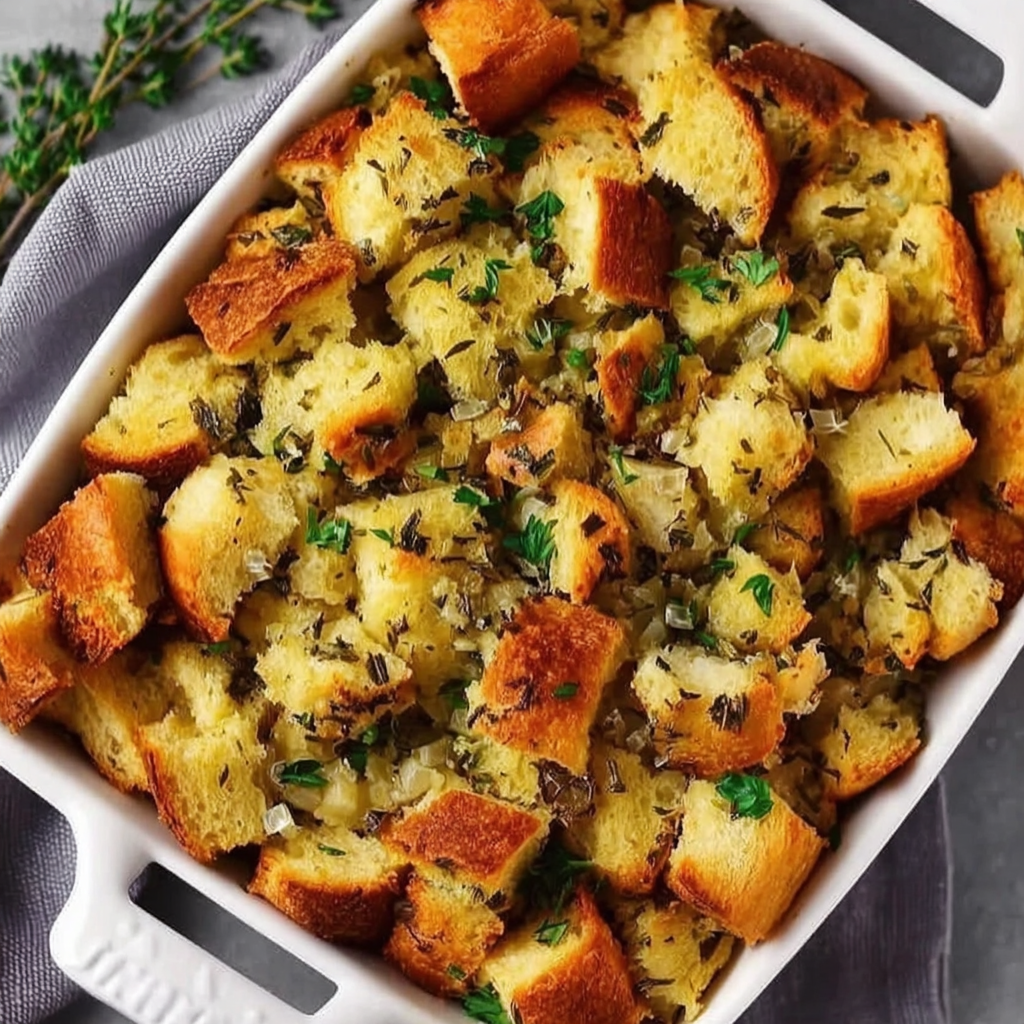
- Cover the baking dish with foil and bake for 30 minutes. Remove the foil and bake for an additional 15-20 minutes until golden and crispy on top.
- Let the stuffing cool for a few minutes before serving. This helps the flavors meld and ensures a enjoyable serving temperature.
Tried this recipe?
Let us know how it was!Introduction
As the holiday season approaches, the warmth of a family gathering around the dinner table becomes a cherished tradition. Among the feast that brings joy and comfort is a dish that holds a special place in many hearts: stuffing. Our favorite buttery herb stuffing stands out for its perfect blend of textures and flavors, a staple that complements any meal, particularly holiday favorites like turkey and ham.
This recipe embraces the rich goodness of butter, which provides a silky mouthfeel and enhances the aromatic herbs, creating a harmonious balance that enriches the stuffing. Heartwarming and delightful, it promises to elevate your dining experience, making your kitchen the heart of your celebrations.
Ingredients
- 1 loaf of day-old bread, cubed (about 10 cups)
Day-old bread is crucial as it holds its shape when mixed with the liquids, helping to absorb flavors without turning mushy. Use a rustic bread for added texture. - 1 cup unsalted butter
Butter adds richness and moisture to the stuffing, enhancing the overall flavor. Unsalted allows for more control over the salt levels in the dish. - 1 medium onion, finely chopped
Onions contribute sweetness and depth to the dish. Sautéing them until translucent unlocks their natural flavors, creating a savory base. - 3 celery stalks, diced
Celery adds a crisp texture and some earthiness, balancing the buttery richness. It also enhances the stuffing's aromatic profile. - 4 cups low-sodium chicken broth
Broth infuses the stuffing with flavor while keeping it moist. Low-sodium allows you to manage salt levels without compromising taste. - 1 tablespoon dried thyme
Thyme provides an earthy, slightly minty flavor that is traditional for stuffing. Dried versions are more concentrated, so a little goes a long way. - 1 tablespoon dried sage
Sage lends a warm, peppery flavor that complements the richness of the butter and bread, making it a classic herb in stuffing recipes. - 1 tablespoon dried rosemary, crushed
Rosemary delivers a strong, aromatic flavor that pairs beautifully with the earth tones in the dish, elevating its overall complexity. - Salt and pepper, to taste
Seasoning at the end allows you to adjust flavors as needed, ensuring a well-rounded dish that suits your palate. - ½ cup fresh parsley, chopped
Adding fresh parsley at the end brightens the stuffing with its vibrant color and fresh taste, creating a delightful contrast with the cooked elements.
Directions & Preparation
Step 1: Preheat your oven to 350°F (175°C).
This initial step prepares the environment for baking the stuffing, ensuring an even and thorough cooking process. Preheating is essential for achieving a golden crust on top while maintaining a moist interior.
Step 2: Melt the butter in a large skillet over medium heat. Add the chopped onion and celery, cooking until softened (about 5-7 minutes).
Sautéing onion and celery in butter forms the aromatic base of the stuffing. This step caramelizes the vegetables, enhancing their sweetness, which is vital for a well-flavored stuffing.
Step 3: Add the thyme, sage, and rosemary; stir to combine and cook for another 1-2 minutes until fragrant.
This step blooms the dried herbs, releasing their essential oils which heighten the flavors in your stuffing. The warm aroma will fill your kitchen, signaling it’s almost time to assemble!
Step 4: In a large mixing bowl, combine the cubed bread and the sautéed mixture. Slowly pour in the chicken broth, tossing gently until the bread is evenly moistened.
Tossing the bread with the buttered mixture ensures even distribution of flavors. Use just enough broth to moisten the bread without making it soggy for the best texture.
Step 5: Season with salt and pepper, and fold in the fresh parsley, mixing thoroughly.
Adjusting seasoning at this stage allows you to taste and perfect the flavors. Fresh parsley adds brightness, making the stuffing more vibrant and aromatic.
Step 6: Transfer the stuffing to a greased baking dish, spreading it out evenly.
Even spreading in the baking dish helps achieve a uniform cooking experience. This step is crucial for ensuring the stuffing crispies up nicely on the top while staying moist inside.
Step 7: Cover the baking dish with foil and bake for 30 minutes. Remove the foil and bake for an additional 15-20 minutes until golden and crispy on top.
Covering initially traps moisture, creating a steamy environment that helps cook the stuffing. Removing the foil allows for browning, resulting in a deliciously crispy top layer that adds texture.
Step 8: Let the stuffing cool for a few minutes before serving. This helps the flavors meld and ensures a enjoyable serving temperature.
Allowing the stuffing to rest not only helps with flavor integration but also makes it easier to scoop out servings. The slightly cooled stuffing will hold its shape better on plating.

The Role of Fresh Herbs in Stuffing
Incorporating fresh herbs like parsley brings a brightness to the dish that dried herbs can't replicate. Fresh herbs impart a vibrant aroma and flavor, elevating the richness of the butter and providing a colorful contrast to the earthy tones of the bread and broth. They can transform a basic stuffing into a gourmet experience, enhancing each bite.
Choosing the Right Bread for Your Stuffing
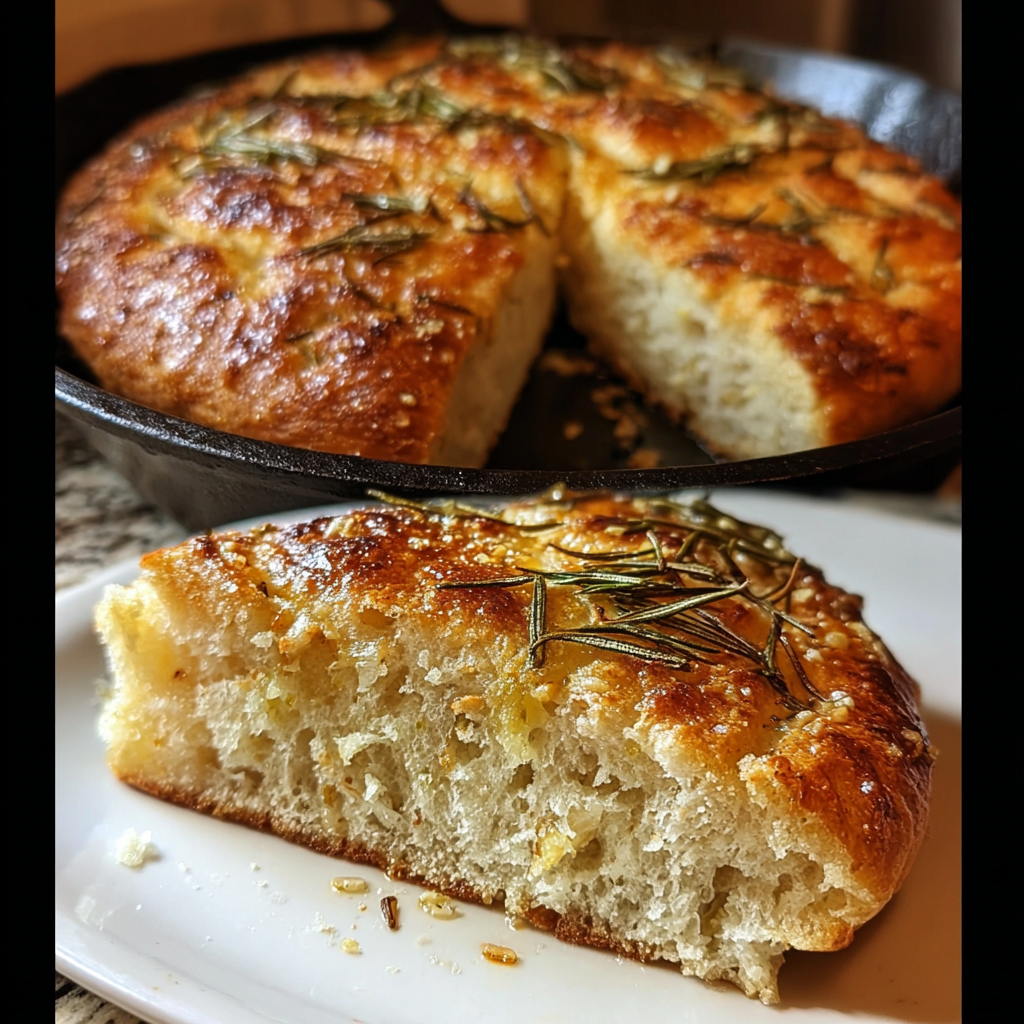
The choice of bread plays a critical role in the texture and flavor of the stuffing. A sturdy loaf, like sourdough or ciabatta, can better absorb the broth and butter without becoming overly soggy. Day-old bread is preferred, as it has lost some moisture, giving it a firmer structure. This results in a delightful blend of crisp and soft textures.
Variations to Spice Up Your Stuffing
While traditional recipes are beloved, variations can keep your stuffing exciting. Consider adding fruits like diced apples or cranberries for a touch of sweetness, or replace some of the butter with olive oil for a healthier alternative. Nuts can add crunch, and different cheese varieties can be incorporated for a richer flavor, allowing you to personalize your stuffing to your liking.
FAQs
What if my stuffing turns out too dry?
If your stuffing is dry, try adding more broth or melted butter gradually until it reaches your desired moisture level. Mixing it gently helps prevent breaking down the bread.
Can I scale the recipe for a larger gathering?
Absolutely! This recipe can be easily doubled or tripled. Just ensure you have a larger baking dish and adjust the baking time as needed.
What if I want to add sausage to the stuffing?
If adding sausage, brown it in the skillet before introducing the onion and celery. This adds a savory depth that complements the herbs beautifully.
Can I use a different type of broth?
Certainly! Vegetable broth can be used for a vegetarian version, maintaining the flavor integrity of the dish. Adjust herbs accordingly to balance the flavors.
What should I do if the stuffing is too thick?
If your stuffing seems too thick, add a bit more broth, mix well, and allow it to sit for a few minutes to absorb the liquid. The goal is to reach a balanced consistency.
Is it possible to add more vegetables to the stuffing?
Yes! Vegetables like mushrooms, bell peppers, or carrots can enhance flavor and texture. Sauté them alongside the onion and celery.
Conclusion
Our favorite buttery herb stuffing captures the essence of traditional recipes while inviting creativity. It’s a dish that can be tailored to your family’s tastes, whether you keep it classic or experiment with new flavors. With its harmonious balance of ingredients, this stuffing is sure to be a highlight at your next meal.
So gather around the table, share stories, and create memories while enjoying this truly delightful dish that is both comforting and nourishing. Happy cooking!
Recipe Card
Deliciously Herb-Infused Buttery Stuffing Recipe
Ingredients
Method
- Preheat your oven to 350°F (175°C).
- Melt the butter in a large skillet over medium heat. Add the chopped onion and celery, cooking until softened (about 5-7 minutes).
- Add the thyme, sage, and rosemary; stir to combine and cook for another 1-2 minutes until fragrant.
- In a large mixing bowl, combine the cubed bread and the sautéed mixture. Slowly pour in the chicken broth, tossing gently until the bread is evenly moistened.
- Season with salt and pepper, and fold in the fresh parsley, mixing thoroughly.
- Transfer the stuffing to a greased baking dish, spreading it out evenly.
- Cover the baking dish with foil and bake for 30 minutes. Remove the foil and bake for an additional 15-20 minutes until golden and crispy on top.
- Let the stuffing cool for a few minutes before serving. This helps the flavors meld and ensures a enjoyable serving temperature.
Tried this recipe?
Let us know how it was!Notes
Additional serving suggestions: pair with a crisp salad, garlic bread, or roasted seasonal vegetables for balance.
For make-ahead, prep components separately and assemble just before heating to preserve texture.
Taste and adjust with acid (lemon/vinegar) and salt right at the end to wake up flavors.