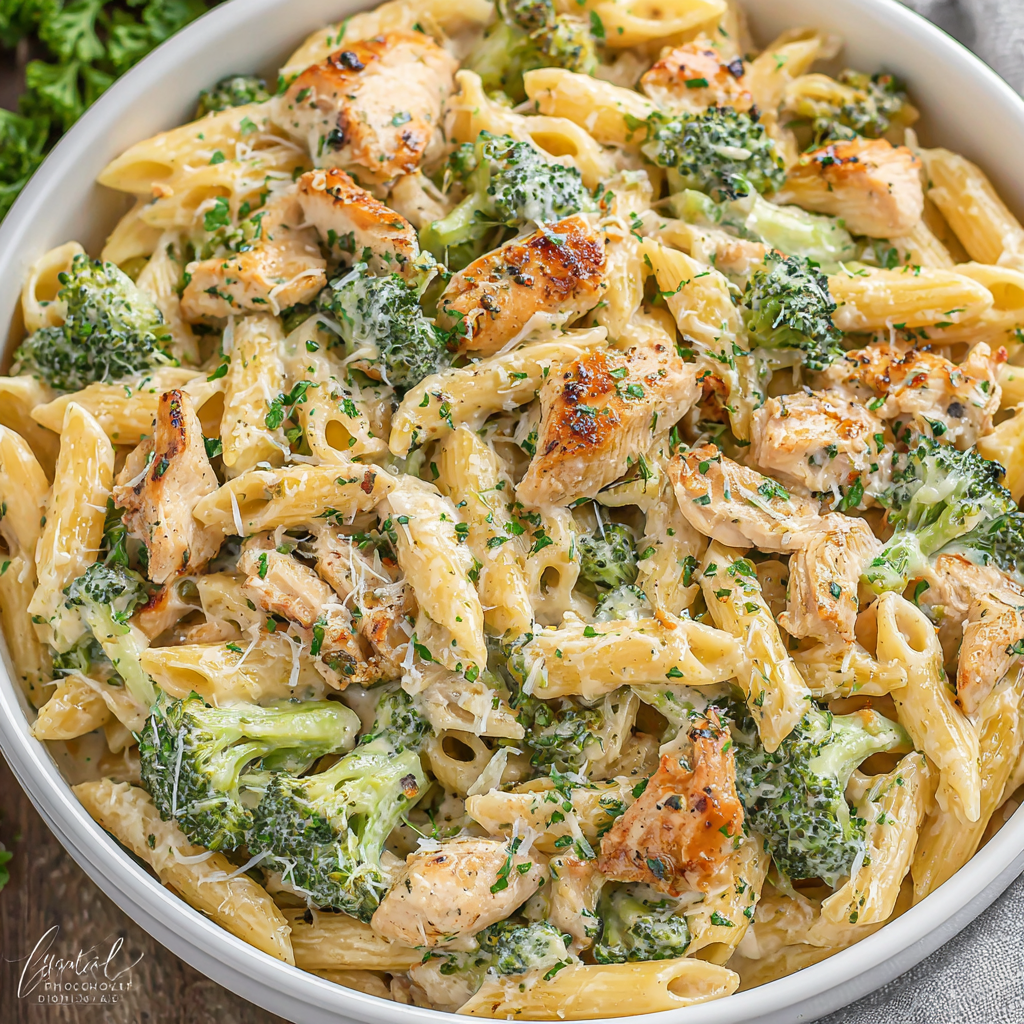
Delicious Chicken and Broccoli Pasta Recipe
Ingredients
Method
- Cook the pasta according to package instructions until al dente.
- While the pasta cooks, heat olive oil in a large skillet over medium heat.
- Add the chicken to the skillet and season with salt and pepper.
- Cook the chicken for about 5-7 minutes per side until fully cooked.
- Once cooked, remove the chicken from the skillet and let it rest before slicing.
- In the same skillet, add the minced garlic and red pepper flakes.
- Add the broccoli and chicken broth, then cover and let steam for 3-4 minutes.
- Slice the rested chicken and then return it to the skillet.
- Add the cooked pasta to the skillet, along with the Parmesan cheese, and toss gently.
- Adjust seasoning with salt and pepper, then serve hot.
Tried this recipe?
Let us know how it was!Introduction
Chicken and broccoli pasta is a wonderful canvas for creativity in the kitchen, merging tender chicken, vibrant broccoli, and comforting pasta into a single dish. This meal not only delights the palate but also offers a nourishing balance of protein and vegetables.
Whether you're preparing a quick weeknight dinner or a comforting meal for family and friends, this dish is both easy and satisfying. The combination of textures and flavors will make it a cornerstone of your mealtime repertoire.
Ingredients
- 8 ounces pasta (penne or fusilli)
Pasta serves as the foundation of this dish, providing a hearty base that absorbs the flavors of the sauce and complements the chicken and broccoli. - 1 pound boneless, skinless chicken breasts
Chicken is the main protein source, adding richness and heartiness to the dish. Choosing lean cuts helps keep the dish light while still satisfying. - 2 cups broccoli florets
Broccoli adds not only vibrant color but also essential vitamins and crunch. It steams perfectly while the pasta cooks, making it an efficient choice. - 3 tablespoons olive oil
Olive oil acts as both a cooking medium and a flavor enhancer, lending a subtle richness while also allowing other flavors to shine. - 2 cloves garlic, minced
Garlic brings an aromatic depth and savory richness that elevates the overall flavor profile of the dish. - 1 teaspoon red pepper flakes
Red pepper flakes add a hint of heat, allowing you to control the spice level according to your taste. - 1 cup chicken broth
Chicken broth adds moisture and a savory depth, helping to bring all the components together into a cohesive sauce. - 1/2 cup grated Parmesan cheese
Parmesan cheese delivers a nutty and salty flavor, enriching the dish while providing a creamy texture when melted. - Salt and pepper to taste
Simple seasoning with salt and pepper allows the natural flavors of the ingredients to shine, ensuring a well-balanced dish.
Directions & Preparation
Step 1: Cook the pasta according to package instructions until al dente.
Cooking the pasta until al dente ensures it maintains a firm texture, which holds up well when combined with the sauce. Be careful not to overcook it, as it will continue to soften when you mix it with the other ingredients later.
Step 2: While the pasta cooks, heat olive oil in a large skillet over medium heat.
Heating the oil is crucial, as it helps to prevent sticking and ensures even cooking of the chicken. The right temperature will allow the chicken to sear nicely, creating a flavorful crust while keeping the inside juicy.
Step 3: Add the chicken to the skillet and season with salt and pepper.
Searing the chicken is essential for flavor development. The seasoning at this stage penetrates the chicken, enhancing its taste, while the high heat creates a nice golden-brown exterior.
Step 4: Cook the chicken for about 5-7 minutes per side until fully cooked.
Ensure the chicken reaches an internal temperature of 165°F, which guarantees it's safe to eat. The searing process not only locks in moisture but also adds depth to the dish with its golden-brown color.
Step 5: Once cooked, remove the chicken from the skillet and let it rest before slicing.
Letting the chicken rest allows the juices to redistribute, making it moist and tender when sliced. This step is crucial for achieving the best texture.
Step 6: In the same skillet, add the minced garlic and red pepper flakes.
Cooking the garlic in the residual oil extracts its flavor into the dish. Take care not to burn it; a faint golden color is ideal as burnt garlic can become bitter.
Step 7: Add the broccoli and chicken broth, then cover and let steam for 3-4 minutes.
Steaming the broccoli helps retain its vibrant color and nutrients while ensuring it's tender but still crisp. The broth creates steam and adds flavor to the dish.
Step 8: Slice the rested chicken and then return it to the skillet.
Slicing the chicken allows it to mix more effectively with the pasta and sauce. This step ensures each bite has an even distribution of chicken, broccoli, and pasta.
Step 9: Add the cooked pasta to the skillet, along with the Parmesan cheese, and toss gently.
Tossing the pasta with the cheese and other ingredients helps everything meld together. The heat helps the cheese melt, creating a creamy texture that clings to the pasta and veggies.
Step 10: Adjust seasoning with salt and pepper, then serve hot.
Taste is key; adjusting the seasoning at this stage ensures the dish is exactly to your liking. Serving it hot enhances the flavors, making each bite comforting and satisfying.

The Secret to Perfectly Cooked Pasta
Cooking pasta might seem straightforward, but achieving that ideal al dente texture can make a significant difference in your dish. Use plenty of water, and add salt to it before it boils to season the pasta. Check the cooking time a minute or two before the package suggests; the pasta should be firm yet tender enough to complement other ingredients without becoming mushy.
Elevating Flavors with Garlic and Spices
Garlic and red pepper flakes are not just add-ons but integral to enhancing the dish’s character. Sautéing garlic until fragrant can unlock a depth of flavor that permeates the chicken and pasta. Adjusting the level of red pepper flakes can cater to all palates, balancing flavors while adding an exciting kick to the creamy sauce.
Choosing the Right Chicken Cut Matters
Opting for boneless, skinless chicken breasts lends to a leaner dish, but consider using thighs for added flavor if you prefer. Thighs tend to stay moist during cooking and bring a slight richness that can elevate the meal. Whichever cut you choose, ensure it's uniform in size for even cooking throughout, contributing to a perfect stir-fry texture.
FAQs
What can I do if the sauce is too thick?
If the sauce seems too thick, add a splash of chicken broth or water gradually, stirring until you achieve your desired consistency.
What if my chicken is overcooked?
If the chicken becomes overcooked and dry, consider slicing it thin and mixing it with the pasta; this can help redistribute moisture and incorporate flavors.
Can I use frozen broccoli instead of fresh?
Yes, frozen broccoli can be used; just ensure to thaw and drain it properly before adding it to the dish to avoid excess moisture.
How can I make this dish more cheesy?
You can increase the amount of Parmesan cheese or mix in some cream cheese or mozzarella for an extra cheesy feel.
Can I add more vegetables to this dish?
Absolutely! Consider adding bell peppers, snap peas, or carrots for extra color and nutrients; adjust the cooking time accordingly for tenderness.
What can I serve on the side?
Garlic bread or a simple salad can complement the dish beautifully, enhancing the overall meal experience.
Conclusion
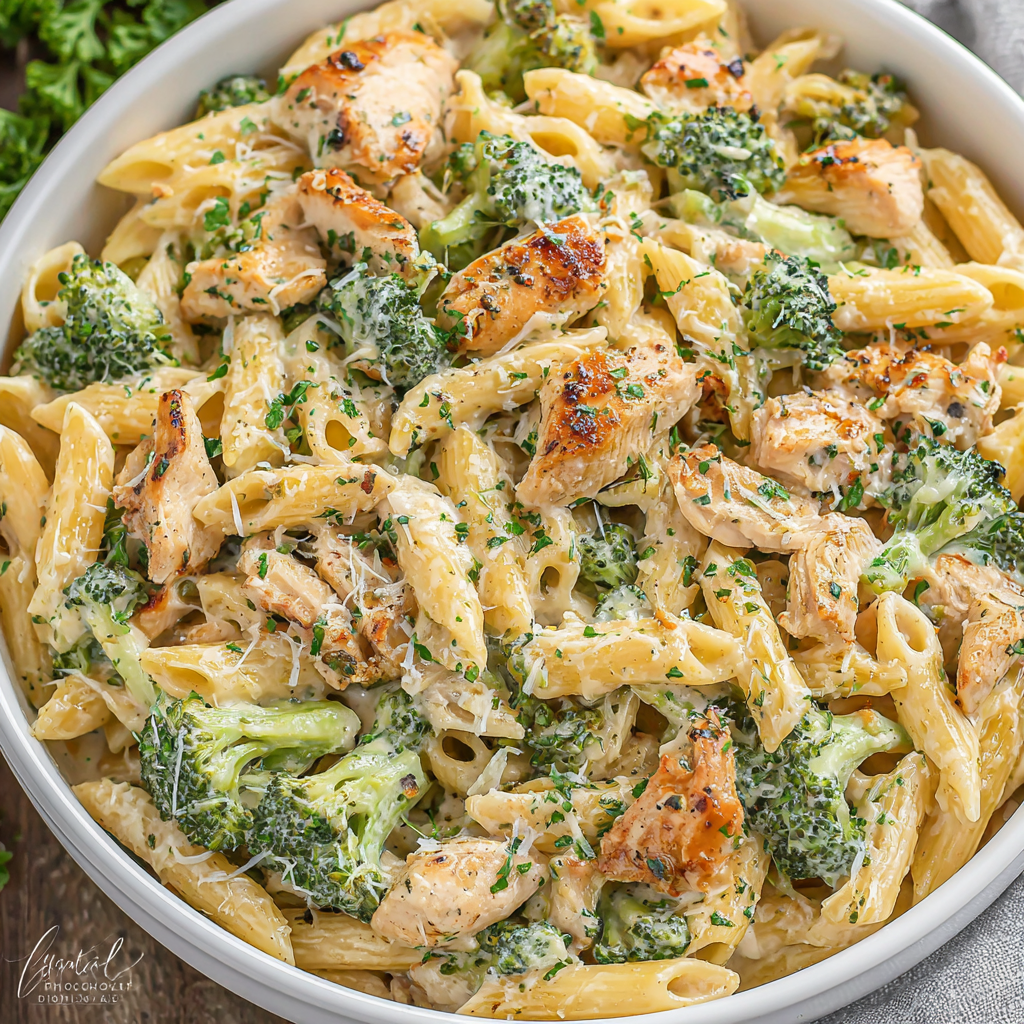
Chicken and broccoli pasta offers a delightful balance of flavors and textures, making it a go-to recipe for any occasion. Not only is it straightforward to prepare, but it also allows for personal customizations based on seasonal vegetables or pantry staples.
Enjoy this dish knowing it's more than just a meal; it's a comfort food classic that brings families together around the table.
Recipe Card
Delicious Chicken and Broccoli Pasta Recipe
Ingredients
Method
- Cook the pasta according to package instructions until al dente.
- While the pasta cooks, heat olive oil in a large skillet over medium heat.
- Add the chicken to the skillet and season with salt and pepper.
- Cook the chicken for about 5-7 minutes per side until fully cooked.
- Once cooked, remove the chicken from the skillet and let it rest before slicing.
- In the same skillet, add the minced garlic and red pepper flakes.
- Add the broccoli and chicken broth, then cover and let steam for 3-4 minutes.
- Slice the rested chicken and then return it to the skillet.
- Add the cooked pasta to the skillet, along with the Parmesan cheese, and toss gently.
- Adjust seasoning with salt and pepper, then serve hot.
Tried this recipe?
Let us know how it was!Notes
Additional serving suggestions: pair with a crisp salad, garlic bread, or roasted seasonal vegetables for balance.
For make-ahead, prep components separately and assemble just before heating to preserve texture.
Taste and adjust with acid (lemon/vinegar) and salt right at the end to wake up flavors.