
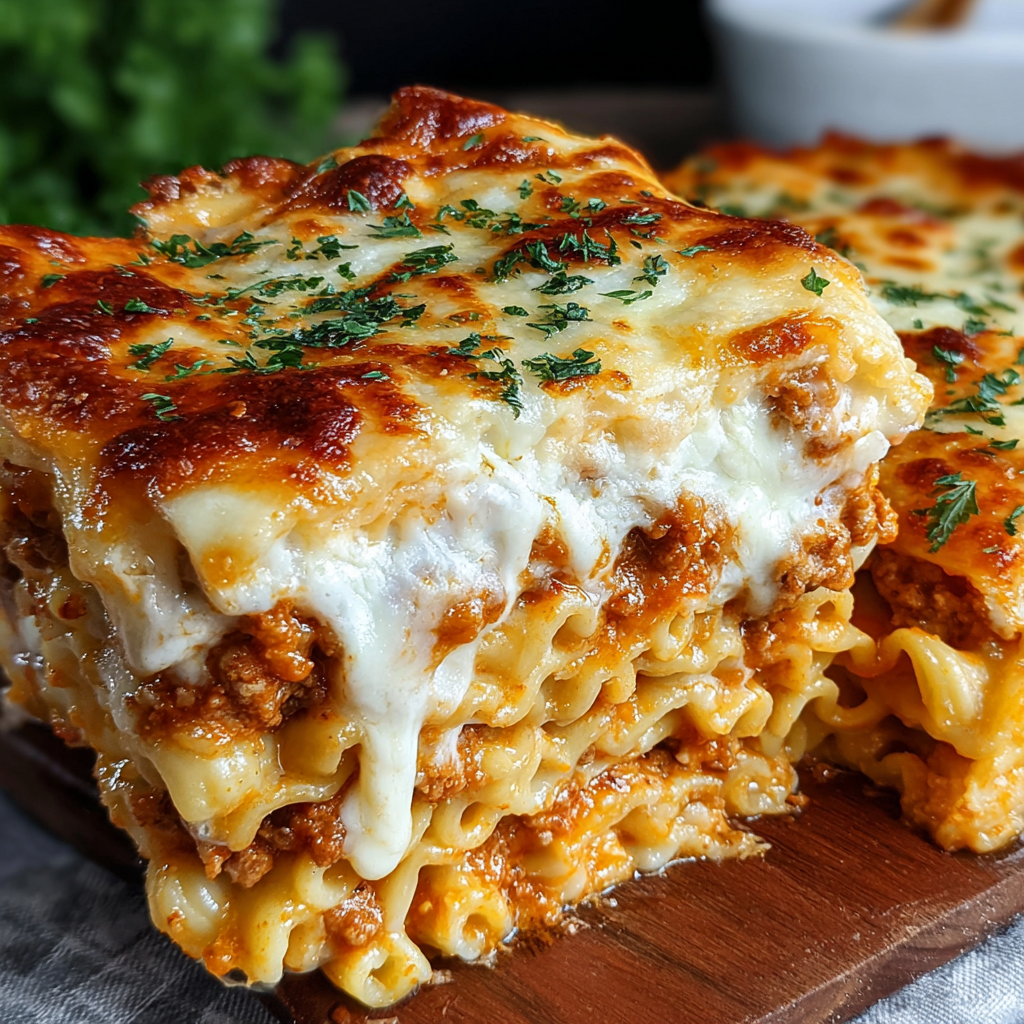
Decadent Mac and Cheese Lasagna for Comfort Food Lovers
Ingredients
Method
- Cook the lasagna noodles until al dente as per package instructions, then drain and set aside.
- In a large pot, melt the butter over medium heat, then whisk in the flour to make a roux.
- Gradually mix in the milk, whisking constantly until the mixture thickens.
- Stir in the garlic powder, onion powder, salt, and pepper to season the sauce.
- Remove the pot from heat and stir in the sharp cheddar and mozzarella cheese until melted and smooth.
- In a separate bowl, mix ricotta cheese, more salt, and pepper.
- Preheat your oven to 375°F (190°C).
- Begin layering the lasagna by spreading a thin layer of the cheese sauce at the bottom of a baking dish.
- Add a layer of noodles followed by a layer of ricotta mixture, then a layer of the cheese sauce, and repeat until all ingredients are used, finishing with cheese sauce on top.
- Cover the dish with aluminum foil and bake for 25 minutes, then remove the foil and bake for an additional 15-20 minutes until bubbly and golden.
- Let the lasagna sit for at least 10 minutes before slicing and serving.
Tried this recipe?
Let us know how it was!Introduction
Mac and Cheese Lasagna is a delightful twist on two beloved comfort foods, seamlessly blending rich, creamy macaroni and cheese with the layered texture of lasagna. This dish isn’t just about indulgence; it’s a celebration of flavors and textures that will bring joy to any table.
Imagine the gooeyness of cheese, the al dente pasta, and a touch of savory sauce harmonizing together in each bite. It’s an easy crowd-pleaser that can turn an ordinary family dinner into a delightful feast.
Preparing Mac and Cheese Lasagna allows you to experiment with different types of cheese, pasta shapes, and even additional ingredients, making it an adaptable dish suitable for any occasion.
Ingredients
- 12 lasagna noodles
Lasagna noodles provide the structure of the dish. They should be cooked until al dente, as they will absorb some moisture from the sauce and prevent becoming mushy. - 4 cups macaroni
Macaroni is the classic choice for mac and cheese, bringing a comforting texture that contrasts beautifully with the other layers in the lasagna. - 4 cups shredded sharp cheddar cheese
Sharp cheddar adds a robust, tangy flavor that balances the creaminess of the dish. It melts beautifully, creating that delightful cheesy pull. - 2 cups ricotta cheese
Ricotta contributes a creamy and slightly sweet flavor, enriching the lasagna while helping to bind the ingredients together. - 2 cups mozzarella cheese
Mozzarella offers a mild taste and a stretchy texture that enhances the overall cheesiness of the dish, creating an irresistible topping. - 2 cups milk
Milk serves as the base for the cheese sauce, helping to create a creamy texture. Whole milk is recommended for richness, but you can use lower-fat milk if desired. - 1/4 cup butter
Butter enriches the cheese sauce, adding a velvety quality and essential fat that enhances flavor. It also aids in the cooking process. - 1/4 cup all-purpose flour
Flour is used to create a roux that thickens the cheese sauce, ensuring a smooth and creamy consistency that coats the pasta evenly. - 1 teaspoon garlic powder
Garlic powder infuses the dish with savory depth without the texture of fresh garlic, allowing the cheese flavors to shine. - 1 teaspoon onion powder
Onion powder provides a subtle sweetness and enhances the overall flavor profile of the cheese sauce. - Salt and black pepper to taste
Seasoning the dish brings out the flavors of the cheeses and balances richness. Adjusting this to your preference is vital for a satisfying result.
Directions & Preparation
Step 1: Cook the lasagna noodles until al dente as per package instructions, then drain and set aside.
Cooking the lasagna noodles just right is crucial; overcooking them will result in a mushy texture later. Al dente noodles will hold up better layered with the other components. Rinse them under cold water to stop the cooking process and prevent them from sticking together.
Step 2: In a large pot, melt the butter over medium heat, then whisk in the flour to make a roux.
Creating a roux is a foundational step for a smooth cheese sauce. This will help thicken the sauce as you add in the milk. Whisk continuously for about a minute, allowing the flour to absorb the butter, which will eliminate any raw flour taste in the final dish.
Step 3: Gradually mix in the milk, whisking constantly until the mixture thickens.
Incorporating the milk gradually ensures a lump-free sauce. Continue to stir until the mixture comes to a gentle simmer and thickens, which usually takes about 5-7 minutes. The goal is a creamy texture that will coat the noodles and filling.
Step 4: Stir in the garlic powder, onion powder, salt, and pepper to season the sauce.
Seasoning the cheese sauce enhances the overall flavor of the lasagna. Taste as you go, adjusting the seasoning to ensure a balanced flavor profile in the final dish. The seasonings should complement the cheese without overwhelming it.
Step 5: Remove the pot from heat and stir in the sharp cheddar and mozzarella cheese until melted and smooth.
Mixing in the cheese while the sauce is warm allows it to melt perfectly, creating a luscious, cohesive sauce that will bind everything together. This step is essential for achieving that rich, cheesy texture that everyone loves.
Step 6: In a separate bowl, mix ricotta cheese, more salt, and pepper.
Blending the ricotta with seasoning ensures that every layer has consistent flavor. It also boosts the richness of the lasagna, making every bite creamy and satisfying.
Step 7: Preheat your oven to 375°F (190°C).
Preheating the oven ensures that your lasagna cooks evenly and thoroughly. It’s best to have the temperature right when you’re ready to bake, which helps in achieving a golden-brown top.
Step 8: Begin layering the lasagna by spreading a thin layer of the cheese sauce at the bottom of a baking dish.
Starting with sauce on the bottom prevents the noodles from sticking and creates a flavorful base for the dish. This initial layer sets the stage for the rest of the lasagna.
Step 9: Add a layer of noodles followed by a layer of ricotta mixture, then a layer of the cheese sauce, and repeat until all ingredients are used, finishing with cheese sauce on top.
Layering the ingredients properly is key for even cooking and flavor distribution. It’s best to finish with sauce, and if desired, a sprinkle of extra cheese ensures a bubbly, appealing crust during baking.
Step 10: Cover the dish with aluminum foil and bake for 25 minutes, then remove the foil and bake for an additional 15-20 minutes until bubbly and golden.
Covering the lasagna initially helps it cook through without drying out. Removing the foil at the end allows the cheese to brown, creating a deliciously appealing crust. Look for bubbling edges and a golden top as indicators that it's ready.
Step 11: Let the lasagna sit for at least 10 minutes before slicing and serving.
Allowing the lasagna to rest enables the layers to set, making it easier to slice without falling apart. This pause is essential for achieving neat, beautiful servings that hold their shape on the plate.

Cheese Selection for Optimal Creaminess
The choice of cheese significantly impacts the texture and flavor of your Mac and Cheese Lasagna. Combining sharp cheddar for its kick, mozzarella for stretchiness, and ricotta for creaminess provides a layered flavor profile. Feel free to experiment with other cheeses like Gruyère for a nutty essence or pepper jack for a hint of heat, tailoring the dish to your taste.
Layering Techniques That Elevate Flavor
Layering isn’t merely about placing ingredients on top of each other; it’s critical for developing flavor and ensuring even cooking. Start with a base of sauce to prevent sticking, and alternate between creamy ricotta and cheesy sauce for a balance of textures. This method allows each layer's flavor to shine while blending harmoniously, creating a satisfying bite every time.
Making It Your Own: Flavor Variations
This dish is a great canvas for customization. Consider adding cooked ground beef or sausage for a heartier version, or mix in vegetables like spinach or roasted peppers for added nutrition and color. You can also play with spices, nuts, or herbs to introduce new dimension and character to your Mac and Cheese Lasagna, making it truly yours.
FAQs
What should I do if my cheese sauce is too thick?
If the cheese sauce is too thick, gradually whisk in a bit more milk until you reach your desired consistency. Ensure it's warmed slightly to blend evenly.
What if I find the flavor too bland?
If the dish tastes bland, try adding more salt, pepper, or other seasonings to enhance the flavors. You can also incorporate additional cheese or serve with a sprinkle of freshly chopped herbs.
Can I use gluten-free pasta in this recipe?
Yes, gluten-free lasagna noodles can be used as a substitute, but ensure you adjust cooking time as gluten-free products can behave differently.
Is there a way to lighten this dish?
To lighten the dish, consider reducing the cheese content and using low-fat dairy options. Additionally, increasing the ratio of vegetables can add flavor without the extra calories.
What if my lasagna is overcooked?
If overcooked, it may be mushy; to mitigate this in future attempts, keep a close eye while baking and adhere to the recommended baking times.
How can I adjust the serving size for large gatherings?
To scale the recipe, simply multiply the ingredient quantities based on the number of servings needed, and use a larger baking dish as necessary.
Conclusion
Mac and Cheese Lasagna is more than just a comfort food; it's a dish that invites creativity and customization. With the perfect melding of flavors and textures, it’s an ideal centerpiece for family meals or gatherings.
Don’t hesitate to explore new variations and personal touches that resonate with your taste. Enjoy the process as much as the final dish, and let this recipe become a beloved staple in your kitchen.
Recipe Card
Decadent Mac and Cheese Lasagna for Comfort Food Lovers
Ingredients
Method
- Cook the lasagna noodles until al dente as per package instructions, then drain and set aside.
- In a large pot, melt the butter over medium heat, then whisk in the flour to make a roux.
- Gradually mix in the milk, whisking constantly until the mixture thickens.
- Stir in the garlic powder, onion powder, salt, and pepper to season the sauce.
- Remove the pot from heat and stir in the sharp cheddar and mozzarella cheese until melted and smooth.
- In a separate bowl, mix ricotta cheese, more salt, and pepper.
- Preheat your oven to 375°F (190°C).
- Begin layering the lasagna by spreading a thin layer of the cheese sauce at the bottom of a baking dish.
- Add a layer of noodles followed by a layer of ricotta mixture, then a layer of the cheese sauce, and repeat until all ingredients are used, finishing with cheese sauce on top.
- Cover the dish with aluminum foil and bake for 25 minutes, then remove the foil and bake for an additional 15-20 minutes until bubbly and golden.
- Let the lasagna sit for at least 10 minutes before slicing and serving.
Tried this recipe?
Let us know how it was!Notes
Additional serving suggestions: pair with a crisp salad, garlic bread, or roasted seasonal vegetables for balance.
For make-ahead, prep components separately and assemble just before heating to preserve texture.
Taste and adjust with acid (lemon/vinegar) and salt right at the end to wake up flavors.