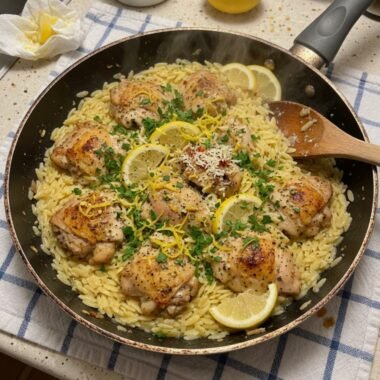
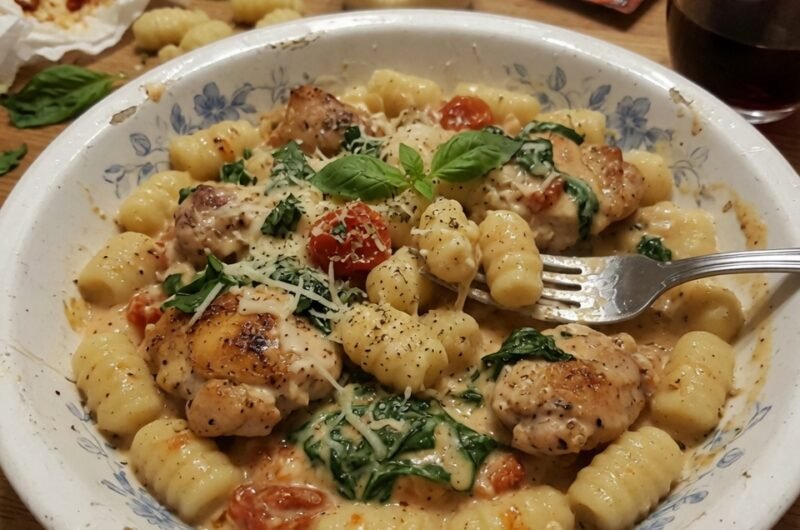
Golden-seared chicken and pillowy gnocchi swim in a sun-dried tomato cream sauce—no separate pot required.
📋 In This Article
Introduction
Let’s be honest: weeknights are chaos. You want dinner to feel like a hug in a bowl, but you don’t have the bandwidth for a mountain of dishes. That is exactly why Creamy Tuscan Chicken Gnocchi is a non-negotiable in my rotation. It hits that sweet spot between “I want to eat well” and “I have zero energy for complexity.”
This isn’t just another skillet meal. It’s a lesson in efficiency. We are using the starch from the potato gnocchi to naturally thicken the sauce while the dumplings cook directly in the cream. It’s a one-two punch of flavor and texture that saves you from boiling a separate pot of water. And those sun-dried tomatoes? They are the secret weapon, providing a concentrated burst of umami that fresh tomatoes just can’t touch in the winter. This dish brings the warmth of a Tuscan kitchen to your table in just 30 minutes.
Why This Recipe Works
Most Creamy Tuscan Chicken Gnocchi Pasta recipes fail in one of two ways: the gnocchi turns to mush, or the sauce breaks into a greasy mess. We fixed both.
The method here relies on starch migration. By cooking shelf-stable potato gnocchi directly in the liquid, the starch gelatinizes and leaches out into the heavy cream and chicken broth. This acts as a natural thickener, creating a velvety sauce that clings to every nook and cranny of the dumplings. No separate roux required.
We also treat the chicken thighs right. Instead of boiling them in the sauce (a crime against poultry), we sear them hard first. This triggers the Maillard reaction—hundreds of new flavor compounds created by browning proteins—adding depth you simply cannot get from simmering alone. It’s a simple step, but it’s the difference between a “good” weeknight meal and one you’d actually pay for.
Ingredients You’ll Need
For the Chicken Base
- Chicken Thighs (boneless, skinless): 1 pound. Thighs have more intramuscular fat than breasts, meaning they stay juicy even if you accidentally overcook them slightly. Cut them into bite-sized pieces.
- Olive Oil: 2 tablespoons. Needed to conduct heat for a proper sear.
- Italian Seasoning: 1/2 teaspoon. A classic blend of dried oregano, basil, and thyme.
- Paprika: 1/2 teaspoon. Adds a subtle, smoky warmth and helps color the meat.
For the Creamy Tuscan Sauce
- Potato Gnocchi: 1 package (16 oz), shelf-stable. These are denser than fresh, making them sturdy enough to withstand the simmering process without disintegrating.
- Heavy Cream: 1 cup. The fat content here is non-negotiable. Lower fat dairy will curdle at a boil.
- Chicken Broth: 1 cup. Provides the savory backbone and balances the richness of the cream.
- Sun-dried Tomatoes (oil-packed): 1/4 cup, drained and chopped. These are little pockets of intense, sweet-tart flavor.
- Garlic: 2 cloves, minced. Don’t add it too early or it will burn and turn bitter.
- Spinach: 1 cup, chopped. Fresh is best; frozen carries too much water and dilutes the sauce.
- Parmesan: 1/4 cup, grated. Stirred in at the end for a salty, savory kick.
- Red Pepper Flakes: A pinch. Just enough to cut through the cream.
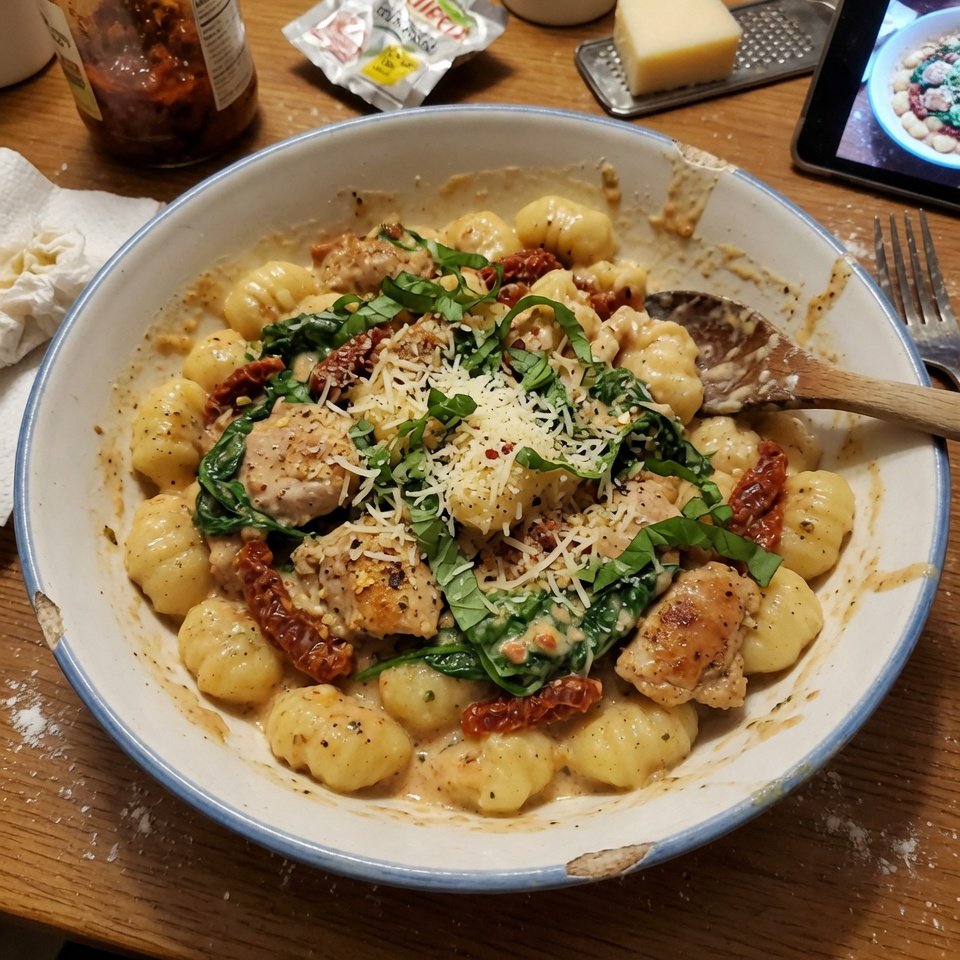
Choosing the Best Gnocchi: A Semantic Deep Dive
Walking down the pasta aisle can be overwhelming. For this Creamy Tuscan Chicken Gnocchi, you have choices, and they matter.
Shelf-stable potato gnocchi is your best bet for this specific recipe. Vacuum-sealed in plastic, these dumplings are denser and drier than their refrigerated counterparts. Why does that matter? They hold their shape better during the simmer. They absorb the sauce without falling apart.
Fresh refrigerated gnocchi (often found in the deli section) are lighter and more delicate. They cook faster—sometimes in under 2 minutes. If you use these, reduce the simmer time in step 4 by half, or you risk ending up with a paste.
Cauliflower gnocchi has become popular for low-carb diets. Be warned: it behaves very differently. It doesn’t release starch the same way, so your sauce won’t thicken naturally. If you go this route, you may need a cornstarch slurry to achieve that signature creamy texture.
Step-by-Step Instructions
1. Sear the Chicken
Pat the Chicken Thighs dry with paper towels. Season generously with salt, pepper, Italian Seasoning, and Paprika. Heat Olive Oil in a large, deep skillet over medium-high heat until it shimmers.
Add the chicken in a single layer. Do not crowd the pan. If you crowd them, the temperature drops, and the chicken steams instead of searing. Let them cook undisturbed for 3-4 minutes per side until a deep golden-brown crust forms. Remove the chicken from the pan and set aside.
Mini-tip: That brown stuff stuck to the bottom of the pan? That’s the fond. It is pure flavor. We are going to rescue it in the next step.
2. Bloom the Aromatics
Reduce heat to medium. Add the minced Garlic and Sun-dried Tomatoes to the remaining oil. Sauté for 30 seconds, just until the garlic is fragrant.
Be careful here. Garlic has a lot of sugar and burns quickly. If it turns dark brown, it becomes acrid and bitter. You want pale gold.
3. Build the Sauce Base
Pour in the Heavy Cream and Chicken Broth. Use a wooden spoon to scrape up the fond from the bottom of the pan. This deglazing step incorporates those caramelized meat juices back into the sauce. Add the Red Pepper Flakes. Bring the mixture to a gentle bubble.
4. Cook the Gnocchi
Stir in the uncooked Potato Gnocchi. Cover the skillet and reduce heat to medium-low. Simmer for 5-7 minutes.
Stir occasionally to prevent sticking. You will notice the sauce start to thicken. This is the starch from the potatoes emulsifying with the cream. The gnocchi are done when they are tender but still have a slight chew (al dente).
5. Finish and Serve
Stir in the chopped Spinach. It will look like a lot, but it wilts down in seconds. Return the seared Chicken (and any juices on the plate) to the pan. Simmer for 1 minute to heat the chicken through.
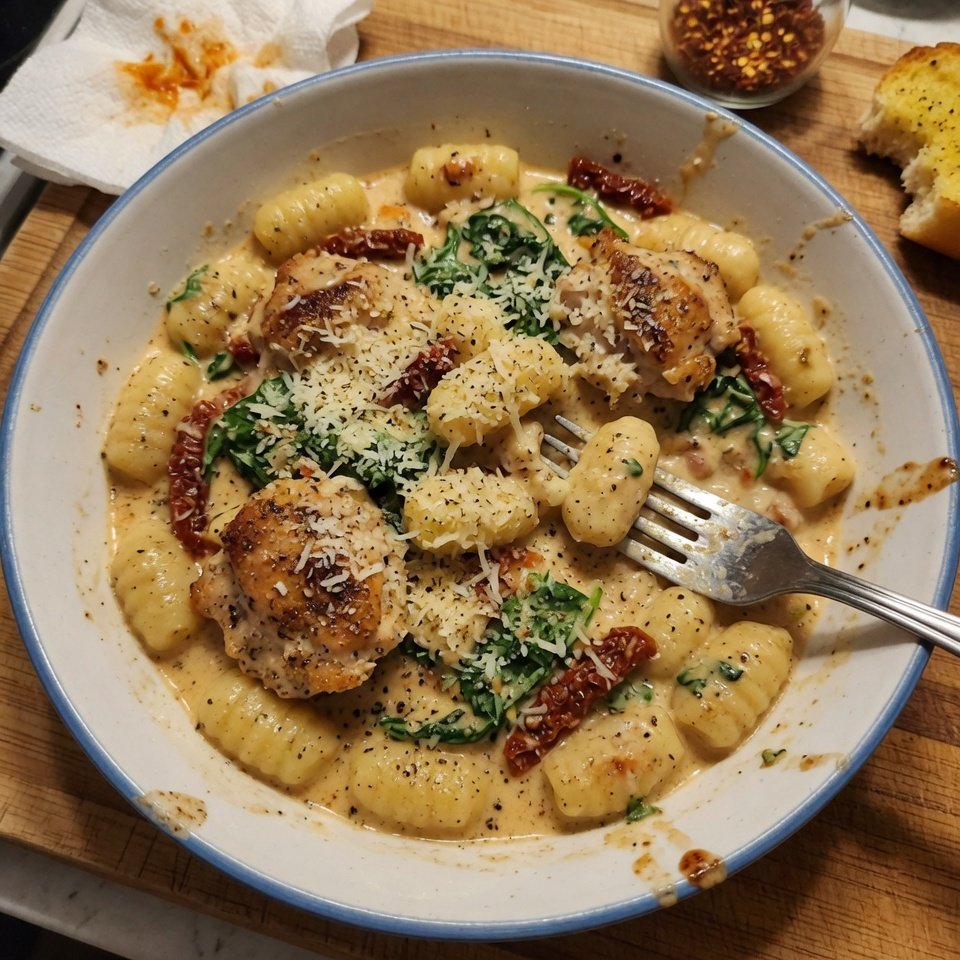
Turn off the heat. Stir in the Parmesan. Taste. Need more salt? Add it now. Serve immediately.
💡 Pro Tips
1. Don’t Skip the Rest I used to rush this step—don’t. When you sear the chicken, the muscle fibers contract and push juices to the center. If you cut into it immediately, you lose 40% of that moisture on the cutting board. Resting the meat on a plate while the sauce starts allows the fibers to relax and reabsorb that liquid.
2. The “Cold Pan” Trick for Garlic If you are worried about burning the garlic, add it to the pan before you turn on the heat. Then turn the heat to medium. This allows the flavor to infuse into the oil gently as it heats up, giving you a wider window of safety before it burns.
3. Grate Your Own Cheese Pre-grated Parmesan in the green can contains anti-caking agents (like cellulose) that prevent it from melting smoothly. For a velvety sauce, buy a wedge and grate it yourself. It melts into the cream seamlessly, creating a cohesive texture.
⚠️ Common Mistakes to Avoid
Mushy Gnocchi This usually happens from overcooking. Shelf-stable gnocchi are hearty, but they have a limit. Once they float and the sauce is thick, stop cooking. Carryover cooking will finish the job.
Thin, Watery Sauce If your sauce is runny after 7 minutes, you likely added too much liquid or didn’t let it simmer aggressively enough. Remove the lid for the last 2 minutes of cooking. Evaporation is your friend here. Alternatively, make a slurry with 1 teaspoon of cornstarch and 1 tablespoon of water, stir it in, and watch it thicken instantly.
Bland Flavor Cream and potatoes are mild; they need salt. Season the chicken before it hits the pan. Salt the sauce at the end. If it tastes flat, it probably needs more salt or a splash of acid (like a squeeze of lemon juice) to brighten the heavy cream.
Variations & Substitutions
Dairy-Free You can swap the Heavy Cream for full-fat Coconut Milk. It works surprisingly well, though it will impart a slight coconut flavor. Use nutritional yeast instead of Parmesan for that cheesy, savory note.
Protein Swaps Not a fan of dark meat? Chicken Breasts work, but they dry out faster. Cut them into similar sized chunks and watch the pan closely—165°F internal temperature is the goal. Or, skip the meat entirely and use Artichokes or cannellini beans for a vegetarian protein boost.
Lighter Version Substitute Half-and-Half for heavy cream. The sauce will be less decadent and slightly thinner, but still delicious. Avoid using skim milk; it doesn’t have enough fat to create a stable sauce emulsion.
Serving Suggestions
This dish is rich. It pairs perfectly with something acidic and crunchy to cut through the cream. A simple side salad with a sharp vinaigrette (think lemon and olive oil) does the heavy lifting here.
If you want to lean into the comfort food aspect, serve it with a hunk of crusty bread or garlic bread. You are going to want something to mop up that last bit of sauce. A glass of dry white wine, like Pinot Grigio, matches the Italian flavors beautifully.
Storage & Meal Prep Tips
Refrigeration Store leftovers in an airtight container for up to 3 days. The gnocchi will absorb more sauce as it sits, so it will be thicker the next day.
Reheating Reheat gently on the stovetop over low heat. Add a splash of Chicken Broth or water to loosen the sauce. Microwaving tends to make the gnocchi rubbery and the sauce separate, so stovetop is the way to go.
Freezing I don’t recommend freezing this dish. Potato gnocchi tend to become grainy and watery after freezing and thawing. The cream sauce can also separate. It’s best enjoyed fresh.
Frequently Asked Questions (FAQ)
+Do I need to boil the gnocchi first?
No. This is a one-pan recipe. The gnocchi cooks directly in the sauce, absorbing flavor and releasing starch to thicken the cream. Boiling them first would actually make them too soft and waterlogged.
+Why did my sauce separate?
This usually happens if the heat is too high. High heat can break the emulsion of the cream. Keep the simmer gentle. If it does break, remove it from the heat and whisk vigorously, or add a teaspoon of cold water to bring it back together.
+Can I use fresh spinach instead of frozen?
Yes, and I recommend it. Frozen spinach holds a lot of water. If you must use frozen, thaw it completely and squeeze out as much liquid as possible before adding it, or your sauce will be thin and watery.
+Can I use chicken breast instead of thighs?
You can. Cut the breast into 1-inch cubes. Just be aware that breast meat cooks faster and dries out easier than thighs. Sear them quickly and remove them as soon as they hit 165°F internal temperature.
+How do I know when the chicken is fully cooked?
The safest way is an instant-read thermometer inserted into the thickest piece. It should read 165°F. Visually, the meat should be opaque all the way through with no pinkness, and the juices should run clear.
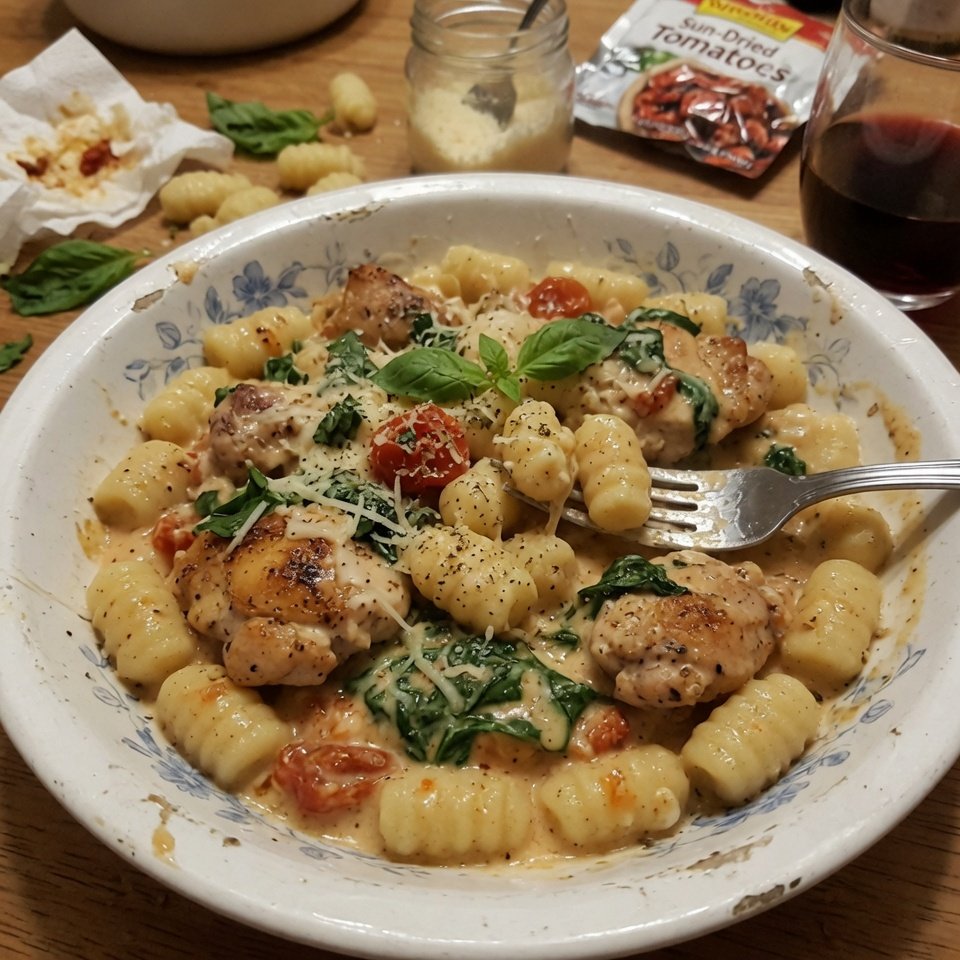
Creamy Tuscan Chicken and Gnocchi (30 Minutes, ONE-PAN)
Ingredients
Method
- How to cook chicken
- How to cook gnocchi
Nutrition
Notes
- To ensure your chicken thighs are perfectly cooked, aim for an internal temperature of 165°F; they should be golden brown on the outside and juicy inside.
- For a lighter version, substitute heavy cream with half-and-half or a blend of Greek yogurt and chicken broth, but be sure to add it gradually to prevent curdling.
- Add the gnocchi directly to the skillet without boiling them first; they will absorb the flavors and cook perfectly in the sauce.
- If using frozen spinach, thaw and drain it well before adding to prevent excess moisture in your sauce.
- This dish reheats beautifully; store leftovers in an airtight container in the fridge for up to three days, and reheat gently on the stovetop over low heat to maintain creaminess.