

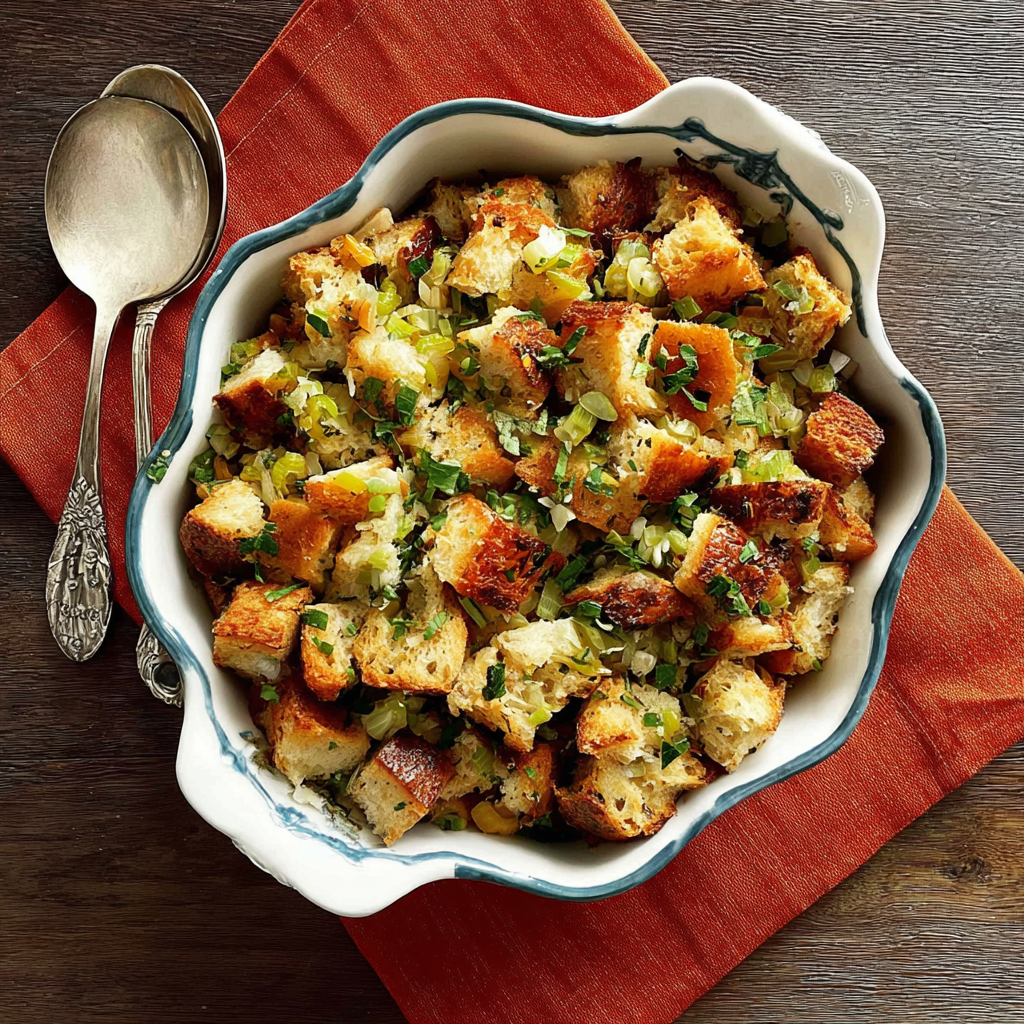
Classic Homemade Bread Stuffing Recipe
Ingredients
Method
- Preheat your oven to 350°F (175°C).
- Spread the cubed bread on a baking sheet and toast for 10–15 minutes until golden brown.
- In a large skillet, melt the butter over medium heat. Add the onions and celery, cooking until softened, about 5–7 minutes.
- Stir in the sage, thyme, salt, and pepper, then cook for an additional 2 minutes to release the herbs' essential oils.
- Combine the toasted bread cubes and the sautéed mixture in a large bowl, mixing gently to distribute the flavors evenly.
- Pour the broth over the mixture and fold in the beaten eggs until everything is well moistened.
- Transfer the mixture to a buttered baking dish and cover with aluminum foil. Bake for 30 minutes.
- Remove the foil and bake for an additional 15–20 minutes, until the top is golden brown.
Tried this recipe?
Let us know how it was!Introduction
As the holidays approach, the scent of freshly baked bread stuffing wafts through kitchens, evoking cherished memories. This old-fashioned dish marries texture and flavor, often becoming the centerpiece of family gatherings. Whether served inside a turkey or as a side dish, it's a comfort food that warms both heart and soul.
Crafted from simple ingredients, traditional bread stuffing reflects the culinary heritage of many families. It embodies the concept of using what you have on hand. Let’s explore how to create a dish rooted in tradition and enhanced by choices that suit your palate.
Ingredients
- 12 cups day-old bread, cubed
The foundation of your stuffing, day-old bread absorbs flavors and moisture while retaining its structure. Use a variety of breads, like sourdough or whole wheat, to add depth. - 1 cup unsalted butter
Butter enriches the stuffing, lending a luxurious mouthfeel and promoting browning. Its fat content also helps to moisten dried bread cubes effectively. - 2 cups onion, diced
Onions build the aromatic base of your stuffing, releasing natural sugars that caramelize over heat. They provide sweetness and depth to the overall flavor profile. - 1 ½ cups celery, diced
Adding crunch and a fresh herbal note, celery contrasts with the soft bread. It also brings essential moisture, contributing to the stuffing’s overall balance. - 2 tablespoons sage, dried
Sage is the quintessential herb in stuffing, imparting an earthy flavor that complements roasted meats beautifully. It’s particularly important in traditional recipes. - 1 tablespoon thyme, dried
Thyme contributes a slightly minty and peppery essence, enhancing the complexity of flavors. It's essential for achieving that homey, comforting taste. - 1 tablespoon salt
Salt is crucial for enhancing flavor, drawing out the natural essence of ingredients. Too little can make stuffing bland, while too much can overshadow other delicate notes. - 1 teaspoon black pepper
Black pepper adds warmth and a subtle kick. It enhances the aromatic properties without overwhelming the natural flavors of the other ingredients. - 3 ½ cups chicken or vegetable broth
Broth serves as the moisture component that brings everything together. A rich broth elevates the taste and helps achieve the desired texture in your stuffing. - 2 large eggs, beaten
Eggs act as a binding agent, ensuring the stuffing holds together without becoming dry. They also add a slight richness that elevates the overall dish.
Directions & Preparation
Step 1: Preheat your oven to 350°F (175°C).
Preheating ensures that your stuffing cooks evenly. An oven at the right temperature allows the bread to toast nicely, giving the dish a golden-brown exterior and warming through adequately.
Step 2: Spread the cubed bread on a baking sheet and toast for 10–15 minutes until golden brown.
Toasting the bread before mixing it into the stuffing helps it retain its structure while soaking up the liquids. This step eliminates excess moisture while introducing a crunchy texture.
Step 3: In a large skillet, melt the butter over medium heat. Add the onions and celery, cooking until softened, about 5–7 minutes.
Sautéing the vegetables in butter caramelizes their natural sugars, enhancing their flavors while providing a aromatic base for the dish. Ensuring they are soft allows them to integrate seamlessly into your stuffing.
Step 4: Stir in the sage, thyme, salt, and pepper, then cook for an additional 2 minutes to release the herbs' essential oils.
Adding the herbs at this stage allows them to bloom in the hot butter and vegetables, imparting a stronger flavor throughout the stuffing. This brief cooking captures the full essence of the herbs.
Step 5: Combine the toasted bread cubes and the sautéed mixture in a large bowl, mixing gently to distribute the flavors evenly.
This is a critical step where the textures contrast, and flavors meld. Be gentle to maintain the structure of the bread cubes, ensuring each piece gets flavored.
Step 6: Pour the broth over the mixture and fold in the beaten eggs until everything is well moistened.
The broth hydrates the bread while the eggs act as a glue, holding everything together. The correct moisture level will ensure the stuffing is not dry and has a cohesive texture.
Step 7: Transfer the mixture to a buttered baking dish and cover with aluminum foil. Bake for 30 minutes.
Covering the dish allows the stuffing to steam and absorb moisture, preventing it from drying out. The baking time is essential for flavor development and cooking the stuffing evenly.
Step 8: Remove the foil and bake for an additional 15–20 minutes, until the top is golden brown.
Uncovering the dish allows the top to crisp up and develops a beautiful crust, enhancing the contrast in textures. This final baking ensures every layer is heated through.

Embracing Flavor with Fresh Ingredients
Using fresh herbs instead of dried can elevate your old-fashioned bread stuffing. Fresh sage, thyme, and parsley not only enhance the aromatic profile but also add vibrant colors and freshness. Remember to increase the amounts since fresh herbs are less concentrated than their dried versions. This small adjustment can lead to a stuffing that bursts with flavor, making your dish even more memorable.
Texture: The Key to Great Stuffing
One of the hallmarks of a perfect bread stuffing is its texture. The interplay between crispy bits and moist crumbs creates a delightful mouthfeel. To achieve this, avoid using overly fresh bread; stale or toasted cubes are essential. Fancy a twist? Try adding chopped nuts or dried fruits. These additions not only create varied textures but also introduce unique flavor elements that can make your stuffing stand out.
Customizing Your Stuffing Experience
Old-fashioned bread stuffing offers a wonderful canvas for creativity. Consider including cooked sausage for a heartier dish or mushrooms for an earthy flavor. Even seasonal additions like cranberries can provide a beautiful tartness that balances the richness. This adaptability makes bread stuffing a versatile dish that can fit any meal and heartily satisfy different palates.
FAQs
What types of bread work best for stuffing?
Stale or toasted bread works best, as it holds its shape during baking. Sourdough, whole wheat, or even cornbread can add lovely flavors.
How do I know if the stuffing is properly seasoned?
Taste a small amount before baking; it should have a balanced flavor. The broth and herbs should shine through without overpowering.
What if my stuffing turns out too dry?
If you find the stuffing is dry after baking, add a bit more warm broth and mix gently. Bake for an additional few minutes to let it absorb.
Can I make stuffing without using broth?
Yes, consider using vegetable or chicken stock if you prefer. Alternatively, a mixture of water and a splash of soy sauce can also suffice.
Can I add fruit, like apples or raisins, to my stuffing?
Absolutely! Adding cubed apples or raisins introduces a lovely sweetness and texture contrast. Balance with additional spices if needed.
What should I do if my stuffing is too thick?
If your stuffing mixture is too dense, gradually stir in more broth until it reaches the desired consistency before baking.
Conclusion
Creating an old-fashioned bread stuffing is a loving nod to culinary traditions that have stood the test of time. With its simple ingredients and rich flavor, this dish can enhance any gathering or family meal.
Take the time to enjoy the process, remembering that every ingredient contributes to the final outcome. Experiment and customize it to make it truly yours. Happy cooking!
Recipe Card
Classic Homemade Bread Stuffing Recipe
Ingredients
Method
- Preheat your oven to 350°F (175°C).
- Spread the cubed bread on a baking sheet and toast for 10–15 minutes until golden brown.
- In a large skillet, melt the butter over medium heat. Add the onions and celery, cooking until softened, about 5–7 minutes.
- Stir in the sage, thyme, salt, and pepper, then cook for an additional 2 minutes to release the herbs' essential oils.
- Combine the toasted bread cubes and the sautéed mixture in a large bowl, mixing gently to distribute the flavors evenly.
- Pour the broth over the mixture and fold in the beaten eggs until everything is well moistened.
- Transfer the mixture to a buttered baking dish and cover with aluminum foil. Bake for 30 minutes.
- Remove the foil and bake for an additional 15–20 minutes, until the top is golden brown.
Tried this recipe?
Let us know how it was!Notes
Additional serving suggestions: pair with a crisp salad, garlic bread, or roasted seasonal vegetables for balance.
For make-ahead, prep components separately and assemble just before heating to preserve texture.
Taste and adjust with acid (lemon/vinegar) and salt right at the end to wake up flavors.


