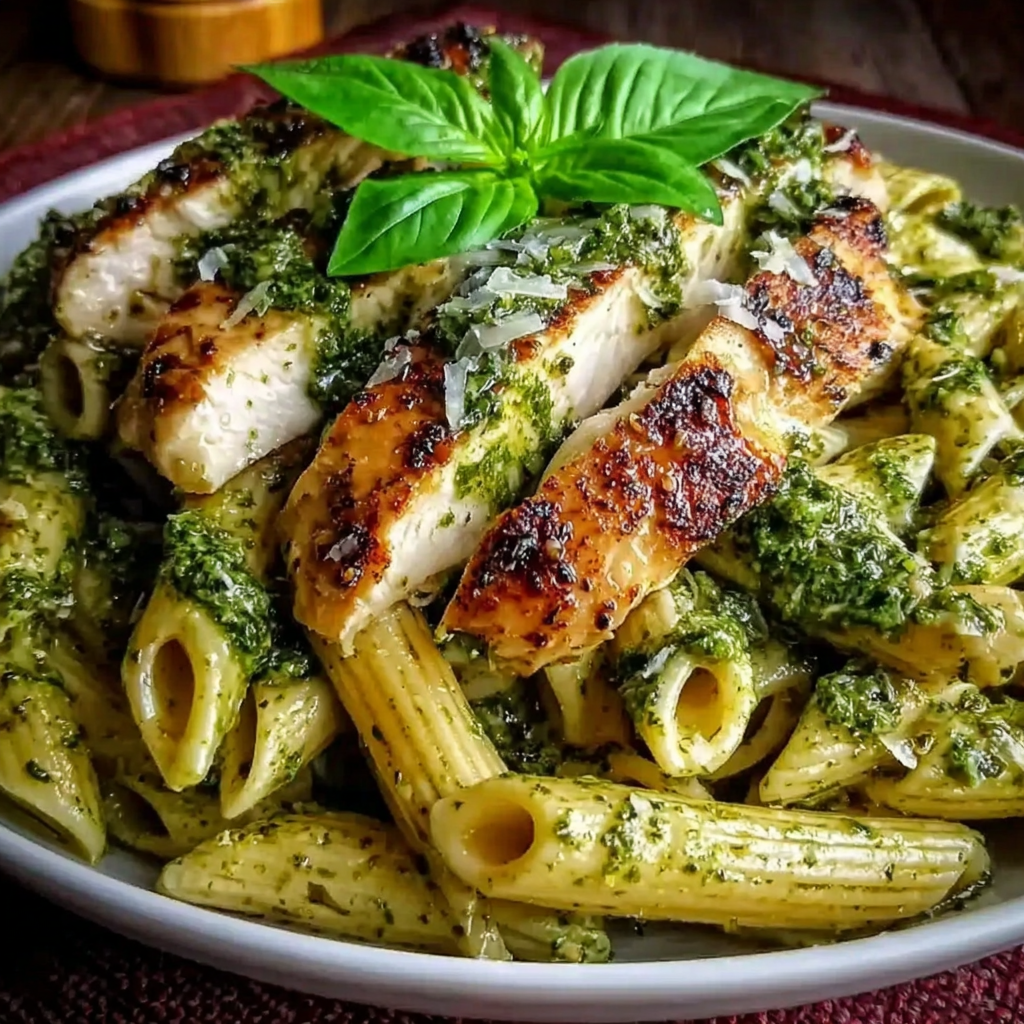
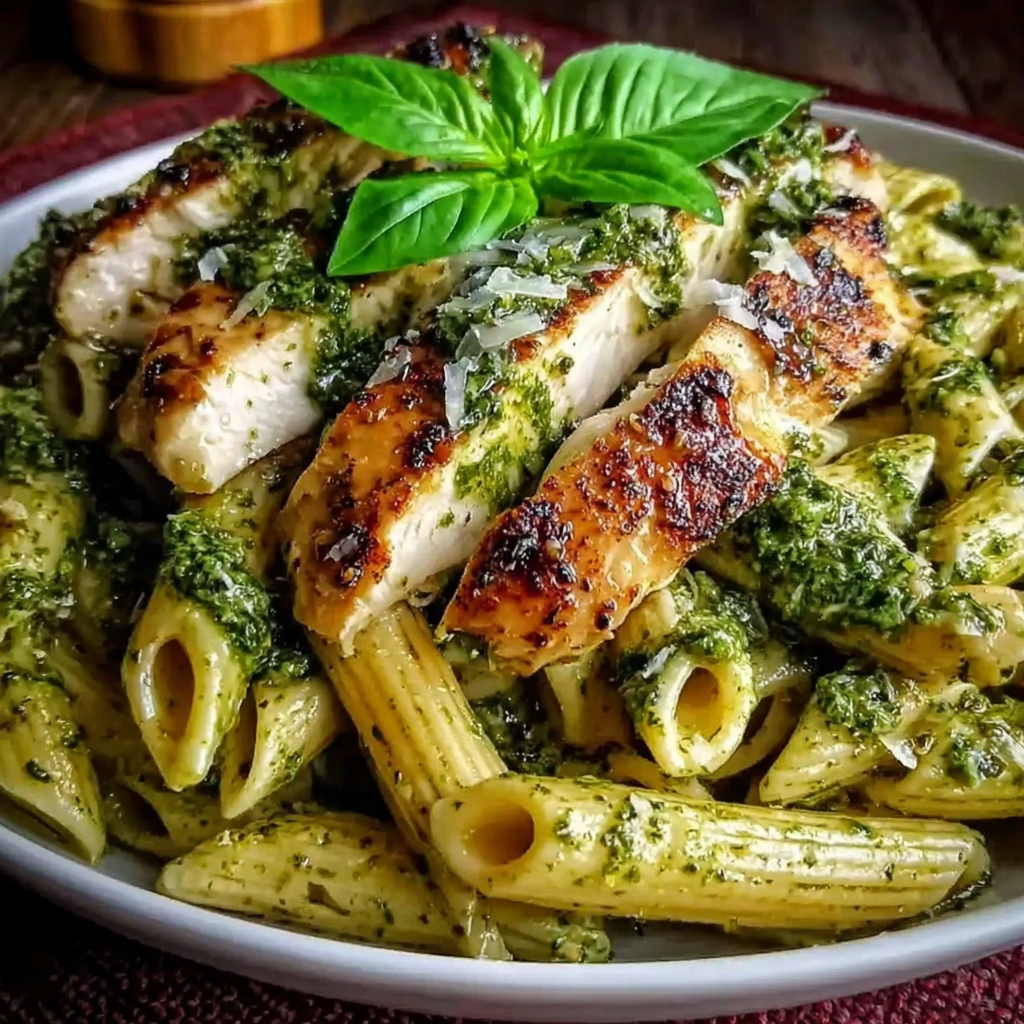
Basil Pesto Chicken Pasta for a Flavorful Feast
Ingredients
Method
- Cook the pasta according to package instructions until al dente, then drain and set aside.
- While the pasta cooks, prepare the basil pesto by combining basil, pine nuts, Parmesan cheese, garlic, and olive oil in a food processor.
- Season the pesto with salt and pepper to taste, adjusting according to preference.
- In a large skillet over medium heat, add a splash of olive oil and cook the chicken breasts until they are golden brown and fully cooked, about 6-7 minutes per side.
- Once cooked, remove the chicken from the skillet and let it rest for a few minutes before slicing it into strips.
- Add the cooked pasta to the skillet and mix in the basil pesto, ensuring every piece of pasta is coated evenly.
- Toss in the sliced chicken, mixing until evenly distributed, and heat through for a couple of minutes.
- Serve immediately, garnished with extra Parmesan and fresh basil, if desired.
Tried this recipe?
Let us know how it was!Introduction
Basil pesto chicken pasta is a delightful dish that merges the vibrant flavors of fresh basil, garlic, and Parmesan cheese with tender chicken and al dente pasta. This recipe creates a symphony of tastes that is both comforting and elevated, suitable for any occasion.
Whether you're cooking for a busy weeknight dinner or a cozy weekend gathering, this dish fills your kitchen with an irresistible aroma that promises satisfaction. The bright green pesto not only adds color but also packs a punch of flavor that will tease your taste buds.
Ingredients
- 12 ounces of pasta (farfalle or penne)
The pasta serves as the base of the dish, providing bulk and texture. Choosing a shape that holds onto the pesto sauce well will enhance every bite. - 2 chicken breasts (about 1 pound)
Chicken breasts are lean, protein-rich, and cook quickly, making them ideal for a speedy meal. Their mild flavor allows the pesto to shine. - 1 cup of fresh basil leaves
Fresh basil is the star ingredient of the pesto, offering a sweet and aromatic flavor that brightens the dish. It provides an authentic Italian taste that elevates the overall profile. - 1/4 cup of pine nuts
Pine nuts add a creamy, nutty flavor to the pesto and contribute to its silky texture. They also deliver healthy fats that help keep you satisfied. - 1/2 cup of grated Parmesan cheese
Parmesan adds depth and umami to the dish, helping to bind the pesto together. Its salty notes complement the freshness of the basil and chicken. - 2 cloves of garlic
Garlic infuses the pesto with a savory kick. Its aromatic qualities enhance the flavor profile and provide health benefits, making the dish delicious and wholesome. - 1/3 cup of olive oil
Olive oil is crucial for emulsifying the pesto, giving it a smooth consistency. It also contributes richness, flavor, and healthy fats. - Salt and black pepper to taste
Seasoning is essential for balancing the flavors in the dish. Salt enhances the natural taste of ingredients while black pepper adds a mild heat.
Directions & Preparation
Step 1: Cook the pasta according to package instructions until al dente, then drain and set aside.
Cooking the pasta properly is crucial for achieving the right texture. Al dente pasta has a slight bite, making it more enjoyable to eat and allowing it to absorb flavors from the sauce.
Step 2: While the pasta cooks, prepare the basil pesto by combining basil, pine nuts, Parmesan cheese, garlic, and olive oil in a food processor.
This step is vital for achieving a well-blended pesto. Pulse the ingredients until they form a smooth paste, ensuring the flavors meld together seamlessly for a vibrant sauce.
Step 3: Season the pesto with salt and pepper to taste, adjusting according to preference.
Tasting the pesto before adding it to the pasta is important to ensure a balanced flavor. Adjusting the seasoning at this stage allows you to personalize the dish to your liking.
Step 4: In a large skillet over medium heat, add a splash of olive oil and cook the chicken breasts until they are golden brown and fully cooked, about 6-7 minutes per side.
Cooking the chicken properly prevents dryness and ensures it is tender. Browning the outside adds flavor and provides visual appeal, creating a delicious crust.
Step 5: Once cooked, remove the chicken from the skillet and let it rest for a few minutes before slicing it into strips.
Resting the chicken allows the juices to redistribute, keeping it moist as you slice. Slicing against the grain will make the meat more tender and easier to chew.
Step 6: Add the cooked pasta to the skillet and mix in the basil pesto, ensuring every piece of pasta is coated evenly.
Combining the pasta and pesto while the pasta is warm helps distribute flavors better. This is where the pasta absorbs the pesto, creating a delightful flavor harmony.
Step 7: Toss in the sliced chicken, mixing until evenly distributed, and heat through for a couple of minutes.
This step ensures that the chicken is integrated into the dish and warmed throughout. It also allows the flavors to meld beautifully, enhancing the overall taste.
Step 8: Serve immediately, garnished with extra Parmesan and fresh basil, if desired.
Garnishing adds a visual appeal and fresh flavor to the dish. Presenting it attractively can entice family and guests, making it an inviting dish to enjoy.

The Charm of Homemade Basil Pesto
Creating your basil pesto from scratch not only elevates the dish but also gives you control over its freshness and flavor. Homemade pesto can be tailored to your tastes, whether you prefer more garlic or a nuttier profile. It’s an opportunity to showcase vibrant basil in its purest form, contributing a burst of flavor that store-bought versions simply can’t match.
Pairing Proficiency: Wine and Sides
Selecting the right wine can elevate your basil pesto chicken pasta experience. A crisp Sauvignon Blanc or a light Italian Pinot Grigio pairs beautifully, complementing the basil’s brightness. For sides, consider a simple arugula salad or roasted vegetables, which will add texture and round out the meal without overpowering the main dish.
Customization: Make It Your Own
This dish is highly versatile, allowing creative cooks to experiment with ingredients. Feel free to swap chicken for shrimp or even vegetables for a meat-free version. You can also incorporate sun-dried tomatoes or olives into the pasta for extra flavor. The goal is to create a delightful meal that caters to your tastes while keeping the essence of basil pesto chicken pasta.
FAQs
What can I do if my pesto is too thick?
If your pesto is too thick, gradually add more olive oil or a splash of water until you reach your desired consistency. Blending it again can also help.
How can I add more protein without changing the dish's character?
You can incorporate cooked chickpeas or white beans for added protein without altering the dish's essence, keeping it hearty yet fresh.
What if the chicken is overcooked and dry?
To salvage overcooked chicken, try slicing it thinly and adding it back to the pasta with more pesto or a splash of pasta water, which can help moisten it.
Can I use different nuts for the pesto?
Absolutely! While pine nuts are traditional, you can use walnuts, almonds, or pecans, adjusting the flavor profile while still achieving a delicious pesto.
What if I don’t have fresh basil?
If fresh basil is unavailable, consider using arugula or spinach for a greener sauce. While it will differ in taste, it can still be a delightful alternative.
Can I make the pesto in advance?
Yes, you can prepare the pesto in advance and store it in the refrigerator, covered with a thin layer of olive oil to prevent browning.
Conclusion
Basil pesto chicken pasta is a dish filled with fresh flavors and a comforting feel, perfect for both everyday meals and special gatherings. It invites creativity and personalization, allowing you to adjust components to your liking.
As you enjoy this culinary creation, consider how each ingredient plays a vital role in crafting a wholesome, nourishing dish that celebrates the essence of basil. Embrace the joyful process of cooking and share this delightful recipe with your loved ones.
Recipe Card
Basil Pesto Chicken Pasta for a Flavorful Feast
Ingredients
Method
- Cook the pasta according to package instructions until al dente, then drain and set aside.
- While the pasta cooks, prepare the basil pesto by combining basil, pine nuts, Parmesan cheese, garlic, and olive oil in a food processor.
- Season the pesto with salt and pepper to taste, adjusting according to preference.
- In a large skillet over medium heat, add a splash of olive oil and cook the chicken breasts until they are golden brown and fully cooked, about 6-7 minutes per side.
- Once cooked, remove the chicken from the skillet and let it rest for a few minutes before slicing it into strips.
- Add the cooked pasta to the skillet and mix in the basil pesto, ensuring every piece of pasta is coated evenly.
- Toss in the sliced chicken, mixing until evenly distributed, and heat through for a couple of minutes.
- Serve immediately, garnished with extra Parmesan and fresh basil, if desired.
Tried this recipe?
Let us know how it was!Notes
Additional serving suggestions: pair with a crisp salad, garlic bread, or roasted seasonal vegetables for balance.
For make-ahead, prep components separately and assemble just before heating to preserve texture.
Taste and adjust with acid (lemon/vinegar) and salt right at the end to wake up flavors.