Baking a Classic German Chocolate Cake at Home
Ingredients
Method
- Preheat the oven to 350°F (175°C).
- Grease and flour three 9-inch round cake pans.
- Melt the German sweet chocolate in a double boiler and set aside to cool slightly.
- In a large mixing bowl, combine the flour, sugar, cocoa powder, baking soda, baking powder, and salt.
- In another bowl, whisk together the buttermilk, vegetable oil, eggs, vanilla extract, and melted chocolate.
- Gradually add the wet ingredients to the dry ingredients, mixing until just combined.
- Divide the batter evenly among the prepared pans and smooth the tops.
- Bake for 30-35 minutes, or until a toothpick inserted in the center comes out clean.
- Let the cakes cool in the pans for 10 minutes, then remove and cool completely on a wire rack.
- Prepare the frosting by combining the coconut, pecans, evaporated milk, sugar, and butter in a saucepan.
- Cook over medium heat until boiling, then reduce to low and stir constantly for approximately 10 minutes until thickened.
- Remove from heat and stir in the vanilla extract. Allow frosting to cool before using.
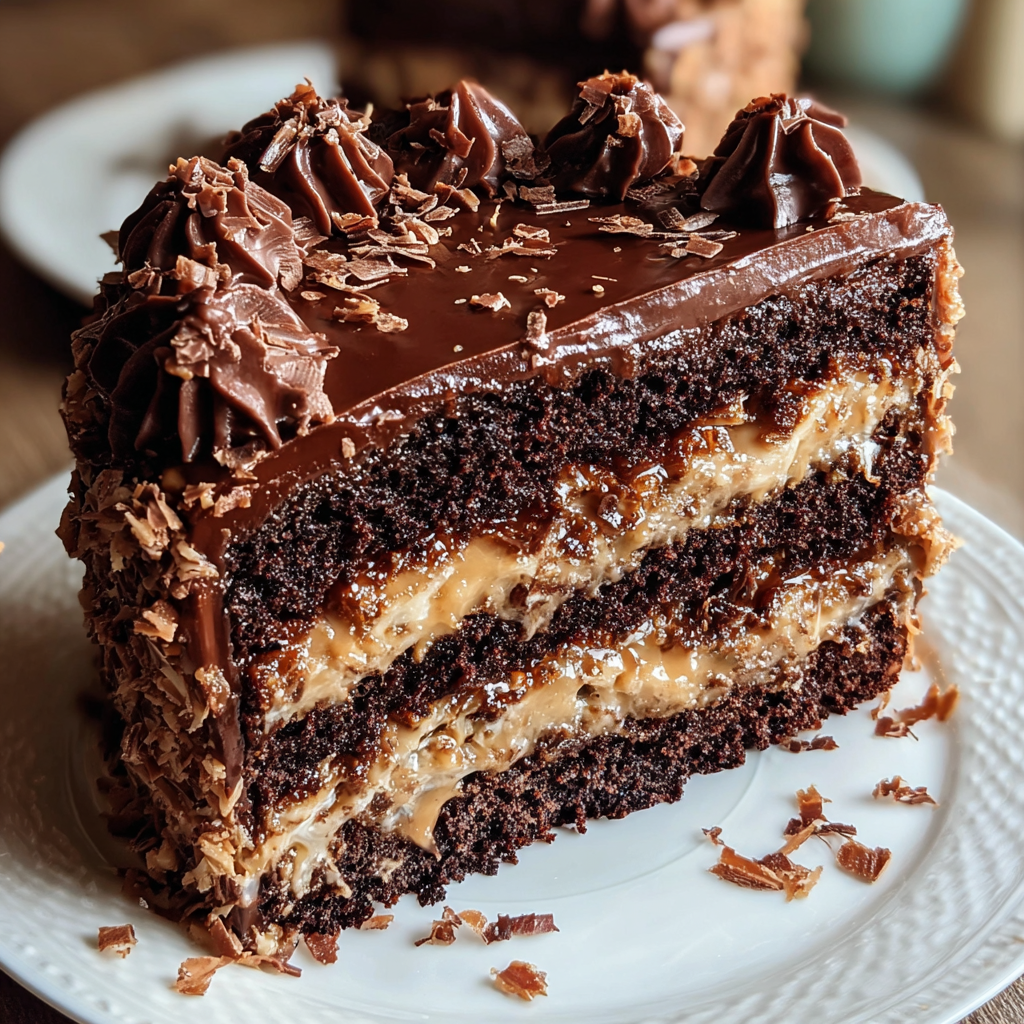
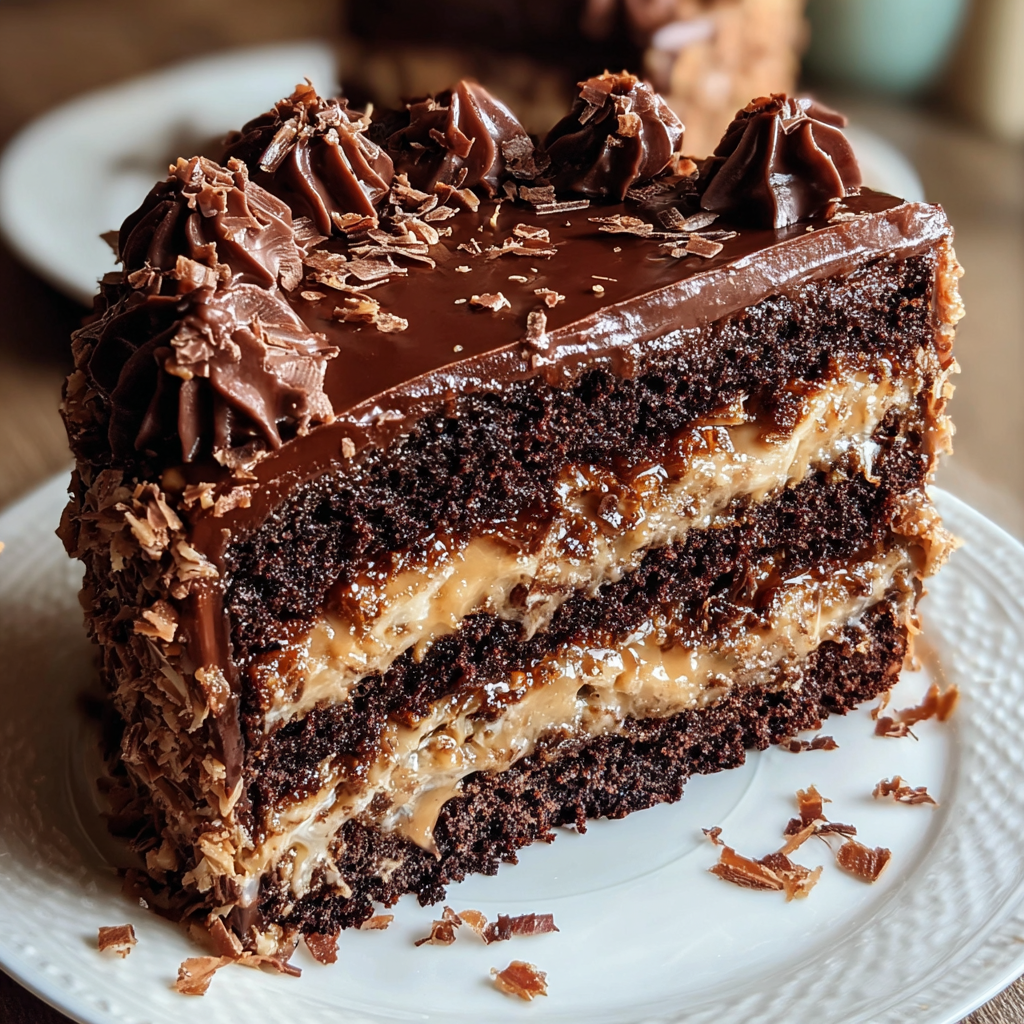
- Assemble the cake layers, spreading frosting between each layer and on top and around the sides.
- Decorate the top with additional coconut and pecans if desired, and serve.
Tried this recipe?
Let us know how it was!Introduction
Few desserts evoke nostalgia as strongly as a German chocolate cake. This indulgent treat, layered with rich chocolate and topped with a delightful coconut and pecan frosting, has won the hearts of many. Its origins might surprise you; the cake actually traces back to an American named Samuel German, who developed a dark-baking chocolate in 1852.
Despite its name, this cake is not from Germany but rather a tribute to Mr. German's contribution. Over the years, it has evolved into a beloved dessert, often served at birthdays and special occasions. The marriage of chocolate, coconut, and nuts creates a flavor profile that is both rich and complex, making every bite a celebration of taste.
When baking this cake, patience is key. Taking the time to allow each layer to cool properly and letting the frosting set will result in a stunning and delicious cake that impresses both in flavor and presentation.
Ingredients
- 2 cups all-purpose flour
This provides the structure for the cake, helping it rise and maintain shape. The flour's protein content plays a significant role in developing gluten, which gives the cake its desired texture. - 1 3/4 cups granulated sugar
Sugar not only sweetens the cake but also helps to retain moisture, ensuring your cake remains soft and tender. It also contributes to the cake's browning during baking. - 3/4 cup unsweetened cocoa powder
Cocoa powder provides the rich chocolate flavor that defines this cake. It adds depth and a slight bitterness that balances the sweetness of the other ingredients. - 1 1/2 teaspoons baking soda
This is a key leavening agent that helps the cake rise by producing carbon dioxide when it reacts with moisture and an acid. A proper amount is essential for achieving the perfect texture. - 1 1/2 teaspoons baking powder
Along with baking soda, baking powder ensures the cake rises adequately, creating a light and fluffy texture. It works effectively with baking soda to support the cake's structure. - 1 teaspoon salt
Salt enhances the overall flavor of the cake, balancing sweetness and bringing out the chocolate's richness. It also strengthens the batter, improving texture. - 1 cup buttermilk
Buttermilk adds moisture to the cake while providing a slight tang, helping to balance flavors. The acidity in buttermilk reacts with baking soda, aiding in leavening. - 1/2 cup vegetable oil
Oil keeps the cake moist and tender, as it remains liquid at room temperature while butter solidifies. This helps achieve a soft, inviting texture. - 2 large eggs
Eggs bind the ingredients together, providing structure and moisture. They also contribute to the cake's richness and help with leavening. - 1 teaspoon vanilla extract
Vanilla enhances the flavor profile, providing warmth and complexity. It also rounds out the sweetness of the cake. - 4 ounces German sweet chocolate
This specially formulated chocolate adds a unique flavor and sweetness to the cake, enhancing the chocolate base and enriching each layer. - 1 cup shredded sweetened coconut
Coconut adds texture and a unique flavor to the frosting, creating a delightful contrast to the cake layers. It also brings a tropical note to the dessert. - 1 cup chopped pecans
Pecans provide crunch and richness, complementing the coconut topping beautifully. Their nutty flavor pairs well with the sweetness of the frosting. - 1/2 cup unsweetened cocoa powder for frosting (optional)
If you want to create a chocolate version of the frosting, adding cocoa powder enhances the chocolate flavor and pairs well with the overall dessert.
Directions & Preparation
Step 1: Preheat the oven to 350°F (175°C).
Preheating the oven ensures that the cake bakes evenly and rises properly. Starting with a hot oven allows the leavening agents to activate at the right temperature, leading to a light and fluffy texture.
Step 2: Grease and flour three 9-inch round cake pans.
Properly greasing and flouring the pans makes it easier to remove the cakes after baking, preventing tearing or sticking. This step is crucial for maintaining the cake's integrity during assembly.
Step 3: Melt the German sweet chocolate in a double boiler and set aside to cool slightly.
Melting the chocolate gently ensures it doesn’t seize or burn. Allowing it to cool slightly before adding it to the batter prevents curdling of the eggs when mixed in.
Step 4: In a large mixing bowl, combine the flour, sugar, cocoa powder, baking soda, baking powder, and salt.
Thoroughly mixing the dry ingredients ensures an even distribution of the leavening agents and flavors. This step is essential for achieving a uniform batter.
Step 5: In another bowl, whisk together the buttermilk, vegetable oil, eggs, vanilla extract, and melted chocolate.
This step combines the wet ingredients, allowing for even incorporation of the chocolate into the batter. The mixture should be smooth and well-blended to ensure a consistent texture.
Step 6: Gradually add the wet ingredients to the dry ingredients, mixing until just combined.
Overmixing can lead to a dense cake, so it’s important to mix until no dry spots remain. The batter should be thick but pourable, representing the ideal consistency.
Step 7: Divide the batter evenly among the prepared pans and smooth the tops.
Ensuring even distribution of the batter allows each cake layer to bake uniformly. Smoothing the tops prepares them for a level cake assembly.
Step 8: Bake for 30-35 minutes, or until a toothpick inserted in the center comes out clean.
The baking time can vary based on your oven and pan material, so checking for doneness with a toothpick is essential. This step helps prevent overbaking, which can dry out the cake.
Step 9: Let the cakes cool in the pans for 10 minutes, then remove and cool completely on a wire rack.
Cooling the cakes in the pans helps them set before transferring. Cooling on a wire rack allows air to circulate, preventing sogginess while ensuring they are completely cooled for frosting.
Step 10: Prepare the frosting by combining the coconut, pecans, evaporated milk, sugar, and butter in a saucepan.
Cooking these ingredients together allows them to meld and create a rich, caramel-like texture essential for the frosting. This step enhances the flavors, resulting in a decadent topping.
Step 11: Cook over medium heat until boiling, then reduce to low and stir constantly for approximately 10 minutes until thickened.
Stirring constantly prevents the mixture from burning and helps achieve the desired thickness. This is a crucial cooking method for developing the frosting's rich flavor.
Step 12: Remove from heat and stir in the vanilla extract. Allow frosting to cool before using.
Allowing the frosting to cool thickens it further and makes it easier to spread without sliding. Patience here leads to a beautifully layered cake.
Step 13: Assemble the cake layers, spreading frosting between each layer and on top and around the sides.
Proper assembly ensures an attractive presentation and allows flavors to blend beautifully. Use an offset spatula to achieve smooth and even frosting.
Step 14: Decorate the top with additional coconut and pecans if desired, and serve.
Adding extra toppings gives the cake a finished look, inviting guests to indulge. This final touch enhances visual appeal and adds texture to each slice.

Understanding the Origin of German Chocolate Cake
While it may seem like this decadent cake hails from Germany, its inception is actually rooted in American culture. The name derives from Samuel German, who invented a dark-baking chocolate for Baker's chocolate in the 19th century. It wasn't until a Texas homemaker created a recipe using his chocolate that the cake became popular, showcasing the delicious pairing of chocolate, coconut, and pecans.
Tips for Perfecting Your Frosting
Getting the frosting right is essential for a successful German chocolate cake. The coconut and pecan mixture needs to be cooked until thick and creamy, striking a balance between spreadability and firmness. Be patient while cooking; undercooked frosting will run off the cake, while overcooked frostings can become grainy. Allow it to cool to the right consistency before layering.
Serving Suggestions for Special Occasions
German chocolate cake is not just a delightful dessert; it fits perfectly into many celebratory moments. Its rich flavors pair beautifully with coffee or a glass of cold milk, enhancing the tasting experience. Consider serving it alongside fresh berries or a scoop of vanilla ice cream to balance its richness, making every occasion feel special.
FAQs
What if my cake layers are too dry?
If your cake layers come out dry, it could be due to overbaking or not measuring ingredients correctly. Ensuring you're accurate with ingredients and checking for doneness a few minutes early can help avoid this.
Can I use semi-sweet chocolate instead of German sweet chocolate?
Yes, you can substitute semi-sweet chocolate, but keep in mind that it may result in a slightly different flavor profile. Adjust the sugar in the batter if desired, as semi-sweet chocolate is less sweet than German chocolate.
How can I make the frosting thicker?
If you find your frosting too thin, continue cooking it a bit longer to evaporate excess moisture. Stir constantly until it thickens. Be sure to cool it down to handle as well before spreading.
What can I do if my frosting is too thick?
If your frosting is too thick to spread, try warming it slightly in the microwave or over a double boiler. This will loosen it, making it easier to work with, while keeping the integrity of the flavors.
Is it necessary to let the cakes cool completely before frosting?
Yes, it's important to let the cakes cool completely to prevent the frosting from melting. Warm cakes can cause the frosting to slide off, resulting in a messy presentation.
Can I replace the pecans with another nut?
Absolutely! If you prefer other nuts like walnuts or macadamias, feel free to substitute. Just keep in mind that different nuts may alter the flavor and texture of the topping.
Conclusion
Baking a German chocolate cake at home is a rewarding experience that allows you to showcase your baking skills while indulging in a delicious dessert. The combination of decadent chocolate layers with the sweet, nutty frosting creates a memorable treat that is sure to impress friends and family.
By mastering the art of this cake, you'll not only create a stunning centerpiece for any gathering but also a rich flavor experience that celebrates its unique heritage. Enjoy each bite and savor the satisfaction of sharing this delightful cake with your loved ones.
Recipe Card
Baking a Classic German Chocolate Cake at Home
Ingredients
Method
- Preheat the oven to 350°F (175°C).
- Grease and flour three 9-inch round cake pans.
- Melt the German sweet chocolate in a double boiler and set aside to cool slightly.
- In a large mixing bowl, combine the flour, sugar, cocoa powder, baking soda, baking powder, and salt.
- In another bowl, whisk together the buttermilk, vegetable oil, eggs, vanilla extract, and melted chocolate.
- Gradually add the wet ingredients to the dry ingredients, mixing until just combined.
- Divide the batter evenly among the prepared pans and smooth the tops.
- Bake for 30-35 minutes, or until a toothpick inserted in the center comes out clean.
- Let the cakes cool in the pans for 10 minutes, then remove and cool completely on a wire rack.
- Prepare the frosting by combining the coconut, pecans, evaporated milk, sugar, and butter in a saucepan.
- Cook over medium heat until boiling, then reduce to low and stir constantly for approximately 10 minutes until thickened.
- Remove from heat and stir in the vanilla extract. Allow frosting to cool before using.
- Assemble the cake layers, spreading frosting between each layer and on top and around the sides.
- Decorate the top with additional coconut and pecans if desired, and serve.
Tried this recipe?
Let us know how it was!Notes
Additional serving suggestions: pair with a crisp salad, garlic bread, or roasted seasonal vegetables for balance.
For make-ahead, prep components separately and assemble just before heating to preserve texture.
Taste and adjust with acid (lemon/vinegar) and salt right at the end to wake up flavors.